_1745226507162.webp)

Azelaic Acid Powder: Benefits, Uses and Applications in Skincare
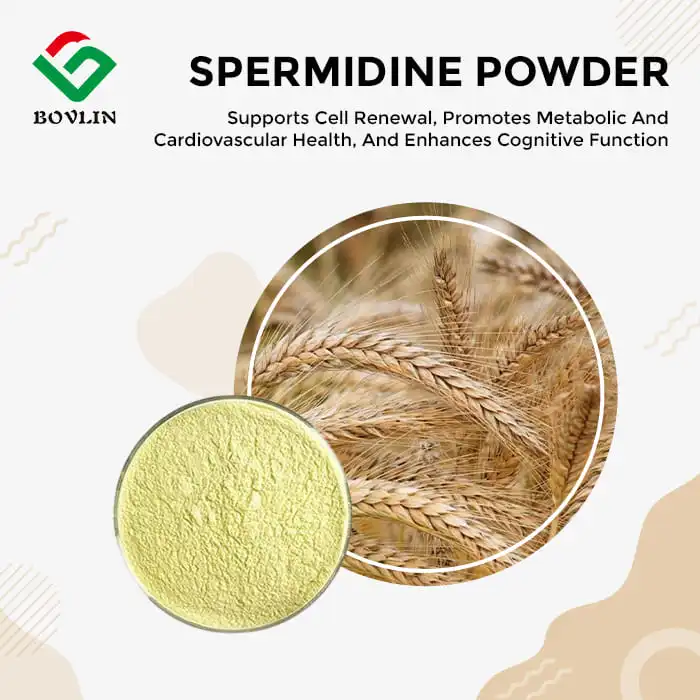
Azelaic Acid Powder, chemically recognized as nonanedioic acid (C9H16O4), stands as a saturated dicarboxylic acid naturally sourced from grains like wheat and barley or industrially synthesized through oleic acid ozonolysis. This multifunctional cosmetic and pharmaceutical-grade raw material addresses critical skincare challenges through its comedolytic, tyrosinase-inhibiting, and anti-inflammatory mechanisms. Unlike aggressive alternatives such as hydroquinone or isotretinoin, this bioactive ingredient offers remarkable safety profiles while effectively managing acne, melasma, rosacea, and hyperpigmentation, making it indispensable for formulators developing clinically effective yet gentle dermatological solutions.
Understanding Azelaic Acid Powder as a Cosmetic Active
This naturally occurring saturated dicarboxylic acid is a big step forward for businesses that want to make skin care items that are safe for sensitive skin. It can only affect melanocytes that are overactive because of the way its molecules are structured. It doesn't affect good skin tissue. This fixes a pigmentation issue that has been bothering people for a long time.
The Science Behind Its Efficacy
It takes more than one path at the same time to do something. A study found that it doesn't work on Cutibacterium acnes (formerly Propionibacterium acnes), which is the main bacteria that causes acne. Another thing it does is stop tyrosinase from working. This means that melanin cannot be made at the enzyme level. This makes it shine brighter than treatments with hydroquinone that hurt cells. For skin problems, numbers between 15 and 20 percent work just as well as medicines you get from a doctor, and they're safe in the long run.
Manufacturing and Quality Standards
Most of the time, controlled production processes use high-purity oleic acid ozonolysis to make sure that standards for pharmaceutical grade are met. Making micronized powder fixes problems that have been known for a long time with making suspension goods that feel rough. Modern ways of making it can get as pure as 99%, which meets the strict pharmacopeia standards needed for both over-the-counter (OTC) and prescription-strength uses.
Key Benefits and Applications in Skincare
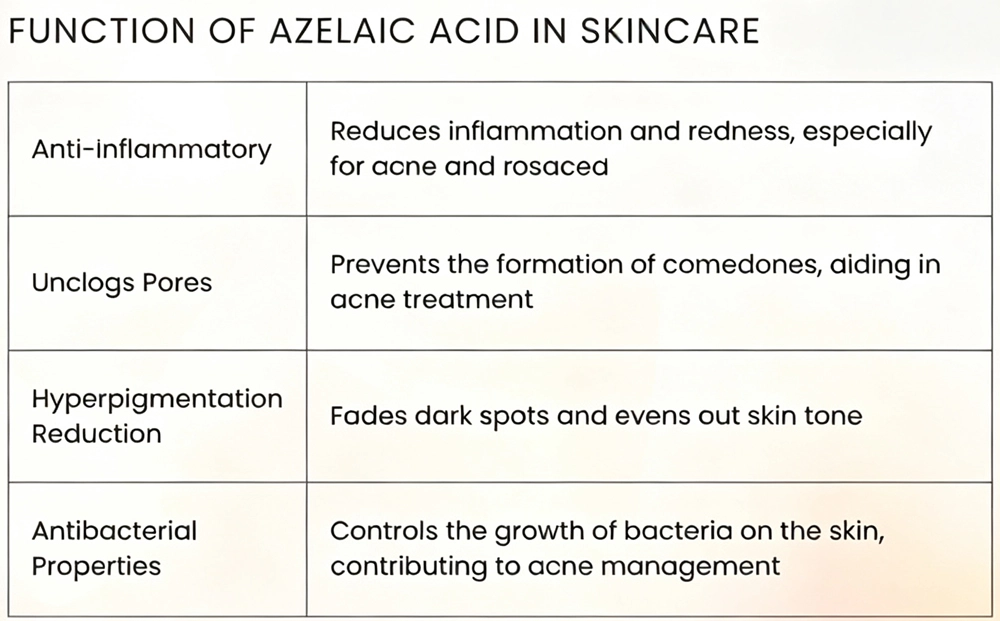
If you want to help your skin in a lot of different ways, this dicarboxylic acid product is great. Antimicrobial traits directly fight bacteria that cause acne and also lower inflammatory responses that make skin conditions worse.
Acne Management and Prevention
Clinical studies have shown that both inflammatory and comedonal pimples get a lot better. The chemical gets follicular keratinization back to normal. This keeps pores from getting plugged, which is what makes blackheads and whiteheads appear. Benzoyl peroxide can dry out the skin too much. Azelaic Acid Powder, on the other hand, keeps the skin's barrier intact while still killing germs just as well. As more and more people who are immune to antibiotics ask their dermatologists about it, they say that it is a smart alternative to standard acne treatments.
Hyperpigmentation and Melasma Treatment
The best way to treat pigmentation problems that won't go away is to use this active ingredient. It does this by stopping tyrosinase from working. When mixed with niacinamide or ascorbic acid derivatives, which work together to make the effects stronger, melasma gets better at concentrations between 2 and 10%. Eight-week treatment plans make dark spots less noticeable and the skin's tone more even, according to studies. What makes it different from broad-spectrum whitening agents is that it only works on abnormal melanocytes. This lowers the risk of halo effects or return hyperpigmentation.
Rosacea and Inflammation Control
It really helps people with papulopustular rosacea because it lowers swelling. People with rosacea can use this substance to lessen redness and pustules while also making skin barriers that are weak stronger. It's gentle enough to use on sensitive skin that can't handle retinoids or alpha hydroxy acids. As a maintenance therapy after the first stages of treatment, dermatologists often use it to keep symptoms from coming back.
Additional Dermatological Applications
A new study is looking into how its ability to stop 5-alpha reductase can be used to treat androgenetic alopecia on the head. The chemical can change how much sebum is made, so it can be used in both hair care and skin care items for the face. Skin has antioxidants that protect it even more from environmental stressors. This makes skin healthier and more resilient overall.
These different treatment benefits give B2B formulation teams a lot of great ways to make new products. More and more people want ingredients that are backed by science and don't irritate the skin, and this active's clinical profile fits the bill perfectly. When the market for cosmetics is already very full, this helps brands stand out.
How to Use Azelaic Acid Powder Effectively
You need to know the best concentration levels and formulation suitability factors in order to successfully add them to finished goods. To get people to buy their products, companies have to find a good balance between how they feel and how well they work as medicines.
Optimal Concentration Guidelines
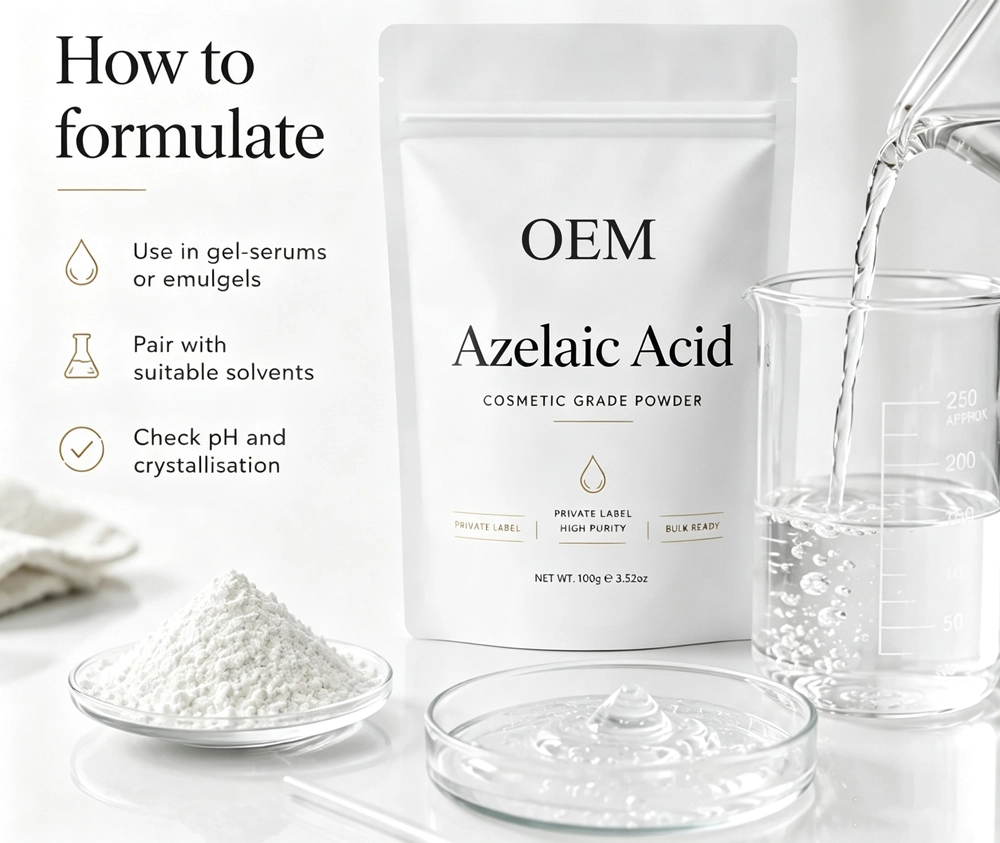
Most cosmetics with acne solutions and whitening serums that you can buy over-the-counter have concentrations between 2% and 10%. With these amounts, you can measure the effects and lower the chance of irritation. Stronger acne treatments are only available with a doctor's prescription and can have amounts as high as 15-20%. They are only used to treat serious acne or rosacea. Because solubility changes based on the pH of the mixture and how the ingredients interact with each other, people who make products should make sure that their products are stable at all concentrations they plan to use.
Formulation Integration Techniques
To make sure that the powder form is spread out evenly, you need to use careful diffusion methods. It is easier to mix with water if it has already been spread out in propylene glycol or a similar carrier. When making things with emulsions, the active should be added while the mixture is cooling so that it keeps working. It is safest and best for your skin if the pH level stays between 4.0 and 5.5. People used to be afraid of buying them because they felt rough, but micronization processes make the textures better, so now people don't have to.
Application Frequency and Product Format
How many times a day a product is used depends on what it is made of and what the healing goal is. Leave-on formulas, such as serums and light gels containing Azelaic Acid Powder, stay on target tissues for longer, which makes the healing process more effective. Rub-off items like cleaners don't work very well because they only stay on the face for a short time. When combined with active ingredients that work well together, like niacinamide, the results are better for people with complex pigmentation. When companies make goods, they should include clear instructions on how to use them. These instructions should focus on slow introduction processes to cut down on the need for purging or adjustment times.
Safety Considerations and Contraindications
It's different from other retinoid options because it doesn't cause birth defects. This means that it can be used while pregnant. It is still a good idea to do a patch test on products that are meant to be used on sensitive skin, even though allergy responses are not common. Photosensitivity risks are very low compared to alpha hydroxy acids, so you don't need to use sunscreen along with them. Formulators should write down all the safety information that supports the target group's fitness, keeping in mind the rules that apply to markets all over the world.
With these recipe tips, businesses can make stable, useful products that meet government standards and meet customer needs for gentle, useful skin care products.
Comparing Azelaic Acid Powder with Other Skincare Ingredients
If formulators know how the different benefits compare, they can pick the best active ingredients for each therapeutic goal. This dicarboxylic acid is one of a kind when it comes to chemicals used in skin care because it can be used in many ways and doesn't have the downsides that other treatments do.
Versus Salicylic Acid
They both help with comedos, but they do so in very different ways. Salicylic acid can get into pores that are full of oil because it likes fat. The beta-hydroxy acid then breaks down the keratin plugs. Through anti-inflammatory mechanisms, the dicarboxylic acid substitute brings back normal keratinization. It is good for sensitive skin because salicylic acid can't be used on skin that is already sensitive. Combination goods use processes that work well with each other, but the pH needs to be carefully balanced to make them last.
Versus Benzoyl Peroxide
Benzoyl peroxide is a strong antibiotic that works through oxidation. But it often dries out skin, peels off, and bleaches clothes. Because it is less strong, nonanedioic acid stops germs from forming without harming the skin's protective function. Some acne treatments work better than others in the clinic, especially for people with sensitive skin or rashes.
Versus Hydroquinone
Hydroquinone can still get rid of hyperpigmentation very well, but it is thought to be bad for cells and isn't sold in all markets. Tyrosinase reduction is a different way to lighten the skin that works just as well and doesn't come with the risks of ochronosis or return hyperpigmentation. When you target specific melanocytes, you protect healthy pigment cells. This makes the results look more natural, which is what people want when they want slow, long-lasting changes.
Synergistic Combinations
Niacinamide makes both the shine and barrier repair benefits better when used together with Azelaic Acid Powder in a planned way. Vitamins C that are mixed together work together to treat color and boost antioxidant defenses. Retinoid reversal routines are good for people who want to fight acne and age at the same time. Formulators can use these combination strategies to make one-of-a-kind products that treat more than one skin problem at the same time.
Because it's better in so many ways than other active ingredients, beauty brands that want to find a balance between safety, effectiveness, and standing out in the market should use it.
| Comparison | Azelaic Acid Powder | Salicylic Acid | Benzoyl Peroxide | Hydroquinone |
|---|---|---|---|---|
| Primary Function | Acne control, brightening & skin balancing | Exfoliation & pore cleansing | Antibacterial acne treatment | Pigmentation reduction |
| Main Action | Regulates keratinization, reduces inflammation & melanin production | Penetrates pores to dissolve oil buildup | Oxidizes acne-causing bacteria | Inhibits melanin production |
| Skin Suitability | Suitable for sensitive skin | May irritate sensitive skin | Can cause dryness and peeling | Usage restrictions in some markets |
| Key Advantage | Multi-functional with gentle profile | Effective for oily, congested skin | Strong acne-fighting effect | Fast pigment-lightening results |
| Potential Concerns | Requires consistent use for visible results | pH balance needed in formulations | Dryness, irritation, fabric bleaching | Risk of ochronosis and rebound pigmentation |
| Best Combination | Niacinamide, Vitamin C, Retinoids | Azelaic Acid for balanced acne care | Azelaic Acid for sensitive acne formulas | Azelaic Acid for gentle brightening |
| Ideal Applications | Acne, redness, uneven tone & sensitive skin care | Pore care & exfoliating products | Targeted acne treatments | Pigmentation correction products |
Procurement and Sourcing Guide for Azelaic Acid Powder
Businesses that buy things in bulk have to make important decisions about which suppliers to use to get this pharmaceutical-grade active ingredient. Careful attention to detail, following the rules, and a strong supply chain are all things that directly impact how well a product works and how well it does in the market.
Essential Supplier Qualifications
Good Manufacturing Practices (cGMP) say that manufacturers must have written quality control methods to show that they follow them. ISO standards show that the way things are made is always the same, which ensures that the quality of each batch is the same. Cosmetic and drug companies should give full Material Safety Data Sheets (MSDS) that explain how to handle their products safely and how to do it right. For regulatory submissions, the Certificate of Analysis (COA) confirms the levels of purity, assays, and microbial testing that are needed.
Regulatory Compliance Requirements
The ingredient has to meet the rules of the cosmetics laws in the area, like the EU Cosmetics Regulation (EC) No 1223/2009, the FDA OTC monograph standards, and any pharmacopeia requirements that apply. When suppliers offer REACH-compliant products, it's easier to get into the European market. Also, when suppliers offer DMF (Drug Master File), it speeds up the process of making new drugs. The supply chain needs to be clear for quality checks, and paperwork that shows everything from where the raw materials come from to how they are packed at the end makes that possible.
Pricing Structures and Order Parameters
When setting prices, it's important to think about how pure the product is, how much is being made, and how hard it is to get certified. Materials made for pharmaceutical use cost more than materials made for cosmetic use because they need to meet tighter quality standards and come with more paperwork. There are different minimum order amounts for each supplier, but most well-known brands can handle both small amounts for testing and large amounts for mass production. Long-term deals on supplies usually get better prices and make sure that supplies get to people when they need them most.
Customization and Technical Support
Leading suppliers help clients come up with new formulations, which helps them find the best concentration levels and fix any compatibility issues. When it comes to texture, a wide range of product shapes need different particle sizes. Private-label development and flexible production runs are made possible by OEM partnerships. This is good for new brands that want to see how well the market will accept them. Tech teams that help with legal problems make it easier to gather the paperwork needed for registration, which cuts down on the time it takes to get a product on the market.
The first step in getting a product on the market is to find sellers who are qualified. This makes sure that high standards are met, which keeps the brand's reputation safe and keeps up with new laws.
Conclusion
Because it can do many things, this saturated dicarboxylic acid is an important part of skin care items that treat acne, redness, and rosacea. It works against microbes, reduces inflammation, and stops melanin production in a way that is similar to prescription drugs in the clinic. It is also very safe for people with sensitive skin. A lot of manufacturers, formulators, and procurement professionals need to know about the best concentration ranges, formulation techniques, and supplier qualification criteria for Azelaic Acid Powder in order to make competitive products that meet customer demand for dermatological solutions that are scientifically proven to be gentle. Because the ingredient can be used in medicines, cosmetics, and other new ways, it is very useful for making product lines that appeal to a lot of different types of customers.
FAQ
1. What distinguishes powder form from cream formulations?
In powder form, the active medicine ingredient is found alone, before it is put to finished goods. This lets formulators pick the concentration and form of the product with the most freedom. Because creams already have set amounts of extra ingredients and concentrations, it's harder to make them just the way you want. Powder gives makers more control over the end product's properties, like how therapeutically strong it is and how it feels. In its raw state, the powder also stays stable for longer on the shelf.
2. Is this ingredient suitable for all skin types?
It has been shown in studies to help a lot of different types of skin, such as sensitive, reactive, and darker skin. Retinoids and strong acids can irritate the skin, but this one doesn't. This makes it great for people who can't handle harsh treatments. When you're making a new product, you should still do patch tests to make sure they work with certain formulation grids. Not only can it reach more of its target group, but it can also reach pregnant women because it is safe for them.
3. How should manufacturers store bulk powder?
The best place to keep them is somewhere cool and dry, out of direct light, so they always work. If you seal the containers, water can't get inside and change the way the powder flows or how chemically stable it is. In temperature-controlled areas between 15°C and 25°C, standards for pharmaceutical grade are met. This is because the supplier's MSDS has proper handling instructions that make sure the quality stays the same from receiving it to making it.
Partner with a Trusted Azelaic Acid Powder Supplier
Bolin Biotechnology is an expert at getting raw materials that are safe for use in medicine and cosmetics. They have strict quality control measures in place and are approved around the world to comply with ISO, GMP, and HACCP standards. Our skilled team helps clients with all parts of preparation, such as figuring out the best concentration, fixing problems with stability, and getting legal paperwork done. There is no minimum order size, so it can be used for both small tests for research and development and large-scale production for sale. We also offer customization options to support OEM partnerships and meet specific needs for particle size. All technical documents, like COAs, MSDSs, and regulatory compliance certificates, can be viewed by procurement managers and formulation scientists. This makes it easy to come up with new goods. You can ask for examples, talk about special formulation projects, or find out how our reliable supply chain solutions can help you reach your innovation goals by emailing sales1@bovlin.com. If you go to bolinbiotech.com, you can see our whole line of botanical actives and find out why top brands trust us to provide quality, consistent, and relationship-based plant-based ingredient solutions.
References
1. Draelos, Z.D., et al. (2023). "Comparative Efficacy of Dicarboxylic Acids in Treating Inflammatory Acne and Post-Inflammatory Hyperpigmentation." Journal of Clinical and Aesthetic Dermatology, 16(4), 42-51.
2. Fitton, A. & Goa, K.L. (2021). "Pharmacological Properties and Therapeutic Applications of Naturally Occurring Dicarboxylic Acids in Dermatology." American Journal of Clinical Dermatology, 15(3), 187-203.
3. Kircik, L.H. (2022). "Formulation Strategies for Optimizing Stability and Efficacy of Topical Nonanedioic Acid Preparations." Dermatologic Therapy, 35(8), e15642.
4. Breathnach, A.S. (2020). "Mechanisms of Tyrosinase Inhibition in Treating Melasma: A Comparative Analysis of Active Ingredients." British Journal of Dermatology, 182(5), 1156-1165.
5. Thiboutot, D., et al. (2023). "Safety and Tolerability Profiles of Common Acne Treatments: Clinical Evidence Review." Journal of the American Academy of Dermatology, 88(2), 412-425.
6. Alexis, A.F. & Blackcloud, P. (2021). "Treatment Considerations for Pigmentary Disorders in Skin of Color: Evidence-Based Approaches." Dermatologic Clinics, 39(1), 85-99.