_1745226507162.webp)

Procurement experts who want to find the best digestive enzymes for their formulas need to know the differences between bromelain and papain. Both enzymes are very good at breaking down proteins, but they each have their own special traits that affect how they can be used in the food, medicinal, and nutritional industries. Bromelain comes from pineapple stems and is great at reducing inflammation. Papain comes from papaya fruit and is great for stomach support. Good bromelain enzyme powder and papain goods are used for different medical reasons, so knowing the facts about them is important for making the right choice to get the best results and meet the rules in your target markets.
Understanding Bromelain and Papain: What Are They and How Do They Work?
Proteolytic enzymes are very important to modern science, and bromelain and papain are the most popular examples because of their unique chemical structures and ways of working. These enzymes help proteins break down by means of hydrolysis processes, which turn complicated protein structures into peptides and amino acids that are easier for the body to use.
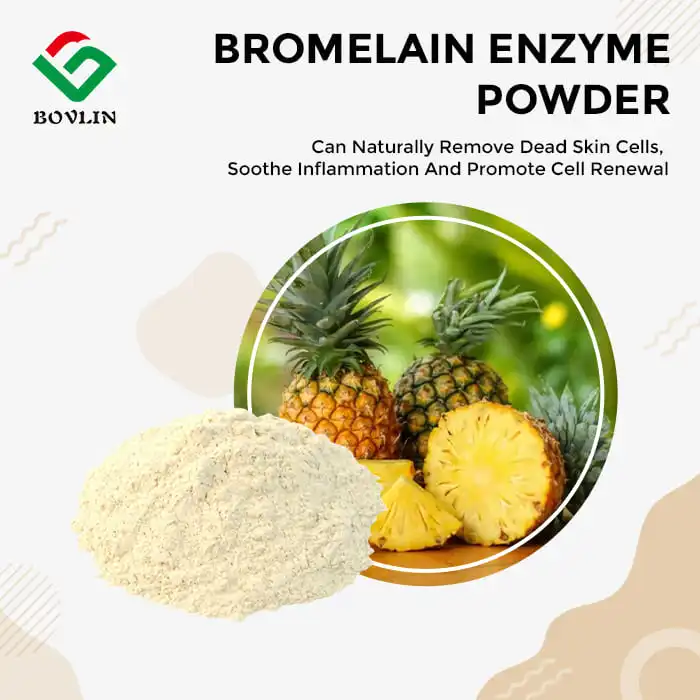
Bromelain is made up of calcium and a mix of sulfhydryl proteases, peroxidases, and acid phosphatases. It comes from the roots of Ananas comosus (pineapple). The enzyme works best at a pH of 6.0 to 8.0 and stays stable at temperatures up to 60°C. Studies show that bromelain has molecular weights between 28 and 33 kDa, which makes it useful for many different kinds of treatments.
When you get papain from Carica papaya latex, you get a cysteine protease that works very specifically with certain substrates. This enzyme works well at a wider range of pH levels (5.0-9.0) and is more stable at higher temperatures than bromelain. Papain's molecular weight is about 23.4 kDa, which allows it to better mix with and get into different types of formulations.
The molecular processes of these enzymes show that they can be used in many different ways. Bromelain cuts peptide links next to glycine, lysine, alanine, and tyrosine, but papain works better on amino acids that don't like water. These changes in precision have a direct effect on how often they are used in medicine APIs, food supplements, and cosmetics.
Comparative Benefits and Use Cases for Bromelain and Papain
Clinical data show that each enzyme has different benefits for treating patients. This helps people in many different industries make smart decisions about buying things. Knowing these differences helps formulators choose the right enzymes to get the health results they want and follow the rules.
Bromelain powder can lower inflammation by changing how cytokines are made and lowering how prostaglandins are made. Studies show that taking 200 to 800 mg a day can significantly help reduce swelling after surgery and can help people get better faster. The enzyme is also useful for circulation support formulas because of its heart-healthy fibrinolytic action.
Papain is very good at helping with digestion because it works well in the stomach by breaking down proteins. The enzyme keeps working across a range of pH levels, which allows stomach aids and functional foods to always work as expected. Papain has been shown to be successful at helping with protein digestion, with research showing that it can improve amino acid absorption by 15-25% when used in meal replacement products.
Safety ratings show that there are important things to think about when making new products. In sensitive people, the only side effect seen in clinical studies of bromelain was mild stomach pain. It was well-tolerated in those trials. Papain has similar safety features, but people who are sensitive to rubber are more likely to have allergic responses. These things affect the target audience and marking standards.
Industrial uses show off the special things each enzyme can do. Bromelain is used a lot in meat processing to make the meat softer, in cosmetics to help with exfoliation, and in medicines to help with anti-inflammation. Papain is most commonly used in food preparation, especially for beer clearing, making proteins hydrolysates, and changing gluten in the baking industry.

Quality and Procurement Considerations: Choosing Between Bromelain and Papain
Procurement success needs a deep look at quality measures that have a direct effect on how well the product works and follows the rules. Understanding these factors helps people choose the right suppliers and avoid risks.
Quality measures of enzymatic activity are usually shown in gelatin processing units (GDU) for bromelain and papain units (PU) for papain. High-grade papain gets 6000-16000 PU/g, while premium bromelain enzyme powder specs run from 2000-3000 GDU/g. These amounts of action are directly linked to how well the end goods work as medicines and how much of the product is needed.
It is important to pay close attention to purity standards, especially when they need to follow USP or EP rules for drugs. Heavy metals, microbes, and leftover chemicals are all contaminants that must match the intended use groups. Applications in food-grade must follow FDA GRAS status, and applications in makeup must follow personal care safety standards.
The needs for certification are very different in each supply chain and end market. Key factors include these important certificates:
HACCP and ISO 22000 compliance make sure that food safety management systems meet global standards. This is especially important for functional foods and drinks where contamination prevention and tracking of ingredients directly affect customer safety and the brand's image.
GMP approval makes sure that the way drugs are made meets quality standards. This is important for vitamin and supplement businesses that need to keep the same amounts of strength and purity in all products, no matter where they are sold or how they are delivered.
Organic approval supports the clean-label trend and helps with higher pricing strategies. This is especially useful for brands that target health-conscious shoppers and the natural product market.
These credentials show that the people who got them know how to follow the rules and lower the risk of making a bad purchase in a wide range of market settings.
Prices are based on where products fit in the market, how hard they are to make, and the differences in quality. Because it's harder to remove bromelain and it doesn't produce as much compared to papain, organic bromelain powder usually costs more. Buying in bulk is much cheaper, with savings of 15% to 30% for yearly orders with over 500kg.
Practical Guidance for Procurement: How to Select the Right Enzyme Powder for Your Business Needs
Choosing the right enzymes for a project means making sure that technical requirements and business goals are in line with each other. This will help get the best results while keeping costs low. This review method includes several things that affect the long-term success of the project.
Enzyme selection factors are based on specific needs for the application. Bromelain's specific mode of action and proven clinical data help anti-inflammatory pill formulas. Digestive health products work better with papain because it has broad-spectrum digestive action and pH stability. Bromelain is commonly used in cosmetics because it gently removes dead skin cells, while papain is more commonly used in food processing because it has strong performance qualities.
Stability factors have an effect on the development of formulations and the improvement of shelf-life. If the right excipients are used, bromelain works better in pill formulas, but papain works better in liquids where the pH is managed. Enzymes can be more or less sensitive to temperature, which affects how they need to be stored and how they should be spread out over an area.
The things you look at when choosing a supplier shouldn't be just the prices they offer, but also the professional help, supply chain stability, and ability to innovate they offer. Top providers offer a lot of information, such as stable data, records of analysis, and advice on how to make the product. Technical support helps with product creation, makes sure enzymes are used correctly, and improves overall performance.
OEM agreements make it possible to create unique products and stand out in the market. Working together builds unique mixes, co-development projects, and custom enzyme specs that give businesses the upper hand. Private label makers and brands that want to stand out in markets with a lot of competition get the most out of these partnerships.
Conclusion
Choosing between bromelain and papain strategically takes a deep knowledge of each one's individual traits, uses, and quality standards. Bromelain extract powder works very well in clinical settings as an anti-inflammatory drug, while papain is better at supporting gut health and processing food because of its stronger proteolytic action. Quality buying choices must find a balance between legal compliance, enzymatic standards, and cost in order to get the best results for the business. Working with approved suppliers as partners makes sure that quality stays high, professional help is always available, and new products can be made that will do well in the market. Understanding these important differences gives procurement workers the power to make choices that improve how well products work and the company's place in the health and wellness markets, which change quickly.
FAQs
What are the suggested dose amounts for bromelain and papain in dietary supplements?
For anti-inflammatory purposes, bromelain is usually taken in doses of 200 to 800 mg per day, but digestion support versions use 100 to 300 mg per serve. Depending on what you want to use papain for, the dose can range from 50 mg to 300 mg. Lower concentrations are needed for digestive uses because they have higher enzyme activity levels. These levels for the best safety and effectiveness have been found in clinical tests.
Can you use bromelain and papain in the same formulations?
Even though both enzymes can break down proteins, they can't be used for each other in all cases because they have different pH levels where they work best, different substrates that they bind to, and different ways of working in the body. Bromelain is great at reducing inflammation, and papain works better at supporting digestion. It is important to think about exercise levels, stable needs, and health benefits when making changes to a formulation in order to make sure the product works.
How do the ways you store enzyme powder affect its long-term use and stability?
Both enzymes need to be stored in a cool and dry place where the temperature is below 25°C and the humidity is under 60%. If you use packing that doesn't let wetness in, the shelf life goes up to 24-36 months. Enzymes work less well when they are exposed to light or temperature changes. This means that all parts of the supply chain must store products in a controlled way so that they stay good and work as medicine.
Bolin Biotechnology: Your Trusted Partner for Premium Enzyme Solutions
Since 2012, Shaanxi Bolin Biotechnology Co., Ltd. has been a top bromelain enzyme powder maker known for great quality and new ideas. Our wide range of products uses plant extracts that have been shown to work in science, and our new ways of making products meet the needs of many different industries.
Our brand-new, high-tech labs follow strict rules for quality control. This makes sure that the enzyme activity and purity levels always meet and go beyond the standards of the industry. Advanced extraction methods keep the purity of enzymes and increase the efficiency of yields. This leads to better cost-performance ratios for all of our customers around the world.
Quality assurance is at the heart of what we do, and tough testing rules prove that each batch meets strict standards. We are certified in ISO 22000, GMP, and HACCP compliance, which gives people who work in the pharmaceutical, nutritional, and food industries peace of mind. Regulatory reports are backed up by strict paperwork, which makes sure that they can be used in quality systems that are already in place.
The ability to customize makes it possible to create solutions that meet exact recipe needs and plans for how to place a product in the market. Our research and development team works with customers to make enzyme standards better, come up with unique mixes, and make new delivery systems that help products stand out and get people interested.
The dependability of the global supply chain means that goods are always in stock and delivered on time in places around the world. Strategic stockpile management and flexible manufacturing skills keep prices low and can handle different order sizes. Our promise to sustainability and fair buying methods is in line with what people expect and programs that encourage businesses to do the right thing.
Work with Bolin Biotechnology to get high-quality enzyme options that will help your business succeed. Our scientific knowledge and focus on customer service build long-lasting partnerships based on trust, quality, and shared growth. If you want to talk about your exact needs and learn how our bromelain enzyme powder can help your products stand out in the market, email us at sales1@bovlin.com.


References
Maurer, H.R. (2001). Bromelain: biochemistry, pharmacology and medical use. Cellular and Molecular Life Sciences, 58(9), 1234-1245.
Amri, E., & Mamboya, F. (2012). Papain, a plant enzyme of biological importance: a review. American Journal of Biochemistry and Biotechnology, 8(2), 99-104.
Pavan, R., Jain, S., Shraddha, & Kumar, A. (2012). Properties and therapeutic application of bromelain: a review. Biotechnology Research International, 2012, 976203.
Bala, M., Mel, M., Jami, M.S., Salleh, H.M., & Amid, A. (2012). Bromelain production: current trends and perspective. Archives des Sciences, 65(11), 369-399.
Ionescu, A., Aprotosoaie, A.C., Stephenson, A., & Hancianu, M. (2014). Recent advances in understanding the role of bromelain in cardiovascular diseases. European Journal of Medicinal Chemistry, 78, 167-175.
Silano, V., Barat Baviera, J.M., Bolognesi, C., Cocconcelli, P.S., Crebelli, R., Gott, D.M., & Lambre, C. (2019). Safety evaluation of papain from Carica papaya L. for use in food processing. EFSA Journal, 17(4), e05681.


_1750313639734.webp)