_1745226507162.webp)

Ceramide Powder Benefits for Skin Health and Beauty
Ceramide powder changes the health and look of your skin by strengthening the natural lipid layer that keeps out moisture loss and damage from the outside world. As a concentrated sphingolipid ingredient, ceramide powder fixes skin that has lost its molecular integrity. This is why it is an essential ingredient in high-tech skin care products. Product developers are becoming more aware that this bioactive ingredient can help with a number of skin problems at once, ranging from barrier dysfunction to visible aging. This makes it an ideal ingredient for high-performance cosmetic and therapeutic uses aimed at picky consumers.
Understanding Ceramide Powder and Its Role in Skin Health
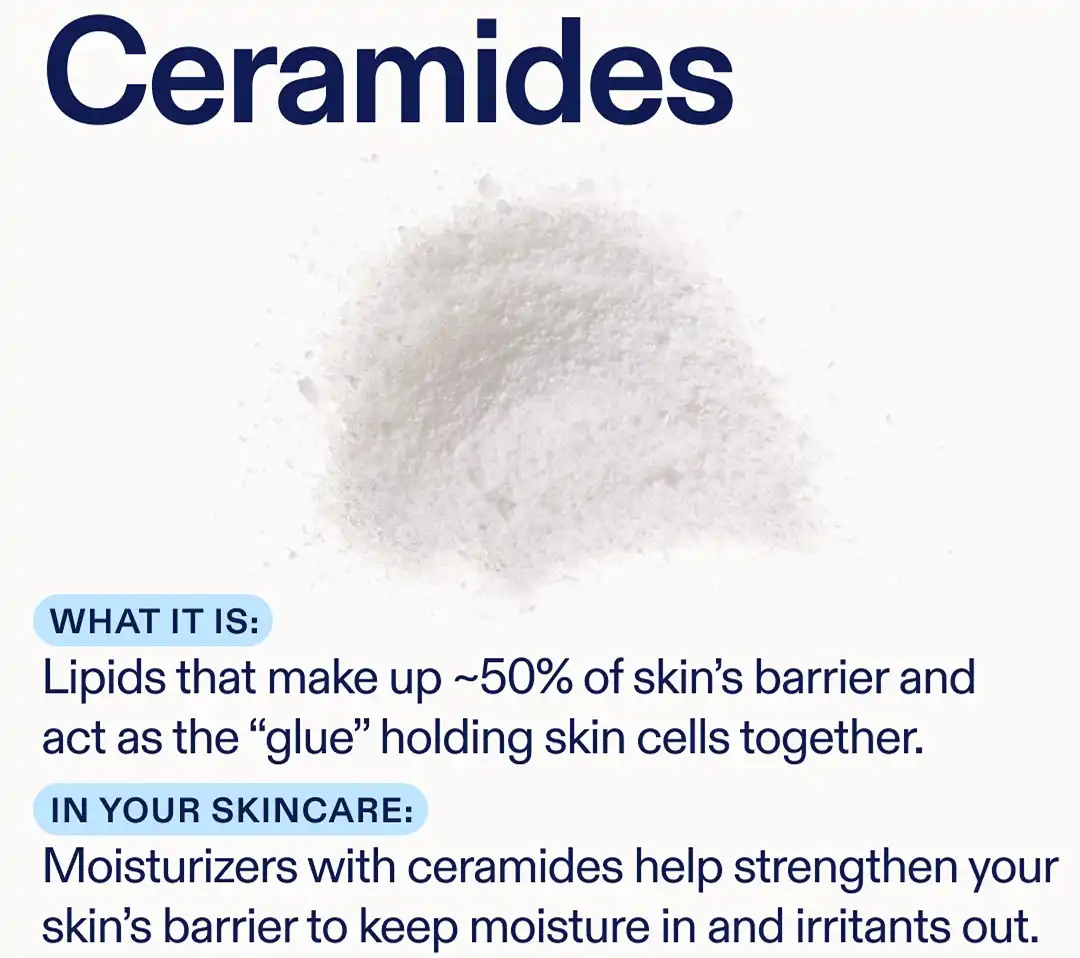
Ceramide powder is a hardened, highly pure mixture of sphingolipids that was made to resemble the molecules that are naturally found on the top layer of human skin. About half of the extracellular lipid framework in the stratum corneum is made up of ceramides, which hold skin cells together like glue. While liquid ceramide dispersions can be unstable, the powder form has a longer shelf life, better dose control, and more formulation freedom that formulators need.
Molecular Structure and Natural Versus Synthetic Origins
The chemical backbone is made up of a sphingoid base linked to a fatty acid by an amide bond. This makes the molecule amphiphilic, which means it can attract both water and oil. Natural ceramides that come from fermenting yeasts like Pichia ciferrii produce stereochemistry that is similar to skin (2S, 3S, 4R configuration) that makes sure receptors work well and biological activity is ideal. Even though synthetic options are cheaper, they often produce racemic mixtures with inactive isomers unless chirally controlled production methods are used. This difference is very important when making goods for skin that is sensitive or clinically weakened, because bioavailability has a direct effect on how well the therapy works.
Superior Absorption and Bioavailability Advantages
Ceramide powder's crystalline structure and melting points that range from 90°C to 120°C based on type make it possible for it to be carefully mixed into oil phases at high temperatures. The heat treatment makes it possible for lamellar liquid crystal structures to form that are physically similar to the way skin's natural lipids are organized. Multi-lamellar emulsion systems can better enter the stratum corneum than regular creams or serums. They do this by sending active molecules straight to the spaces between cells, which is where barrier repair happens.
Core Benefits for Barrier Restoration and Hydration
There is clinical proof that adding ceramide supplements greatly lowers transepidermal water loss (TEWL), which is the main sign of poor barrier function. Studies have shown that skin water levels improve noticeably after two weeks of regular use of products containing 0.5% to 1.0% ceramide concentrations. Ceramides do more than just keep wetness in the skin; they also fix damaged lipid lamellae that are caused by atopic dermatitis, rosacea, and photoaging. Because it can heal, ceramide powder is more than just an ingredient in cosmetics. It works as a skin treatment to fix structural problems at the cellular level.
Synergistic Formulation with Complementary Actives
When mixed with ingredients that work well together, ceramide powder shows how versatile it is in preparation. Putting ceramides and niacinamide together improves the pathways in skin cells that make ceramides. This starts a circle of barrier improvement that keeps going. Hyaluronic acid helps keep the skin hydrated by drawing water molecules to the epidermis. Ceramides then seal this wetness inside the tissue. A natural lipid ratio of 3:1:1 for ceramides, cholesterol, and fatty acids is what researchers have found to be best for barrier healing. These strategic mixtures let formulators make complete solutions that deal with many aging and damage routes at the same time.
Comparison and Selection of Ceramide Powder Products for B2B Buyers
To find your way around the pure ceramide powder landscape, you need to know how the different product formats and source choices affect the performance of the end formulation, compliance with regulations, and place in the market. Strategic choices about what to buy depend on how well the ingredient specs match the goal product groups and what customers want.
Powder Versus Alternative Delivery Forms
Ceramide powder is better than oils, pre-dispersed liquids, and combinations that are enclosed in a capsule. There are no stabilizers, emulsifiers, or solubilizers in the powder form, so formulators have full control over how the transport system is designed. This cleanliness is very important when making barrier creams for medicinal use or clean-label beauty items, where knowing what's in them is what makes people decide to buy them. Even though liquid ceramide complexes are handy, they add more formulation factors and may make the product less stable in high-water or environments with very low pH. Targeted delivery is possible with encapsulated forms, but they come at higher costs that might not work for mass-market products.
Organic Fermentation-Derived Versus Synthetic Options
Phytoceramides that come from fermentation are different from those that are made chemically. Natural-origin marketing claims are becoming more and more important to health-conscious customers, and fermentation methods produce molecular structures that are identical to those found in nature. Analytical confirmation using C13-NMR or mass spectrometry shows that the structure is that of a real sphingoid and not a fake ceramide that doesn't have any biological function. For therapeutic-grade uses, the minimum requirements are purity levels above 95% as measured by HPLC, heavy metal levels below 10ppm, and controlled leftover solvents that meet medicinal standards.
Global Sourcing and Supply Chain Transparency
Leading suppliers in the US, Europe, and China all have different strengths when it comes to volume, licensing, and expert support. For the natural products market, European companies often stress the importance of organic approval and COSMOS compliance. Chinese suppliers, such as well-known biotechnology companies, can handle big orders quickly and cheaply while still keeping the ISO 9001, ISO 22716 (GMP for Cosmetics), and HACCP certifications that are needed for global distribution. Shaanxi Bolin Biotechnology Co., Ltd. was founded in 2012 and is an example of a Chinese company that specializes in active ingredients drawn from plants and has complete quality systems that support medicinal and nutraceutical uses. As stakeholders expect brands to source ingredients responsibly, supply chain openness, such as tracking documents, sustainability approvals, and ethical sourcing practices, has a bigger impact on purchasing choices.
Integrating Ceramide Powder Into Skincare Formulations
For product creation to go well, the right ceramide powder technology combination must be used to keep the activity of the ingredients while also getting the desired stability and sensory profiles. Formulation science will tell us if ceramide powder delivers on its promises or just adds nothing useful to ingredient lists.
Dosage Guidelines and Incorporation Best Practices
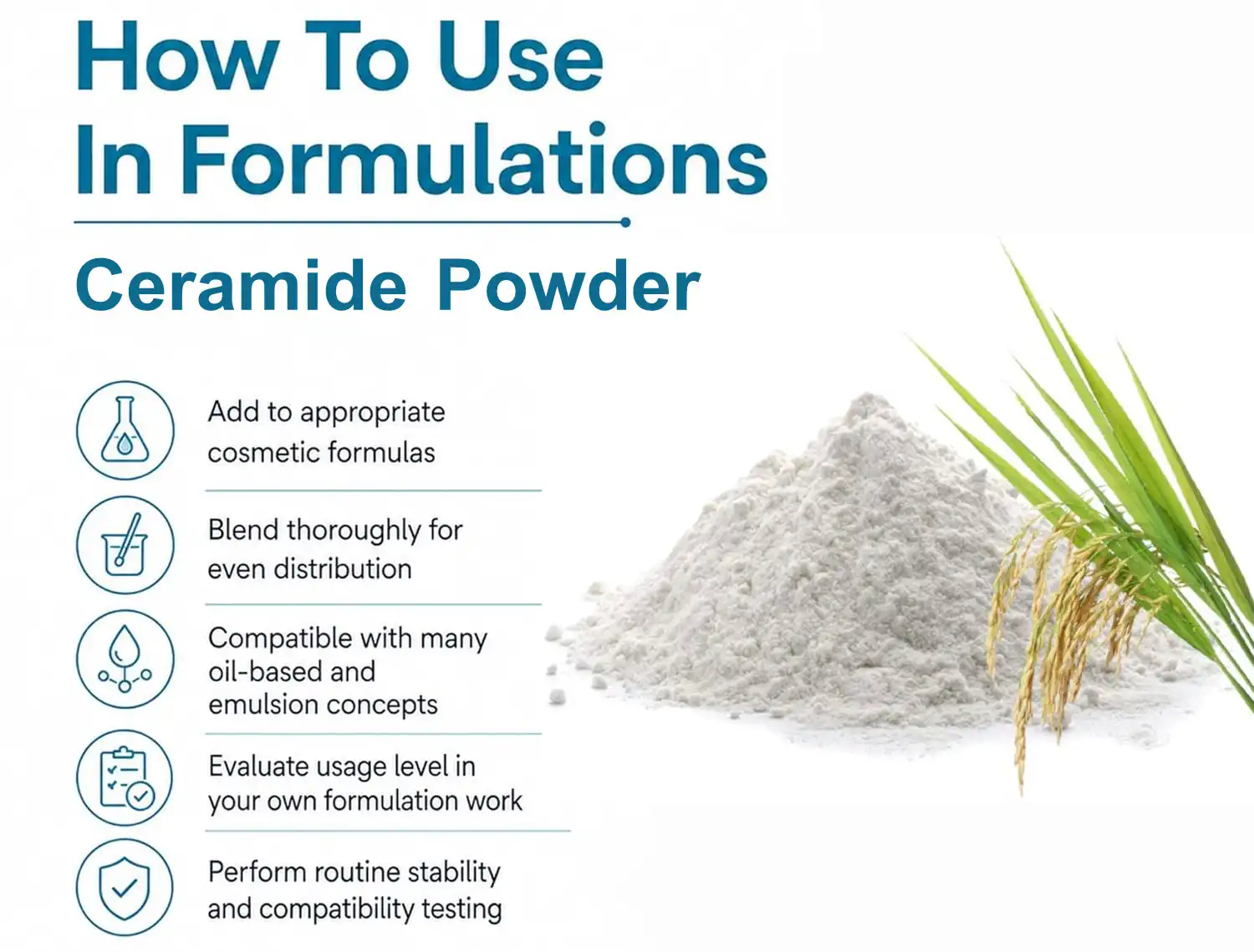
Minimum amounts are set by clinical standards. For example, 0.05% to 0.2% is recommended for daily moisturizers for upkeep purposes, and 0.5% to 1.0% is recommended for intense repair formulas that target damaged barriers. If the recipe can't keep the right lamellar structure, higher amounts don't necessarily mean more benefits. For technical inclusion, ceramide powder must be added to oil stages that have been heated to 90°C to 95°C until the oil is completely clear. Crystallization can be avoided by pre-solubilizing in amphiphilic esters or specific solvents like octyldodecanol before adding the main batch. Keeping the pH level between 5.0 and 6.5 is best for safety, since pH levels below 4 or above 9 cause hydrolytic breakdown during storage.
Compatibility with Active Ingredient Systems
Ceramide powder can be easily mixed with a wide range of product structures, such as oil-in-water emulsions, water-in-oil systems, dry balms, and new delivery vehicles like liposomes or niosomes. Stability testing shows that it works well with popular active ingredients like retinoids, peptides, vitamins, and alpha-hydroxy acids. Ionic detergents can change the way lipids are organized, but nonionic emulsifiers keep the purity of the lamellar structure better. Because ceramides are amphiphilic, they can be added to both lipophilic and hydrophilic stages, based on how the formulation is built and how it is processed.
Safety Profiles and Sensitive Skin Considerations
Ceramides are very well tolerated by all skin types, even those that are sensitive, reactive, or clinically weakened. Testing on skin always shows that there isn't much chance of discomfort and no sensitization reactions. Pure ceramide powder can be used after chemical peels, laser treatments, or other procedures that temporarily weaken the barrier function because it has this safety profile. Formulation strategies for sensitive skin focus on using as few extra ingredients as possible, making formulations without fragrances, and following the hypoallergenic testing procedures that clinical and dermo-cosmetic brands need for therapeutic product marketing.
Procurement Considerations for Ceramide Powder in Bulk
Effective business-to-business buying strikes a balance between quality control, pricing, and the ease of logistics to ensure a steady supply of ceramide powder ingredients that support consistent product production and market competitiveness.
Quality Specifications and Supplier Qualification
Pharmaceutical-grade ceramide powder needs a Certificate of Analysis (CoA) that shows it is pure using HPLC, that its identity is confirmed using spectroscopic methods, that it doesn't contain any pathogens through microbial tests, and that it is free of heavy metals. Supplier qualification audits look at how well a company can make things, its quality control systems, its ability to follow rules, and its technology support infrastructure. Verification of INCI nomenclature (Ceramide NP, AP, EOP, or particular labels) stops substitution with fake ceramides that aren't as good. Formulation mismatch risks can be reduced by asking for reference samples to be tested on a bench scale before making production promises.
Pricing Structures and Commercial Terms
Prices on the market depend on where the raw materials come from, how complicated the production process is, how pure the product is, and how many orders are placed. Fermentation-derived ceramides are more expensive than synthetic options because they have better activity profiles and are easier to sell. The smallest amount you can buy varies a lot—from 1 kg for specialty sellers to 25 kg or more for bulk chemical wholesalers. Long-term supply deals usually get better prices and first picks when there aren't enough supplies. Knowing the total landed costs, which include shipping, taxes, and handling fees, helps you accurately price your products and figure out your profit margins, which is important for placing yourself in the market.
International Logistics and Quality Assurance
When buying ceramide powder across borders, you need to pay attention to the package requirements (usually moisture-barrier foil bags inside fiber drums), keeping the temperature stable during transport, and making sure that your customs paperwork is correct. Harmonized System (HS) numbers are used for tariff classification, and safety data sheets (SDS) help communicate hazards in a way that follows the rules of the country that is receiving the goods. Protocols for checking pre-shipment samples make sure that standards are met before the full container is released. This keeps low-quality materials from getting into production systems. Setting up backup sources in different parts of the world makes the supply chain more resistant to problems that happen in one area or when it depends on a single source.
Future Trends and Innovations in Ceramide Powder for Skin Health
Ceramide powder technology is on a path of innovation that will lead to better effectiveness, longer-lasting benefits, and new uses that forward-thinking brands can use to set themselves apart from competitors.
Advanced Delivery Systems and Molecular Optimization
New technologies are focusing on making ceramide powder more bioavailable by using liposomes, biomimetic vesicles, and nano-encapsulation to help it get deeper into the epidermis. Molecular optimization looks into certain ceramide subclasses (Ceramide EOP for better barrier repair and Ceramide AP for anti-inflammatory benefits) to help with different skin problems. Combination actives that combine ceramides with growth factors, stem cell extracts, or prebiotics that support the microbiome are the next generation of skin care products that look at skin health as a whole instead of just one process at a time.
Market Growth Projections and Strategic Implications
An study of the industry predicts that the markets for ceramide ingredients will continue to grow by more than 10% each year. This is because the population is getting older, people are becoming more aware of the health of their barriers, and the Asian skincare markets are growing because multi-step practices make active ingredient use normal. Companies that want to take advantage of category growth should strategically place their goods and build relationships with their suppliers. Ceramides are becoming more important in product creation as buyer education and clinical proof make them better known as ingredients, along with well-known actives like hyaluronic acid and vitamin C.
Sustainability and Ethical Sourcing Developments
Concern for the environment affects buying decisions, as brands look for sellers who use sustainable production methods, green feedstock, and lower their carbon footprint. Clean beauty values are in line with fermentation-based production using non-GMO materials and zero-waste processes. Organic approval (COSMOS or USDA Organic for edible forms) and fair-trade methods for getting botanicals boost brand stories about making responsible products. As companies make their sustainability promises into real buying criteria that affect vendor scorecards and approved supplier lists, these things become more and more important when choosing suppliers.
Conclusion
Ceramide powder is an ingredient that has been scientifically proven to work and can be used in beauty, medicine, and nutrition products to improve skin health. It has been shown to be effective in repairing barriers, keeping moisture in, and helping with therapy, so it should be included in product lines aimed at smart customers looking for answers based on proof. For integration to work, you need to know about chemical properties, the right way to formulate things, and how to strategically source from qualified sellers who follow strict quality standards. As new technologies and practices for sustainability improve, brands that adopt them early will be better able to compete in growing markets that value both performance and responsibility in choosing ingredients.
FAQ
Why does ceramide powder provide better skin penetration than pre-formulated creams?
The pure powder form lets formulators make better transport systems, like lamellar liquid crystal structures made through controlled heat processing, that look like the way skin's natural lipids are organized. These biomimetic structures make it easier for ceramides to get into cells between cells, while regular cream bases may only put them on the skin's surface, not reaching therapeutic amounts at target spots in the stratum corneum.
Is ceramide powder safe for sensitive or reactive skin types?
In clinical tests, the tolerance ratings are always very good, and there isn't much chance of discomfort or sensitization. The ingredient copies the skin's natural lipids instead of adding alien substances, which lowers the risk of an immune reaction. Formulations made for sensitive uses should stay pH normal (5.0–6.5), not have any extraneous ingredients, and go through hypoallergenic patch testing before they hit the market.
How can buyers verify authentic ceramide quality from potential suppliers?
Ask for detailed scientific information, such as C13-NMR or mass spectrometry results that confirm the sphingoid base structure, HPLC purity results that show more than 95% active content, and stereochemical confirmation of a skin-identical structure. More security comes from supplier audits that check for GMP compliance, ISO licenses, and rules in the manufacturing process. Before committing to large-scale production, trying samples in your own formulas makes sure that they work well and are compatible.
Partner With Bolin Biotechnology for Premium Ceramide Powder Supply
Pharmaceutical-grade ceramide powder is supplied by Shaanxi Bolin Biotechnology Co., Ltd., which meets the high standards of beauty, nutritional, and pharmaceutical companies around the world. Our fermentation-derived ceramides are more than 95% pure and have skin-identical stereochemistry. They are backed by a number of standards, such as ISO 9001, GMP, and HACCP compliance. We know that the success of a formulation relies on consistent ingredients, good technical support, and supply lines that you can count on. Our research and development team helps with formulation, customizes samples, and provides testing support to make sure that they work well with your product development processes. As a seller of ceramide powder since 2012, we keep up our production capacity to meet the needs of both small research batches and large commercial orders. We offer cheap terms and a range of minimum order quantities (MOQs). Email our expert sales team at sales1@bovlin.com to get certificates of analysis, talk about the needs of your unique application, or set up shipping of samples. We use our knowledge of plants and modern science to come up with long-lasting solutions that make your brand more competitive in today's tough global markets.
References
Coderch, L., López, O., de la Maza, A., & Parra, J.L. (2003). Ceramides and skin function. American Journal of Clinical Dermatology, 4(2), 107-129.
Meckfessel, M.H., & Brandt, S. (2014). The structure, function, and importance of ceramides in skin and their use as therapeutic agents in skin-care products. Journal of the American Academy of Dermatology, 71(1), 177-184.
Wickett, R.R., & Visscher, M.O. (2006). Structure and function of the epidermal barrier. American Journal of Infection Control, 34(10), S98-S110.
Holleran, W.M., Takagi, Y., & Uchida, Y. (2006). Epidermal sphingolipids: metabolism, function, and roles in skin disorders. FEBS Letters, 580(23), 5456-5466.
Chamlin, S.L., Kao, J., Frieden, I.J., Sheu, M.Y., Fowler, A.J., Fluhr, J.W., Williams, M.L., & Elias, P.M. (2002). Ceramide-dominant barrier repair lipids alleviate childhood atopic dermatitis. Journal of the American Academy of Dermatology, 47(2), 198-208.
Madison, K.C. (2003). Barrier function of the skin: "la raison d'être" of the epidermis. Journal of Investigative Dermatology, 121(2), 231-241.