_1745226507162.webp)

MCT Powder vs MCT Oil: Which Ingredient Is Better for Functional Food Applications?
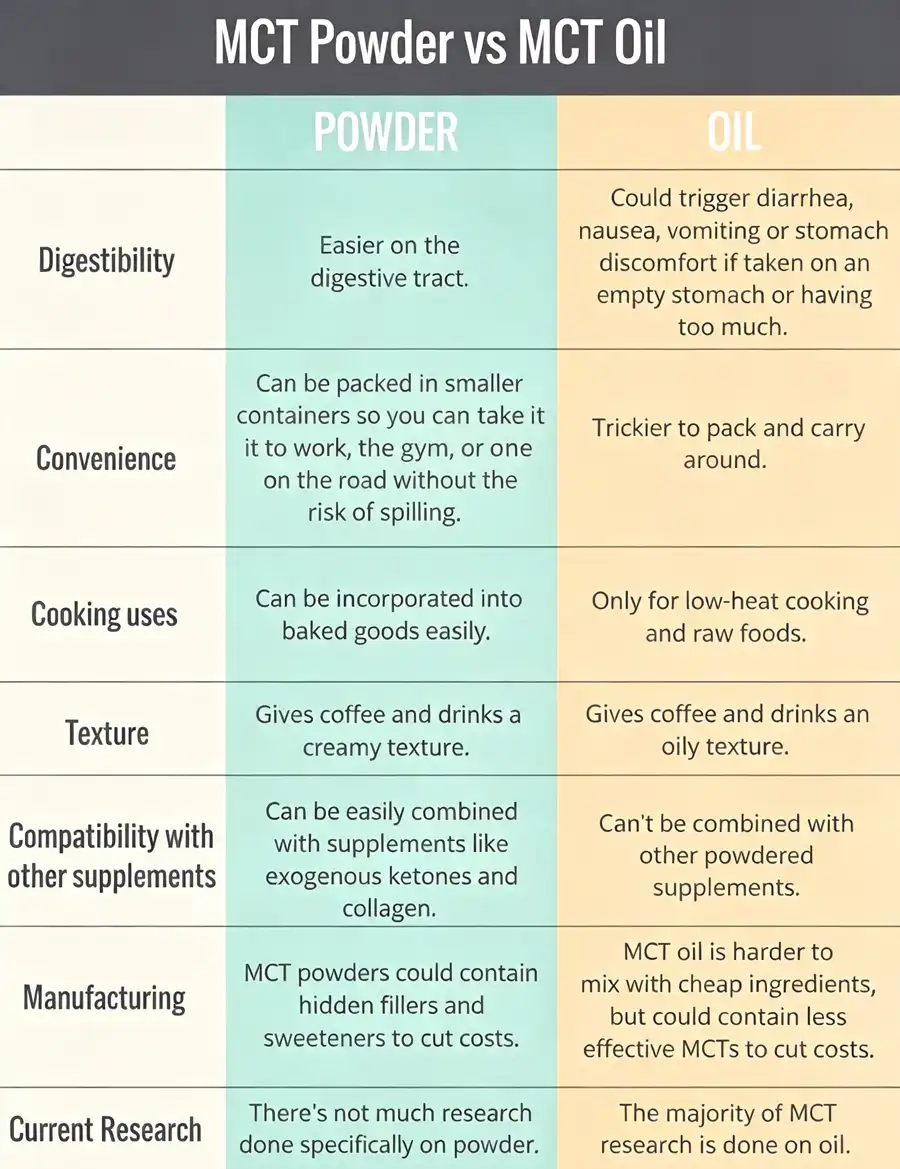
When deciding between MCT powder and MCT oil for functional food development, the answer depends on your specific manufacturing needs. Medium chain triglycerides powder offers superior stability, ease of blending, and versatility in dry formulations, making it ideal for sports nutrition products and solid drink mixes. MCT oil, however, excels in liquid applications where direct bioavailability matters most. For manufacturers prioritizing shelf stability, cold-water solubility, and clean-label formulations, MCT powder typically delivers more practical advantages across diverse product categories.
Understanding MCT
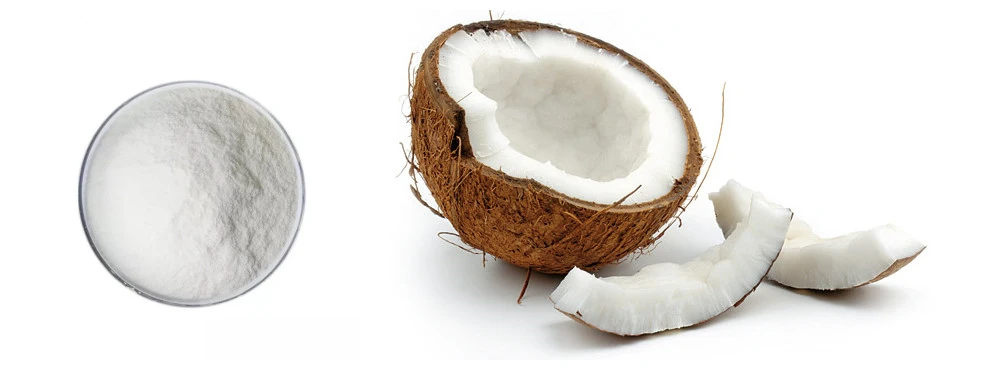
Medium chain triglycerides are a unique group of fatty acids that are mostly found in coconut and palm kernel oils. MCTs are different from long-chain fatty acids because they have 6 to 12 carbon atoms, which lets the body process them in a different way. Caprylic Acid (C8) and Capric Acid (C10) are the two most important MCTs. They don't go through the normal fat-breaking routes. Instead, they go straight to the liver to be turned into energy quickly.
Because they make metabolism work better, MCTs are great for ketogenic diets and sports performance goods. Researchers have found that MCTs increase the production of ketones without needing a complete limit of carbohydrates. This gives formulators a powerful tool for making energy-focused functional foods.
Why MCTs Matter for Product Development?
MCTs are liked by formulators because they provide measurable nutritional benefits while keeping the flavors neutral. MCTs are different from many other functional fats because they work well in both sweet and savory recipes without adding any unwanted flavors or making the texture harder. This flexibility has led to its use in protein shakes, fitness drinks, and nutrition bars for health-conscious customers.
More people want MCT-rich products because of the growing ketogenic and low-carb movement. Athletes looking for long-lasting energy, wellness consumers trying to lose weight, and biohackers trying to improve brain function are all growing market segments. It is important to know how the different ways of delivering MCT affect the performance of a product when making recipes that meet the needs of a wide range of customers.
Key Differences Between MCT Powder and MCT Oil
The main difference between MCT powder and MCT oil is how they are processed and the physical qualities that are produced. MCT oil is made up of pure liquid medium chain triglycerides that are taken from coconut or palm kernels. This focused form is the most powerful, but it can be hard to formulate in some situations.
Spray-drying microencapsulation technology is used to create medium-chain triglyceride powder from liquid MCT oil. During this process, safe carrier structures like acacia gum, sodium caseinate, or tapioca maltodextrin are wrapped around oil droplets. This makes a powder that is easy to work with and keeps the health benefits of MCT oil while also fixing a number of problems in the making process.
Composition and Processing Methods
The C8 and C10 fatty acids are separated from the rest of the coconut oil in MCT oil. High-quality oil goods have these target chemicals present in amounts of 95% or more. The liquid form doesn't need any extra work, so it keeps the pure fatty structure that makes uptake quick.
In addition to basic extraction, there are several more complex steps needed to make medium chain triglycerides powder. In the beginning, manufacturers make an emulsion by mixing MCT oil with hydrocolloid carriers and emulsifiers. This mixture goes through high-pressure nozzles in hot chambers, where the fast evaporation of water makes hollow microcapsules. The wrapping keeps the fatty cores from oxidizing while letting water spread out, which is a big plus for powdered drink mixes.
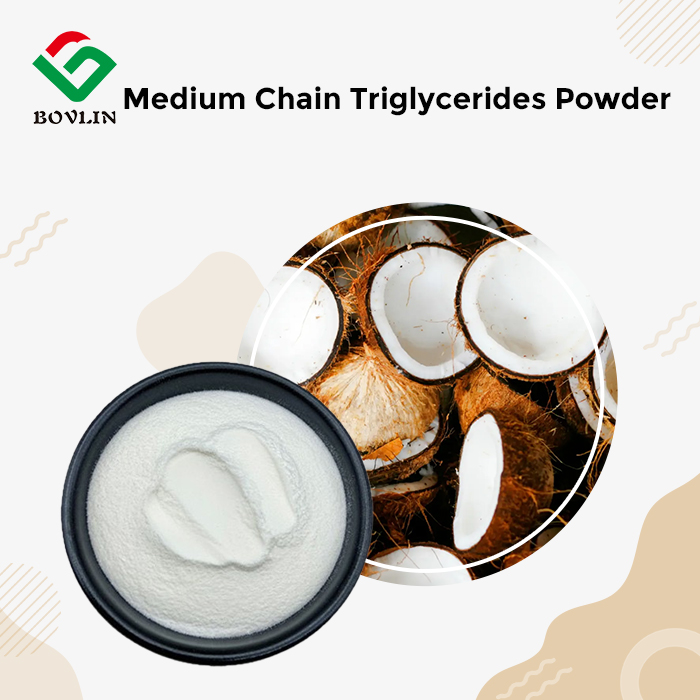
Bolin Biotechnology makes medium-chain triglyceride powder in two concentrations: 50% and 70%. This lets formulators choose the fat density based on taste preferences and health goals. During the spray-drying process, we keep the temperature under tight control to keep sensitive fatty acids from breaking down.
Stability, Shelf Life, and Storage Considerations
Oxidative stability is a key point of difference. Even though MCT oil has saturated fatty acids that make it less likely to go bad than polyunsaturated oils, it can still go bad over time if it is exposed to light, heat, or air. Opened packages may start to smell and taste bad after a few months, especially if they are kept in a warm place.
Microencapsulation greatly increases the shelf life of functional items. The carrier matrix blocks oxygen from getting in, which greatly slows down the oxidation process. Our medium chain triglycerides powder stays good for 24 months if it is kept in the right way, in a cool, dry place out of direct sunlight. This longer-term stability cuts down on waste, makes the supply chain work better, and makes sure that the quality of the product stays the same throughout distribution cycles.
Powder forms are also easier to store. MCT oil needs to be handled carefully so it doesn't leak, and it needs to be shipped at a certain temperature to warm places. Powder forms, on the other hand, can be shipped easily in moisture-resistant containers that don't need any special temperature controls. The containers can be stacked and won't leak, which makes managing the warehouse easier and lowers the cost of goods per kilogram of active ingredient.
Solubility and Formulation Behavior
The most important real difference is probably how well something dissolves in water. Pure MCT oil and water naturally separate, so they need to be emulsified very strongly to make stable liquid formulas. Even with strong emulsifiers, oil droplets may eventually stick together and separate. This is especially likely to happen in ready-to-drink drinks that need to be stored for a long time.
Our medium chain triglycerides powder mixes right away with hot or cold water and doesn't separate. The hydrophilic carrier matrix makes sure that the mixture spreads evenly, so there is no need for extra emulsification systems. This quick solubility speeds up the production of single-serve stick packs, vitamin shakes, and sports recovery drinks, all of which are bought because they are convenient for the customer.
Another benefit of formulation is the ability to mix dry ingredients. Protein preparations, collagen peptides, and other powdered ingredients mix evenly with medium chain triglycerides powder; there is no clumping or oil movement. Because of this similarity, complex nutritional blends can be made quickly and easily with simple ribbon blenders instead of the more complicated tools needed to mix liquid oils.
Application Insights for Functional Food Products
Powder or oil formats should be chosen based on the type of product and how customers usually use it. Each style has its own benefits that depend on the situation.
Optimal Applications for MCT Powder
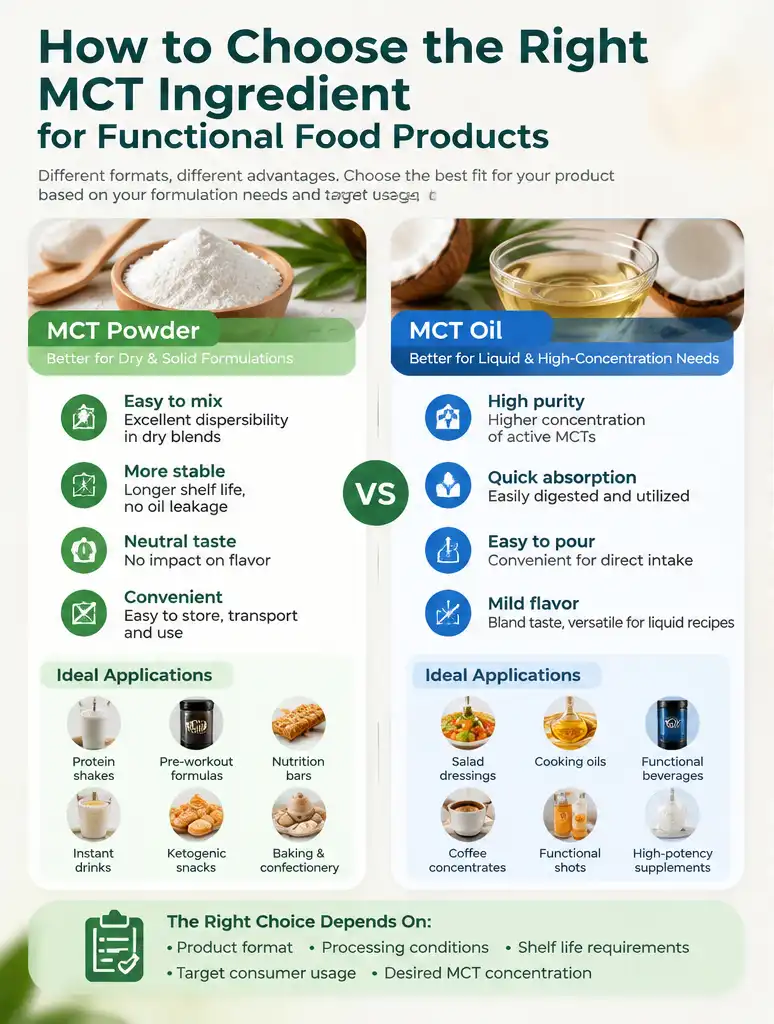
Medium chain triglycerides powder works great for tasks that need to be mixed without water, kept fresh for a longer time, or made easier for customers. Protein shake mixes, pre-workout recipes, and recovery blends are all made in powder form by companies that make sports nutrition. The powder mixes easily with other ingredients, so the regularity from batch to batch is maintained without clogging up the equipment.
Nutrition bar makers like medium chain triglycerides powder because it stops oil from moving around and making bars soft or wrappers that are greasy. When mixed with bar grids, the powder sticks well and gives customers the energy they want. Medium chain triglycerides powder is used by people who make ketogenic snacks to increase the fat level without changing the taste or adding extra water.
Formulations for instant drinks are another great use. Powder's neutral taste and quick dissolution make it a good addition to coffee creamers, meal replacement shakes, and functional drink mixes. People really like single-serve stick pack forms for powder because they are easy to carry around without worrying about leaks.
Medium chain triglycerides powder can also be used successfully in baking and candy making. The enclosed format can handle mild processing temperatures and spreads evenly through batters and doughs. Some formulators switch out some of the normal fats in indulgent products for medium-chain triglyceride powder to make them lower in calories.
Where MCT Oil Performs Best
MCT oil naturally works best in liquid forms. The bland flavor and easy pouring properties of oil make it useful for salad dressings, cooking oils, and other food items. People who want to take supplements directly often choose oil forms because they are easier to measure and absorb quickly.
Some beverage companies are able to successfully add MCT oil to emulsified drinks where there aren't many concerns about separation or where there is access to specialized equipment for homogenization. MCT oil can be added to cold-brew coffee concentrates and functional shots to make them feel richer in the mouth without the need for powder carriers.
Some specialized supplements are only available in pure oil forms and aim for the highest concentration of C8. When carrier ingredients aren't wanted for certain metabolic or cognitive health uses, these concentrated therapeutic products are used instead.
Procurement Considerations for B2B Clients
Many things must be taken into account besides just price comparison when choosing the right sources. Quality control, the dependability of the supply chain, and the ability to provide expert help are what set excellent suppliers apart from average ones.
Certification and Quality Standards
Reputable makers keep a full range of certifications that show they meet international quality standards. As a general rule, you should look for providers who are certified as KOSHER, HALAL, HACCP, or ISO22000. Organic approvals (USDA Organic, EU Organic) are important for brands that want to be seen as having clean labels.
Verification of non-GMO status is becoming more important as customers look more closely at where ingredients come from. Concerns about sustainability may exist with MCTs that come from palm kernels. For brands that care about the environment, products that come from coconut are a better choice. Clear supply chain paperwork helps brands show customers that they are honest about where their products come from.
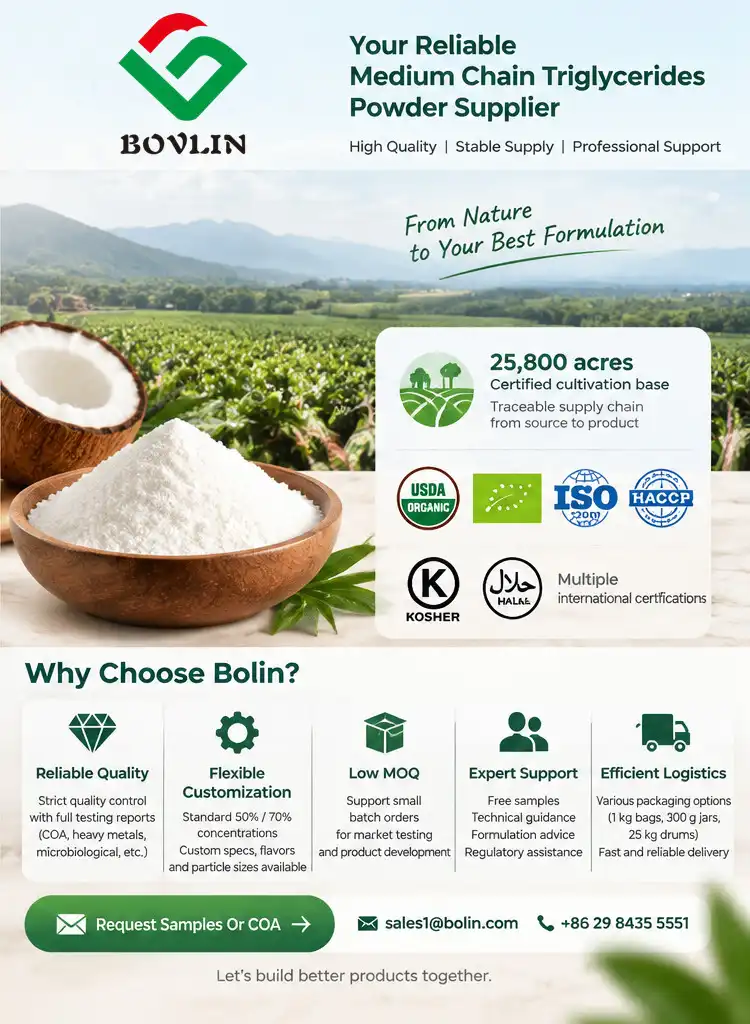
We keep a lot of different certifications at Bolin Biotechnology, such as KOSHER, HACCP, ISO22000, HALAL, EU, and USDA Organic certificates. Our approved growth base of 25,800 acres makes it possible to track products from the source to the finished product. This gives buying teams the proof they need to follow the rules and tell the story of the brand.
Customization and Technical Support
Suppliers can meet individual formulation needs if they have flexible production capabilities. Standard concentrations of medium chain triglycerides powder (50% and 70%) work well for most uses, but custom specifications may make some product ideas work better. You can make your end goods stand out by giving them different flavors, carrier matrices, or particle size distributions.
Different providers have very different minimum order amounts. Large commodity suppliers may ask new brands to make commitments that are too big for them to handle. On the other hand, specialized manufacturers offer MOQs that are easy to meet and help with product development and market testing. Brands that want complete solutions have more options with OEM and private label services.
Transactional suppliers and strategic partners are different when it comes to technical support. Experienced sellers help speed up the development of new products by giving advice on formulation, stable testing, and regulation issues. We offer free samples to test the quality, which lets R&D teams confirm how well the product works before committing to large-scale production.
Packaging and Logistics
The types of packaging you choose should match the size of your business and how you like to handle things. For samples and small production runs, small-batch makers may like 1 kg bags or 300 g jars better. Commercial makers usually find 25 kg drums that are easy to handle and hold a lot of material.
Production doesn't stop when shipping times are reliable. Check the supplier's wait times, minimum reorder amounts, and history of delivering on time. Domestic storage cuts down on shipping times and makes it easier for U.S. makers to fill out import paperwork.
Making the Right Choice—MCT Powder or MCT Oil?
The best format depends on a number of things, such as the product format, the manufacturing capabilities, the preferences of the target market, and the needs of distribution.
Manufacturers of dry mix products, bars, or baked goods will find that medium chain triglycerides powder gives them better results with less work. The powder's stable benefits are especially useful for goods that will be sold in stores for a long time at room temperature.
Even though they can be hard to handle, brands that want to focus on maximum MCT concentration or making liquid products may prefer oil forms. In high-value product categories where pure oil gives marketers an edge, emulsification problems can be solved with specialized tools and recipe know-how.
Budget issues also play a role in choosing a structure. Medium chain triglycerides powder has filler ingredients in it that lower the percentage of pure MCT, but the better stability and processing often make up for the extra cost. Instead of directly comparing the costs of raw ingredients, figure out the effective cost per gram of active MCT.
Early on in the development process, procurement teams should ask for examples of both forms. Bench-scale testing shows the stability, organoleptic, and processing behavior that help make choices about the final shape. Our technical team works with product developers to find the best formulation parameters for each application.
Conclusion
It is important to use both medium-chain triglyceride powder and MCT oil when making useful foods. Medium chain triglycerides powder is very stable and easy to work with, and it can be used for a wide range of things, from sports nutrition to meal replacements and solid drink mixes. The enclosed format solves important problems in production while keeping the health benefits that people want. MCT oil is still useful for certain liquid uses and pure supplement items where the highest quantity is important. Product development teams that do their jobs well compare both formats based on specific performance needs, manufacturing capabilities, and strategies for positioning the product in the market. Working with skilled suppliers who uphold strict quality standards and offer full technical support cuts down on development time and guarantees the long-term success of a product.
FAQ
Can MCT powder and MCT oil be used interchangeably in formulations?
They can't be used instead of each other without making changes to the formulation. Because medium chain triglycerides powder has filler ingredients that change the concentration, you'll have to adjust the doses to get the same MCT amounts. Different types of powder react differently when mixed, which means that processing factors and maybe even other parts of the formula need to be changed.
What concentration of MCT should formulas contain for effective results?
Doses that work usually fall between 5 and 15 grams of pure MCT per dose, but this depends on how the product is marketed and how well the customer can handle it. Products for sports nutrition tend to use higher amounts, while products for general health may use lower amounts. Starting with mild amounts helps people escape times of digestive adjustment.
Does MCT powder dissolve completely without residue?
Bolin Biotechnology's medium chain triglycerides powder is of high quality because it dissolves completely in both hot and cold water, leaving no oil slicks or residue that can be seen. If you use the wrong carriers for inferior goods, they might leave behind grit or need too much stirring. Testing a sample before buying a lot of it makes sure that the breakdown performance meets the needs of production.
Partner with Bolin Biotechnology for Premium MCT Powder Supply
Bolin Biotechnology provides medium-chain triglyceride powder that is of pharmaceutical grade and was designed to meet the needs of challenging functional food uses. Our spray-dried formulas in 50% and 70% concentrations give production teams the stability, solubility, and shelf life benefits they need to make competitive new products. With more than 12 years of experience working with plant extracts and a wide range of certifications, such as KOSHER, HACCP, ISO22000, HALAL, and USDA Organic, we help procurement teams find trusted medium chain triglycerides powder providers who know how to ensure quality and follow the rules. We have adjustable MOQs that work for both new brands and well-known makers. On top of that, we offer full OEM customization services and quick technical support. Email our team at sales1@bovlin.com to get free samples and talk about how our medium chain triglycerides powder options can help you come up with new products.
References
1. Bach AC, Babayan VK. Medium-chain triglycerides: an update. American Journal of Clinical Nutrition. 1982;36(5):950-962.
2. St-Onge MP, Jones PJ. Physiological effects of medium-chain triglycerides: potential agents in the prevention of obesity. Journal of Nutrition. 2002;132(3):329-332.
3. Mumme K, Stonehouse W. Effects of medium-chain triglycerides on weight loss and body composition: a meta-analysis of randomized controlled trials. Journal of the Academy of Nutrition and Dietetics. 2015;115(2):249-263.
4. Clegg ME. Medium-chain triglycerides are advantageous in promoting weight loss, although they are not beneficial to exercise performance. International Journal of Food Sciences and Nutrition. 2010;61(7):653-679.
5. Rego Costa AC, Rosado EL, Soares-Mota M. Influence of the dietary intake of medium-chain triglycerides on body composition, energy expenditure, and satiety: a systematic review. Nutricion Hospitalaria. 2012;27(1):103-108.
6. Sharma A, Gogoi B. Microencapsulation of omega-3 fatty acid-rich blends: characterization and optimization of spray-drying process conditions. Powder Technology. 2020;370:114-123.