_1745226507162.webp)

Natural Astaxanthin Powder in Skincare Formulations
The microalgae Haematococcus pluvialis provides natural astaxanthin powder, which is a big step forward in current skin care formulas. This keto-carotenoid antioxidant is very good at fighting reactive stress, which is what causes people to age faster than they should. Unlike manufactured versions made from petrochemicals, natural astaxanthin powder keeps the better (3S, 3'S) stereoisomer configuration, which makes it more bioavailable and active in living things. Through advanced microencapsulation technology, it changes from a thick oleoresin to a stable, free-flowing powder. This solves important manufacturing problems and makes it essential for cosmetic ingredient makers looking for clean-label ingredients that work.
Understanding Natural Astaxanthin Powder and Its Role in Skincare
Learn about natural astaxanthin powder and how it can help your skin. Cosmetic makers and formulation experts all over the world are interested in this microalgae-derived chemical because it is a powerful antioxidant. Natural astaxanthin is up to 6,000 times more powerful as vitamin C and 550 times more powerful than vitamin E as an antioxidant when it comes to reducing singlet oxygen, which is a main cause of skin damage.
The Science Behind Microalgae-Derived Carotenoids
As a way to protect itself from external stresses, Haematococcus pluvialis stores astaxanthin. It is possible to get an extract that is more than 95% esterified astaxanthin when the plant is picked and treated in a closed photobioreactor system. Because it comes from living things, it has naturally occurring fatty acids that help it penetrate the skin and be taken up by cells. This makes it different from lab-made alternatives that don't have this synergistic matrix.
Anti-Aging Mechanisms at the Cellular Level
Astaxanthin has a special chemical structure that lets it cross cell walls and protect cells from oxidative risks both inside and outside the cell. Clinical studies show that regular direct treatment makes skin more elastic, helps it keep wetness, and reduces the depth of wrinkles. The ingredient does its job by blocking matrix metalloproteinase enzymes that break down collagen and encouraging fibroblast activity to make new collagen at the same time. Because it works on both preventing damage and fixing it, this makes it useful for all-around anti-aging products.
UV Protection and Photoaging Defense
Ultraviolet light causes reactive oxygen species to form, which speed up the aging process. Natural astaxanthin powder is very good at blocking UVB rays and scavenging free radicals before they damage DNA and structure proteins. Formulations with 0.5 to 2% astaxanthin show significant increases in the minimum erythema dose, which means that the skin's natural defenses against UV radiation work longer. Because it protects against UV rays, it is a key ingredient in sunscreens, daily lotions, and treatments for skin damaged by the sun.


Comparing Natural Astaxanthin Powder to Alternative Ingredients in Skincare
When procurement workers look at antioxidant ingredients, they have a lot of choices, and each one has its own pros and cons. Knowing these differences helps you make smart choices that fit with how you want to place your product, how you can make it, and the rules that apply.
Natural Versus Synthetic Astaxanthin
The isomeric design has a big effect on how living things work. Astaxanthin that is made in a lab is a racemic mixture of stereoisomers, and only a small part of it is the natural (3S, 3'S) form. This change in structure means that the antioxidant doesn't work as well and is less bioavailable. People also think that natural sources are better, especially when it comes to high-end skin care products where "clean label" claims are what make people buy. Brands that want to appeal to health-conscious customers can use products that come from microalgae to their advantage.
Powder Format Advantages Over Oil-Based Alternatives
A lot of formulators start by looking at krill oil or astaxanthin oleoresin as possible sources. Even though these have the active ingredient, they are very hard to formulate. People who are allergic to shellfish or other oil-based products should be especially careful. Because of its unique fishy smell, it needs covering agents that make preparation more difficult and may lower stability. These problems don't happen with powder forms, which also have better shelf stability thanks to safe microencapsulation. The fact that it is free-flowing makes exact dosing easier in automatic production settings, which cuts down on waste and makes consistency between batches better.
Cost-Efficiency in Manufacturing Contexts
At first glance, astaxanthin powder bulk types may seem more expensive per kilogram, but a full cost study shows that they are actually more cost-effective. Because they are more concentrated, they need lower inclusion rates than oils that are less concentrated. Processing time and equipment cleaning needs are cut down when dealing is made easier. Longer shelf life cuts down on inventory loses caused by rust. All of these things raise the total cost of ownership, which is especially true for companies that make a lot of products or make a lot of products that use the same ingredients.
Procurement Insights: Sourcing High-Quality Natural Astaxanthin Powder
Building ties with dependable providers is the key to getting the right ingredients. There is a lot of quality difference in the natural astaxanthin powder market, so it's important to do your research to protect your brand's image and make sure you're following the rules.
Essential Certifications and Quality Markers
Teams in charge of buying things should give more weight to sellers who have a lot of different certifications that show they are committed to quality systems. GMP certification proves that production methods that keep things clean and consistent are being followed. Organic approval isn't required by all companies, but brands that care about the earth and don't use GMOs like it. Independent labs do third-party tests to make sure of the product's safety, heavy metal level, and ability to kill microbes. Suppliers should be able to easily give out Certificates of Analysis for each production batch. These should include HPLC test results that show the amount of astaxanthin is within certain levels.
We keep our ISO, GMP, and HACCP certifications up to date so that we can meet foreign standards here at Shaanxi Bolin Biotechnology Co., Ltd. Our quality control procedures include tests at three important times: when we receive the raw materials, when we keep an eye on the work in progress, and when we release the finished product. This three-check method makes sure that every package meets the requirements that were stated.
Bulk Ordering Strategies and Volume Considerations
Minimum order amounts are usually between 25 and 100 kilograms, but well-known sellers can often handle smaller trial orders for developing new recipes. At 500 kilograms, volume savings start to make sense, and there are more price levels after that at one-ton amounts. Strategic procurement teams weigh the costs of moving goods against the benefits of buying in bulk, especially for items that can be stored properly for 24 to 36 months. By using production plans to make predictions, you can find the best time to place your orders to get the best prices and the lowest storage costs.
Regulatory Documentation and Traceability
Full traceability from planting to final packaging makes sure that cosmetics follow the changing rules in different markets. For example, suppliers should give full proof of their products' allergen status, country-of-origin certificates, and stable data to back up promises about shelf life. Regulatory support files with safety ratings and toxicological data make it easier to register a product, especially when going into European markets that need thorough ingredient dossiers because of REACH rules.
Practical Guidelines for Integrating Natural Astaxanthin Powder into Skincare Formulations
To formulate something well, you need to know how the basic features affect its stability, how it tastes, and how bioavailable it is. These technical factors decide whether goods provide the benefits promised for the whole time they are on the shelf.
Optimal Concentration Ranges for Efficacy
Based on product shape and promises, clinical study shows that topical concentrations of natural astaxanthin powder between 0.1% and 2.0% work well. Lightweight serums that fight against free radicals usually have 0.5 to 1.0% of them, which gives noticeable benefits without changing the structure. Richer anti-aging creams may have up to 2.0% of this ingredient, which is used because of its natural red-purple color to show how strong it is. Formulators should allow for a small amount of extra—about 5 to 10 percent—to account for the product's slow breakdown over its lifetime.
Solubility Solutions and Dispersion Techniques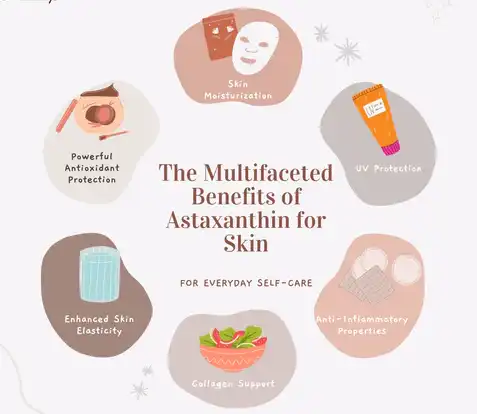
Because astaxanthin is lipophilic, it needs to be added to different base systems with care. The powder is easy to work with in dry formulas and oil phases of emulsions because it dissolves quickly in oils. Specialized types that dissolve in cold water and use nanoemulsion technology are good for water-based products. One other way is to mix normal powder with caprylic/capric triglyceride or squalane first, before emulsifying. Homogenization at 5,000 to 8,000 RPM for 10 to 15 minutes makes sure that particles are spread out evenly, which stops finished goods from having different colors.
Stability Preservation Through Formulation Design
Astaxanthin is an antioxidant, but its conjugated double bond structure also makes it vulnerable to light, heat, and oxidation. Complementary antioxidants, such as tocopherol or ascorbyl palmitate, should be added to formulas so that damaged astaxanthin molecules can be repaired. Photodegradation can be stopped by opaque or amber packing, and oxygen contact can be kept to a minimum by flushing with nitrogen during filling. Stability testing at high temperatures (40°C for three months) suggests how well something will work in the real world and helps prove promises. Products that keep 90% of their original strength show good stable ratings.
Compatibility with Common Cosmetic Actives
Pure astaxanthin powder mixes well with hyaluronic acid, peptides, and niacinamide; they don't work against each other. When vitamin C is added, the pH needs to be carefully controlled because ascorbic acid's acidic surroundings may speed up the breakdown of astaxanthin. Retinol relationships work especially well, and astaxanthin's antioxidant qualities help reduce irritation caused by retinoid while also improving collagen production. When formulating multi-active goods, people who make them should do compatibility studies that look at color stability, pH shift, and active retention over at least six months.
Why Choose Natural Astaxanthin Powder: Long-Term Benefits and Market Advantages
The global makeup market rewards brands more and more that show a real commitment to natural products that is backed up by science. This trend opens up chances for early users who market their goods with believable stories about how well they work.
Clean Beauty Movement and Consumer Expectations
Today's smart shoppers look over ingredient lists with a level of intelligence that has never been seen before. The fact that natural astaxanthin powder comes from microalgae fits nicely with the values that millennials and Gen Zers use to decide what to buy. Along with efficiency, these customers value longevity, traceability, and environmental duty. Products that contain natural astaxanthin do better in the market because they can be used to tell stories that combine marine biology, environmentally friendly farming methods, and cutting edge skin care science into interesting stories that make people feel something while also meeting their rational needs for effectiveness.
Competitive Differentiation in Saturated Markets
There are so many vitamin C serums and retinol creams on the market that they have become commodities, and price competition is eating away at profit margins. Natural astaxanthin powder gives brands a unique situation that allows them to charge higher prices. The ingredient is fairly new to popular skin care, which gives brands that come out with new products before the market becomes saturated an edge. Formulators can create unique color signatures, ranging from soft pink tones to bright magenta tones, that stand out on busy store shelves and show where the product comes from naturally through color cues related to carotenoids.
Research Pipeline and Future Applications
Ongoing clinical study keeps finding new uses for these substances that go beyond traditional anti-aging treatments. Researchers looking into how astaxanthin helps the health of the skin bacteria have found some interesting prebiotic effects that could lead to new probiotic skin care products. Oral-external combination treatments have better results when supplements are used along with topical applications. This means that beauty-from-within product ecosystems could become more common. The ingredient has a proven safety rating and a lot of toxicological data, which makes it easier to come up with new products quickly and with few legal hurdles.
Partnership Opportunities with Certified Suppliers
When you work with sellers who have technical know-how, your relationships with them change into strategic partnerships. Access to formulation advice, help with stable testing, and data to back up claims speeds up the product creation process. Co-branding chances use supplier certifications and quality records to boost brand authority. This is especially important for new brands that don't have a big footprint in the market yet. Technical classes and training programs keep formulation teams up to date on the latest best practices, solving methods, and new uses that give them a competitive edge.
Shaanxi Bolin Biotechnology Co., Ltd. offers full R&D help that goes beyond just providing raw materials. During the whole development process, our expert team works together with clients to offer formulation advice, help with stability testing, and help with paperwork for regulatory applications. This consultative method helps our partners get the best results and speeds up the time it takes for new goods to hit the market.

Conclusion
Natural astaxanthin powder meets the needs of people who want to use real natural ingredients and scientists who want to prove that these ingredients work. The antioxidant that comes from microalgae has measurable anti-aging effects and meets the clean label standards that drive current consumer choices. People who work in procurement and formulation and know about sourcing issues, formulation parameters, and market positioning possibilities will be able to use this powerful ingredient to make goods that stand out. Natural astaxanthin powder is a key ingredient for forward-thinking skincare brands that want to offer real innovation because of its strong clinical proof, adaptability in manufacturing, and compelling sustainability stories.
FAQs
What distinguishes natural from synthetic astaxanthin powder in skincare?
The main change is in the source and stereochemistry. The natural astaxanthin powder from Haematococcus pluvialis has more than 95% of the (3S, 3'S) isomer, which is best absorbed by human bodies. Synthetic forms made from petrochemicals have mixed isomers that are less bioavailable and effective. Natural versions have helpful extras like fatty acids that help them get deeper into the skin, but manufactured versions don't have these helpful chemicals.
Are there safety concerns or side effects when formulating with this ingredient?
Naturally occurring astaxanthin powder has great safety ratings and a lot of chemical evidence to back them up. When made from microalgae instead of sea crabs, it doesn't pose any allergen risks. As long as the concentrations are within the suggested levels, the right formulation has no negative affects. Suppliers should give you safety data sheets and allergy statements that prove the plants are grown in photobioreactors that are controlled and don't pose any risks of cross-contamination.
How can procurement teams verify supplier authenticity and product quality?
Legitimate providers are happy to show all of their certificates, such as GMP, ISO, and third-party testing proof. Ask for Certificates of Analysis that are special to each batch and show the results of the HPLC test, heavy metal screening, and microbe testing. Authentic natural astaxanthin powder looks dark red to violet rather than bright orange, which could mean that it has been oxidized or that it is not very concentrated. Build ties with providers who offer facility checks and clear records of the growing and extraction processes.
Partner with a Trusted Natural Astaxanthin Powder Manufacturer
Bolin Biotechnology wants people who work in purchasing and product development to learn more about how our high-quality natural astaxanthin powder can change the way you make skin care products. We have been providing plant extracts that have been scientifically proven to work in nutraceutical, pharmaceutical, and cosmetic uses since 2012. Our astaxanthin powder from microalgae goes through strict quality control, stays at stable test levels, and comes with all the legal paperwork you need. We have flexible minimum order amounts, low bulk prices, and expert support that helps you make great products. Our world shipping network makes sure that clients in the US and other countries get their orders on time. Sample orders are handled first, which lets your R&D teams check the quality before committing to large production runs. You can talk to our team at sales1@bovlin.com about your unique formulation needs and find out why top brands choose Bolin Biotechnology as their natural astaxanthin powder provider.
References
Capelli, B., Bagchi, D., & Cysewski, G.R. (2013). Synthetic astaxanthin is significantly inferior to algal-based astaxanthin as an antioxidant and may not be suitable as a human nutraceutional supplement. Nutrafoods, 12(4), 145-152.
Tominaga, K., Hongo, N., Karato, M., & Yamashita, E. (2012). Cosmetic benefits of astaxanthin on humans subjects. Acta Biochimica Polonica, 59(1), 43-47.
Davinelli, S., Nielsen, M.E., & Scapagnini, G. (2018). Astaxanthin in skin health, repair, and disease: A comprehensive review. Nutrients, 10(4), 522-538.
Dose, J., Matsugo, S., Yokokawa, H., Koshida, Y., Okazaki, S., Seidel, U., Eggersdorfer, M., Rimbach, G., & Esatbeyoglu, T. (2016). Free radical scavenging and cellular antioxidant properties of astaxanthin. International Journal of Molecular Sciences, 17(1), 103.
Ng, Q.X., De Deyn, L.L.Z.J., Loke, W., Foo, N.X., Chan, H.W., & Yeo, W.S. (2020). Effects of astaxanthin supplementation on skin health: A systematic review of clinical studies. Journal of Dietary Supplements, 18(2), 169-182.
Yuan, J.P., Bird, K., & Wang, J.H. (2011). Potential health-promoting effects of astaxanthin: A high-value carotenoid mostly from microalgae. Molecular Nutrition & Food Research, 55(1), 150-165.