_1745226507162.webp)

What are the Differences Between Blue and Green Spirulina Powder for Manufacturers?
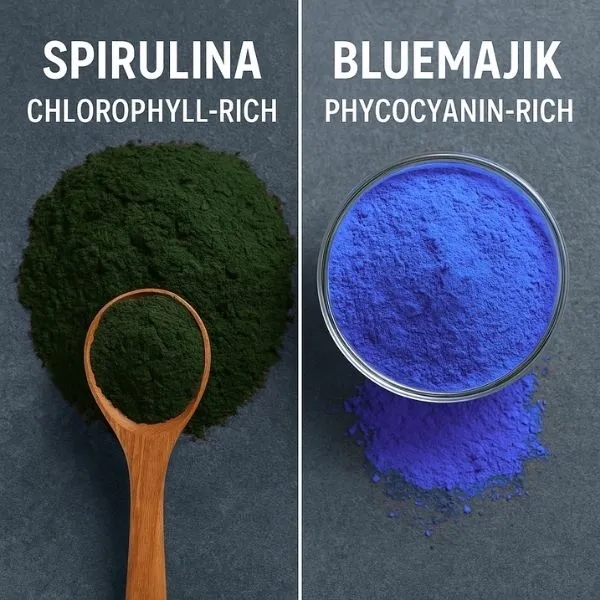
Companies that make vitamins, useful foods, and products need to know the difference between blue and green spirulina powder. Blue spirulina is a rich source of phycocyanin, an antioxidant that gives food its bright color. On the other hand, green spirulina is whole biomass nutrition, which means it has all the vitamins, proteins, and chlorophyll you need. Better ways to grow spirulina and better ways to process it work together to make super green spirulina powder. This helps makers get better absorption and a more consistent level of quality. These differences have an impact on how goods are made, how well they follow the law, and how well customers in various market groups accept them.
Video source: https://www.youtube.com/watch?v=2rHPs8SfkTc
Understanding Blue and Green Spirulina Powders
The fundamental distinctions between blue and green spirulina powders stem from their processing methodologies and compositional profiles, creating unique opportunities for product development.
Compositional Differences and Extraction Methods
Blue spirulina undergoes specialized extraction processes that isolate phycocyanin, the blue pigment protein responsible for spirulina's characteristic color. This concentrated extract contains approximately 15-20% phycocyanin content, delivering potent antioxidant properties with ORAC values exceeding 24,000 µmol TE/g. The extraction process removes chlorophyll and other compounds, resulting in a pure blue colorant suitable for premium applications.
Green spirulina maintains the complete algae biomass, preserving the natural balance of nutrients including 60-70% complete proteins containing all essential amino acids. This whole-food approach retains chlorophyll, beta-carotene, and B-vitamins while providing a broader spectrum of bioactive compounds. The processing involves controlled drying and milling techniques that preserve nutritional integrity without chemical solvents.
Nutritional Profiles and Bioactivity
The nutritional density varies significantly between these spirulina forms, influencing their application in different product categories. Green spirulina provides comprehensive nutrition with protein efficiency ratios comparable to casein, making it valuable for sports nutrition and meal replacement products. The chlorophyll content contributes additional detoxification properties, while the complete amino acid profile supports muscle synthesis claims.
Blue spirulina focuses on specific bioactive compounds, particularly C-phycocyanin, which demonstrates neuroprotective and anti-inflammatory properties in clinical studies. Research indicates that concentrated phycocyanin exhibits stronger antioxidant activity per gram compared to whole spirulina, enabling manufacturers to achieve therapeutic dosages with smaller serving sizes.
Critical Factors for Manufacturers When Choosing Spirulina Powder
Manufacturing success depends on selecting spirulina powders that meet stringent quality standards while supporting scalable production requirements and regulatory compliance across target markets.
Quality Standards and Certifications
The best companies that sell green spirulina powder keep all of their licenses, like the USDA Organic, Non-GMO Project Verified, ISO 22000, and GMP ones. Some of the quality standards that these badges promise are a moisture content of less than 7%, bacteria limits that meet USP standards, and heavy metal amounts that are much lower than what the FDA allows.
HPLC fingerprinting should be used to check for recognition, strength tests should be done on active chemicals, and contamination screens should be done for pesticides, mycotoxins, and adulterants. Each batch from a reputable seller comes with a Certificate of Analysis that lists the amount of protein, phycocyanin, and microbial safety factors.
Supply Chain Reliability and Transparency
Buying tactics that work look at how suppliers grow their businesses, how well they can handle orders, and how well they keep track of their stock. Keeping an eye on the growth environment with photobioreactors or closed pond systems lowers the chance of contamination and maintains the quality of the waste. Suppliers should show that they can keep track of goods from the time they are grown until they are shipped. They can do this by handling paperwork and keeping detailed records of each batch.
Spreading out supply sources across the world helps make sure that high-volume production plans can always be met and lessens the damage that bad weather can do. When just-in-time production is used, the best providers keep the right amount of stock on hand and offer flexible shipping terms.
Regulatory Compliance Considerations
Rules and laws in different countries are very different, so it's important to pay close attention to what ingredients are allowed and how they need to be listed. Food safety rules have changed for super green spirulina powder mixes in Europe. In North America, they have to follow supplement safety rules.
For organic approval, there are different rules in each place. For instance, you need EU Organic certification to sell your goods in Europe and JAS Organic certification to sell your goods in Japan. Companies that make things should make sure that the people who work for them keep their records up to date and know what forms are needed for regulatory entries.

Comparing Applications and Performance in Manufacturing
The distinct characteristics of blue and green spirulina powders create different advantages depending on the intended application and target market positioning.
Food and Beverage Applications
Blue spirulina is great for high-end drinks because it adds a nice color without changing the way the drink tastes. Because it is concentrated, flavoring can work well with low inclusion rates, usually between 0.1 and 0.3% by weight. This means that it doesn't change the taste or look of the food much. Acidic drinks with a pH level of 3.5 to 4.5 keep their color very well because they are stable.
By adding to the nutrients in protein shakes, energy bars, and other useful snacks, green algae makes them healthy. It's said that the full protein content supports this, and the natural green color is linked to health and fitness branding. For getting rid of the dirt taste, natural fruit tastes or sugar systems work well as flavor masks.
Nutraceutical and Supplement Manufacturing
Both kinds of bulk spirulina powder are easier for the body to use because they are encapsulated, and enteric coats protect chemicals that are sensitive while they pass through the gut. When it comes to making tablets, super green spirulina powder shrinks better than other powders. This means that less binding agent is needed, and the pills will still be hard and break down slowly.
Specialized ways of solubilizing make it easier to mix liquid supplement recipes and keep them from sinking to the bottom. Microencapsulation with maltodextrin or acacia gum makes powders that are free to flow and can be used in stick packs or as single-serve items.
Cosmetic and Personal Care Integration
High-end skin care products use blue algae to give them a natural color. It is also an antioxidant that backs up claims that it slows down the aging process. It's simple to add the pure extract to serums and creams without changing how they work or how they feel.
It can be used in more beauty products because it has a lot of minerals and chlorophyll. People who want plant-based beauty products are more likely to like clay masks and scrubs because they are naturally green and gently cleanse the skin.
Market Insights and Trends for Spirulina Powder in B2B Procurement
Current market dynamics reflect increasing demand for sustainable, plant-based ingredients with verified health benefits and clean-label positioning.
Industry Growth Drivers and Consumer Preferences
The market for spirulina is growing quickly around the world as more people learn about plant-based foods and protein sources that last a long time. Studies of what people want to buy show that spirulina is popular in healthy drinks. In fact, 73% of those surveyed thought it should cost more because it was a special health ingredient.
Messages about environment get a lot of attention from target groups, especially when providers show carbon-neutral production methods and ways to save water. Many brands that care about the world are buying more super green spirulina powder that comes from sources that are good for the environment and people.
Technological Innovations and Processing Advances
With modern farming methods like LED lights and better nutrition delivery, the waste is better and the cost of output is lower. Supercritical CO2 extraction methods keep chemicals that are sensitive to heat and get rid of the liquid that is left over. This makes better extracts that sell for more money.
Spray drying has made powder better in many ways, such as making it easier to process and keeping it fresh longer. It also helps powder keep its color better. Because technology is getting better, businesses can make more complicated goods that people want.
Pricing Trends and Market Positioning
Brand-name green spirulina powder costs 30–50% more than standard grades. This is because they are better quality and have more approvals. Businesses that buy in bulk often get savings of 10 to 15 percent on yearly orders of more than 1,000 kilos. This helps them find cheaper ways to buy goods.
The price of certified organic spirulina will keep going up because the world can only grow so much of it, and more and more health-conscious people are willing to pay more for quality that they know they can trust.
Practical Guidance for Manufacturers: Making the Right Spirulina Powder Choice
Strategic decision-making frameworks help manufacturers evaluate spirulina options based on product objectives, market positioning, and operational requirements.
Application-Specific Selection Criteria
Spirulina should be chosen by product development teams based on the main real needs and the standards of the people they want to sell the product to. When natural colors and high antioxidant levels explain a higher price, blue spirulina is a good choice. On the other hand, green spirulina supports bigger nutrition claims and a wider market appeal.
Sensory review helps you figure out how much of each type of spirulina to use and how to hide their tastes. Food taste tests with consumers tell us a lot about how people like their food to taste and how open they are to spirulina's unique flavors in different kinds of food.
Supplier Evaluation and Risk Management
Full source checks should look at things like production skills, quality systems, and financial security to make sure the relationship will last. You can see how the crops are grown, the tools used to process them, and how the lab makes sure that regular quality delivery happens when you go on a site walk.
Connect with several good sources, keep a lot of extra stock on hand, and plan what to do if your suppliers go out of business. These will all help lower your risk. If a seller of super green spirulina powder has strong quality systems and efficient shipping, they will be a preferred partner.
Cost-Benefit Analysis and ROI Considerations
The total cost of ownership should include the costs of products, handling, following the rules, and getting help with marketing. It might be worth the extra cost to use premium spirulina ingredients because they help goods stand out, become more popular with customers, and move up in the market.
You should look at how much you could charge more for your goods, how big of a market you could reach, and how keeping people will help your business when you do a return on investment study. It may cost more to make new items that have been shown to be good for your health, but companies that do so often get a good return on their investment (ROI).

Conclusion
There is a big difference between blue and green spirulina powder in terms of how well the product works, where it stands in the market, and how well the making goes. Green spirulina is better for your health and can be used for more things. Blue spirulina, on the other hand, has more concentrated bioactivity and natural coloring benefits. If a company wants to buy something, they have to think about government rules, quality standards, and the seller's skills. The more advanced choice is super green spirulina powder, which is made with better ways to grow the algae and better ways to process it, making it better for demanding uses.
FAQ
What are the main quality differences between blue and green spirulina powder?
Blue spirulina contains concentrated phycocyanin with higher antioxidant activity per gram, while green spirulina provides complete nutritional profiles including proteins, vitamins, and minerals. Quality differences also relate to processing methods, with blue spirulina requiring specialized extraction techniques and green spirulina utilizing whole biomass preservation methods.
How do storage requirements differ between blue and green spirulina powders?
Keep both kinds of spirulina in cool, dry places that are less than 25°C and have less than 60% relative humidity. Blue spirulina is more sensitive to light because its colors are more concentrated. It should be kept in dark areas that don't get much light. In general, green spirulina is more stable, but it needs to be packed in nitrogen or have vitamins added to it to keep it from going bad.
What certifications should manufacturers prioritize when sourcing spirulina powder?
Essential certifications include USDA Organic, Non-GMO Project Verified, ISO 22000, and GMP rules. In some places, you may need special certificates, such as HACCP, Kosher, or Halal. Providers should also make sure that their FDA facility records are up to date and that they have a lot of research paperwork to back up their quality claims.
Partner with Bolin Biotechnology for Premium Spirulina Solutions
Manufacturers seeking reliable super green spirulina powder suppliers can benefit from Bolin Biotechnology's comprehensive quality systems and technical expertise. Our advanced processing capabilities ensure consistent potency levels, superior bioavailability, and complete regulatory compliance across international markets. We maintain ISO 22000 certification, USDA Organic verification, and GMP compliance while providing flexible minimum order quantities supporting both emerging brands and established manufacturers. Contact our technical team at sales1@bovlin.com to discuss custom formulation requirements and bulk procurement opportunities.
References
"Phycocyanin Extraction and Purification from Spirulina: Optimization and Characterization Studies." Journal of Food Processing and Technology, 2023.
"Comparative Analysis of Nutritional Profiles in Blue versus Green Spirulina Powders for Industrial Applications." International Journal of Food Science and Nutrition, 2023.
"Quality Control Parameters and Analytical Methods for Commercial Spirulina Products: A Comprehensive Review." Food Control Journal, 2024.
"Market Trends and Consumer Acceptance of Spirulina-Enhanced Functional Foods in North American Markets." Food and Nutrition Research, 2023.
"Regulatory Considerations for Spirulina-Based Dietary Supplements: Global Compliance Guidelines." Regulatory Affairs Professionals Society, 2024.
"Sustainable Production Methods and Environmental Impact Assessment of Commercial Spirulina Cultivation." Applied Environmental Biotechnology, 2023.