What Quality Standards Should Purple Yam Powder Meet for Food Manufacturing?
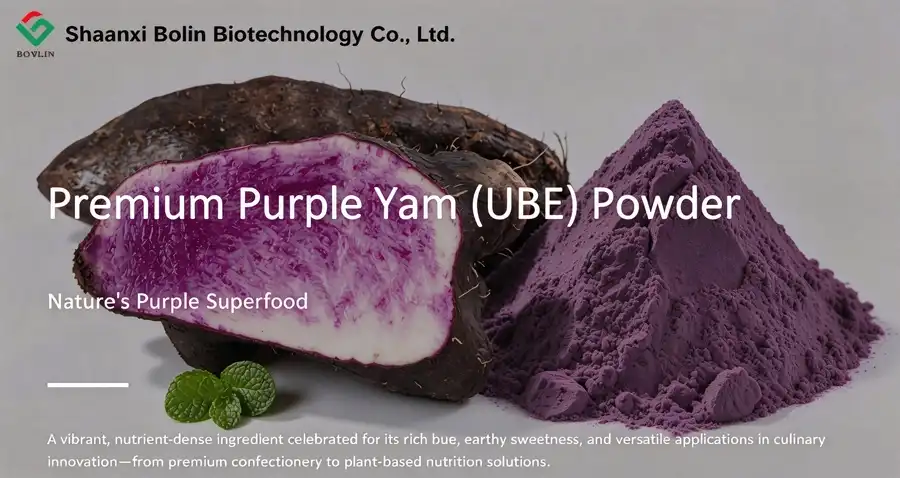
A food-grade purple yam powder should clear seven checkpoints before it enters a formula: a declared botanical source, a measured color value, controlled moisture and ash, a stated particle size, heavy metal limits, microbiological limits, and records proving each lot met them. On a working specification sheet that reads as Dioscorea alata as the source, loss on drying and ash each at or below 8 g/100 g, at least 95% passing an 80-mesh screen, lead and arsenic at or below 1 mg/kg, cadmium at or below 0.05 mg/kg, mercury at or below 0.03 mg/kg, and a total plate count under 10,000 cfu/g with no E. coli or Salmonella. I check every sample against those numbers before we discuss anything else.
Understanding Quality Requirements for Purple Yam Powder
Identity and Botanical Source
We don’t use paper files to keep track of things anymore; we utilize shared systems. Buyers now demand a lot code that can trace a drum back to a harvest date, a test record and a drying batch. Some producers are experimenting with distributed ledger records for that chain. That makes it tougher to counterfeit a license. In the economic sector, a supplier who can swiftly respond to “which field and drying run made this drum” is already ahead of the game, without even using any new technology. A food corporation has to be able to respond rapidly in a recall drill or a retail inspection when time is of the essence. I suppose supplier surveys will include a score for trackability of the items, as well as pricing and wait time.
Regulatory Benchmarks That Shape a Specification
In North America, US rules are the most important to start with. Purple yam powder is not an FD&C dye because it is added to recipes as a food item that adds color, not as an allowed color addition. In January 2025, the FDA said that Red No. 3 could not be used in food. This made the difference in business more important. Food safety dates were set for January 2027. Brands want proof that a natural violet blend is really natural now that they are moving away from synthetic blends. In the EU, the thing has to meet certain standards and be tested for toxins. A plant that is approved by both ISO 22000 and HACCP has a well-thought-out plan to keep food safe. If a seller sends all the necessary information for the FSMA Foreign Supplier Verification Program, the buyer only has to do a little work. This saves the buyer weeks of work.
Certifications That Open Retail Channels
Government pressure on phony colors has forced some merchants to modify the language used in a standard. Now that Red No. 3 is gone from the U.S. food supply, bright fake mix companies must turn to some other component that can withstand processing and yet seem natural. “There is information now on specification sheets about how much anthocyanin is in there, how to cushion and how stable the product is at high temperatures. Reformulation will be done by provider with application notes and confirmation of analysis. I observe the similar shift in EU, SE Asia. “Clean label” claims dictate where a product is placed on the retail shelf. It’s simple to understand what this implies in real life. Along with information on metals and moisture, the standard also includes information about color stability.
Critical Quality Dimensions for Food Manufacturing Use
Four checks on a production line let us know if a powder will work or not. Each one fails in a different way, and they should all be in the purchase contract instead of the sales brochure.
Color Value and Batch-to-Batch Consistency
The amount of powder doesn't tell you anything about how dark it is. Ask for the color value to be measured on a spectrophotometer and given as Lab readings or as a color equal compared to a standard that has been kept. If the two numbers are different, "99% pure" doesn't mean much. On the shelf, a retail bag might look like a different item. Because color changes with variety, when it was picked, and the temperature at which it was dried, a supplier with more control over those things has a smaller range. You should get the color reading of both the lot you're buying and two from the past. Then you should put them next to each other. That number is only for sales if the supplier can't give it to you. The paper isn't very good.
Moisture, Ash, and Particle Size
There are limits on how much ash and water can be in the formula. When you scale up a recipe, the water balance won't change if the loss on drying is at or below 8 g/100 g. This means that the powder won't stick together in the bag. If the ash level is 8 grams per 100 grams or less, it means that there is too much mineral grit or soil that was not washed enough. Particle size affects how something feels in the mouth. It's important that an 80-mesh screen lets at least 95% of the matter through. This makes it easy for cold drinks to mix and keeps plant-based shakes and bubble tea from getting sticky. This kind of powder tastes grainy and costs less per kilogram, but it takes longer to crumble. In a ready-to-drink line, that gap makes customers unhappy instead of meeting requirements. That's why the mesh number should be written into the contract.
Heavy Metals and Microbiological Limits
Root crops absorb what sits in the soil, so metal testing is not optional. A defensible specification sets lead and arsenic at or below 1 mg/kg, cadmium at or below 0.05 mg/kg, and mercury at or below 0.03 mg/kg. Microbiology follows the same logic. A total plate count under 10,000 cfu/g, with E. coli and Salmonella absent, covers the baseline for a dry ingredient used in no-cook applications such as ice cream bases and smoothie blends. Two processing controls decide whether a lot passes:
- Heat treatment method. Hot-air drying lowers moisture and microbial load together, but the temperature profile has to be validated for each batch. Buyers should ask whether the plant uses steam, dry heat, or irradiation, and rule out ethylene oxide and irradiation entirely when the label claims forbid them.
- Environmental control after drying. Milling and packing rooms need filtered air, positive pressure, and controlled humidity, because a clean dried powder picks up moisture and airborne organisms fast in an open room. A plant that mills and packs in one unsealed space will show more lot-to-lot variation in plate count than one with a separated packing area.
Those two controls determine whether a certificate reflects the process or just one lucky sample.
Comparative Analysis for Procurement Decision-Making
You can only use these sheets if you compare them. That's true for all types of farming, all plant species, and all language levels.
Organic vs. Conventional Purple Yam Powder
There are fewer places to get organic food, and it costs more. You give up a claim that really sells and a supply chain that is quicker and easier to check. Organic licenses also limit how farmers can deal with pests and rich soil, which can change the number of crops grown and, in some seasons, the intensity of the colors, which matters for purple yam powder. The certificate could make the difference between being accepted and not being accepted for a brand that sells through a chain of natural grocery stores. There is a food service account that sells ube lattes based on speed and taste. Most of the time, regular powder with a clean microbiology record wins. They should pick the grade first, then the sales channel. If they do it the other way around, they'll have to pay for a license that no one in the sales chain asked for.
Purple Yam, Taro, and Purple Sweet Potato Compared
These three powders look the same in a jar, but they mix in a mixer in different ways. Ube has a warm, nutty, vanilla-like note, and dairy has a deep violet that looks blue-purple. The color of the taro is a lighter lavender-gray, and the taste is milder and more starchy. When you use purple sweet potatoes, the violet color is stronger. It tastes sweet and earthy, with no vanilla note. Also, the way they handle heat is different. It is better for ube's color to stay the same after being baked than for most other types of purple sweet potatoes, where the color turns gray at 180°C. Formulators who are making a made good should first try both of them. Even if it costs less per kilo, making a full run of crumb mauve might cost more than violet.
| Dimension | Ube powder(Purple Yam Powder) | Taro Powder | Purple Sweet Potato Powder |
|---|---|---|---|
| Appearance | Purple | Off white | Light purple |
| Mixing behavior | Behaves differently in a mixer | Behaves differently in a mixer | Behaves differently in a mixer |
| Flavor profile | Warm, nutty, vanilla-like note | Milder, more starchy | Sweet and earthy, no vanilla note |
| Color expression | Deep violet, looks blue-purple; deep violet in dairy | Lighter lavender-gray | Stronger violet color |
| Heat stability (color after baking) | Color holds up better after baking | — | Turns gray at 180°C (most purple sweet potato types) |
| Formulation advice | Formulators should try both first | Formulators should try both first | — |
Grading Claims and What "Grade A" Should Mean
"Grade A" is not a government word; it's a business word. As long as the seller says it means something, that something has to be written down. Putting the grade label next to limits that can be measured is helpful. These limits could be the source species, the color value range, the mesh pass rate, the moisture and ash ceilings, the metal limits, or the microbiological results. When someone says "99% pure" and then stops, you should ask what the last 1% is made of and what test was used to find it. A good Grade A sheet reads more like a study than a brochure. People who want to buy something should put the specification sheets next to each other and look to see if all three sellers did the same things. The cheapest quote usually means a shorter list of tests, not a better way to do things.
How to Assess and Ensure Quality Compliance in Procurement
Verification is more than just a duty; it's a process. At each step, the chance that a production run won't work out goes down. This is done before any money changes hands.
Building a Testing Protocol Before You Buy
Write the test list inside the offer to buy. There should be lot numbers, the name of the lab, and the date of the test for the color value, moisture, ash, mesh pass rate, heavy metals, and bacteria tests, and this documentation is just as important for purple yam powder as for any other ingredient. Something made by someone inside the company isn't as strong as proof from someone outside the company. People who buy things in stores will see an SGS report or something similar when they look at your source file. It's not about how pure something is; what matters is how much anthocyanin is in an HPLC run. People who don't do this step usually find out about it when they are being checked out and the store asks for proof of a color claim. Every lot goes through release tests, and tests are also done every three months or when the source changes.
Verifying Heat and Acid Performance with Samples
A license doesn't show what a powder does when it's 180°C or pH 3.5. There is only one way to do it: a bench hearing. Need a real test? Get a free sample and bake it, heat it up, and let it sit in an acidic drink for 24 hours. Below pH 4, anthocyanins turn pink. Above pH 4, they turn blue-green. So, tests for a cheese base and tests for a lemon drink are different. The dose is another thing that can change. By weight, most recipes have between 1% and 3%, and drinks have between 0.5% and 1%. This is because too much powder makes things dry and dulls the color. Formulators don't have to guess as much when they work with a supplier that helps with trials during application.
Auditing the Supplier, Packaging, and Storage Chain
Ask for a video tour of the plant if you can't go there in person. You need to get the mill, the warehouse, the drying room, and the packing line all at the same time. After that, check out the box. A 1,000 kg tote is better than a 25 kg fiber drum with a foil cover for longer runs because it keeps out light and water. Each type of file should have a lot code that can be used to find a batch that was dried. A lot of the time, simple rules about storage are broken. Keep the powder below 25°C, out of direct UV light, and under a lid when not in use. In that case, a shelf life of 12 to 24 months is fine. A box may lose its color before it gets to your line if you leave it next to a loading dock window for a week.
Future Trends and Innovations in Purple Yam Powder Quality Standards
These days, people who buy things want data more quickly than they did five years ago. The shops, the government, and the customers are all putting pressure on them at the same time.
Lot-Level Traceability from Field to Drum
We don’t use paper files to keep track of things anymore; we utilize shared systems. Buyers now demand a lot code that can trace a drum back to a harvest date, a test record and a drying batch. Some producers are experimenting with distributed ledger records for that chain. That makes it tougher to counterfeit a license. In the economic sector, a supplier who can swiftly respond to “which field and drying run made this drum” is already ahead of the game, without even using any new technology. A food corporation has to be able to respond rapidly in a recall drill or a retail inspection when time is of the essence. I suppose supplier surveys will include a score for trackability of the items, as well as pricing and wait time.
Faster Testing at the Receiving Dock
That means a lot of food is sitting in quarantine, manufacturing on hold. Plate counts used to take days. Microbial testing, including ATP swabs and molecular screens, may bring that down to hours. This implies that a plant may discharge stuff faster. A near-infrared moisture meter can take a reading in seconds, so those receiving items may label a lot as wet before it comes inside the facility. They’re not as good as a complete lab panel, but they do discover problems early enough to be able to address them. “If they don’t have the four-day hold, a firm just needs to hold one day of safety stock when they start running low. The tools are inexpensive because it takes a lot of money to move quarantined goods.
Clean-Label Chemistry and the Shift Away from Synthetic Dyes
Government pressure on phony colors has forced some merchants to modify the language used in a standard. Now that Red No. 3 is gone from the U.S. food supply, bright fake mix companies must turn to some other component that can withstand processing and yet seem natural. “There is information now on specification sheets about how much anthocyanin is in there, how to cushion and how stable the product is at high temperatures. Reformulation will be done by provider with application notes and confirmation of analysis. I observe the similar shift in EU, SE Asia. “Clean label” claims dictate where a product is placed on the retail shelf. It’s simple to understand what this implies in real life. Along with information on metals and moisture, the standard also includes information about color stability.
Conclusion
To make purple yam powder good, you need to measure things and keep records of those measurements. It's important to say what kind of plant the food is because taro, purple sweet potato, and Dioscorea alata all look and taste different. There should be metal limits, microbiological data, and the color value on a document that is specific to the lot. The moisture and ash levels should be at or below 8 g/100 g, and the 80-mesh pass rate should be at least 95%. Without the numbers, grades and rates in a pure language don't mean much. The procurement team should include the test list in the quote and do their own bench tests to make sure they know how the product will react to acid and heat. Before the drum ships, they should also check how it was packed and stored. These standards help buyers get consistent color and flavor, and they also cut down on the number of runs that are rejected.
FAQ
Is purple yam powder gluten-free and suitable for vegan products?
Yes. It comes from a tuber, so it holds no wheat, barley, or rye gluten and carries no animal inputs. Most buyers still want a written allergen statement and a gluten result below 20 ppm on file for label review, because shared milling equipment can create cross-contact. Ask how the plant cleans between runs and whether it handles allergens on the same line. Vegan status is straightforward for a single-ingredient tuber powder, but a certificate from the certifying body, not a self-declaration, is what a retail buyer will accept.
How do I verify a supplier's food safety compliance?
Request the certificate pack and check expiry dates: ISO 22000, HACCP, cGMP, Kosher, Halal, plus a third-party lab report for the specific lot. Match the certificate scope to the product you are buying, since a facility certificate that excludes the milling line proves little.
What separates organic from conventional purple yam powder?
The organic version carries a USDA or EU organic certificate that covers the ingredient, along with a documented farm-level supply chain and limits on soil and pest inputs. That adds cost and narrows the supplier list. Conventional powder delivers the same color and flavor when microbiology and metal results are clean, and it suits food service accounts that compete on price rather than on a natural-channel claim. Pick the sales channel first, then the grade.
Source Purple Yam Powder from Bolin Biotechnology
The Bolin Biotechnology company has been making plant-based goods in an 8,000 m² building in Xi'an since 2012. It has ISO 22000, HACCP, Kosher, and Halal certifications and ships to more than 80 countries. The purple yam powder our company makes is Grade A, hot-air-dried, 95% through 80 mesh, and comes with color data for each lot. It has been tested for HPLC. You can start with 1 kg and work your way up to 25 kg drums and 1,000 kg totes. You can get free samples and a video tour of the plant by emailing sales1@bovlin.com.
References
1. U.S. Food and Drug Administration, "FDA to Revoke Authorization for the Use of Red No. 3 in Food and Ingested Drugs," FDA News Release, 2025.
2. Codex Alimentarius Commission, "General Standard for Contaminants and Toxins in Food and Feed (CXS 193-1995)," FAO/WHO, 2019.
3. International Organization for Standardization, "ISO 22000:2018 — Food Safety Management Systems: Requirements for Any Organization in the Food Chain," ISO, 2018.
4. Bridle, P. and Timberlake, C. F., "Anthocyanins as Natural Food Colours — Selected Aspects," Food Chemistry, 1997.
5. Francis, F. J., "Food Colorants: Anthocyanins," Critical Reviews in Food Science and Nutrition, 1989.
6. U.S. Department of Agriculture, Agricultural Marketing Service, "National Organic Program Regulations, 7 CFR Part 205," USDA, 2023.