_1745226507162.webp)

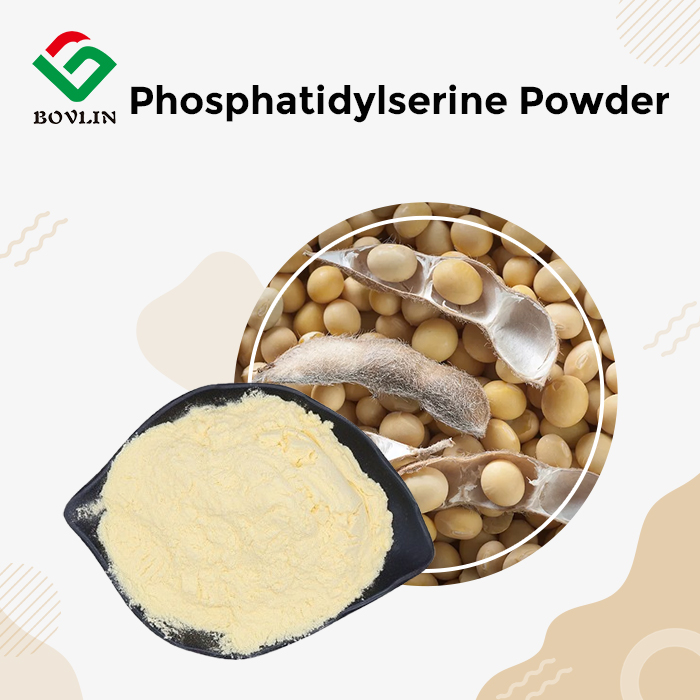
Phosphatidylserine Powder


- Product Description
Premium Phosphatidylserine Powder – Industrial-Grade Brain Health Supplement Ingredient
Shaanxi Bolin Biotechnology offers Phosphatidylserine Powder at three exact quantities of 20%, 50%, and 70% PS content, all validated by HPLC-ELSD methods. Our sophisticated enzymatic conversion method maintains Peroxide Value continuously around 5 meq/kg to avoid lipid oxidation which degrades efficacy.
We have ISO9001 and FSSC22000 certifications. We strictly manage microbiological limits (Total Plate Count <1000 cfu/g) and control heavy metals (Lead <0.5 ppm). Our powder comes in soy and sunflower derived versions with great bulk density (0.35-0.65 g/ml) for effective capsule filling.
With 25,800 acres of approved planting base and the most advanced automated facility in 2024, we provide pharmaceutical grade quality with moisture below 5% and solvent residues below 50 ppm.
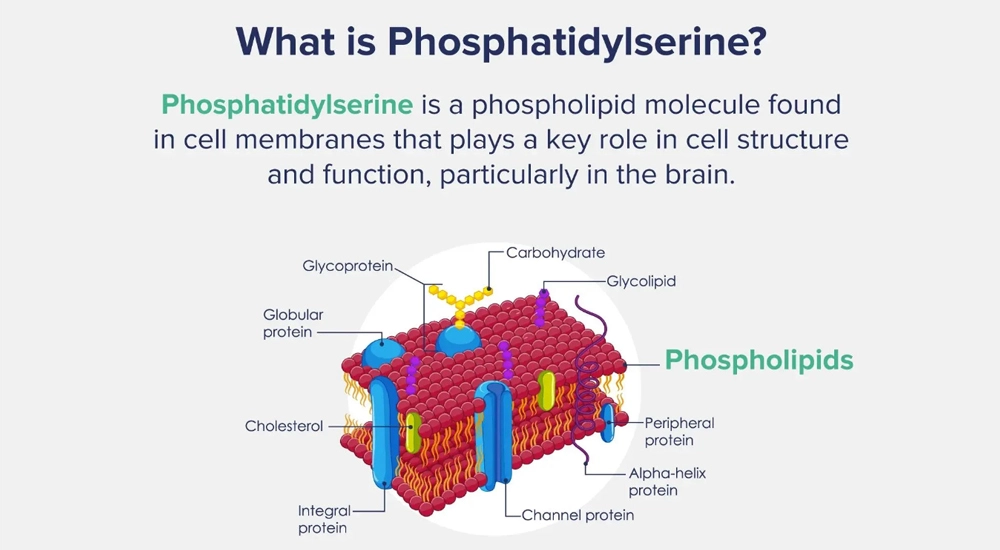
What Makes Our Phosphatidylserine Powder Different?
Dual-Source Flexibility for Your Market Needs
Every day you encounter a variety of consumer preferences. That’s why we provide both soy and sunflower derived choices.
Phosphatidylserine Powder from Sunflower non-GMO, allergen-free profiles for clean-label goods for European and North America markets. Your quality assurance teams will be happy with 0% soy allergen claims.
Soy-derived alternatives are cost-effective for general dietary supplements with no loss of bioactivity. The PS molecule is the same, no matter where it comes from, only the lipid matrix is somewhat different.
Both varieties are packaged under nitrogen and fortified with tocopherols. This double protection system has a shelf life of 24 months when kept at temperatures below 25°C.
Precision in Every Batch
Our quality control is above industry standards. Although many providers report on “Total Phospholipids”, what we really do is measure the Phosphatidylserine content by HPLC with Evaporative Light Scattering Detection.
This difference is important. Phospholipids do not have chromophores and hence cannot be reliably detected by generic UV spectrophotometry. You get precisely what your formulation calls for, not bloated figures.
Technical Specifications That Drive Performance
|
Item |
Test Standard |
Testing Result |
||
|
Physicochemical Control |
||||
|
Appearance |
Powder |
Complies |
||
|
Color |
Light Yellow Powder |
Complies |
||
|
Odor&Taste |
Distinctive Smell |
Complies |
||
|
Loss on Drying |
≤2.0% |
1.52% |
||
|
Peroxide Value |
≤10.0 |
Complies |
||
|
Heavy Metals |
||||
|
As |
<0.05ppm |
Complies |
||
|
Pb |
<1 ppm |
Complies |
||
|
Microbiological Control |
|
Complies |
||
|
Total Plate |
<1000cfu/g |
Complies |
||
|
Yeast & Mold |
<50cfu/g |
Complies |
||
|
E. Coli |
<0.5 |
Complies |
||
|
Salmonella |
Negative |
Not Detected |
||
|
Assay |
||||
|
L-a-Phosphatidyl-L-serine |
≥50.0% |
50.93% |
||
Application Versatility for Modern Formulations
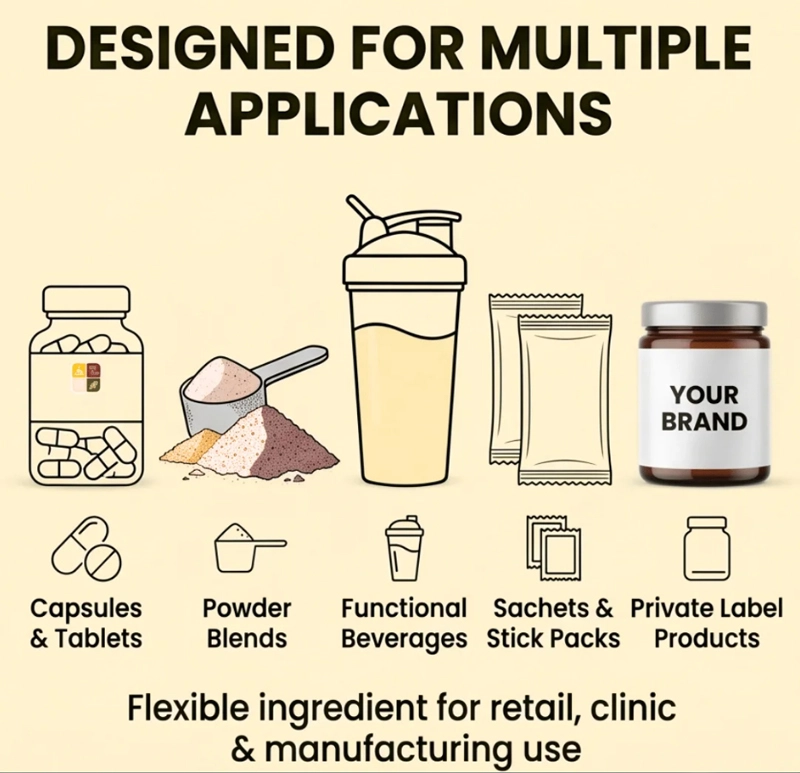
Capsules & Tablets
The 40-80 mesh particle size permits smooth passage through encapsulation equipment . Your production teams will be freed from wrestling with bridging or static adhesion concerns.
Consider the natural lipids included in our powder for direct compression tablets. Use a proper lubricant such as magnesium stearate (0.5-1%) to avoid punch face sticking in high-speed tableting.
Beverage & Gummy Integration
Heat sensitivity has to be handled strategically. Add powder in stages of cooling (below 60°C) to maintain phospholipid integrity.
It is amphiphilic and, as such, is a great emulsifier for fortified drinks. It forms stable suspensions when dispersed with lecithin or polysorbate 80, and does not separate.
Functional Food Enrichment
PS supplementation is useful in ready-to-drink formulations, nutrition powders and snack bars. The Phosphatidylserine Powder is compatible with protein matrices and carbohydrate bases.
Your R&D teams can exploit its liposomal potential. This, along with ultrasonic emulsification, produces nano-sized liposomes that boost the bioavailability of co-formulated vitamins and antioxidants.
Rigorous Quality Assurance You Can Trust
Six-Step Verification Process
Each batch is fully tested before it reaches your door.
Step 1: Selection of Raw Materials
We have a recognized planting base of 25,800 acres and we can track our product from seed to harvest. Botanical identification verifies species purity.
Step 2: Heavy Metal and Pesticide Testing
ICP-MS analysis 23 heavy metals checked to EU requirements. Multi-residue pesticide screening for 450+ chemicals by GC-MS/MS and LC-MS/MS.
Step 3: Microbial Safety Assessment
Total aerobic count, yeast/mold, coliforms, Salmonella and E. coli testing is performed according to USP <2021>. Production is carried out under Class 100,000 cleanroom conditions.
4. Analysis of Active Ingredient
HPLC-ELSD measures particular Phosphatidylserine content, not generic phospholipids. For the peak identification, the genuine standards of PSs (Sigma-Aldrich) are used.
Step 5: Audit of Suppliers
Our procurement team evaluates secondary material suppliers on-site annually to ensure their GMP compliance and documentation systems.
Step 6: Third Party Verification
Independent testing by SGS and Eurofins offers impartial validation. Each cargo is accompanied with certificates.
Oxidation Prevention Protocol
Phospholipids are degraded fast in the presence of oxygen. Triple Defense:
- Oxygen Displacement During Packaging With Nitrogen Flushing
- Mixed tocopherols (400-800 ppm) free radical scavengers
- Fiber drums with double LDPE liners provide moisture barriers
Store at a temperature below 25°C and a relative humidity below 60%. Containers that are sealed correctly are stable for the whole 24-month shelf life.
Manufacturing Excellence Since 2012
Two-Facility Production System
Our 2015 facility created the groundwork – industrial-scale extraction with precise purification technologies servicing early worldwide customers across 47 countries.
The 2024 next generation plant is fully automated and closed loop sustainable. Ethanol is recovered in 95 percent solvent-recovery systems, lowering the environmental effect and the expense of manufacturing.
Both facilities are ISO9001, FSSC22000, Halal and Kosher certified. Regulatory compliance teams for compliance with EU Novel Food laws and FDA GRAS status.
Advanced R&D Capabilities
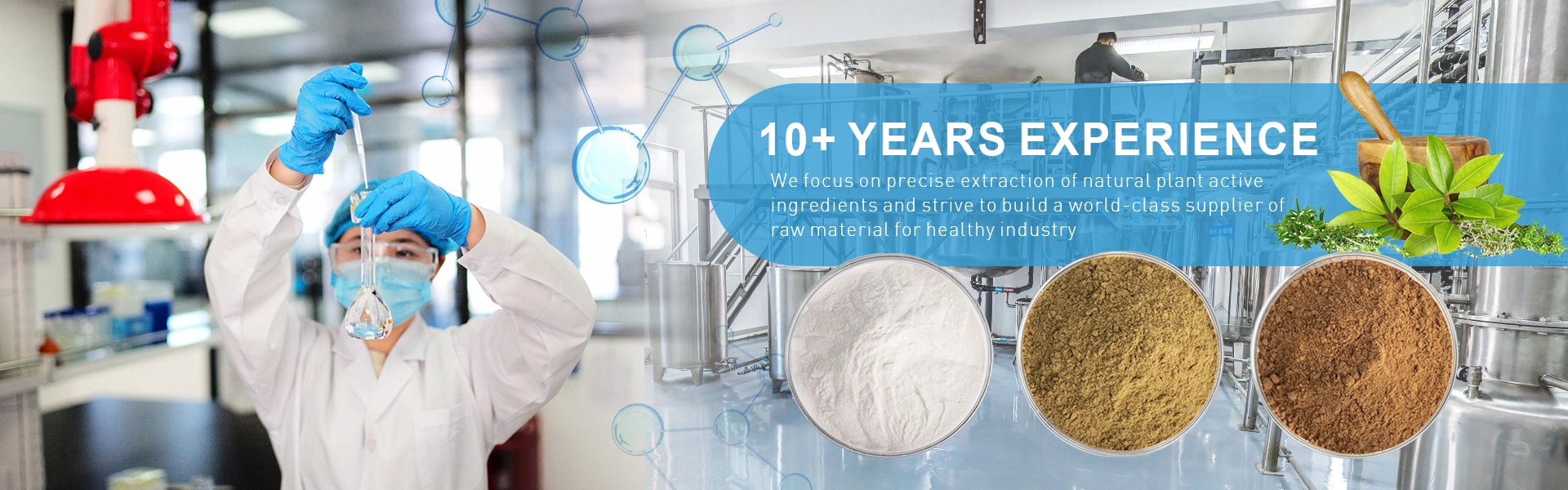
We have a staff of 80 people, including biochemical engineers who are experts in lipid chemistry. Features of in-house laboratory:
- HPLC-ELSD systems for phospholipid profiling
- Verification of molecular structure using P-NMR spectroscopy
- Dynamic light scattering for characterisation of liposomes
- Accelerated stability chambers (36 months shelf life simulation)
We partner with your development teams to create unique formulas. We provide more than ingredients. If you need specialized particle sizes, carrier mixes or encapsulation solutions, we offer technical help.
Frequently Asked Questions
Q1: What is the functional difference between Soy-derived and Sunflower-derived versions?
A:While bioactivity remains identical (both contain the same PS molecule), Sunflower PS is non-GMO and allergen-free, making it ideal for clean-label markets. Soy PS offers cost advantages for general supplements without compromising efficacy.
Q2: How do you prevent oxidation during storage?
A:We use double LDPE liners within fiber drums and perform nitrogen flushing to displace oxygen. The powder includes tocopherols as antioxidants. Store below 25°C in low-humidity environments for optimal stability.
Q3: Can this powder work in gummy manufacturing?
A:Yes, but add it during the cooling stage (post-cook) to minimize thermal degradation. Alternatively, use microencapsulated versions that protect phospholipids during high-temperature processing.
Q4: Why might my HPLC test show lower assay than your COA?
A:PS analysis requires specific columns and mobile phases to separate the PS peak from Phosphatidylethanolamine (PE). Generic methods may fail to separate these peaks, causing integration errors. We provide validated method protocols (MOA) to align your testing procedures.
Q5: Does particle size affect tablet compression?
A:Standard 40-80 mesh powder flows well but requires proper lubrication due to natural lipid content. For direct compression tablets, add 0.5-1% magnesium stearate to prevent punch face sticking during high-speed operations.
Q6: What documentation supports regulatory submissions?
A:Each batch includes Certificate of Analysis, MSDS, Allergen Declaration, GMO Status Statement, BSE/TSE Certification, and country-specific regulatory letters. We maintain comprehensive technical dossiers supporting GRAS status and Novel Food compliance.
Partner with a Trusted Supplier
Contact our technical sales team at sales1@bovlin.com to discuss your specific requirements for Phosphatidylserine Powder.