_1745226507162.webp)

Applications of Dihydromyricetin in Functional Foods and Dietary Suppelments
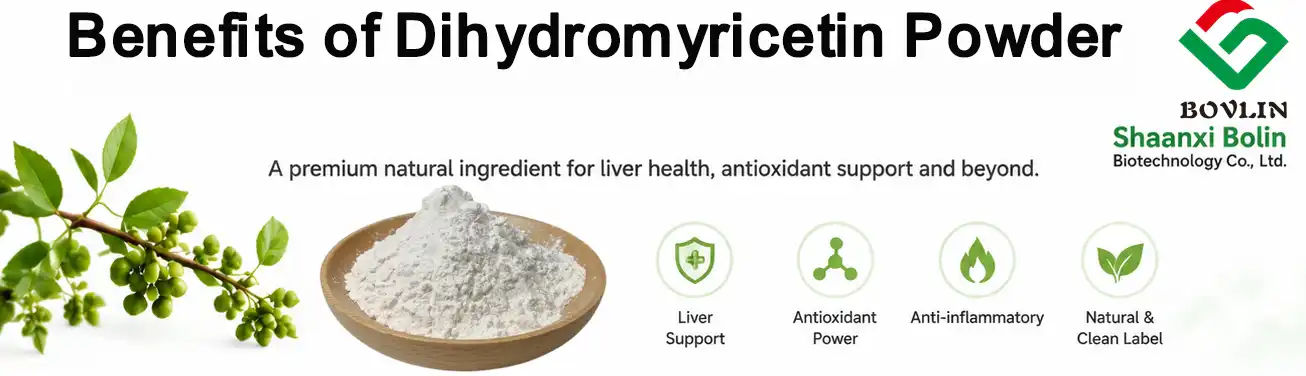
Dihydromyricetin powder is a natural ingredient that is changing the way useful foods and health supplements are made all over the United States. This beneficial flavonoid comes mostly from Ampelopsis grossedentata and meets important customer needs for protecting the liver, helping the body process alcohol, and supporting antioxidants. The compound's scientifically proven processes, especially its ability to boost alcohol dehydrogenase and acetaldehyde dehydrogenase activity, make it an important ingredient for formulators who want to make unique, effective goods. As regulatory teams and buying managers look at plant actives, DHM powder is becoming a more popular choice for new product lines because it is easy to label, has strong clinical support, and can be used in a variety of ways.
Understanding Dihydromyricetin Powder and Its Core Benefits
Botanical Origins and Excellence in Extraction
Dihydromyricetin comes from the plant Ampelopsis grossedentata, which is also known as "vine tea" and has been used for hundreds of years in Asian health practices. Modern methods of extraction separate this flavonoid using complex steps like solvent extraction, filtering, and crystallization. This produces pharmaceutical-grade material that is at least 98% pure, as shown by HPLC analysis. The molecule structure, C15H12O8, has many hydroxyl groups that give it its strong antioxidant properties. For quality sources, you need to pay attention to standardizing the raw materials, controlling the extraction parameters, and following strict testing methods that look for heavy metals, pesticide leftovers, and microbiological toxins. Suppliers with GMP, ISO, and HACCP standards make sure that the product can be tracked from planting to harvesting to production. This provides the regularity needed for legal compliance and product stability.
Hepatoprotective Mechanisms and Metabolic Support
Clinical studies show that Dihydromyricetin powder has an amazing ability to protect liver function in many ways. The substance speeds up the metabolism of ethanol by increasing the activity of ADH and ALDH enzymes. This lowers the buildup of acetaldehyde, which is the main harmful byproduct that causes hangover symptoms and liver damage. Studies in reputable pharmacology journals show that taking DHM supplements lowers blood levels of alanine aminotransferase and aspartate aminotransferase, which are signs of liver stress. In addition to breaking down booze, DHM also helps reduce inflammation by blocking NF-κB signaling pathways and decreasing oxidative stress by cleaning up free radicals. These processes give nutraceutical businesses that make liver health supplements, post-consumption recovery products, and metabolic wellness formulations real formulation benefits. The compound's neuroprotective benefits, especially its ability to change GABA-A receptors without making people sleepy, make it useful for managing stress and improving brain function.
Quality Parameters Critical for Procurement
Product formulators who are looking at DHM powder need to put a number of technical requirements at the top of their list to make sure the recipe works. Purity standards of at least 98% HPLC-grade material give the best bioactivity and dose accuracy. The spread of particle sizes has a direct effect on how quickly they dissolve and how bioavailable they are. Micronized grades are better for rapid-release uses. With a melting point range of 245°C–246°C, DHM powder is thermally stable and can survive normal industrial processes like compressing tablets, filling capsules, and making hot drinks without breaking down. It is important to think about how DHM dissolves. It dissolves easily in hot water and ethanol, but not so much in cold water. This means that manufacturing techniques like cyclodextrin complexation or nano-emulsion technologies are needed. Regulatory teams need to make sure that the paperwork from suppliers includes full tests for leftover solvents, bacteria limits that are in line with USP/EP standards, and allergen statements that are necessary for clean-label placement.
Applications of Dihydromyricetin Powder in Functional Foods and Dietary Supplements
Diverse Product Format Integration
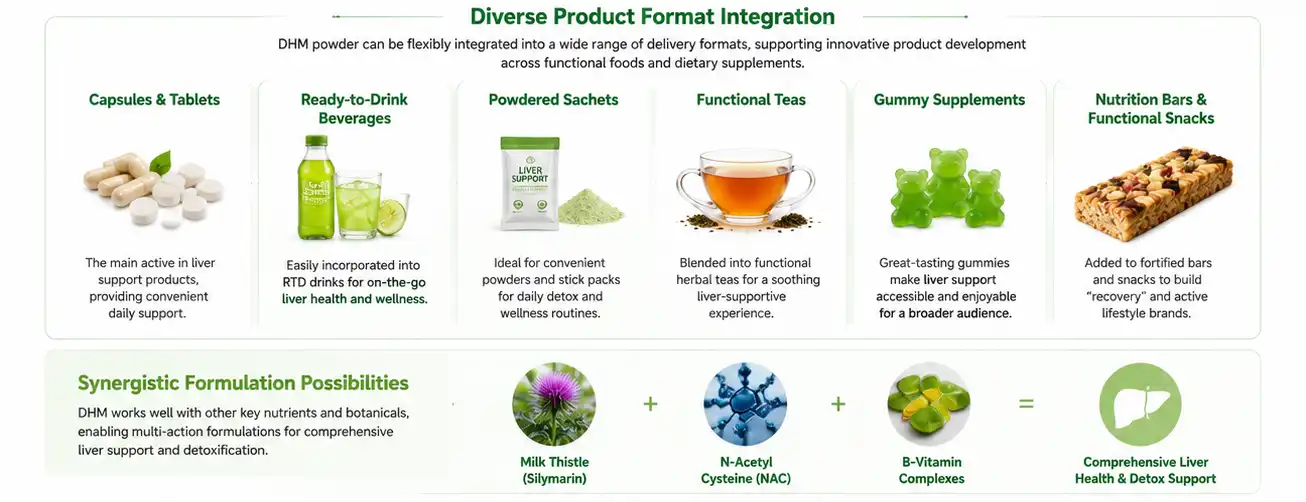
The fact that DHM powder can be used in a variety of delivery methods opens up many possibilities for new products. The ingredient is the main active in liver support products that come in pill and tablet form, usually at doses between 300 mg and 600 mg per serving based on clinical study parameters. For beverage uses, there are both possibilities and challenges. The substance is naturally bitter, so it needs to be hidden using flavorings or complexation technologies. On the other hand, it is stable at high temperatures, so it can be used in ready-to-drink drinks, powdered sachets, and functional teas. Gummy supplements are a growing area where DHM's benefits can reach people who like easy, tasty ways to take vitamins. DHM powder is added to fortified nutrition bars and useful snacks to make a "recovery" brand that appeals to people with active lifestyles.
Formulation experts like how DHM works well with other plants like milk thistle, N-acetyl cysteine, and B-vitamin complexes. This lets them make products that work together to help the liver in many ways and remove toxins. Advanced delivery technologies, such as liposomal encapsulation and sustained-release materials, improve bioavailability and lengthen treatment windows. This gives supplements a competitive edge in markets that are already very crowded. These new ideas solve important problems: they speed up the effects of goods that help the body's alcohol metabolism and make the liver health benefits last longer for daily routines.
Emerging Trends and Market Opportunities
As people become more health-conscious, DHM powder can be used for more than just getting rid of hangovers. More and more, DHM is being used in metabolic health products to help with glucose metabolism, cholesterol control, and reducing inflammation. Sports nutrition companies are looking into DHM's antioxidant qualities for recovery goods after exercise, using its anti-inflammatory properties to help the body adapt to training. The clean-label trend makes DHM even more appealing as an active ingredient that comes from natural sources and isn't made in a lab. Personalized nutrition platforms use DHM in unique supplement plans that take into account each person's liver health markers and alcohol use trends. For these uses, suppliers need to be able to offer expert support, stability data, and formulation advice. These are the kinds of services that set premium ingredient partners apart from common suppliers.
Comparative Analysis: Dihydromyricetin Powder vs Other Forms and Remedies
Format Optimization for B2B Applications
When purchasing managers look at DHM goods, they see a number of different style choices. Each has its own benefits for certain uses. Dihydromyricetin powder gives you the most options for unique formulas because it can be used with a wide range of excipients and doses. When used in large quantities, the style saves money, especially for private-label producers who need to be able to make more at once. Pre-encapsulated DHM goods cut down on processing steps, but they are harder to customize and usually cost more per unit. Standardized extracts that include DHM and other vine tea ingredients may provide extra bioactive chemicals, but they also bring differences in active content that make doses more difficult. There are synthetic replacements to DHM, but they are hard for people to accept in places that value natural ingredients more, even though they might have higher purity ratings.
Comparisons of DHM's clinical effectiveness show that it works better than other hangover treatments and liver support ingredients. Activated charcoal, replacing electrolytes, or anti-inflammatory drugs are common ways to treat symptoms, but they don't address the underlying biochemical processes. The enzyme-activating processes of DHM offer mechanistic benefits, which are backed up by comparison clinical studies showing better reductions in blood alcohol concentration and hangover intensity scores. Concerns about regulatory status support organically derived DHM powder, which can usually be classified as a food supplement under the DSHEA framework. This avoids the regulatory complexity that comes with synthetic pharmaceutical methods.
Procurement Guide for Bulk Buyers and OEM Manufacturers
Supplier Evaluation Framework
To get a steady supply of dihydromyricetin extract, you have to carefully evaluate suppliers based on a number of factors. Verification of certifications should show that current GMP, ISO 9001, and other relevant food safety certifications are still valid. Audit trails should show ongoing compliance rather than one-time successes. In order to figure out how much production can handle, you have to look at both the current output and how well the system can be expanded to meet rising demand. You should also include backup plans in case there are problems with the supply chain. Consistency from batch to batch is an important quality factor that can be checked by looking at the certificate of analysis for more than one production run and looking at test difference, impurity profiles, and physical features. Technical help is what sets strategic partners apart from transactional providers. Having access to formulation experts, stability study data, and regulatory documents speeds up product development and lowers formulation risk.
Third-party quality assurance is an important way to make sure that what a seller says is true. Baseline quality standards are set by independent lab tests that include spectroscopic methods for identity proof, approved HPLC techniques for quantitative analysis, and full safety screening for heavy metals, pesticides, and microbial contamination. Preferred partner status is given to suppliers who show proactive quality management by doing things like checking stability under both short-term and long-term situations, continuously verifying the process, and keeping paperwork clear. Supply chain procedures deserve the same amount of attention: dependable wait times, packaging that keeps ingredients stable, and quick customer service that can keep operations running smoothly are all important for meeting production plans.
Strategic Sourcing Considerations
A good negotiation strategy should find a mix between lowering costs and making sure the quality of the goods is good. This is because going for the cheapest option often comes with hidden costs like quality problems, the risk of not following the rules, or unreliable supplies. By promising a lot of goods, you may be able to get better terms and make sure that the seller gets priority when capacity is limited. Contractual clauses that cover quality standards, testing procedures, shelf-life promises, and ways to fix materials that don't meet standards protect purchase investments. Building ties with several qualified suppliers reduces reliance on a single source while keeping the pressure on suppliers to perform at a high level. Geographic diversity lowers global and logistical risks, but it costs more to qualify suppliers and make sure quality systems work.
Safety, Dosage, and Customer Feedback Insights
Clinical Dosing Guidelines and Safety Profile
Dosage suggestions for Dihydromyricetin powder based on research usually fall between 300 mg and 1200 mg per day, with exact amounts relying on the purpose of the use and the people who will be taking it. Single doses of 600 mg are often used to support alcohol metabolism before or during drinking, while daily liver health maintenance formulas use split doses totaling 300–600 mg. In the US, DHM is legal as a dietary supplement, but responsible sellers make sure that promises are backed up by evidence and don't imply that DHM can be used to treat diseases without permission. Safety studies show that it is well tolerated across all clinical trial groups. Adverse events are rare and usually only cause mild stomach problems at high amounts. DHM doesn't cause a lot of harm in experimental models. Even at amounts well above what is considered therapeutic, no genotoxicity or major organ toxicity was seen.
Though interaction issues are still low, there are theoretical worries about chemicals that are broken down by overlapping liver pathways. When formulating combination goods, people who make them should look at any possible interactions. This is especially important for prescription drugs that affect liver enzyme systems. There isn't enough safety information for the pregnancy and breastfeeding groups, so labels should be kept as safe as possible. These safety features make regulatory entries easier and allow applications to a wide range of people, which is good for brands that want to reach as many people as possible.
Documented Performance and Innovation Directions
Business-to-business clients are very happy with DHM powder in a number of success areas. Formulation compatibility gets good reviews, and technical teams point out how easy it is to incorporate into different matrixes and production methods. End-user comments sent through brand partners shows that consumers strongly agree with how effective the product is thought to be, especially when it comes to reducing hangovers and improving healing the next day. Repeat purchases of goods containing DHM show that people are still interested in them, which proves that the ingredient has real health benefits and not just placebo effects.
Neuroprotection, cardiovascular health, and metabolic syndrome control are some of the new uses that are being looked into by researchers. New studies are looking into DHM's possible benefits in treating diseases linked to inflammation, improving glucose metabolism, and improving cognitive function. These study lines show that DHM powder has a lot of room to grow in the health and wellness categories over the long term. Early users will be in a good position as more clinical evidence comes in and more people learn about the product.
Conclusion
Through its scientifically proven processes, wide range of formulation compatibility, and high safety profile, Dihydromyricetin powder offers excellent value across functional food and dietary supplement uses. The ingredient meets the high quality standards needed by the pharmaceutical and nutraceutical industries while also meeting changing customer needs for natural, effective liver support and metabolic health solutions. Successful buying strategies focus on building relationships with suppliers that show they can meet licensing requirements, increase output, and provide technical support. As clinical research adds to DHM's body of evidence and market knowledge grows, adding this botanical active strategically puts brands in a strong position to compete in health markets that are always changing and looking for new, effective natural ingredients.

FAQs
Why does dihydromyricetin powder exhibit bitterness in liquid formulations?
Because Dihydromyricetin powder is made up of flavonoids, it naturally has a bitter taste that you can taste in drinks and liquid vitamins. This problem is solved by manufacturers using smart taste systems that include sweeteners, masking agents, or matching plants that make the sense experience balanced. Cyclodextrin complexation technology is another good option. It encapsulates DHM molecules to reduce the contact between taste receptors while also making the stability better. These methods make it possible to make market items that taste good without lowering the effectiveness of the active ingredients.
What shelf life and storage conditions does dihydromyricetin powder require?
If you keep DHM powder in a controlled setting with cool temperatures, low humidity, and protection from direct light, it should stay stable for 24 months. The active chemical may break down over time if it is exposed to high humidity and ultraviolet radiation, which is shown by accelerated stability tests. The best way to store things is in climate-controlled buildings with sealed, opaque cases. Manufacturers should test products on a regular basis during the shelf life to make sure they keep their strength and quality standards.
How does natural DHM powder compare to synthetic alternatives?
Natural co-factors and phytochemical profiles that manufactured forms don't have are found in professional-grade dihydromyricetin powder that comes from Ampelopsis grossedentata. More and more, consumers want products that come from natural sources, which helps with marketing and clean label requirements. The plant matrix is kept when natural extraction is done, which may help with bioavailability and effectiveness through synergistic processes. Quality sellers ensure tracking from cultivation through end product, meeting organic standards and non-GMO proof that synthetic sources cannot claim.
Partner with Bolin Biotechnology for Premium Dihydromyricetin Powder Supply
Choosing the right Dihydromyricetin powder provider affects the success of the formulation and how successful the company is in the market. Bolin Biotechnology sells pharmaceutical-grade DHM powder that is made according to strict GMP guidelines. It is ≥98% pure and comes with a lot of quality paperwork to show that it meets all the requirements of international regulations. Our factories keep their ISO approval and follow strict testing procedures that include checking for over 400 pesticide chemicals, heavy metals, and microbiological safety according to USP/EP standards. We have flexible minimum order amounts that can be met by both well-known names and new, innovative companies. Our technical support teams are also here to help with formulation, stability data, and regulatory paperwork. Our supply chain stability ensures regular shipping schedules, which are necessary for industry to keep going. At the same time, our competitive positioning balances quality guarantee with cost-effectiveness. Email our team at sales1@bovlin.com to talk about your unique application needs and get technical specs, samples, and custom solutions. You can look at our full line of herbal extracts at bolinbiotech.com and learn how our dedication to plant-based innovation can help you reach your product development goals.
References
Shen Y, Lindemeyer AK, Gonzalez C, Shao XM, Spigelman I, Olsen RW, Liang J. Dihydromyricetin as a novel anti-alcohol intoxication medication. Journal of Neuroscience. 2012;32(1):390-401.
Hou XL, Tong Q, Wang WQ, Shi CY, Xiong W, Code J, Liu X, Fang JG. Suppression of inflammatory responses by dihydromyricetin, a flavonoid from Ampelopsis grossedentata, via inhibiting the activation of NF-κB and MAPK signaling pathways. Journal of Natural Products. 2015;78(7):1689-1696.
Wang H, Zhang Y, Bai R, Wang M, Du S. Dihydromyricetin prevents hepatic inflammation and oxidative stress in a rat model of alcoholic liver disease. Biomedicine & Pharmacotherapy. 2018;99:763-769.
Chen S, Zhao X, Wan J, Ran L, Qin Y, Wang X, Gao Y, Shu F, Zhang Y, Liu P, Zhang Q. Dihydromyricetin improves glucose and lipid metabolism and exerts anti-inflammatory effects in nonalcoholic fatty liver disease. British Journal of Pharmacology. 2015;172(13):3370-3386.
Liu TT, Zeng Y, Tang K, Chen X, Zhang W, Xu XL. Dihydromyricetin ameliorates atherosclerosis in LDL receptor deficient mice. Atherosclerosis. 2017;262:39-50.
Shi L, Zhang T, Liang X, Hu Q, Huang J, Zhou Y, Chen M, Zhang Q. Dihydromyricetin improves skeletal muscle insulin resistance by inducing autophagy via the AMPK signaling pathway. Molecular and Cellular Endocrinology. 2015;409:92-102.