_1745226507162.webp)

OEM and ODM Services for Red Dragon Fruit Powder: Tailored Natural Color Solutions for Brands
When companies want to make their goods stand out by adding healthy, colorful ingredients, red dragon fruit powder is a great natural choice. This natural ingredient comes from the red pitaya fruit and gives products a strong color while also being good for you as an antioxidant. Manufacturers in the nutraceutical, food, beverage, and cosmetics industries can use OEM and ODM partnerships to make this powder exactly the way their brands want it, from the particle size and color intensity to the packing forms and regulatory compliance. At Shaanxi Bolin Biotechnology Co., Ltd., we've seen how working together strategically can turn raw plant material into innovations that are ready for the market and appeal to people who want to buy products with clean labels.
Understanding Red Dragon Fruit Powder and Its Value in Natural Color Solutions
The Botanical Foundation of Red Pitaya Powder
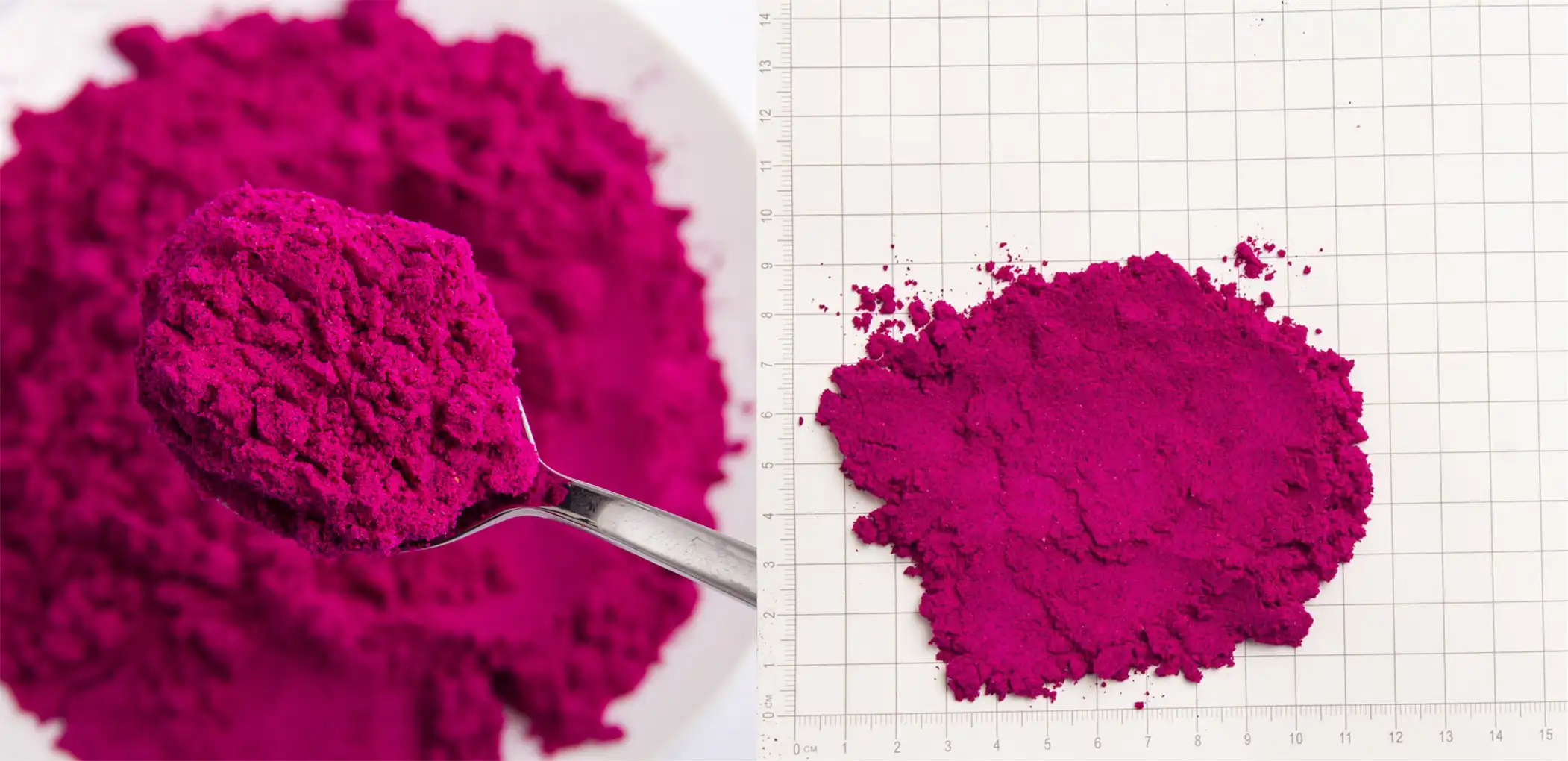
The meat of the Hylocereus polyrhizus cactus, which is mostly grown in warm and subtropical areas, is used to make red dragon fruit powder. The powder still has the betalain pigments (especially betacyanins) that give the fruit its unique pink color. When it comes to color stability, these water-soluble chemicals are better than synthetic options, especially in acidic environments like those found in candy and drinks. The drying process focuses healthy parts like vitamin C, fiber, and polyphenolic antioxidants, which gives this food more uses besides just looking good.
Organic Versus Conventional Sourcing
When purchasing teams look at organic red dragon fruit powder, they should know what that means for approval. Organic varieties are more expensive because they are grown without using synthetic chemicals and fertilizers, according to third-party proof. This difference is very important for brands that want to get USDA Organic or EU Organic approval. Conventional sources are cheaper for large-scale output and still meet guidelines for food safety. Before committing to buying routes, you should think about how your brand is positioned, since the time it takes to get organic certification can add several months to the product development cycle.
Comparative Advantage Over Alternative Natural Colorants
The red pitaya version has clear technical benefits when compared to beetroot powder or white dragon fruit powder. Geosmin, which is found in beets, adds an earthy note that can make taste profiles more complicated in delicate situations. When mixed with water, white dragon fruit powder doesn't have the strong color that is needed for visual effect. Red dragon fruit powder adds a bright color at smaller amounts—usually between 0.5 and 2% in beverage systems—while also adding a light tropical sweetness that improves taste profiles instead of changing them. This efficiency means that the product is cost-effective, even if the unit price is higher.
OEM and ODM Services: Tailoring Red Dragon Fruit Powder for Brand Needs
Customization Parameters That Drive Market Differentiation
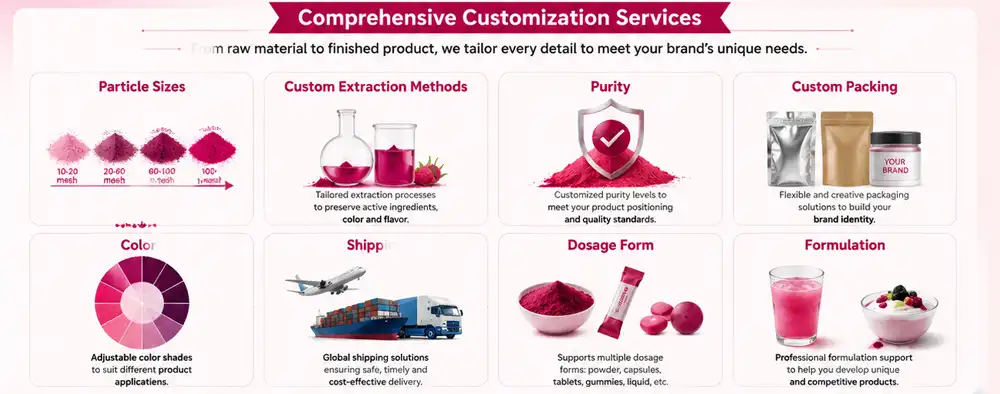
When OEMs and ODMs work together, they can customize in a lot of different technical areas. The range of particle sizes is an important standard, and spray-dried types usually fall between 60 and 100 mesh. For quick drink mixes, finer granulation makes it easier for the ingredients to spread out, while for supplement formulas, larger particles work better for encapsulation. Controlling the moisture level below 5% stops the growth of microbes and caking while the red pitaya powder is being stored. Water activity (Aw) numbers kept below 0.3 keep things stable even when the humidity changes. These factors aren't made up on the spot; they're designed to help our clients solve real formulation problems they face in production settings.
In addition to physical traits, we've created custom extraction methods that keep or improve certain beneficial chemicals. Vitamin C loss happens during thermal processing, which makes keeping it in the food a scientific problem. Customers who are making supplements for health often ask for low-temperature freeze-drying to keep ascorbic acid as long as possible, even though this way costs more to process. On the other hand, beverage companies that care more about color stability than health claims may choose spray-drying, which achieves higher pigment concentration by controlling the temperature at which the water is removed.
Compliance and Certification Navigation
International quality standards make it hard for businesses to buy from each other. The ISO 22000 certification shows that food safety is managed in a planned way, and the HACCP protocols make sure that key control point tracking happens at all stages of production. GMP compliance is especially important for pharmacy clients who are making herbal medicines. These certificates aren't just marketing tools for us; they're also rules that help us keep track of batches, control allergens, and keep things from getting contaminated.
Regulatory environments are always changing, especially when it comes to new food classifications in the EU and Generally Recognized as Safe (GRAS) standing in the US. ODM agreements are useful because they take on the job of government oversight. When the EU changed the levels of heavy metals allowed in botanical ingredients, our team changed the testing procedures and let clients who would be affected know about the changes before their current inventory caused compliance problems. This proactive method stops expensive production stops and market exits before they happen.
Strategic Partnership Models in Practice
A client in the nutrition industry came to us looking for a fruit-based powder to use in vitamin gummy recipes. Their original request called for regular red dragon fruit powder, but working together on research and development showed that it wouldn't be stable in the acidic conditions their pectin-based chewy needed. We made a new version with maltodextrin added as a carrier matrix. This made it more stable at low pH levels while keeping the goal ORAC values above 1500 μmol TE/g. The final ingredient worked reliably through their hot deposition process and didn't lose its color, which allowed the product to be launched successfully across major retail outlets.
Procurement Strategies for Red Dragon Fruit Powder in Bulk and Wholesale
Supplier Vetting Beyond Price Comparisons
In order to find real, trustworthy providers, you need to do more than just look at quotes. Factory checks are still the best way to make sure that a company can make things. When you visit the site, you should look closely at the methods for tracking raw materials. For example, can the source trace back finished organic red dragon fruit powder to specific harvest lots? Check the processing tools for the risk of cross-contamination, especially if products that contain allergens are made on the same lines. Check the storage facilities' pest control records and temperature tracking records. Improper storage quickly lowers the quality of powder in damp places.
Verifying a person's reputation through business networks gives you useful information. In the botanical extract industry, there are private ways for buying workers to share their experiences with suppliers. Test results from a third party provide objective proof of quality. Asking for Certificates of Analysis (COA) for recent production batches shows that key factors like heavy metal levels, microbial numbers, and moisture content are consistent. Differences between COAs and real given materials are signs of possible integrity problems that need to be talked over with the seller right away.
Bulk Purchasing Economics and MOQ Flexibility
When buying natural colorants in bulk, you have to weigh your number promises against the costs of keeping an inventory on hand. Bulk buying usually starts with a 50-kilogram minimum order, and the prices get better as you buy 100 kg, 500 kg, or even tons. These limits show how efficiently the production works; bigger batches lower the setup costs per unit and raise the extraction rates. But brands should figure out the real landing costs, such as storage, insurance, and the chance of items becoming obsolete, before committing to numbers greater than what people are expected to use in six months.
Different providers have very different levels of MOQ freedom. When contract manufacturers work with private-label clients, they often need smaller minimums to allow for testing steps. We set up buying programs that let brands place 25 kg trial orders to help with formulation development. Once brands are sure that the product is accepted by the market, they can make bigger promises. This step-by-step method lowers the financial risk while keeping the supply going. You should also be able to negotiate the terms of payment. Letters of credit protect both parties in foreign deals, and long-term relationships may allow for net-30 terms that make managing cash flow easier.
Logistics Considerations for Quality Preservation
Environmental rules must be followed when shipping plant powders across foreign borders. Changes in temperature during ocean freight can cause mist to form inside packages, letting water in and encouraging the growth of microbes. If you're sending something overseas, we recommend foil-laminated packing with nitrogen flushing to keep the powder intact during the 30–40 day transport windows. Airfreight is faster for orders that need to be sent right away, but it costs a lot and is usually only worth it for small amounts of high-value organic products.
For Harmonized Tariff Schedules customs classification, you need accurate paperwork. For food preparations that aren't listed elsewhere, red dragon fruit powder usually comes under HS code 2106.90. However, for organic certifications, you may need to fill out more paperwork. Working with customs brokers who know about plant ingredients can help you get your goods through faster. To make sure that customs processing goes smoothly in all major import countries, we keep detailed specification sheets that list botanical names, processing methods, and categories of planned use.
Optimizing Product Formulation Using Red Dragon Fruit Powder
Technical Parameters for Application Success
Powder properties that allow for quick recovery are useful in beverage uses. Particle sizes centered around 80 mesh allow for full spread without a gritty taste, and spray-drying forms open structures that make it easier for the red dragon fruit powder to absorb water. Testing how well it dissolves at your specific working pH proves performance. Beta-carotene colors are very stable between pH 3.5 and 5.5, which makes the powder perfect for sports drinks and juices. When the pH goes above 6.0, the color changes to brown, which limits its use in neutral dairy replacements that don't need to be buffered.
Nutritional comparison sets standards for basic success. Betacyanin levels in good red pitaya powder are between 50 and 150 mg/100 g, which can be measured using UV-Vis spectrophotometry at 538nm. Total polyphenol content usually ranges between 200 and 400 mg GAE/100g, and ORAC tests can be used to measure how much antioxidant activity it has. Different processing methods have very different vitamin C retention rates. For example, freeze-dried powders keep 80–90% of the vitamin C amounts of fresh fruit, while spray-dried varieties only keep 40–60%. Label claims and marketing strategies based on practical benefits are shaped by these measures.
Regulatory Compliance Across Markets
According to 21 CFR 73.1, the FDA says that red dragon fruit powder is a color addition that does not need to be certified as long as it comes only from the edible part of the fruit. When compared to synthetic colorants that need batch approval, this exemption makes the regulatory load lighter. Regulation (EC) No 1333/2008 of the European Union allows pitaya products to be used in most types of food without any quantity limits. However, some uses need to be checked against the rules in Annex II.
Innovation Case Studies Demonstrating Market Impact
Different legal systems apply to cosmetic applications. The Personal Care Products Council says that red dragon fruit extract can be used in cosmetics without any problems, but there may be limits on how much can be used based on the final product. To keep them from reacting with betalain colors, preservative methods need to be carefully chosen. Standardizing INCI terminology makes sure that all foreign markets use the same language when listing ingredients. For example, Hylocereus Undatus Fruit Extract is usually used, even though the botanical names of different species can be different.
A functional beverage brand aimed at millennials wanted to add natural color to their line of sparkling water with adaptogens. Synthetic Red 40 went against their clean-label stance, and beet juice added taste notes that were not desired. At a 1.2% inclusion rate, organic red dragon fruit powder gave them the bright pink color they needed for their brand. Stability tests showed that the color would stay the same for 18 months when kept in the fridge. The product was put in high-end food stores, and customers said that the way it looked was the main reason they bought it.
Conclusion
Red dragon fruit powder is more than just a natural colorant; it's an example of how botanical innovation and market desire for openness can work together. Through OEM and ODM partnerships, this colorful ingredient can be customized in ways that make it stand out for brands in nutrition, food, drink, and skincare uses. To be successful, you have to make tough buying choices, like choosing between organic certification and big buying and following the rules. Technical improvement of particle size, moisture control, and bioactive retention ensures that the performance of the product meets the needs of the market. Forward-thinking brands can take advantage of the growing trend toward clean labels by addressing underlying problems through quality systems, supply diversification, and technology innovation. This will help build customer trust through ingredient transparency.

FAQs
What certifications validate quality in red dragon fruit powder procurement?
Some of the most important certifications to get are ISO 22000 for managing food safety, HACCP for verifying key control points, and GMP for pharmaceutical-grade uses. Organic approvals from the USDA, the EU, or a similar organization show that farming methods do not use manufactured inputs. Certifications from third-party testing labs that meet ISO/IEC 17025 standards are another way to make sure the quality. Depending on the market you want to reach, you may need Halal and Kosher certificates. These qualifications show that quality control is done on a regular basis instead of just once, which gives the supply chain more trust.
How do OEM-customized powders differ from standard offerings?
OEM customization meets the needs of certain brands that standard goods can't. This includes custom particle size distributions that improve dissolution rates, changed moisture contents that fit your working environment, or carrier structures that make the product more stable in harsh pH conditions. Custom packing forms, ranging from small sample sizes to bulk totes, can be used for a range of production levels. With private labeling, common chemicals are turned into parts that are associated with a brand. Standard goods are available right away and have cheaper minimums, but they don't give the technology optimization and brand branding that custom solutions do.
Can formulation characteristics be adjusted for specific applications?
Through joint development, formulation traits can be changed in a lot of ways. By adding a carrier, you can make the color strength stronger or weaker. Pigments are kept safe in high-temperature situations by encapsulation technologies. By co-spraying-drying with fruit powders that go well with the main flavor or flavor-masking agents, taste profiles can be changed. Particle size reduction or surface change techniques can make something more soluble. For these changes to take effect, your R&D team and the scientists at your provider will need to talk about technical details in order to find the best solutions that meet both performance and cost standards.
Partner with Bolin Biotechnology for Superior Natural Color Solutions
Shaanxi Bolin Biotechnology Co., Ltd. stands ready to transform your product vision into market reality through our comprehensive OEM and ODM capabilities. Since 2012, we've specialized in delivering scientifically validated botanical ingredients that meet the rigorous standards your brand demands. Our ISO-certified facilities produce pitaya powder customized to your exact specifications, from particle size and color intensity to packaging formats and regulatory documentation. As an experienced red dragon fruit powder manufacturer, we combine plant wisdom with modern extraction technology to ensure consistent quality, competitive lead times, and responsive technical support throughout your product development journey.
Contact our team at sales1@bovlin.com to discuss how our tailored natural colorant solutions can enhance your formulation's visual appeal while satisfying clean-label consumer expectations. We invite procurement professionals, formulators, and R&D directors to explore partnership opportunities that accelerate innovation and strengthen market positioning.
References
Rodríguez-Sánchez, J.A., et al. (2021). "Betalain Stability and Antioxidant Activity in Spray-Dried Red Pitaya Powder Under Different Storage Conditions." Journal of Food Science and Technology, 58(4), 1456-1467.
Chen, M., & Liu, H. (2020). "Comparative Analysis of Natural Colorants in Functional Beverage Applications: Stability and Sensory Impact." International Journal of Food Engineering, 16(9), 223-238.
Thompson, K.R., et al. (2022). "Quality Control Parameters for Botanical Fruit Powders in Nutraceutical Manufacturing." Pharmaceutical Technology, 46(3), 34-42.
Patel, S., & Sharma, V. (2019). "Regulatory Frameworks for Natural Color Additives in Global Food Markets: A Compliance Guide." Food Regulation Quarterly, 12(2), 88-104.
Williams, D.L. (2023). "Supply Chain Risk Management in Botanical Ingredient Procurement: Strategies for Long-Term Stability." Supply Chain Management Review, 27(1), 56-71.
Martinez, A., et al. (2021). "Microencapsulation Technologies for Protecting Betalain Pigments in Food Applications." Trends in Food Science & Technology, 109, 445-459.