_1745226507162.webp)

Azelaic Acid Powder vs Salicylic Acid: Which Ingredient Is Better for Acne Care?
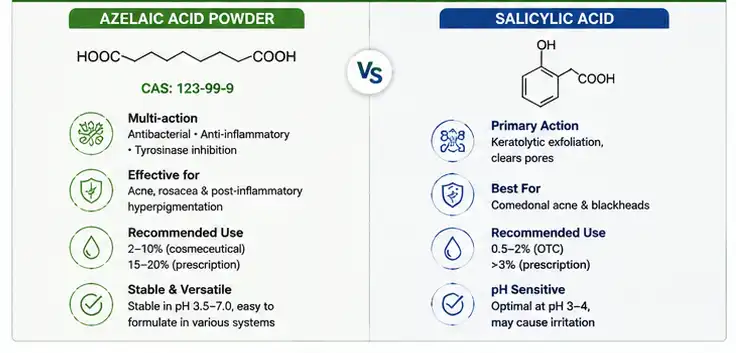
Therapeutic aims and target demographics determine whether to use Azelaic Acid Powder or salicylic acid for acne therapy. Saturated dicarboxylic acid (nonanedioic acid, C9H16O4) Azelaic Acid Powder treats moderate-to-severe acne and rosacea with antibacterial, tyrosinase-inhibiting, and anti-inflammatory properties. Surface-level comedonal acne benefits from salicylic acid's keratolytic exfoliation. Azelaic acid offers an appealing therapeutic profile with minimal irritation risk, especially in sensitive-skin populations and combined acne-post-inflammatory pigmentation therapies.
Introduction
Millions of individuals worldwide suffer acne, keeping clinical dermatology and cosmetics businesses busy. Acne affects 50 million Americans annually, prompting new active ingredient choices, according to the American Academy of Dermatology. Choosing azelaic or salicylic acid influences more than clinical results. It also affects formulation stability, regulation, and market position.
In this business-to-business analysis, both substances are examined for their chemical properties, clinical efficacy, production issues, and purchasing choices. Knowing these distinctions helps producers, formulators, and buying managers create high-quality goods for a broad spectrum of clients. Effective, safe beauty compounds are becoming increasingly popular. To remain ahead in global marketing channels, selecting the appropriate elements is crucial.

Understanding Acne and Treatment Challenges
The Complex Pathophysiology of Acne Development
Sebum generation, follicular hyperkeratinization, Cutibacterium acnes colonization, and inflammatory cascade activation produce acne vulgaris. Hormones, genetics, and environment affect these processes. Treatment must vary for mild comedonal acne and severe papulopustular acne.
Formulation Obstacles in Acne Care Product Development
Creating effective acne treatments entails overcoming technical issues. Even experienced formulators struggle to keep substances stable when pH changes, dissolve correctly in water and non-water systems, and perform effectively with preservatives and penetration enhancers. The perfect balance between potency and tolerability is still difficult to discover since aggressive actives induce redness, dryness, and flaking that makes individuals not want to follow guidelines.
Market Demands and Regulatory Considerations
Customers now demand acne treatments that also brighten skin, delay aging, and restore skin barriers. Ingredient purity, production, and safety documents are strictly regulated in various markets. These restrictions include US FDA guidelines, EU Cosmetics Regulation, and pharmaceutical pharmacopeia requirements. Clean-label movements, environmental certifications, and end customers' increased desire for supply chain transparency must also be considered by B2B purchasers.
Key Properties of Azelaic Acid Powder and Salicylic Acid
Chemical Structure and Mechanism of Azelaic Acid
Grain-derived nine-carbon dicarboxylic acid is azelaic acid powder (CAS: 123-99-9). Most commercial oleic acid derives from oxygen-driven breakdown. This raw substance attacks numerous acne pathways simultaneously using many reputable approaches. Cutting Cutibacterium acnes germs without making them antibiotic-resistant is a benefit since drug resistance is making routine therapies harder. Post-inflammatory hyperpigmentation, a concern for darker skin tones due to acne scars' permanent markings, is treated well by blocking tyrosinase. It reduces the inflammatory response that converts comedones into painful, scarring sores by controlling reactive oxygen species and cytokine release.
Azelaic acid bulk powder makes purity monitoring and formulation easier. Powder forms provide precise content adjustments during product development, while micronized grades allow smooth suspensions. Clinical studies demonstrate that prescription-strength therapies work at 15–20% and cosmeceuticals at 2–10%. This allows formulators great product positioning flexibility.
Salicylic Acid's Keratolytic Action and Lipophilic Penetration
Willow bark or lab-made salicylic acid is a beta-hydroxy acid. Breaking down skin cells is its principal function. As a lipophilic substance, it may enter sebum-filled pores and dissolve corneocyte bonds. By preventing and mending microcomedones, the earliest lesions that become inflammatory acne, this approach treats comedonal acne successfully. Over-the-counter salicylic acid works best at 0.5–2%, while prescription medications may exceed 3%.
The element is pH-dependent and difficult to manufacture. Best results occur at pH 3–4, when undissociated acid reaches the stratum corneum. However, acidic environments may annoy easily irritated persons. While azelaic acid acts in many ways, salicylic acid only treats follicular blockage, not infection or inflammation. This may make it less effective for moderate to severe inflammation.
Comparative Stability and Formulation Constraints
These goods need distinct handling when purchased and assembled. The stability of Azelaic Acid Powder throughout a broad pH range (3.5–7.0) and its resistance to oxygen degradation help it last longer. It blends well with niacinamide, retinoids, and vitamin C derivatives due to its balance.
Maintaining pH and protecting packaging from light and moisture are crucial for salicylic acid stability. Due to its acidic nature, it may not perform well with peptides and plant extracts that don't like low pH. In regions with frequent temperature variations, bulk purchases might cause crystallization during storage and delivery.
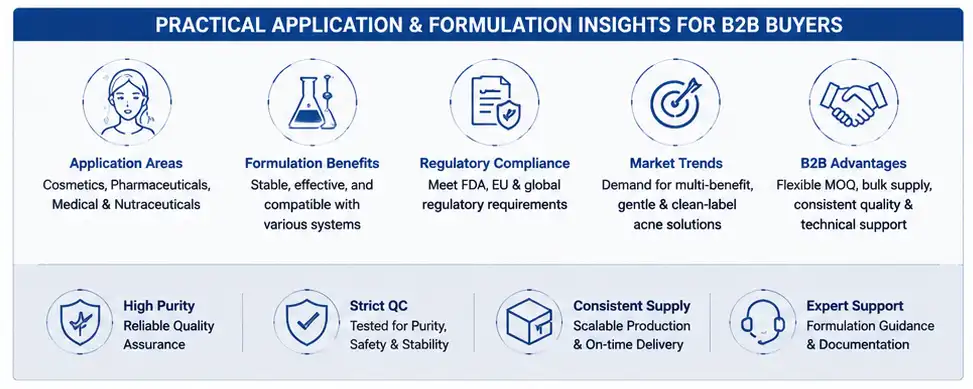
Practical Application and Formulation Insights for B2B Buyers
Azelaic Acid Powder Incorporation Strategies
Addition of Azelaic Acid Powder to final goods requires careful particle size distribution and dispersion. Prescription medication with 15–20% gel or cream bases needs stabilizing ingredients like carbomer polymers or xanthan gum to prevent settling. Formulation must be utilized to maintain suspension uniformity throughout the product's shelf life since the powder doesn't dissolve quickly in water.
Cosmetic formulators have additional possibilities with 2–10%. Serums, lotions, and even liposomal encapsulation or silicone-based anhydrous solutions may include these tiny levels. Maintaining pH and skin safety requires selecting the correct neutralize agents and buffering systems. When combined with additional active substances like niacinamide for barrier function or alpha hydroxy acids for texture, azelaic acid produces synergistic outcomes that appeal to those who desire full treatments.
Using powder for mass manufacturing has advantages. Raw powder makers can adjust concentration, base, and active chemicals, unlike suspensions or gels. This flexibility helps OEM/ODM firms make private-label goods for clinical dermatology and natural cosmetics.
Salicylic Acid Formulation Approaches and Format Diversity
Based on their production capabilities and product type, formulators may employ salicylic acid as crystalline powder, liquid solutions, and pre-neutralized salts. Before mixing with water, crystalline powder must be dissolved in alcoholic or propylene glycol solutions. Although pre-dissolved liquid forms simplify production, they may restrict pH and preservatives.
Leave-on serums and lotions employ 0.5–2%, which balances efficacy and comfort. Due to the brief contact duration, rinse-off treatments like cleansers and masks may use more, but the overall dosage is less. To ensure product stability and efficacy, the substance must be evaluated for compatibility with cationic polymers and plant extracts throughout development.
Market and product type affect regulatory difficulties. Over-the-counter medicine monographs in the US enable concentration ranges and claims. Other countries may have distinct cosmetic laws. These frameworks must be understood by B2B purchasers to ensure that their claims and concentrations match their target market registrations while being competitive.
Format Selection and Market Positioning Considerations
When choosing between powder-based azelaic acid formulations and salicylic acid delivery methods, there are more than formulation concerns. Market strategy and customer choice are also important. Light-textured gel variants are popular with oily skin, while cream bases are popular with mixed or sensitive skin that needs more hydration. Because they distribute active ingredients more effectively and employ sophisticated formulation methods, serum formats place items in high-end markets and enable them to charge more.
Microencapsulation, sustained-release polymers, and biocellulose sheet masks help drugs stand out. Technology may stabilize chemicals, improve skin penetration, and prevent irritation. This helps azelaic acid formulations for sensitive skin and salicylic acid treatments that desire to reduce tingling.
Procurement Considerations for Global B2B Clients
Quality Verification and Supplier Certification Standards
Make sure pharmaceutical- or cosmetic-grade azelaic acid and salicylic acid providers fulfill tight specifications. Pharmaceutical COAs must indicate purity over 99%. Above 98% purity is typical for cosmetics. For the product to be safe and compliant, heavy metal testing, microbiological contamination screening, and residual solvent analysis must be done.
Supplier certificates reassure you about your goods and quality system. ISO 9001 accreditation proves you can organize processes and enhance them. Depending on the goal, cosmetic or pharmaceutical GMP clearance ensures that the factory is properly set up, staff are taught, and records are preserved. HACCP license provides protection against manufacturing and storage contamination. It's particularly crucial for cosmetics and food-based treatments.
As customers and authorities scrutinize brand ingredient sources, traceability paperwork that provides complete supply chain transparency is becoming increasingly critical. Companies may easily comply with new supply chain due diligence and sustainability claims if suppliers maintain detailed data on batches, raw materials, and control.
Logistics, Minimum Order Quantities, and Supply Continuity
Procurement difficulties go beyond ingredient quality. Cost and shipping efficiency are also considered. Minimum order numbers vary widely per source. Some specialist pharmaceutical ingredient vendors need multi-kilogram commitments, whereas cosmetic ingredient providers give smaller amounts for formula formulation and stability testing before full-scale manufacturing.
Comparative pricing depends on the quantity purchased, delivery conditions, and contract terms. Long-term supply agreements ensure products distribution amid shortages and achieve better pricing. The current global supply chain issues made this crucial. Purchasers can maintain adequate items on hand without tying up working capital in raw material stockpiles when they know how long it takes to create, test, and ship goods overseas.
Shipping and storage charges add to the ticket price to effect ownership costs. Costs include maintaining the appropriate temperature during storage and transit, guarding against moisture with packing, and completing customs documentation. These procedures function more easily with vendors that understand international pharmaceutical and cosmetic ingredient logistics. This reduces delays and regulatory difficulties that might interfere with production.
Strategic Supplier Relationships and Technical Support
Establishing ties with ingredient providers that offer skilled formulation support goes beyond transactions. It benefits product development throughout. Suppliers with application labs, formulation scientists, and regulatory knowledge can increase product launch speed and reduce reformulating costs when stability or compatibility issues arise.
When developing new product packaging or therapeutic claims that need clinical data, this collaborative strategy is very useful. Suppliers with substantial formulation libraries and case studies can help you utilize their products efficiently, optimize concentrations, and mix constituents to produce more effective, stable, and safe solutions.
Making the Right Choice: Which Ingredient Fits Your Acne Care Needs?
Matching Ingredients to Therapeutic Targets and Skin Types
Choosing between azelaic acid and salicylic acid depends on therapeutic goals and target audience. Moderate to severe inflammatory acne, papulopustular rosacea, and post-inflammatory hyperpigmentation benefit from azelaic acid. More individuals may take it instead of retinoids or hydroquinone since it is FDA Category B and safe for sensitive skin and pregnancy.
Salicylic acid is effective for comedonal acne, greasy skin, and mild daily exfoliation with acne-prevention. Marketability is simpler in mass-market channels because ingredient familiarity is a major influence in purchasing choices due to its extensive clinical history and consumer recognition. Salicylic acid is milder than prescription acne treatments, so makers sell them to teenagers and first-time users. Azelaic Acid Powder provides the added anti-inflammatory and skin-lightening effects that salicylic acid lacks.
Regulatory Pathways and Clean-Label Positioning
Product development time, testing requirements, and marketing claims depend on regulatory categorization. Over-the-counter (OTC) medication monographs govern salicylic acid acne solutions' manufacture, labeling, and manufacturing in the US. Acne treatments must follow more criteria than cosmetics, but this categorization makes claims straightforward.
Azelaic acid regulates several functions depending on its amount and purpose. Lower-concentration cosmeceuticals may be marketed as cosmetics in many areas, but prescription-strength formulations require full medication clearance. This provides you several market choices, from clinical dermatology collaborations to high-end beauty retail.
Clean-label trends favoring natural ingredients accommodate both actives. Natural azelaic acid in grains lends the claim "grain-derived" legitimacy. Commercial manufacturing mainly employs synthetic methods for purity and uniformity. Customers that want to know more about products than simply how well they operate want transparent information about manufacturing, sustainability, and ingredients.
Integration with Broader Product Line Strategies
Strategically picking ingredients considers brand design, portfolio strategy, and product performance. Complete acne treatment systems may employ both substances in various products. Azelaic acid in specialized treatment products helps with active breakouts and reduce scars, while salicylic acid in everyday cleansers and toners keeps skin smooth. This increases therapeutic advantages while reducing discomfort from powerful single-product compositions.
When picking ingredients, consider the product's lifespan. For years, salicylic acid has had dependable supply chains. Azelaic acid is getting more popular and has greater clinical proof. In the increasingly competitive acne treatment business, innovation and distinction are possible. Your product development can stay up with market changes by monitoring fresh research, customer trends, and the competition.
Conclusion
Both salicylic acid and Azelaic Acid Powder cure acne, however they have distinct therapeutic functions and commercial positions. Azelaic acid reduces bacterial development, irritation, and skin discoloration in mild to severe cases and sensitive skin. Salicylic acid's keratolytic activity clears comedonal acne effectively and simplifies daily exfoliation. Strategic ingredient selection depends on your target audience, therapeutic aims, regulatory routes, and formulation capabilities. To succeed in the competitive skin care market, you need carefully selected ingredients, strong quality control systems, reliable supply partnerships, and formulation knowledge to turn clinical potential into stable, marketable products that provide consistent benefits and set your brand apart.
FAQ
1. How effective is azelaic acid for severe acne compared to salicylic acid?
Clinical studies show that azelaic acid at concentrations of 15 to 20 percent works just as well as 5% benzoyl peroxide and topical antibiotics at treating inflammatory acne, but it is safer and easier to use. Salicylic acid stops and heals comedonal acne well, but it doesn't directly reduce inflammation very much. Azelaic acid's multi-mechanism method usually works better for severe inflammatory acne, while salicylic acid formulations work better for mild to moderate comedonal acne. Combination methods that use both ingredients in products that work well together get the best results for all levels of acne severity.
2. What concentration ranges ensure safety and efficacy?
For best therapeutic benefit, prescription azelaic acid products use concentrations between 15 and 20%. On the other hand, cosmeceutical uses use concentrations between 2 and 10% to balance effectiveness with ease of access over-the-counter. Salicylic acid works well at levels between 0.5 and 2% in leave-on products, and it can sometimes reach 3% in rinse-off products. These numbers are based on government rules, clinical proof, and concerns about tolerability. Formulation pH, vehicle choice, and relationships between ingredients that work well together have a big effect on how well and how easily they can irritate the skin at certain amounts.
3. How do storage and shipping conditions affect ingredient quality?
To stay stable during storage and transport, both ingredients need to be kept away from moisture, too much heat, and light. Azelaic Acid Powder is very stable when kept in covered cases at room temperature, and it doesn't change much over the course of a normal shelf life. Because salicylic acid is hygroscopic, it needs to be stored in a dry place to keep it from caking and breaking down. For sensitive grades, international shipping should use temperature-controlled operations, along with the right paperwork for clearing customs and checking the quality when it arrives.
Partner with Bolin Biotechnology for Premium Azelaic Acid Raw Materials
Shaanxi Bolin Biotechnology specializes in sending pharmaceutical- and cosmetics-grade active ingredients to companies around the world that need to be sure of quality and supply. We are a well-known company that supplies Azelaic Acid Powder and have many certifications, such as ISO, GMP, and HACCP. We offer full technical paperwork, formulation support, and unique solutions that are made to fit your product development needs. Our quality control procedures make sure that the same level of purity, safety from microbes, and reliability from batch to batch are always met. This is necessary to keep the finished product working well and following all regulations in international markets. Get in touch with our technical team at sales1@bovlin.com to talk about your recipe goals, ask for full Certificates of Analysis, and find out how our knowledge of ingredients and supply chain can help you come up with new products and make more money faster. You can find out about all of our plant actives and useful ingredients at bolinbiotech.com.

References
1. Fitton, A., & Goa, K. L. (1991). Azelaic acid: A review of its pharmacological properties and therapeutic efficacy in acne and hyperpigmentary skin disorders. Drugs, 41(5), 780-798.
2. Draelos, Z. D., et al. (2007). The effect of 2% hydroquinone/6% glycolic acid/10% L-ascorbic acid and 4% hydroquinone on skin pigmentation: A double-blind randomized trial. Journal of Cosmetic Dermatology, 6(2), 75-80.
3. Kircik, L. H. (2011). Efficacy and tolerability of azelaic acid (AzA) gel 15% in the treatment of post-inflammatory hyperpigmentation and acne: A 16-week, baseline-controlled study. Journal of Drugs in Dermatology, 10(6), 586-590.
4. Thiboutot, D., et al. (2009). New insights into the management of acne: An update from the Global Alliance to Improve Outcomes in Acne group. Journal of the American Academy of Dermatology, 60(5 Suppl), S1-S50.
5. Zander, E., & Weisman, S. (1992). Treatment of acne vulgaris with salicylic acid pads. Clinical Therapeutics, 14(2), 247-253.
6. Zaenglein, A. L., et al. (2016). Guidelines of care for the management of acne vulgaris. Journal of the American Academy of Dermatology, 74(5), 945-973.