_1745226507162.webp)

Best Blueberry Anthocyanin Extract for Antioxidant Power
When procurement professionals look for the best blueberry anthocyanin extract for commercial use, they want high-purity anthocyanin powder that works the same way in all formulations. The bioactive anthocyanin compounds in this concentrated plant ingredient are generally found in amounts between 15% and 25%. These compounds were taken out using allowed methods that protect the integrity of the molecules. For medicinal active ingredients, nutraceutical supplements, functional drinks, and cosmetics, high-quality blueberry anthocyanin powder must meet stringent standards. Whole fruit powder is less stable, and this powder can be fully tracked from the raw material to the final product.
Understanding Blueberry Anthocyanin Extract: Composition & Benefits
Biochemical Profile of Premium Blueberry Anthocyanin
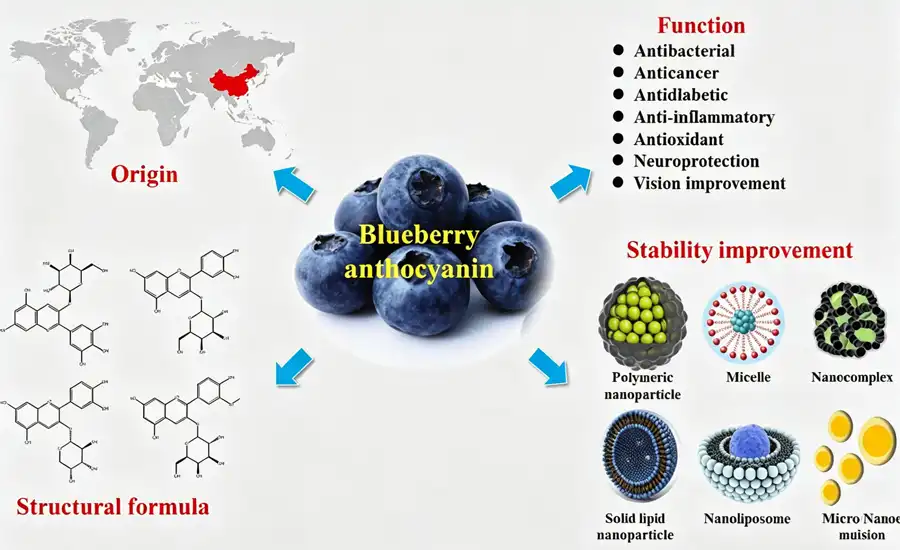
Blueberry anthocyanin extract contains significant amounts of flavonoids, which are a type of polyphenolic material. There are four main parts: delphinidin-3-galactoside, cyanidin-3-glucoside, malvidin-3-galactoside, and petunidin-3-glucoside. Its unique blue-purple color comes from water-soluble pigments. These pigments also have a very high antioxidant capacity, as shown by ORAC readings that often go over 400 μmol TE/g. The extract can lower reactive oxygen species better than many antioxidants made by humans because of these chemicals.
The extraction method has a big effect on the quality of the final product. Using ethanol-water mixes for solvent extraction keeps the anthocyanin glycosides while getting rid of the sugars and tannins that aren't needed. In more advanced ways, membrane filtration and spray drying are used at controlled temperatures below 60°C to keep the materials from breaking down when heated. High-Performance Liquid Chromatography (HPLC) analysis is used by quality makers to check anthocyanin profiles and make sure that batches are consistent with each other, which is very important for pharmaceutical and nutraceutical uses.
Evidence-Based Health Benefits Driving Market Demand
A lot of clinical study has shown that blueberry anthocyanins have a lot of different therapeutic effects. Heart health benefits include better endothelial function through nitric oxide production and less LDL oxidation, as shown in randomized controlled studies with people who had metabolic syndrome. The anti-inflammatory processes work by blocking the NF-κB pathway, which lowers the production of pro-inflammatory cytokines.
Neuroprotective properties are getting more focus in products for cognitive health. Studies show that anthocyanin metabolites get into the brain from the blood and build up in the hippocampi, where they improve neurogenesis and neural plasticity. Anthocyanins can regenerate rhodopsin in retinal cells, which can help with night vision adaptation and reduce digital eye strain, which is becoming a bigger problem for customers.
Dermatological uses take advantage of the extract's ability to fight free radicals caused by UV light while also stopping the collagenase and elastase enzymes that break down the extracellular tissue. These many benefits make for strong marketing claims for B2B buyers who are making unique goods in the health and beauty categories.
Quality Control Standards Ensuring Product Integrity
Pharmaceutical-grade blueberry anthocyanin powder is different from other products because it follows strict quality control rules. Manufacturers who follow ISO 9001, GMP, and HACCP standards do multiple stages of testing, starting with verifying the raw materials and continuing with plant recognition and pesticide residue screening. Heavy metal testing shows that the levels of lead, cadmium, mercury, and arsenic are within the USP standards.
The microbiological testing meets the standards set by the pharmacopeia, with total plate counts below 1,000 CFU/g and no pathogens, such as E. Salmonella, E. coli, and Staphylococcus aureus. Testing for stability under accelerated conditions (40°C/75% RH for six months) gives information on shelf life that is needed for regulatory applications. These thorough quality controls let procurement teams know that the ingredient will always work the same way during product development, production scaling up, and market distribution.
Comparing Anthocyanin Options for Optimal Procurement Decisions
Blueberry vs. Alternative Anthocyanin Sources
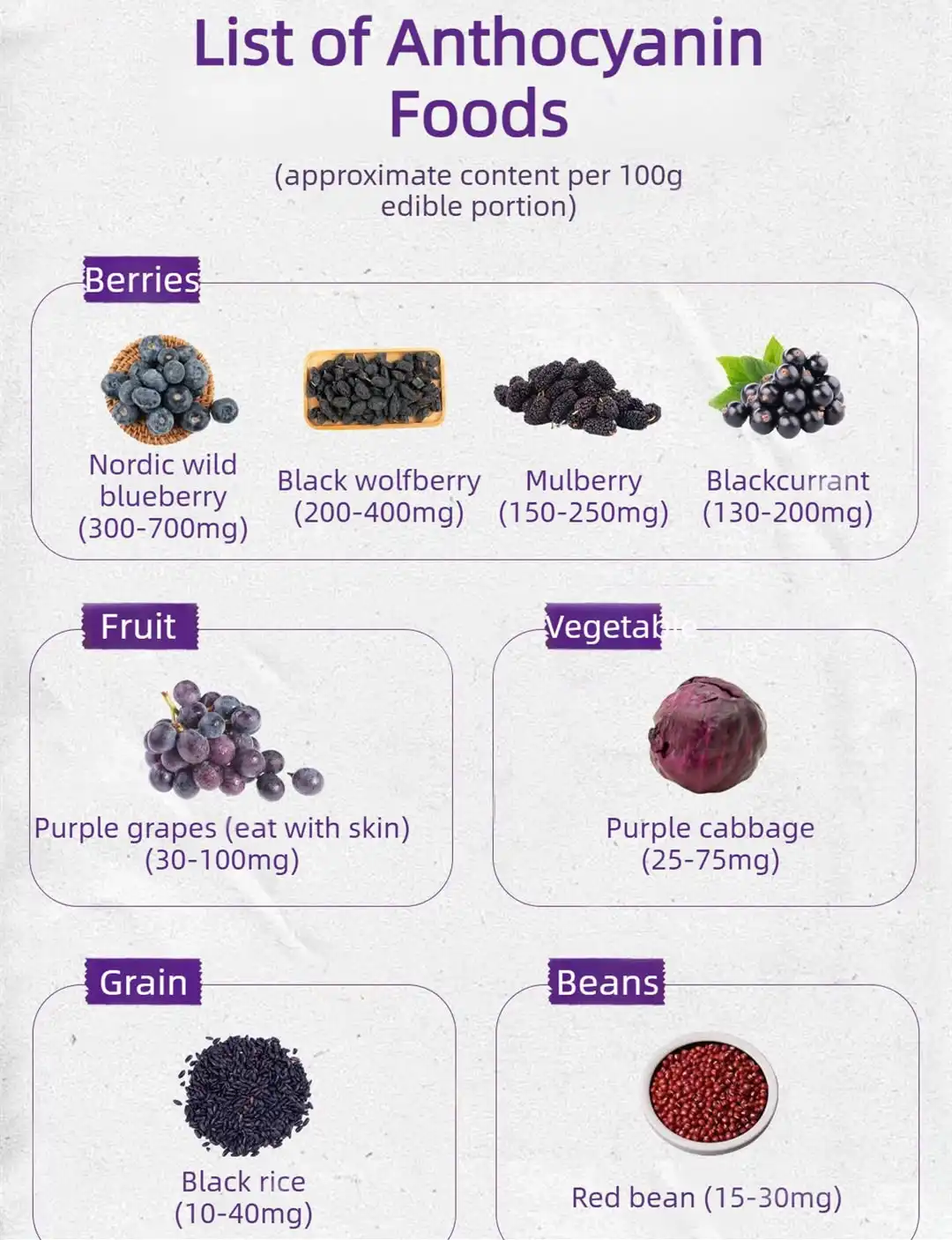
To choose between blueberry anthocyanin powder and other sources, you need to know how the different ingredients affect how well they work. Elderberry extracts have more overall anthocyanins, but they also have different glycoside profiles, with sambubioside and sambubioside-5-glucoside structures taking the lead. The main part of black currant anthocyanins is delphinidin-3-rutinoside, which changes how well they dissolve in water-based mixtures.
Acai berry extracts have a lot of lipid fractions along with anthocyanins, which makes them harder to clean up and could make water-based goods less stable. Grape skin extracts that are high in malvidin derivatives work well in acidic conditions, but they might add unwanted tannic notes to uses that care about taste. Anthocyanins from bilberries have been included in pharmacopeia monographs for uses related to eye health. This gives them regulatory benefits in European markets, but the high prices are usually because of problems with the supply chain.
Blueberry anthocyanin powder strikes a good mix between a number of buying factors. Large-scale farming in North America and Europe helps the supply chain for raw materials by lowering global sourcing risks. The anthocyanin profile works well in a wide range of pH levels, unlike blackberry, which breaks down quickly above pH 4. Consumer perception research constantly ranks blueberry as one of the most trusted and sought-after superfruit ingredients. This supports strategies for clean label positioning.
Organic Certification and Regulatory Alignment
The choice between organic and standard affects both how much things cost and where they stand in the market. Organic blueberry anthocyanin powder costs more because it uses approved organic raw materials, has to pay third-party certification fees, and needs special processing equipment. But getting organic approval opens the door to high-end supplement markets and European markets where demand for organic ingredients is growing at double-digit rates every year.
Regulatory frameworks are very different from one area to the next. In the US, anthocyanin extracts can be used in food without getting pre-market approval because they are GRAS (Generally Recognized As Safe). However, in the UK and EU, new food laws may need safety dossiers for some formulations. Regional pharmacopeias, like the USP, EP, or JP, must be followed for pharmaceutical applications. Each one sets different acceptance standards and assay methods. When choosing a vendor, strategic procurement teams make sure that the skills of the supplier match the needs of the target market.
Figuring out where a supplier's products are sold helps you get the best landed prices and lead times. It's common for Asian manufacturers to offer low prices, but shipping times and tariffs can be longer. European suppliers are close to EU-based manufacturers, which helps them take advantage of trade deals that give them more power. North American sources make operations easier for US nutraceutical brands and help people from different cultures communicate and work together to make new products.
How to Incorporate Blueberry Anthocyanin Powder into Your Product Line?
Formulation Strategies Across Product Categories
It is important to pay attention to dosage, bioavailability improvement, and stability optimization when adding blueberry anthocyanin to nutraceutical formulas. Depending on the health claim, most supplements have between 50 mg and 500 mg of anthocyanins per dose. Putting medicine in vegetarian or gelatin pills makes delivery easy, but making gummy formulas needs changing the pH to keep the color stable in pectin or gelatin matrices.
The extract's natural coloring qualities and antioxidant properties make it useful for functional beverage applications. To keep the colors bright in ready-to-drink products, the pH needs to be kept between 3.0 and 3.5, which is the range where anthocyanins show their most red tones. Adding citric acid or ascorbic acid helps colors stay true and changes the taste notes. Co-solvents or emulsification systems may be needed to help ingredients dissolve in high-concentration drinks, especially when they are mixed with lipophilic ingredients like omega-3 oils.
Anthocyanins are used in serums, creams, and masks that target old skin and protect the environment because they are antioxidants and reduce inflammation. Water-phase inclusion works well in emulsions, but formulators need to think about how it might react with cationic surfactants, which can lead to precipitation. Some antimicrobials may combine with polyphenolic compounds, so preservative systems need to be tested to make sure they work well together. Oxidative degradation doesn't happen when products are stored in airtight cases or UV-protective containers.
Dosage Optimization and Regulatory Compliance
To find effective doses, you have to look at the clinical research and follow the rules set by the government. Studies that show anthocyanins are good for the heart usually use 300 mg to 600 mg of them every day for 12 weeks. Similar dose ranges are often used in cognitive health trials. For vision health, formulations may include 100 mg to 160 mg based on bilberry equivalency estimates.
In some places, regulatory frameworks set the highest daily intake levels. Anthocyanin extracts are considered food ingredients in Europe, and there are no specific limits on how much can be used as long as it is done correctly. However, concentrated extracts that are higher than what people usually eat may need to go through new food assessments. Pharmaceutical apps follow the steps for making drugs, which require a lot of information about safety and effectiveness. When purchasing teams work with R&D, they need to make sure that packaging plans are in line with how the products will be classified by regulators.
Labeling rules depend on the type of goods and the location. In the United States, dietary supplements must have Supplement Facts panels with lists of ingredients, but structure-function promises can be made without prior approval. For something to be certified organic, it must be handled in a certain way and have clear organic labels. When it comes to cosmetics, the names of anthocyanin extracts are listed by INCI names like "Vaccinium Myrtillus Fruit Extract" instead of normal percentages.
Storage Stability and Shelf-Life Considerations
To keep anthocyanin stable over the course of a product's shelf life, you need to know how it breaks down. The main ways things break down are through oxidation processes that are sped up by light, high temperatures, and metal ion catalysts. Powdered forms with more than 6% moisture content break down more easily when water is added. Stability is strongly affected by pH. Anthocyanins are most stable in flavylium cation forms between pH 2 and 4, which is the best range for storage.
Some ways to keep things safe are to flush them with nitrogen during packing, use chelating agents like EDTA to get rid of catalytic metals, and add ascorbic acid as a sacrifice antioxidant. Using maltodextrin, gum arabic, or modified starches in microencapsulation technologies blocks air and light while making it easier for the technology to dissolve in water. With these changes to the processing, the shelf life goes from 12 months for powders that aren't covered to 24 months or longer for ingredients that are properly mixed.
Quality deals with suppliers should include storage conditions. Usually, sealed containers should be kept below 25°C in dark, dry places. Following ICH standards for accelerated stability testing gives accurate information on how fast things break down in real life. Testing kept samples on a regular basis makes sure that the anthocyanin extract powder content and antioxidant activity stay within the acceptable range for the entire stated shelf life. This protects the brand's image and makes sure that the regulations are followed.
Strategic Procurement: Sourcing and Partnering with Trusted Anthocyanin Powder Suppliers
Supplier Vetting Criteria and Certification Verification
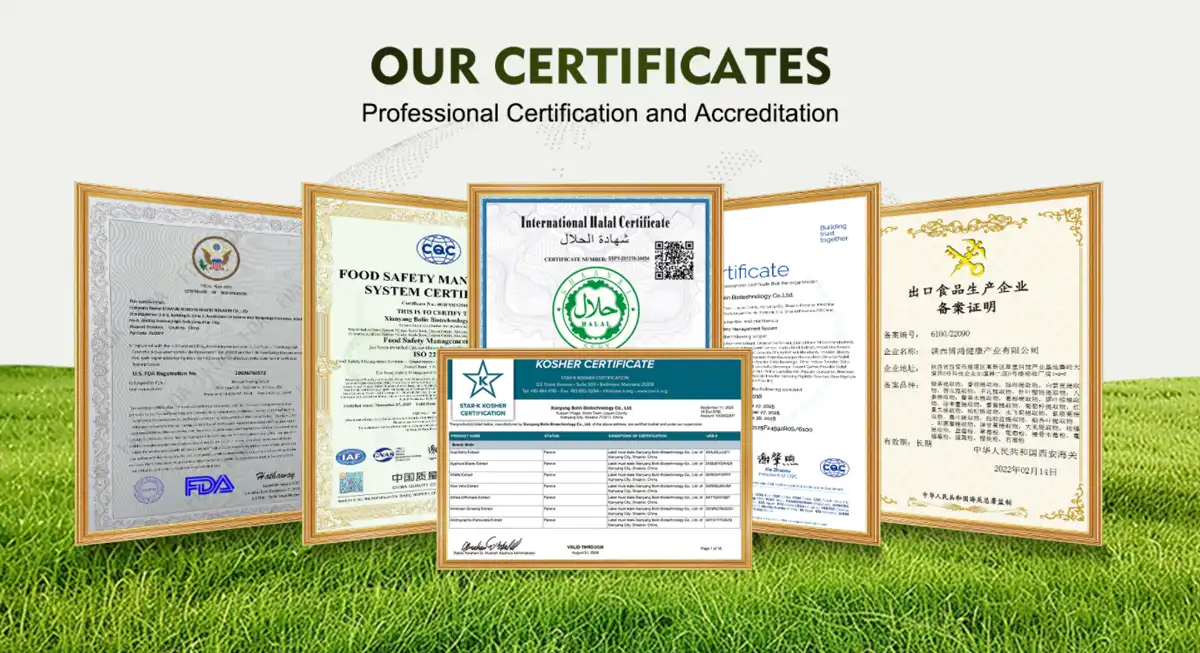
Setting up reliable supply lines starts with carefully screening potential suppliers. Manufacturing certifications give you basic peace of mind about quality processes and following the rules. For example, ISO 9001 certification shows that quality management processes are written down, and ISO 22000 or FSSC 22000 certification shows that food safety management systems are in place. GMP certification for making dietary supplements (based on 21 CFR Part 111 in the US or similar standards) makes sure that the right controls are in place for handling, processing, and checking the ingredients.
For organic licenses to be valid, they must be checked by reputable groups like the USDA Organic program, the EU Organic program, or similar programs. Getting Kosher and Halal certifications helps companies that sell to certain groups of people find new customers. Suppliers should be able to easily provide up-to-date certificates and show that they are happy to work with audit requests or third-party inspections.
With traceability tools, you can keep track of where the raw blueberries come from all the way through extraction and final packaging. Leading suppliers use blockchain or digital tracking tools to keep records of where each production batch came from, how it was processed, and the results of any tests that were done. During regulatory inspections or customer audits, this paperwork is very important because it lets you act quickly if quality problems arise. Specifications for buying things should make it clear that they need Certificates of Analysis that are special to each lot and come with full documentation for tracking them.
Sample Evaluation and Pilot Production Validation
Sample testing is an important part of good procurement strategies before agreeing to large purchases. The first test should check the material's look, particle size distribution, and bulk density, all of which affect how it handles and forms. Testing for solubility in the right matrices shows that it can be used in the ways that were planned. Analytical testing by unbiased third-party labs backs up what the seller says on the COA about the amount of anthocyanin, moisture, heavy metals, and microbiology.
Before going full-scale, pilot production runs with sample materials show any problems that might come up with processing. Stability studies on finished goods made from sample batches find any interactions or decline patterns that were not expected. Sensory evaluation panels look at how color, flavor, and smell affect goods that people will be using. These steps for approval lower the risks that come with switching suppliers or using new ingredients.
Instead of relying on a single source, procurement teams should set up multi-supplier approval programs. Keeping an accepted vendor list with at least two qualified sources for key ingredients helps keep the business running even if there are supply problems. Re-evaluating backup sources on a regular basis through sample testing keeps their qualification status up to date and gives you an edge when negotiating a contract.
Building Strategic Partnerships for Custom Solutions
In addition to buying things, strategic relationships with ingredient suppliers give businesses an edge over their competitors by working together on new products. The biggest companies that make anthocyanin powder have expert service teams that can help with formulating better products, giving customers stability data that is specific to their needs, and helping with regulatory paperwork for target markets.
During the development stages of a product, suppliers who offer flexible minimum order amounts are especially helpful for private label and OEM manufacturers. Custom standardization to specific anthocyanin percentages, particle size requirements, or carrier matrix mixtures lets products stand out. Sharing intellectual property rights through co-development agreements can speed up growth and spread the costs of development.
Long-term supply agreements with price stability clauses and volume promises protect both parties from changes in the market and encourage suppliers to keep enough inventory and production capacity. These partnerships work best when there is open communication about predicting demand, setting high standards, and working on continuous improvement. Reviews of a business on a regular basis that look at performance metrics, market trends, and future regulatory changes make relationships stronger in more ways than just buying and selling.
Conclusion
To find the best blueberry anthocyanin extract for antioxidant power, you have to balance a lot of different buying factors, such as quality, compliance, and business strategy. In nutraceutical supplements, functional drinks, cosmetics, and pharmaceutical applications, high-purity anthocyanin powder that meets pharmaceutical-grade specifications performs consistently. Strategic sourcing means carefully checking out suppliers based on things like certifications, traceability, and quality systems, all while forming partnerships that help with business continuity and new ideas. Effective procurement teams maximize return on investment (ROI) by understanding what affects prices, negotiating volume agreements, and using the positioning of premium ingredients to make products that stand out and command a good market position. As scientific evidence grows and more people learn about the health benefits of anthocyanin, manufacturers who can reliably get high-quality blueberry anthocyanin powder through strategic supplier relationships will have a lot of opportunities.
FAQ
What distinguishes blueberry anthocyanin powder from regular blueberry powder?
Blueberry anthocyanin powder represents a concentrated extract standardized to specific anthocyanin content, typically 15-25%, whereas whole blueberry powder contains all fruit components including sugars, fibers, and organic acids with anthocyanin levels around 0.5-1%. The extraction process removes inactive bulk material, delivering 20-50 times higher bioactive concentration per gram. This standardization ensures consistent antioxidant potency critical for pharmaceutical and nutraceutical applications where dosage precision matters.
Are there safety concerns or contraindications with blueberry anthocyanins?
Blueberry anthocyanins demonstrate excellent safety profiles with human consumption history spanning centuries. Clinical trials employing doses up to 640mg daily for extended periods report minimal adverse effects. Potential considerations include mild gastrointestinal effects at very high doses and theoretical interactions with anticoagulant medications due to cardiovascular effects, though clinical significance remains unestablished. Regulatory authorities globally recognize anthocyanin extracts as safe when used appropriately in food and supplement applications.
How can buyers verify blueberry anthocyanin powder quality and authenticity?
Quality verification starts with requesting complete COAs showing HPLC anthocyanin profiles, not just total polyphenol measurements that lack specificity. Third-party testing through independent laboratories confirms supplier claims. Authentication methods include botanical DNA analysis preventing adulteration with cheaper sources. Supplier facility audits or third-party GMP certifications provide systems-level assurance. Traceability documentation linking batches to specific raw material lots enables verification back to cultivation sources, ensuring authenticity throughout the supply chain.
Partner with Bolin Biotechnology for Premium Anthocyanin Powder Supply
Bolin Biotechnology stands as your trusted anthocyanin powder manufacturer, delivering pharmaceutical-grade blueberry extracts that meet the exacting standards of global nutraceutical, pharmaceutical, and functional food industries. Our vertically integrated operations combine controlled cultivation partnerships with advanced extraction facilities certified to ISO 9001, GMP, and HACCP standards, ensuring consistent anthocyanin content and exceptional antioxidant potency across every production batch. Each lot undergoes comprehensive testing for purity, heavy metals, and microbiological safety, backed by complete traceability documentation supporting your regulatory submissions and quality assurance requirements.
Our technical team collaborates with procurement managers and formulators to optimize anthocyanin powder specifications for your specific applications, whether developing cardiovascular supplements, functional beverages, or anti-aging cosmetics. We accommodate flexible minimum order quantities for product development while maintaining capacity for large-scale commercial supply with predictable lead times. Contact our team at sales1@bovlin.com to request samples, discuss custom standardization requirements, or explore how our premium blueberry anthocyanin extracts can elevate your product differentiation strategy. Visit bolinbiotech.com to review our complete botanical extract portfolio and discover why leading brands trust Bolin Biotechnology as their strategic ingredient partner.
References
Wu, X., Beecher, G.R., Holden, J.M., Haytowitz, D.B., Gebhardt, S.E., & Prior, R.L. (2006). Concentrations of anthocyanins in common foods in the United States and estimation of normal consumption. Journal of Agricultural and Food Chemistry, 54(11), 4069-4075.
Khoo, H.E., Azlan, A., Tang, S.T., & Lim, S.M. (2017). Anthocyanidins and anthocyanins: colored pigments as food, pharmaceutical ingredients, and the potential health benefits. Food & Nutrition Research, 61(1), 1361779.
Kalt, W., Cassidy, A., Howard, L.R., Krikorian, R., Stull, A.J., Tremblay, F., & Zamora-Ros, R. (2020). Recent research on the health benefits of blueberries and their anthocyanins. Advances in Nutrition, 11(2), 224-236.
Pojer, E., Mattivi, F., Johnson, D., & Stockley, C.S. (2013). The case for anthocyanin consumption to promote human health: a review. Comprehensive Reviews in Food Science and Food Safety, 12(5), 483-508.
Yousuf, B., Guldiken, B., Ozkan, C.F., & Capanoglu, E. (2016). Investigating the effect of different extraction techniques on anthocyanin content and stability. Food Chemistry, 197(Part A), 1124-1130.
Wallace, T.C., & Giusti, M.M. (2015). Anthocyanins. Advances in Nutrition, 6(5), 620-622.