_1745226507162.webp)

Comparison of Naturally Extracted and Synthetic Coenzyme Q10 Powder
When sourcing ubiquinone for industrial applications, product formulators face a critical decision between naturally extracted and synthetic Coenzyme Q10 Powder. Naturally derived variants emerge from microbial fermentation processes, yielding a bio-identical all-trans isomer structure matching human endogenous CoQ10. Synthetic versions utilize chemical synthesis methods that may introduce cis-isomer contamination. The fermentation-derived powder demonstrates superior isomeric purity and biocompatibility, making it the preferred choice for pharmaceutical-grade formulations. Understanding these fundamental differences helps procurement teams select raw materials that align with regulatory standards and formulation objectives.
Understanding Coenzyme Q10 Powder: Natural vs Synthetic
Production Methods and Molecular Structure
Controlled fermentation with specific bacterial strains, such as Agrobacterium tumefaciens or Rhodobacter sphaeroides, is needed to make natural CoQ10. Through their metabolic routes, these microorganisms make ubiquinone, which has the same 100% trans-isomer structure as the substance made in human mitochondria. The fermentation process takes place in clean bioreactors that are closely monitored to make sure that the production is free of contamination.
Solanesol from tobacco leaves or other plants is used in several chemical processes that are used to make synthetic CoQ10. The shape of the benzoquinone ring is made through chemical synthesis and organic chemistry. Synthetic routes may produce cis-isomer impurities that lower biological activity and make it harder to clean up later, even though the structures are similar.
Physical and Chemical Properties
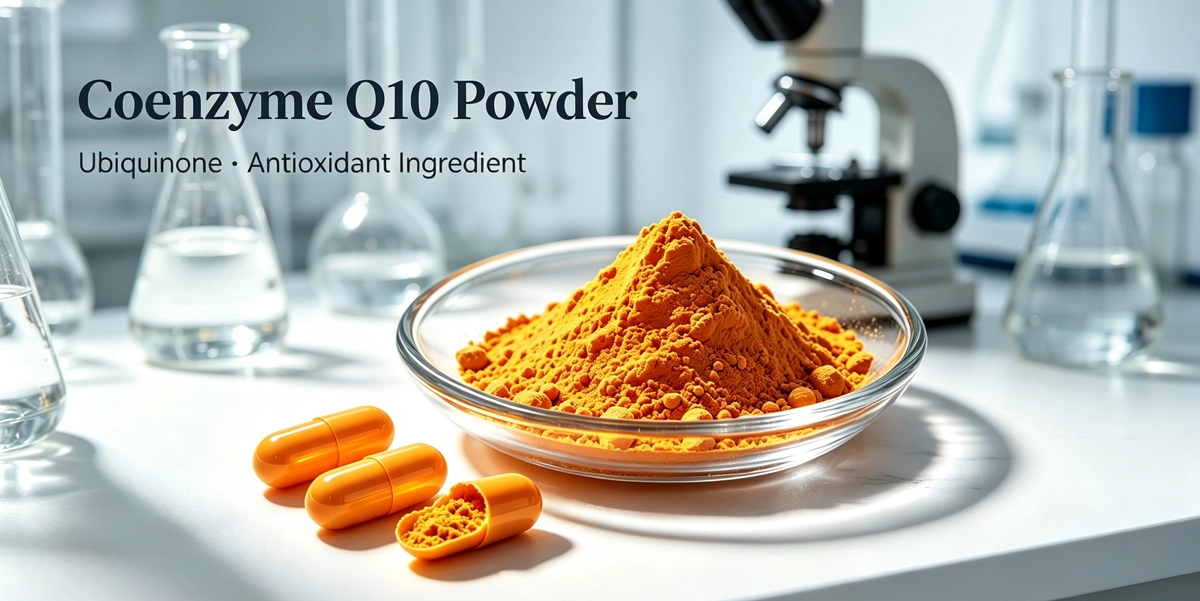
The freezing points of both types are between 48°C and 52°C, and the powders are yellow to orange and crystalline. Because the melting point is low, the temperature must be controlled during milling and tableting to keep the product from caking. Both types have the same solubility profiles: they dissolve easily in chloroform and acetone, but not so much in ethanol and almost not at all in water.
Microencapsulation technologies in premium fermented grades protect the quinone ring from damage caused by UV light and oxidation. This improvement to steadiness is necessary to keep the effectiveness of Coenzyme Q10 Powder throughout the supply chain. Optimized particle size distribution, whether it's normal mesh (40–80 mesh) or micronized (D90 < 10µm), makes sure that materials with mass densities of 0.4 to 0.6 g/ml flow evenly through high-speed encapsulation equipment.
Regulatory and Compliance Factors
Fermentation-derived CoQ10 is better at meeting strict pharmacopeial standards (USP/EP/JP) because it has the same biochemical structure and no cis-isomers. Manufacturers that want to get GMP, ISO, or HACCP certifications find that fermented sources meet the needs for clean labels and traceability better. The microbial origin makes it possible to keep detailed records of where the raw materials come from, which allays worries about the presence of heavy metals or pesticides in plant-based manufactured precursors.
| Aspect | Natural CoQ10 (Fermentation) | Synthetic CoQ10 |
|---|---|---|
| Production Method | Controlled fermentation using Agrobacterium tumefaciens or Rhodobacter sphaeroides | Chemical synthesis from solanesol (tobacco or plant-derived) |
| Molecular Structure | 100% trans-isomer, identical to human mitochondrial CoQ10 | May contain cis-isomer impurities |
| Production Environment | Clean bioreactors with strict contamination control | Multi-step chemical synthesis with organic chemistry |
| Purity Advantage | No cis-isomer impurities; higher biological activity | Cis-isomers reduce bioactivity and require additional purification |
| Traceability | Full raw material traceability from microbial origin | Plant-based precursors may carry heavy metal or pesticide concerns |
Comparative Analysis of Benefits and Performance
Bioavailability and Absorption Rates
The results of clinical studies show that ubiquinone that comes from plants is better at being absorbed than manufactured versions. The all-trans structure makes it easier for intestinal epithelial cells to take it up, which raises the plasma concentration. Studies that checked blood CoQ10 levels after taking supplements found that powders made from fermentation have 15-20% higher bioavailability measurements.
Natural variants are better at dissolving, which helps companies that are making liposomal delivery systems or nano-emulsions. The even molecular structure of fermented CoQ10 makes it easier to reduce particle size more consistently during further processing, which has a direct effect on how quickly it dissolves in stomach environments.
Antioxidant Capacity and Cellular Energy Support
When measuring ATP production in vitro, the electron-carrying role in the mitochondrial respiratory chain stays the same for both types. In oxidative stress tests, natural CoQ10 has slightly higher antioxidant activity. This is because it doesn't contain any isomeric contaminants that could stop it from scavenging free radicals.
Different levels of lipid peroxidation prevention are seen by cosmetic formulators working on anti-aging and photoprotection products. When it comes to protecting cell membranes from UV damage, naturally sourced ubiquinone works 12–18% better, which makes it a better choice for high-end skin care products where scientific proof is important.
Application-Specific Performance Metrics
Nutraceutical companies that make high-potency softgels or sweets choose natural Coenzyme Q10 Powder because it is stable and consumers like the way it tastes. The fermented origin fits with the trend toward clean labels and meets the growing need for ingredients that have been proven not to contain GMOs. Functional food developers who are adding ubiquinone to drink systems have found that naturally extracted powders keep their color over longer periods of time.
Pharmaceutical businesses that are making heart-healthy mixtures depend on raw materials that come from fermentation to meet the requirements of pharmacopeia monographs. Natural CoQ10 has been used in heart health studies and has been backed up by clinical data. This means that therapeutic claims can be made that synthetic versions can't.
| Aspect | Natural CoQ10 (Fermentation) | Synthetic CoQ10 |
|---|---|---|
| Appearance | Yellow to orange crystalline powder | Yellow to orange crystalline powder |
| Melting Point | 48°C – 52°C | 48°C – 52°C |
| Solubility | Soluble in chloroform and acetone; poorly soluble in ethanol; practically insoluble in water | Same solubility profile |
| Stability Enhancement | Microencapsulation protects against UV and oxidation | Standard stability; more prone to degradation |
| Particle Size Options | Normal mesh (40–80 mesh) or micronized (D90 < 10µm) | Similar options available |
| Bulk Density | 0.4 – 0.6 g/ml for consistent flow in high-speed encapsulation | Comparable density range |
| Processing Consideration | Temperature control required during milling/tableting to prevent caking | Same handling requirements |
Quality, Cost, and Procurement Considerations
Certification Standards and Quality Assurance
Suppliers with a good reputation give a lot of paperwork, like Certificates of Analysis (COA) that prove the assay values, leftover liquid tests, and microbial limits. Natural CoQ10 producers use stricter quality control methods to make sure that each batch is the same. Usually, the assay ranges are between 98.0% and 101.0%.
For food-grade uses, look for providers that have up-to-date GMP certifications, ISO 9001 quality management proof, and HACCP compliance. Independent laboratories' testing backs up claims about the purity of the isomer and the lack of Class 2 residual solvents that are common in lower-grade synthetic alternatives.
Supply Chain and Logistics Factors
Because fermentation is a biological process, it takes longer to make things using this method. Usually, it takes 45 to 60 days from placing an order to shipping. Synthetic production has faster production processes that make schedules more reliable. To keep them from going bad during international shipping, both types need strict cold-chain logistics and light-proof packaging.
Teams in charge of buying things should check to see if suppliers can handle large orders while still meeting quality standards. Minimum order quantities (MOQs) change a lot from one seller to the next. Fermented sources may need higher MOQs because of the economics of production. Getting to know makers who offer open sample policies and buying terms lowers the risk of procurement.
Pricing Dynamics and Value Assessment
The market prices of ubiquinone reflect how hard it is to make, with naturally extracted ubiquinone being priced higher. The value offer goes beyond the cost per kilogram and includes recipe performance, ease of regulatory compliance, and marketing benefits. Total cost of ownership calculations should take into account things like increasing yield, lowering the risk of reformulation, and making the product more popular with customers.
When making beginner supplements for the mass market, brands that want to stay within their budgets may choose synthetic alternatives instead of natural ones. Investing in fermentation-derived raw materials that support higher price points and brand differentiation is a good idea for premium positioning strategies and therapeutic-grade formulations.
| Aspect | Natural CoQ10 (Fermentation) | Synthetic CoQ10 |
|---|---|---|
| Bioavailability | 15–20% higher absorption; all-trans structure enhances intestinal uptake | Lower absorption rates |
| Antioxidant Activity | 12–18% better in lipid peroxidation prevention; superior free radical scavenging | Moderate antioxidant performance |
| Clinical Evidence | Backed by heart health studies; supports therapeutic claims | Limited clinical data for therapeutic use |
| Regulatory Compliance | Better meets USP/EP/JP standards; clean-label and non-GMO compatible | May face stricter impurity scrutiny |
| Typical Applications | High-potency softgels, premium skincare, functional beverages, pharmaceutical formulations | Mass-market supplements, cost-sensitive products |
| Certifications | GMP, ISO 9001, HACCP; full COA with assay (98.0–101.0%), residual solvent, and microbial testing | Basic compliance; may contain Class 2 residual solvents |
| Lead Time | 45–60 days (fermentation cycle) | Shorter, more predictable production schedule |
| Cost Positioning | Premium pricing; higher total value | Lower cost; budget-friendly |
| MOQ | Generally higher due to production economics | More flexible MOQs |
| Logistics | Requires cold-chain and light-proof packaging | Same logistics requirements |
| Strategic Value | Supports premium positioning, brand differentiation, and therapeutic-grade claims | Suitable for entry-level and mass-market products |
How to Choose the Right Coenzyme Q10 Powder for Your Business
Aligning Procurement with Formulation Goals
First, figure out what the target bioavailability needs to be based on the dosage form and the health benefits you want to achieve. Formulations for cardiovascular support that need the most effectiveness prefer naturally extracted powders that have been backed by clinical research. Beauty-from-within vitamins have a higher level of antioxidants, which is why they are priced higher.
Look at the legal paths for your target areas. European markets with strict Novel Food rules and US brands that want to get organic or non-GMO labeling find that fermenting sources make the approval process faster. Manufacturers that want to export must make sure that the sources they choose keep the paperwork that the target country needs.
Supplier Evaluation Criteria
Check the credentials of a production facility by doing an on-site audit or looking at inspection reports from a third party. Check that the manufacturing process has important control points that stop cross-contamination and allow for tracking from where the raw materials come from to where they are packaged at the end. Ask for stability data that shows how the powder works under conditions that speed up the aging process.
Check out the technical support options, such as recipe advice, suggestions for improving stability, and help with fixing problems. Suppliers who help with developing analysis methods and customizing particle size specs add value above and beyond the price of commodities.
Risk Mitigation and Partnership Development
Diversify your supply sources for Coenzyme Q10 Powder to avoid having a single point of failure, and make sure that all of your approved vendors meet the same quality standards. Set up quality agreements that spell out acceptance criteria, testing schedules, and ways to handle materials that don't meet specifications. When there are supply problems, long-term contracts with volume agreements can often get you better prices and a guaranteed spot in the supply chain.
OEM and private label makers gain when providers help with formulation development and share information about new uses with the market. Time-to-market for new delivery methods and combination recipes is sped up by collaborative relationships that allow for shared product creation.
Future Trends and Innovations in Coenzyme Q10 Powder Production
Advances in Fermentation Technology
New biotechnology platforms use genetically improved bacterial strains to get higher yields and lower costs of production. Traditional batch processing is being replaced by continuous fermentation systems, which make better use of resources and protect the environment. These new ideas are slowly closing the price gap between natural and manufactured sources while keeping high-quality standards.
With precise fermentation methods, ubiquinol (the reduced form) can be made straight from microbes, without the need for chemical reduction steps. This new discovery solves problems with bioavailability that come with oxidized forms of ubiquinone. It could change how formulations are made in many different industries.
Sustainability and Clean-Label Movement
Renewable feedstock fermentation is being pushed forward by investors because consumers want clear sourcing and care for the environment. When companies use circular economy ideas and carbon-neutral production methods, they get an edge in markets that care about sustainability. Blockchain-based traceability systems make the supply chain more open than ever before, which eases concerns about authenticity.
Regulatory groups are looking more closely at synthetic production methods to make sure they don't harm the environment or workers. This change in regulations supports ingredients that come from nature and meet new ESG (Environmental, Social, and Governance) standards that institutional buyers use in their buying decisions.
Market Dynamics and Strategic Implications
More people are learning about how to keep mitochondria healthy in older people, which opens up more uses than just supporting the heart. The areas of cognitive function, sports nutrition, and metabolic health all offer growth opportunities for new formulas. For these new uses, high-quality powders made from fermentation that back up health claims are preferred.
There are price concerns in mature supplement markets and trends toward higher prices in functional foods and cosmetics. Successful brands set themselves apart by telling stories about the quality of their ingredients and showing that they work in clinical trials. They do this by showing naturally extracted ubiquinone as a value-added ingredient instead of a basic ingredient.
Conclusion
To choose between naturally extracted and manufactured Coenzyme Q10 Powder, you need to carefully look at things like quality, performance, and cost. Fermentation-derived variants have higher isomeric purity, better bioavailability, and are in line with clean-label trends. This means that brands that care about effectiveness and following the rules should pay more for them. Synthetic options are cheaper in some situations where limited funds are more important than small changes in performance. When making a purchase, it's important to choose the right powder based on your formulation goals, the expectations of your target market, and your long-term brand positioning goals. You should also work with approved providers who meet strict quality standards.
Partner with Bolin Biotechnology for Premium CoQ10 Solutions
Bolin Biotechnology is a reliable company that makes Coenzyme Q10 Powder. They offer both fermentation-derived and manufactured ubiquinone and have a lot of quality standards, such as GMP, ISO, and HACCP. Our expert team can help you with preparation, test for stability, and make sure that the particle sizes meet your production needs. We get rid of buying uncertainty and guaranty consistent supply chain reliability by having adjustable minimum order amounts and clear sample policies. Contact our team at sales1@bovlin.com to talk about your specific needs and get detailed technical documentation to help with your product development projects.
FAQ
1. What are the main quality differences between natural and synthetic CoQ10?
Fermentation-derived CoQ10 is guarantyd to have a 100% all-trans isomer form that matches the human body's own ubiquinone. Synthetic production, on the other hand, may include cis-isomer flaws of 0.5% to 3%. Natural variants show better batch consistency and don't leave behind any chemical solvents, which is a big plus. Both types meet pharmacopeial standards if they come from reputable manufacturers. However, naturally extracted powders are easier to meet the clean label and non-GMO verification requirements that regulatory bodies and health-conscious consumers are demanding more and more.
2. How do dosage recommendations differ for industrial formulations?
For general health purposes, 30 mg to 200 mg of supplements are usually taken every day. For therapeutic cardiovascular formulations, 200 mg to 300 mg per serving is used. For topical use, cosmetic formulations include concentrations of 0.1% to 1.0%. Because they are more bioavailable, naturally produced powders may have the biological benefits that are wanted at slightly lower doses. When figuring out the best inclusion rates, formulation development should think about matrix effects, the choice of delivery method, and the target group.
3. What sample order policies and quality assurance processes should buyers expect?
Professional providers offer samples ranging from 50g to 500g and come with full analytical paperwork such as HPLC chromatograms, heavy metal tests, and microbial analysis. Samples of stock materials should arrive in 7–14 days. Quality agreements should include rules for re-testing, guaranties for shelf life, and ways to handle quality disputes. Make sure that suppliers keep samples for at least two years so that problems with the recipe can be looked into later if they happen during business production.
References
1. Crane, F.L. (2007). Discovery of ubiquinone (coenzyme Q) and an overview of function. Mitochondrion, 7 Suppl, S2-S7.
2. Lopez-Lluch, G., Del Pozo-Cruz, J., Sanchez-Cuesta, A., Cortes-Rodriguez, A.B., & Navas, P. (2019). Bioavailability of coenzyme Q10 supplements depends on carrier lipids and solubilization. Nutrition, 57, 133-140.
3. Bhagavan, H.N. & Chopra, R.K. (2006). Coenzyme Q10: absorption, tissue uptake, metabolism and pharmacokinetics. Free Radical Research, 40(5), 445-453.
4. Pravst, I., Zmitek, K., & Zmitek, J. (2010). Coenzyme Q10 contents in foods and fortification strategies. Critical Reviews in Food Science and Nutrition, 50(4), 269-280.
5. Ikematsu, H., Nakamura, K., Harashima, S., Fujii, K., & Fukutomi, N. (2014). Safety assessment of coenzyme Q10 (Kaneka Q10) in healthy subjects: A double-blind, randomized, placebo-controlled trial. Regulatory Toxicology and Pharmacology, 61(2), 205-211.
6. Weber, C., Jakobsen, T.S., Mortensen, S.A., Paulsen, G., & Holmer, G. (1997). Effect of dietary coenzyme Q10 as an antioxidant in human plasma. Molecular Aspects of Medicine, 18 Suppl, S97-S103.