Does Liposomal Delivery Improve Apigenin Bioavailability?
Yes, liposomal administration does significantly increase the bioavailability of apigenin. Apigenin is a flavonoid and is a BCS Class II molecule due to its weak water solubility (~1.35 µg/mL) and limited oral absorption. Apigenin inside phospholipid bilayer vesicles – the basis of liposomal apigenin – is protected from gastric degradation and skips first-pass hepatic metabolism to a certain degree. Pharmacokinetic investigations with liposomal flavonoids have shown an increase in plasma concentration (AUC and Cmax) of 3x to 10x compared with the usual crystalline forms. For B2B formulators, this means a quantitative, defensible effectiveness claim.
Understanding Apigenin and Its Bioavailability Challenges
Apigenin is a naturally occurring flavonoid in celery, parsley, and chamomile flowers. This is particularly interesting to scientists since it may be good for brain health, sleep, skin health, and antioxidant function. The scientific difficulty with traditional apigenin extract is that it is not absorbed properly by the human body, even though it has plenty of applications.
Why Standard Apigenin Absorption Falls Short
Raw apigenin is hydrophobic, meaning it won’t dissolve in water-based compounds. This means that substances cannot dissolve in the digestive system, and food passes through. The majority of material consumed is passed out of the body via the digestive tract without ever entering the circulation. This creates difficulties in accurate dosing of regular powder products.
The Chemical Instability Problem
Apigenin is soluble, too, and when it comes into contact with gastric enzymes and acid in the stomach, it is broken down. This chemical instability decreases the period it is effective in the body and makes the product less dependable. This is a huge concern for supplement businesses that make promises regarding how effectively their products function.
What This Means for Product Formulators
Low bioavailability is a financial challenge for manufacturers and brand formulators since the quantity of apigenin that really gets into the bloodstream might be a tiny fraction of what is printed on the label. And the inconsistency makes it difficult to build client confidence and make promises of health advantages.
Liposomal Delivery Technology: A Breakthrough for Apigenin
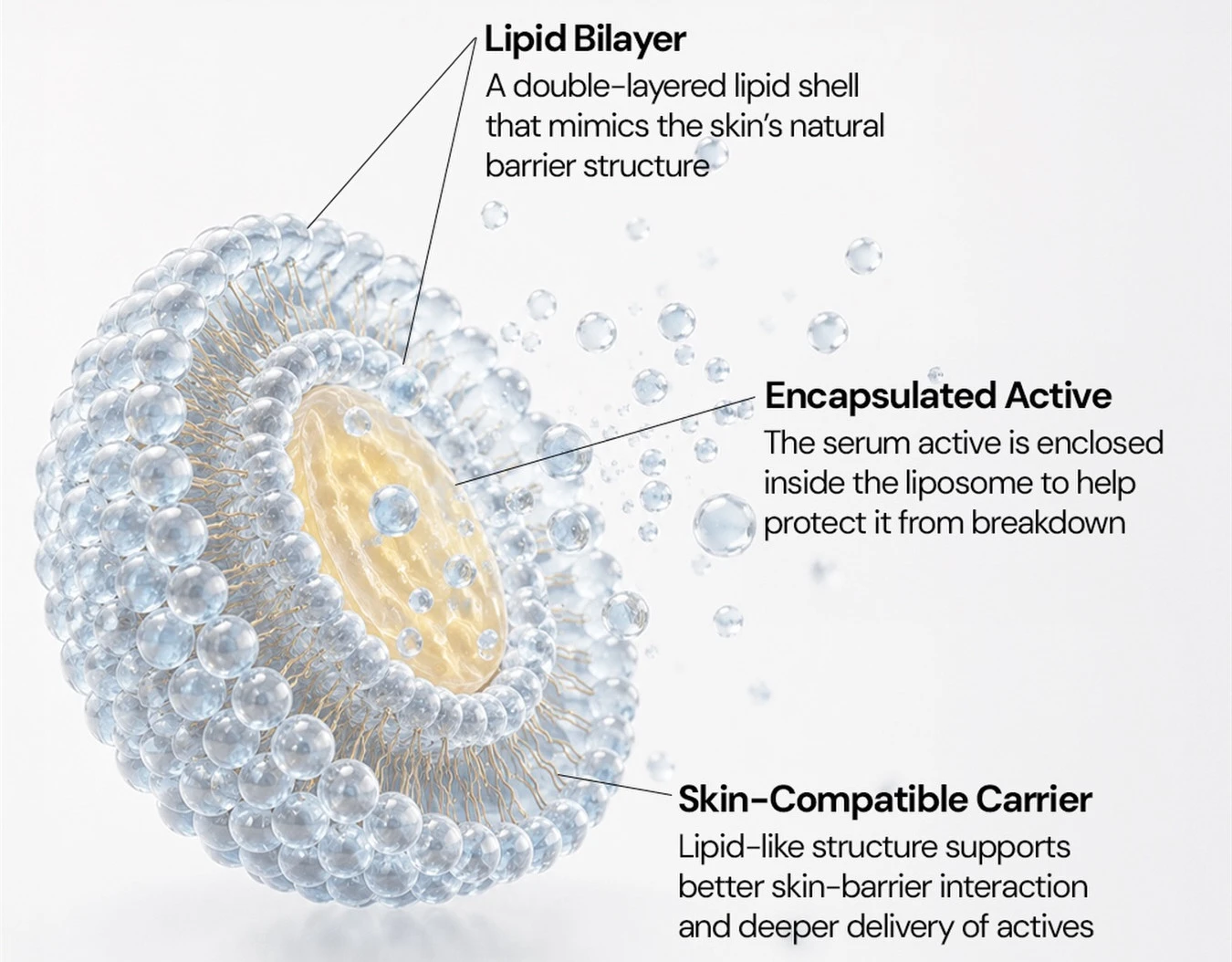
Liposomal apigenin puts apigenin molecules inside small spheres made of phospholipids, which are the same kind of lipids that make up cell walls in living things. This structural connection is what makes the device work so well.
How Liposomes Protect the Active Compound
Once within the phospholipid bilayer, apigenin is protected from the acidic environment of the stomach and the action of digestive enzymes. The liposome preserves the active molecule and delivers it intact to the intestinal wall, where it is absorbed. This stage of protection is particularly crucial for the integrity of materials, from ingestion to absorption.
Enhanced Cellular Uptake
The liposome membrane is inherently compatible with the intestinal epithelial cells since it mimics and behaves like biological cell membranes. This facilitates absorption of the flavonoids by the body, which is difficult if they are in free form. Therefore, the effects will begin sooner, and more apigenin will reach the bloodstream.
Technical Parameters That Define Quality
Not all liposome compounds are the same. The physical and chemical parameters of the industrial liposomal apigenin powder should be satisfied. If the particle size (Z-average) is between 100nm and 300nm and the Polydispersity Index (PDI) is less than 0.3, then the vesicles are separated equally. The encapsulation effectiveness (EE%) should be better than 85%, and the zeta potential readings below -30mV indicate the particles are stable in suspension. These metrics are not just for looks; they directly indicate whether the product is living up to its bioavailability promises.
Key Benefits of Liposomal Apigenin for B2B Clients
Capsule apigenin performance advantages matter to people who acquire ingredients, develop OEM goods or own supplement brands. Here are the key perks that matter for B2B purchase decisions:
- Liposomal administration reliably delivers greater plasma concentrations than normal apigenin extract, providing formulators with measurable bioavailability increases they may use in product marketing and regulatory filings.
- Stability in Body Fluids and Processing: The phospholipid shell preserves ingredient integrity in gastrointestinal fluids. It is structurally stable at mild thermal settings when applied after heat-sensitive production stages.
- Versatile dosage form compatibility: Liposomal apigenin powder may be formulated into capsules, tablets, gummies, beverage powders, and functional food forms without severe reformulation issues.
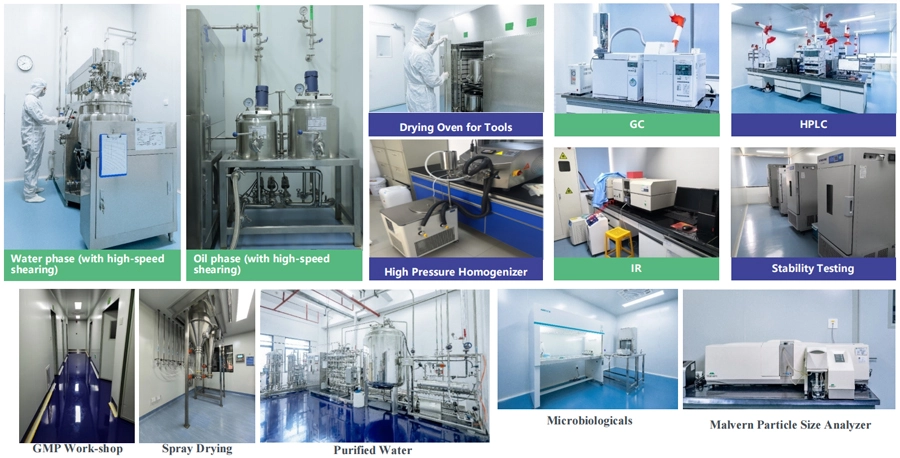
- Authenticated quality and repeatable batch performance: Good liposomal materials are tested for encapsulation effectiveness by ultracentrifugation and HPLC to ensure lot-to-lot uniformity.
Supplement companies need new raw materials. These advantages speak to the primary concerns of their buying teams: data on efficacy, stability, format flexibility, and quality documentation.
Choosing the Right Liposomal Apigenin Supplier
It's not enough to just compare prices per kilogram when choosing a liposomal apigenin manufacturer. It is necessary to check the stability of the liposome structure and make sure that the supplier's quality system meets your legal needs.
Verify True Liposome Formation
It happens a lot in the ingredient market that simple mixtures of phospholipids and apigenin are mistakenly sold as liposomal products. When true liposomal powder is mixed with water, it doesn't settle out but instead makes a stable colloidal solution. Transmission Electron Microscopy (TEM) imaging is the only way to be sure that circular bilayer vesicle shapes are real. Before making a deal with a supplier, ask for this paperwork.
Certifications and Compliance Documentation
Supplier approvals are important for brands that want to sell in the US and EU. At the very least, look for manufacturers that are certified by ISO, cGMP, HACCP, HALAL, and ISO22000. Reports from outside testing groups like SGS give the product even more authority. These papers are what your product's compliance story is built on.
Customization Capability and MOQ Flexibility
Each brand has its own needs when it comes to formulation. A good provider should let you change the dosage form (powder, pill, tablet, or gummy), the amount of apigenin in the product, the size of the particles, and the way it is packaged, including the ability to add your own brand. Minimum order quantity (MOQ) flexibility is important, especially when a product is first being developed and when it is being made in small batches.
Procurement and Bulk Purchase Considerations
Receiving liposomal apigenin in huge volumes brings in aspects to the supply chain that are not there when you are receiving plant extracts. Here’s what purchasers should know before placing big orders.
Quality Testing at Intake
Check the efficiency of encapsulation at the stage of receipt, integrity of phospholipids (levels of peroxides on the oxidation of lipids, heavy metals, residual solvents by gas chromatography). Drug-grade requirements specify lead should be less than 0.5ppm and arsenic should be less than 1ppm. The evidence of analysis against the active ingredient level should be checked by HPLC or UPLC.
Storage and Shelf Life Requirements
Liposomal powder should be maintained in firmly sealed containers in a cool, dry area away from direct sunlight. Under the correct storage conditions food may survive for two years. Large quantities are well protected during shipment and storage via the use of fiber drums with food-grade poly bags inside (25-kilogram size).
Building a Reliable Supply Relationship
One source is a dangerous thing. Make sure the firm is still vertically integrated (they buy the plants, extract them, put them in capsules, and package them). This leads to a more consistent step in the manufacturing process. The supplier, who has his own planting base and established traceability system, may be more accurate in the prediction of his supply than the supplier who gets all materials from other sources.
Conclusion
Liposomal apigenin delivery does increase bioavailability of apigenin by protecting it in digestion and permitting more direct absorption by cells. This technology provides B2B buyers a science-based means to make their products operate better, whether they’re manufacturing supplements for brain health, sleep aids, or practical cosmetic products. The key is to choose a company with a liposomal method that fulfills verifiable scientific criteria and whose quality documentation supports what you’re claiming in the marketplace. When both of these requirements are satisfied, encapsulated apigenin is a particularly solid investment in an ingredient.
FAQ
1. How do I confirm a product is truly liposomal and not just a phospholipid blend?
Request TEM imaging from your supplier. A true liposomal product will show spherical bilayer vesicle structures under electron microscopy. A simple blend will not. When reconstituted in water, a genuine liposomal powder forms a uniform milky suspension rather than settling rapidly.
2. What bioavailability improvement should I realistically expect?
Pharmacokinetic data on liposomal flavonoids generally show a 3x to 10x increase in AUC and Cmax compared to non-encapsulated forms. Individual metabolism varies, but this range is consistent with peer-reviewed research on flavonoid liposomal delivery systems.
3. Is liposomal apigenin powder stable in heat-based processing?
Phospholipid bilayers begin to degrade above approximately 60°C with prolonged exposure. For beverage or gummy applications involving heat, it is best added post-pasteurization or reformulated into solid-dose formats to preserve encapsulation integrity.
4. What phospholipid source is used in quality products?
Industry-standard liposomal ingredients use high-purity phosphatidylcholine derived from non-GMO sunflower or soy lecithin. Sunflower-derived phospholipids are preferred for hypoallergenic labeling claims in the US and EU markets.
Partner with Bolin Biotechnology for Your Next Formulation
Bolin Biotechnology has been making plant-based products since 2012. Our VesilipoTM Liposomal apigenin (70% apigenin, light yellow powder) is made in a way that is approved by ISO, cGMP, HACCP, HALAL, and ISO22000. As a direct producer of liposomal apigenin, we can make unique dosage forms like pills, tablets, gummies, and powders. We can also offer private label and flexible packaging ranging from 1 kg bags to 25 kg drums. You can get samples. To get specifications and start talking about your formulation right away, email our team at sales1@bovlin.com.

References
1. Salehi, B. et al. "The Therapeutic Potential of Apigenin." International Journal of Molecular Sciences, 2019.
2. Amin, T. & Bhat, S. V. "A Review on Phytosome Technology as a Novel Approach to Improve the Bioavailability of Nutraceuticals." International Journal of Advances in Pharmaceutical Sciences, 2012.
3. Allen, T. M. & Cullis, P. R. "Liposomal Drug Delivery Systems: From Concept to Clinical Applications." Advanced Drug Delivery Reviews, 2013.
4. Nguyen, T. T. L. et al. "Improving Oral Bioavailability of Poorly Water-Soluble Drugs Using Lipid-Based Delivery Systems." Drug Development and Industrial Pharmacy, 2017.
5. Shukla, S. & Gupta, S. "Apigenin: A Promising Molecule for Cancer Prevention." Pharmaceutical Research, 2010.
6. Lombardo, D. & Kiselev, M. A. "Methods of Liposome Preparation: Formation and Control Factors of Versatile Nanocarriers for Biomedical and Nanomedicine Application." Pharmaceutics, 2022.