_1745226507162.webp)

Ergothioneine Powder Explained: A Natural Antioxidant Ingredient for Health and Beauty Products
Ergothioneine powder is a new and innovative natural antioxidant that is changing the way health and beauty products are made all over North America. Often called the "longevity vitamin," this naturally occurring amino acid protects cells in ways that regular antioxidants can't. Understanding ergothioneine's unique molecular benefits is important for procurement professionals in nutraceuticals, pharmaceuticals, cosmetics, and functional foods who want to make competitive formulations that are based on science. This in-depth book looks at its biochemistry, uses, sourcing issues, and quality standards. It gives formulators, R&D directors, and supply chain managers the information they need to choose ingredients that improve product performance.
What Is Ergothioneine Powder and How Does It Work?
Ergothioneine (CAS 497-30-3, EC 207-843-5) is an amino acid that contains sulfur and is mostly made naturally by fermenting certain types of fungi. The chemical makeup of this biological substance is very stable, and it doesn't oxidize even when it's made in harsh conditions. This makes it different from synthetic antioxidants.
The Cellular Transport Advantage
Since ergothioneine is important for the body, it has a transport protein (OCTN1) that is designed to take it in and spread it out in tissues. This selective accumulation mostly happens in tissues that are under a lot of oxidative stress, like the skin, brain tissue, liver, and kidneys. This protects the body exactly where it needs it most. Once ergothioneine gets into cells, it mainly stays in the mitochondria, which are the energy-producing parts of cells that are most likely to be damaged by free radicals.
Mechanism of Antioxidant Action
It gets rid of reactive oxygen species (ROS) and hydroxyl radicals by giving them an electron without turning them into pro-oxidants. It's not the same as vitamin C or polyphenols, which can sometimes make things react. A study in humans shows that stopping the production of cytokines can change the things that make inflammation happen. This supports both healing and preventative uses in recipes that deal with oxidative stress and diseases that happen when cells age.
Safety and Bioavailability Profile
Safety tests have shown that ergothioneine is safe to put on the skin and in the mouth. Studies showed that when up to 30 mg was taken every day for a long time, there were no bad effects. That's why there is a large therapeutic window where food supplements work well. If there is more than 50 mg/mL of it in the water, it dissolves quickly. To make it easy to mix into drinks, pills, and makeup bases, it is first broken down in the body.
Key Benefits and Uses of Ergothioneine Powder
Because this naturally occurring antioxidant can be used in many different types of products, it is very useful. It's helpful for formulators that it can be used for more than one thing. This is because it solves many market issues.
Nutraceutical and Supplement Applications
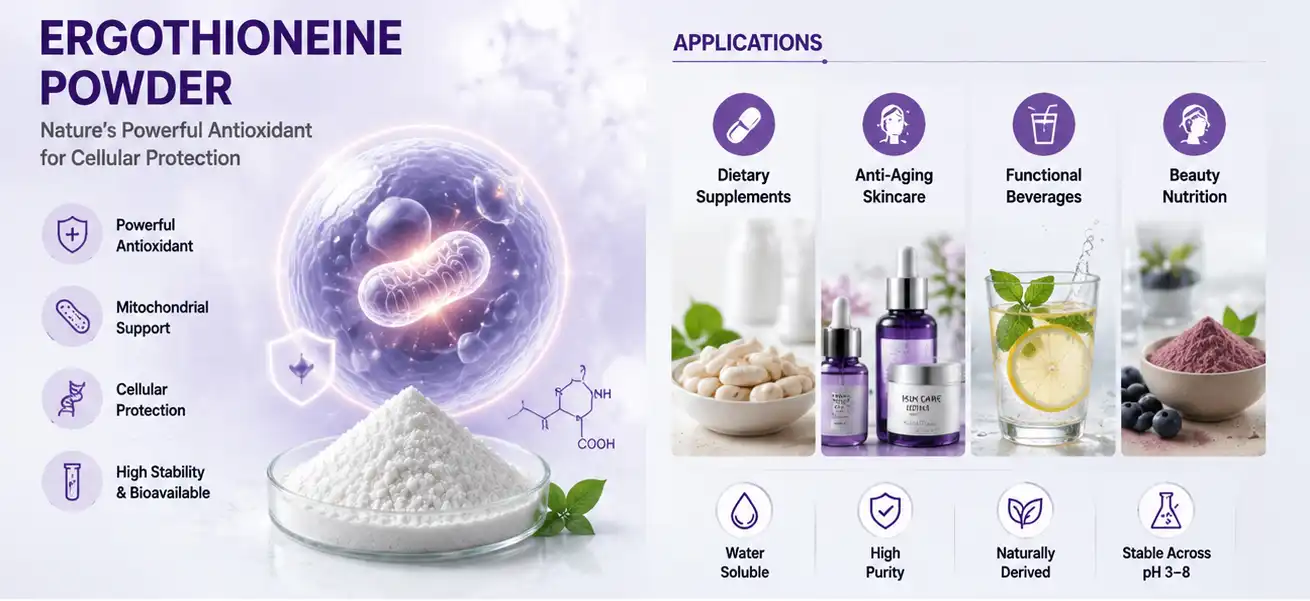
It is being used more and more in health products that say they can help people live longer. The brain works better and stays clear because it protects it. This is especially important for older people. It helps keep mitochondrial efficiency high, which in turn impacts how much energy cells make and how good their metabolism is, according to a study. These days, it's used in the right places to make anti-aging supplements that keep cells from ageing, recipes that help you remember things and concentrate better, immune support products that use its anti-inflammatory properties, and heart health supplements that protect the endothelium of blood vessels. Dosing plans can be changed without changing how good the product tastes because high-purity crystalline powder doesn't have a strong smell or taste. This is true whether the product is in capsules, tablets, or powder that dissolves in water.
Cosmetic and Dermatological Formulations
A lot of skin care companies like ergothioneine powder because it blocks UV rays very well. When UV light hits, ergothioneine powder stops free radicals that could damage DNA and collagen. This is how normal sunscreens protect cells at the molecular level. After 12 weeks of topical use at amounts between 0.5 and 2.0%, clinical tests show that the skin's elasticity and ability to hold water get better.
Scientists in the cosmetics industry use it in high-end anti-aging serums, whitening treatments that make the skin look better, eye contour products that smooth out fine lines, safe day creams that claim to protect against sun damage, and formulas that help the body heal after surgery. It's easy to mix the solid form with water to make emulsions of oil in water or water in oil. It will stay stable for as long as the product's normal shelf life if you store it correctly.
Functional Food and Beverage Innovation
More and more people want clean labels, which means there is a bigger need for well-known chemicals that are useful and backed by science. Things that don't have any "free-from" ingredients are what people want. Ergothioneine is a chemical that occurs naturally and does just that. For people who make drinks, it's steady (it works between pH 3 and 8) and easy to dissolve. In other words, it can be added to functional waters, ready-to-drink brain boosters, health shots, and teas to make them stronger. Energy and recovery bars make with it, and the companies that make them say it works well because it helps mitochondria.
Ergothioneine Powder Compared to Other Antioxidants
When buying teams know how ergothioneine stacks up against other well-known antioxidants, they can make better choices about how to formulate products and save money.
Superior Cellular Uptake and Retention
Vitamin C comes in the form of ascorbic acid, which is taken in by cells through non-specific transporters. OCTN1 transport proteins, on the other hand, bind and concentrate ergothioneine in tissues. This means that it works in cells for weeks, while water-soluble vitamins only work for hours. Glutathione is something that cells make on their own, but ergothioneine can easily get into cells. It is a better choice for people who have trouble making glutathione because of this.
Chemical Stability Advantages
A lot of antioxidants, like catechins and resveratrol, break down quickly in labs when they come in contact with heat, light, or air. Ergothioneine is very stable because it is made up of a thiol-imidazole molecule. It still works after being cooked, spray-dried, and put into capsules. This means that each batch will have the same shelf life and performance. This is very helpful for quality assurance teams that have to handle complicated supply chains.
Synergistic Formulation Potential
It's not that ergothioneine is bad for other antioxidants; it works with them to make the whole thing work better. It makes the antioxidant power much higher when mixed with vitamin E or coenzyme Q10. This is because it helps these molecules grow back after they get rid of free radicals. Formulators can use fewer chemicals overall while still having the same or even better performance claims. It costs less and looks better this way.
Sourcing and Sustainability Considerations
Ergothioneine that is made in a lab or taken from mushrooms is not as good for the earth as ergothioneine that is made naturally. Modern fermentation technology can get source materials to 99% pure while still being gentle on the earth. This meets the strict requirements for pharmaceutical-grade uses. For brands that want to draw eco-friendly customers, organic approval is another plus.
How to Source and Procure High-Quality Ergothioneine Powder?
To make sure you always have ergothioneine powder, you need to carefully check out the sources and make sure they meet their quality standards.
Critical Quality Parameters for B2B Procurement
Supply teams should be very clear about what they want. For example, they should want purity levels of at least 98% for pharmaceutical use and 95% for cosmetic use. They should also want heavy metal limits that meet EU or USP standards (lead <1 ppm, arsenic <0.5 ppm, mercury <0.1 ppm), microbial safety parameters like total plate count and lack of pathogens, and residual solvent analysis for materials that come from fermentation. As proof, there needs to be a Certificate of Analysis for each lot, evidence of third-party testing from recognized labs, allergen and GMO status statements, and full paperwork that shows how the raw material was used to make the final powder.
Evaluating Manufacturing Capabilities
Sites from major providers have been approved by more than one quality system. Shaanxi Bolin Biotechnology sets this standard. Since 2012, they have been making ISO-certified goods on 25,800 acres of cultivation bases and in two dedicated factories. Their six-step quality process includes making sure the raw materials come from certified suppliers, checking for all pesticides that meet EU standards, making sure the product is safe for microbes, using HPLC/UPLC to measure the amount of active ingredient, testing for heavy metals, and having a third party check the product. This strict method makes sure that each batch is the same, which is important for pharmaceutical and nutraceutical uses.
Certification and Regulatory Compliance
People who buy from other countries put more weight on suppliers who have well-known certifications. Certifications like KOSHER and HALAL make the business easier for more people to get into. Food safety and pharmaceutical-grade quality are guaranteed by following HACCP and cGMP. Marketing with a "clean label" is easier with organic certifications, and regulatory document support speeds up the acceptance of products. When sellers give full documentation sets, it takes a lot less time for new goods to reach the market.
Supply Chain and Logistics Considerations
Good purchasing plans think about things like minimum order quantities that match planned production, lead times that account for changes in seasonal demand, different ways to package powder (usually foil-lined bags with moisture barriers), and the best places to store powder (cool, dry places away from direct light). Building ties with suppliers who can offer flexible MOQ and custom package solutions gives brands an edge over their competitors. This is especially true for new brands that are trying out new formulas.
| Key Evaluation Factor | What Buyers Should Check |
|---|---|
| Purity & Quality Standards | Purity ≥98% for pharmaceutical applications, ≥95% for cosmetic applications; check heavy metals, microbial safety, and residual solvents |
| Quality Documentation | Supplier should provide COA, third-party testing reports, allergen/GMO statements, and full traceability documents |
| Manufacturing Capability | Choose suppliers with certified facilities, stable production capacity, and strict quality control systems |
| Testing & Quality Control | Verify HPLC/UPLC assay testing, pesticide screening, heavy metal testing, microbial testing, and batch consistency |
| Certifications & Compliance | Look for ISO, GMP/cGMP, HACCP, HALAL, KOSHER, and other regulatory support documents |
| Supply Chain Stability | Reliable raw material sourcing, consistent production, and traceable supply chain are essential for long-term cooperation |
| Packaging & Storage | Select moisture-proof packaging such as foil-lined bags; store in cool, dry, light-protected conditions |
| MOQ & Logistics Support | Flexible MOQ, customized packaging, and reasonable lead times help brands scale production efficiently |
Conclusion
New scientific findings and customer demand for pure, effective ingredients led to the development of ergothioneine powder. It is very stable, can be used in many situations, and has a unique way of taking nutrients from cells. These qualities make it an important ingredient for people who are making new health and beauty goods. Because it has more benefits than other antioxidants, procurement professionals can use them to make formulations that really stand out in markets that are already full. Ergothioneine always works well in cosmetics, pharmaceuticals, nutraceuticals, and functional foods that come from approved producers who follow strict testing and quality standards. This helps people accept the company and build its reputation.
FAQ
Is ergothioneine powder safe for daily consumption and topical application?
Many tests have shown that ergothioneine powder is safe to eat and put on the skin. The daily amounts used in dietary supplements are generally between 5 mg and 30 mg, and longer-term research have shown that there are no adverse effects. Dermatological tests have shown that cosmetics that are put on the skin in amounts up to 2.0% are safe and don't irritate or make the skin more sensitive. Regulatory bodies, including EFSA and FDA, recognize it as safe when used within established guidelines.
What dosage ranges work best for different product categories?
Supplements for health and wellness work best with 10 to 25 mg per serving, cosmetics with 0.5 to 2.0% concentration, functional drinks with 5 to 15 mg per serving, and medicines with higher concentrations may be needed for certain treatment goals. For formulation teams to be sure they know what the best dose is for their matrix, they should test for stability.
How do I identify reputable bulk ergothioneine powder suppliers?
Look for suppliers that have full certifications like ISO, GMP, HACCP, and organic, as well as clear documentation like full Certificates of Analysis, third-party testing verification, a production history that goes back more than five years, and technical support teams that can answer questions about formulation. Before you commit to big sales, get examples that come with data that can be used for analysis.
Partner with Bolin Biotechnology for Premium Ergothioneine Powder Supply
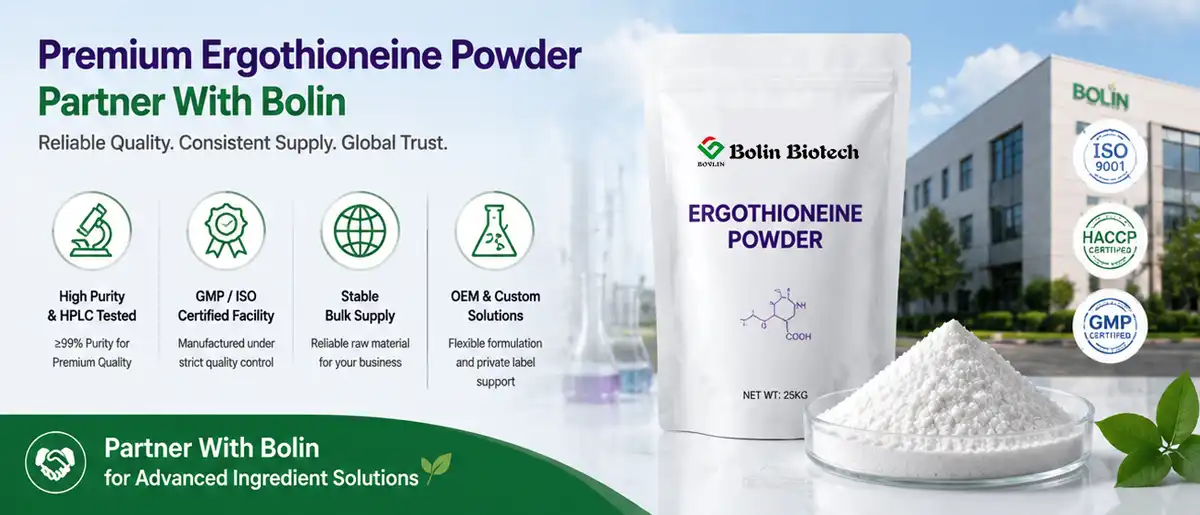
Shaanxi Bolin Biotechnology sells pharmaceutical-grade ergothioneine powder that is made to the best international standards. This powder can help you come up with new recipes. Our 99% pure product is used all over North America by companies that make functional foods, cosmetics, nutraceuticals, and medicines. HPLC/UPLC research and tests by a third party have confirmed that it is correct. We make it easier for you to follow the rules by being fully certified in KOSHER, HALAL, HACCP, and cGMP. We can be sure that each batch has the same level of quality this way. The technical team at our company can help you get your product to market faster by giving you tips on how to formulate it, data on its stability, and help with governmental paperwork. We have been making ergothioneine powder for more than 12 years. Our minimum order quantities are open, our terms are cheap for brands that are growing, and our supply chain operations are reliable. Send an email to sales1@bovlin.com right now to get technical specs, product samples, or to talk about how you'd like a custom formulation to help you reach your innovation goals.
References
1. Cheah, I.K., and Halliwell, B. (2012). Ergothioneine: Antioxidant Potential, Physiological Function and Role in Disease. Biochimica et Biophysica Acta - Molecular Basis of Disease, 1822(5), 784-793.
2. Gründemann, D., et al. (2005). Discovery of the Ergothioneine Transporter. Proceedings of the National Academy of Sciences, 102(14), 5256-5261.
3. Halliwell, B., Cheah, I.K., and Tang, R.M.Y. (2018). Ergothioneine – A Diet-Derived Antioxidant with Therapeutic Potential. FEBS Letters, 592(20), 3357-3366.
4. Hseu, Y.C., et al. (2020). Ergothioneine Protects Against UVB-Induced Photoaging Through Inhibition of MMP Expression and Collagen Degradation. Journal of Dermatological Science, 98(2), 101-110.
5. Paul, B.D., and Snyder, S.H. (2010). The unusual amino acid L-ergothioneine is a physiologic cytoprotectant. Cell Death & Differentiation, 17(7), 1134-1140.
6. Tang, R.M.Y., et al. (2018). Distribution of Ergothioneine in the Human Brain and Its Potential Role in Neuroprotection. Neurochemistry International, 116, 29-36.