_1745226507162.webp)

Ergothioneine vs CoQ10: Comparing Longevity Ingredients
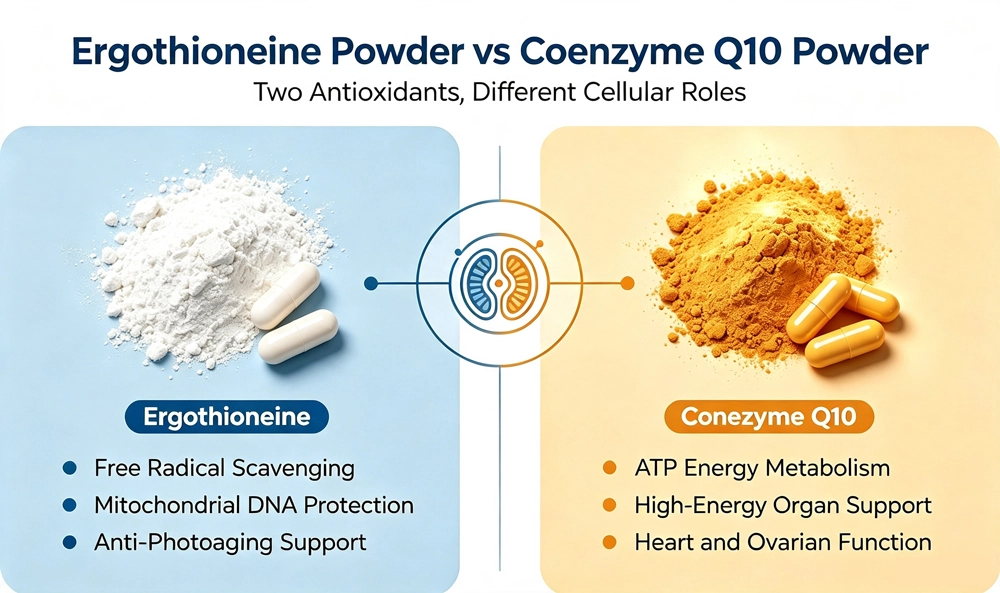
Product developers and purchasing managers often compare ergothioneine powder and coenzyme Q10 when looking for ingredients that will make anti-aging products last longer. Both substances protect cells in ways that have been proven by science, but they do so in different ways. Ergothioneine is an amino acid that is found naturally and can be made through fermentation. It builds up in tissues that are under a lot of stress and is a very stable master antioxidant. CoQ10 helps the mitochondria make energy and get rid of free radicals. Knowing these differences helps business-to-business buyers make smart choices about where to get ingredients that meet the needs of their target markets, follow regulations, and meet their formulation goals for nutraceuticals, medicines, and cosmetics.
Understanding Ergothioneine and CoQ10: Key Longevity Ingredients
What Is Ergothioneine?
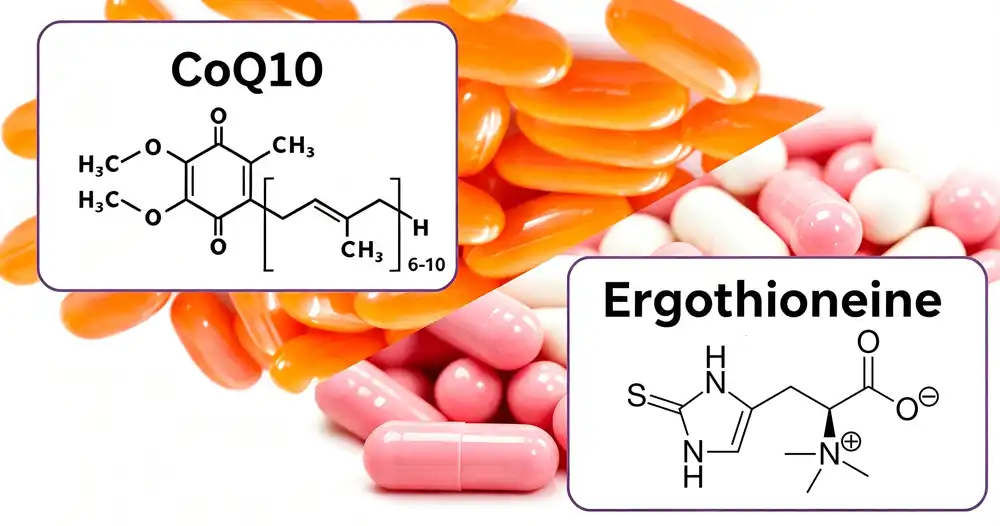
Ergothioneine is a unique amino acid that has sulfur in it. It's called the "longevity vitamin" since it only builds up in cells that are being stressed by free radicals. Human cells have a unique protein called OCTN1 that actively takes in and stores this chemical in mitochondria, nuclei, and other sensitive parts of cells. This is different from most antioxidants. This biological specialisation shows how important it is for cells to stay healthy for ergothioneine.
Pure ergothioneine powder (CAS 497-30-3) is made by letting certain types of fungi ferment spontaneously. It is a fine, white, crystalline material that dissolves easily in water and doesn't taste bad. It is perfect for use in pharmaceuticals because the fermentation process ensures that the stereochemical purity is uniform and gets rid of any plant-matrix inconsistency. It doesn't change when heated during the manufacturing process and stays stable across a wide pH range. This makes it very appealing to formulators who work with a variety of delivery methods.
The Role of Coenzyme Q10
Ubiquinone, which is another name for coenzyme Q10, moves electrons around in mitochondrial respiration chains and is very important for them. All of our cells have this lipid-soluble compound, but the heart, liver, and kidneys, which need a lot of energy, have the most of it. CoQ10 not only makes energy, but it is also a strong antioxidant that stops lipid peroxidation from hurting cell walls.
To get enough natural CoQ10, people who are older, sick for a long time, or taking statins should take supplements. People who work for companies that make things either ferment yeast or use tobacco leaf products for semi-synthesis to make CoQ10. A less active form is called ubiquinol, while ubiquinone needs to be changed in the body. Business-to-business buyers need to keep these differences in mind as they look at what suppliers have to offer. This is because bioavailability affects how much of a product people need to take and how well they expect it to work.
Biochemical Synergies and Distinctions
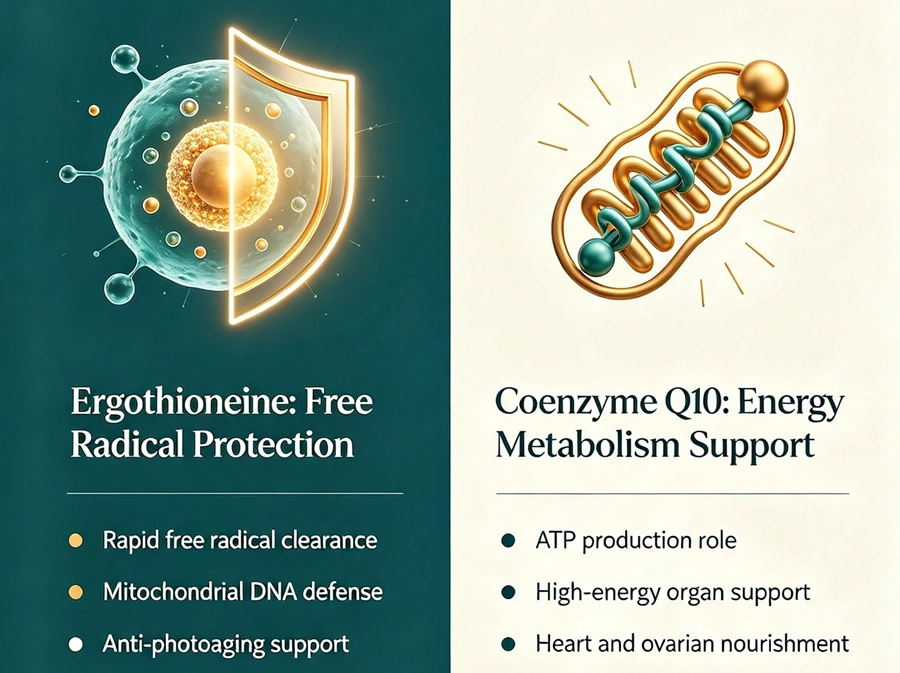
That being said, they both work against reactive stress in different ways that don't work against each other. Mostly, ergothioneine keeps cell parts safe by getting rid of free radicals and metals directly, which stops hydroxyl radicals from forming. Because its molecules are small and have a positive charge at physiological pH, it is easy for them to get into subcellular areas. It can even get into the membranes of mitochondria and keep respiratory complexes stable there.
CoQ10 moves electrons around in the cell and takes them and gives them away as ATP is made. Because it is there, it can stop the lipid breakdown chain processes in membranes and help make energy at the same time. Ergothioneine powder protects mitochondrial structures, and CoQ10 makes them work better, so clinical research shows that putting these two ingredients together may help each other. Professionals in procurement tell formulation teams to keep this synergy in mind when they are making whole products that fight more than one way of ageing.
Comparing Antioxidant Properties and Health Benefits
Mechanisms of Cellular Protection
Because it is made up of thiourea, ergothioneine is an antioxidant that can deal with reactive oxygen species without creating pro-oxidants. Vitamins C and E can sometimes turn into oxidised forms that could be harmful. On the other hand, ergothioneine keeps cells safe even after it gets rid of free radicals. Studies have shown that it lowers signs of oxidative damage in human skin cells that have been exposed to UV light. This supports its use in skin care products that protect against UV rays.
It is a strong antioxidant that mostly works in lipid membranes to keep polyunsaturated fatty acids from turning into free radicals. Getting rid of peroxyl radicals is easy because the ubiquinol form drops. Vitamin E is then made, which creates a network of antioxidants. Biogerontology journals have published research that shows that giving older people extra CoQ10 lowers inflammation biomarkers and improves endothelial function. This shows that it is good for the circulatory system.
Evidence-Based Health Applications
Ergothioneine has been shown in studies to help keep your brain fit. Studies that look at populations show that older people who eat better are less likely to get mild cognitive decline. There is more of the chemical in brain cells that are more likely to get Parkinson's or Alzheimer's disease. These findings make it more important for North American and European markets to have nootropic goods for older people who care about their health.
A lot of proof shows that CoQ10 is good for your heart. Randomized controlled studies that were analyzed show that people with heart failure who take 100–300 mg every day have a better ejection fraction. CoQ10 might also help stop migraines and make it easier to work out. These apps are recognised by regulatory bodies in several places. This makes it easier to get health claims accepted, which is important for supplement brands that want to stand out from the rest.
It is very safe to use both of the ingredients. Studies on people have shown that taking up to 30 mg of ergothioneine per day does not have any bad effects. That's because saturable transport lets the body control tissue amounts on its own. CoQ10 is safe to take in amounts higher than 1,200 mg per day; some people have had mild stomach problems. Formulators can use these gaps to be flexible with how people are dosed while still making sure that people are safe.
Procurement Considerations for B2B Buyers: Quality, Sourcing, and Pricing
Supplier Qualification and Quality Verification
To get chemicals that are safe for use in medicine, suppliers have to go through strict screening processes. Buyers in business-to-business (B2B) should give more weight to companies that have ISO 9001, ISO 22000, and cGMP licenses. These show that they have strong quality control systems. One company that follows this standard well is Shaanxi Bolin Biotechnology. It has ISO-certified factories that make it easy to see where the raw materials come from and where they are packed at the end. In their six-step testing process, they use HPLC/UPLC to check the amounts of active ingredients, check for heavy metals according to EU rules, and look at the safety of microbes. All of these are important safety steps for medicinal and nutraceutical uses.
An important part of your study is checking the Certificate of Analysis (CoA). A reliable supplier will give you a COA for each batch that shows the outcomes of microbiological tests, solvent residue analyses, and purity tests. Getting validated by a third-party lab increases credibility, especially when entering regulated markets that need proof from a third party. So that they don't place big orders, procurement managers should ask for samples with matched COAs. This way, quality control teams inside the company can check that the standards are in line with what the seller says they can do.
Fermentation vs Synthetic Sourcing
Finding out how ergothioneine powder is made changes both how good it is and where it stands in the market. Methylobacterium or similar organisms are used in natural fermentation processes to make ergothioneine powder. This kind of ergothioneine powder has a clean label appeal that more and more health-conscious customers are looking for. This biotechnology method always makes things that are very pure, and there are no worries about chemical creation. You can say that this supports "natural" or "non-GMO" claims, based on where the fermentation substrate comes from.
There are a lot of different ways that different companies make CoQ10. The naturally occurring trans-isomer of CoQ10 is made by yeast fermentation. This is better for supplement use than man-made cis-isomers because it is more accessible. Japanese companies were the first to use this technology, and they still have the best specs. However, new companies in other areas are now offering specs that are just as good. When procurement experts look at different sources, they have to decide how important it is to keep a good image versus saving money.
Strategic Purchasing and Supply Chain Management
Strategies for buying in bulk have a big effect on the total cost of acquisition. Volume agreements lower the cost per unit and make sure that priority is given when supply is limited. Negotiating flexible minimum order quantities (MOQs) is especially helpful for new brands that want to see how well the market accepts them before ramping up production. Established companies like Bolin Biotechnology, which has been in business for more than 12 years and has a large planting base, show supply security that lowers the risk of formulation changes.
The lead times for ingredients and suppliers are not all the same. Taking into account fermentation cycles and purification processes, it usually takes 45 to 60 days from placing an order to receiving the fermented ergothioneine. CoQ10 is available based on inventory levels, with known providers keeping stock on hand for quick shipping. Procurement managers should make sure that buying plans and product launch dates are aligned, with extra time built in for quality checks and clearing customs before production starts.
Integrating Ergothioneine and CoQ10 in Product Formulation
Strategic Ingredient Selection
Selecting one of these compounds for longer life relies on the desired benefits and how the customer is positioned. Ergothioneine works well in formulas that focus on protecting cells, improving brain function, and stopping photoaging. Because it dissolves easily in water, it can be added to drinks, gummies, and liquid supplements without the need for emulsification systems. The neutral taste profile keeps the taste of the product the same in all kinds of situations, from functional drinks to beauty-from-within supplements.
CoQ10 works especially well in goods that focus on the heart and on helping the body use energy. Because it is lipophilic, it needs special delivery methods like self-emulsifying, liposomal, or oil-based frameworks to make it more bioavailable. Ubiquinol types are more expensive but better absorbed, which is important for older people whose bodies can't convert them as well. When choosing CoQ10 variants, formulation chemists have to weigh the benefits of increasing bioavailability against the costs.
Synergistic Combination Strategies
When you mix ergothioneine and coQ10, you get anti-aging products that work on a lot of different cell pathways. People who want holistic answers to living longer rather than single-mechanism treatments will like this approach. This approach makes sense from a clinical point of view: ergothioneine shields mitochondrial membranes from oxidative damage, and CoQ10 improves the efficiency of electron transport within those protected structures.
Because of dosage concerns, calculations need to be done carefully. A new study suggests that ergothioneine doses of 5 to 25 mg per day are effective. On the other hand, CoQ10 doses of 100 to 200 mg per day are usually needed for cardiovascular effects. Formulators need to make sure that the pill or tablet sizes can hold these amounts along with other active ingredients without making production impossible. Powder blends are flexible and allow for accurate dose adjustments while a product is being developed.
Market Positioning and Consumer Trends
Researchers in North America are putting more and more emphasis on ingredients that have been scientifically proven to make people live longer. Biohackers and wellness fans who are interested in new research on aging are big fans of the ergothioneine market. In the crowded supplement market, brands that highlight fermentation-derived sources and cellular transport mechanisms stand out. People who are informed and looking for focused nutritional interventions are interested in marketing messages that focus on the body's dedicated ergothioneine transporter.
It's clear that European markets really like clean-label formulas with few extra ingredients. Bolin Biotechnology's ergothioneine powder (99% pure, HPLC tested) meets these needs and has the KOSHER, HALAL, and HACCP certifications needed for wide market access. When buying things for EU clients, procurement teams should give extra weight to suppliers who provide full regulatory paperwork, such as novel food approvals when needed. This will cut down on the time it takes to get new products on the market.
Decision-Making Framework for Procurement Managers
Supplier Evaluation Metrics
Systematic evaluation of suppliers needs evaluation standards that take into account more than one factor. The purity standards set the standard, and ergothioneine powder with 99% assay values means it is of pharmaceutical-grade quality and can be used in high-end formulas. Statistical process control data that shows stability from batch to batch shows that a production capability is mature. Preferred vendor status is given to suppliers whose coefficient of variation is less than 2% across multiple batches.
Documentation for regulatory compliance goes beyond simple certifications. Comprehensive providers offer allergen statements, BSE/TSE declarations, GMO status certifications, and California Prop 65 compliance letters. This information makes it easier to send final goods to the government for approval. The place where a factory is located is important because factories in strict oversight areas (like the EU, USA, and Japan) tend to have better quality systems. However, new makers are becoming more and more able to meet these standards through international audits.
Aligning Ingredient Specifications with Client Segments
Nutraceutical companies try to keep costs low without sacrificing safety, so they often accept purity grades of 95–98% when regulations allow it. Pharmaceutical companies want the purest grades (>99%) with lots of stable data and tested testing methods. Makeup formulators value functional testing data more than just chemical analysis. Studies of cellular uptake, skin penetration, and interaction with common makeup bases all add a lot to the value of the data they buy.
OEM/ODM manufacturers need suppliers who can provide technical support services in addition to raw materials. Full-service ingredient suppliers are different from commodity vendors because they help with formulation, stability testing, and regulatory issues. Bolin Biotechnology is a research-driven company with two specialized production plants and 25,800 acres of cultivation bases. This makes them strategic partners instead of transactional providers, which is something that savvy procurement operations value more and more.
Sustainability and Ethical Sourcing
Sustainability measures are now part of modern procurement systems that help choose vendors. When compared to extracting plants from the wild, fermentation-based ingredient production is usually better for the earth. How much water is used, how much energy is used per kilogram of production, and how trash is managed all show how sustainable a business is. Suppliers who are ahead of the curve give information on how their products affect the environment. This helps companies meet their social responsibility goals and supports brand messaging that cares about the environment.
To meet the demand for supply chain transparency, traceability systems are used from the source of the fermentation substrate to the final packaging. Even though blockchain-based tracking systems are still new in the ingredient industry, they give brands that focus on ethical sources peace of mind that they will be around in the future. As of now, the best practices include keeping detailed records of the history of each batch and checking that the facility is following labour and environmental standards on a regular basis.
Conclusion
Choosing between ergothioneine powder and CoQ10, or using them together to get the best results, relies on the design goals, target audience, and market positioning goals. Ergothioneine's unique ability to enter cells and new clinical data support its use in next-generation formulations for long life, especially for brain health and photoprotection. CoQ10 is an important part of heart health and active-aging products because it supports energy production and is good for the heart. Procurement experts who want to get the most out of formulations know that these chemicals work together, not against each other, to fight different parts of cellular ageing. Partnering with quality-focused manufacturers guarantees uniform specs, legal compliance, and supply reliability, all of which are important for building known customer names in the wellness market, which is very competitive.
FAQ
Is long-term ergothioneine supplementation safe?
Ergothioneine has a very good safety profile, as shown by many long-term studies. Human clinical studies that gave up to 30 mg of the drug every day for long periods of time found no negative effects. This is because saturable transport proteins naturally control tissue concentrations. Concerns about genotoxicity or reproductive toxicity have not been raised by toxicology studies. It is safe according to regulators in many places. In the US, it is generally recognised as safe (GRAS), which means it can be used in a lot of different foods and supplements. This good safety profile gives formulators faith in guidelines for long-term use.
How do ergothioneine and CoQ10 absorption rates compare?
Ergothioneine is absorbed very well through special OCTN1 transporters that line the walls of the intestines. It reaches its highest levels in the blood within one to two hours of being eaten. Bioavailability studies show that oral doses are absorbed about 100% of the time up to saturation levels. CoQ10 absorption is more variable, ranging from 2-5% for normal powder formulations to 15% to 30% for better delivery methods that use nanotechnology or lipid carriers. When compared to ubiquinone, the ubiquinol form is more bioavailable. These variations affect the amount that needs to be taken. For example, CoQ10 usually needs more milligrams to reach optimal tissue levels, while ergothioneine can be taken in very easily.
What quality verification steps ensure supplier reliability?
As part of comprehensive supplier qualification, full technical paperwork such as manufacturing process flowcharts, validation routines for analytical methods, and stability study results in line with ICH standards must be requested. Third-party audit reports from well-known certification bodies show that the facility meets quality standards. Independent labs test samples to make sure that the specs match what the supplier says they are. Procurement managers should look at how quickly providers answer technical questions and how ready they are to provide customised documentation. These are signs of quality-focused operations rather than commodity-focused ones.
Partner with Bolin Biotechnology for Premium Ergothioneine Powder Supply
You can trust Shaanxi Bolin Biotechnology to make ergothioneine powder that is 99% pharmaceutical-grade and comes from natural fermentation processes that have been proven to work. Our ISO-certified facilities make sure that every batch meets strict international standards by checking the quality six times, which includes heavy metal screening that is compliant with EU law and HPLC/UPLC analysis. With more than 12 years of experience in this field, we've been helping B2B procurement teams with flexible MOQs, detailed CoA documentation, and technical formulation advice since 2012. Our water-soluble, additive-free ergothioneine works well in a wide range of situations, such as when making nutraceuticals, functional drinks, or new cosmetics. Email our team at sales1@bovlin.com to get samples and talk about your specific sourcing needs with a supplier who is dedicated to quality, innovation, and the reliability of the supply chain.
References
1. Cheah, I.K., & Halliwell, B. (2021). Ergothioneine, recent developments. Redox Biology, 42, 101868.
2. Servillo, L., et al. (2020). Ergothioneine products derived by oxidation in model systems. Free Radical Biology and Medicine, 160, 180-188.
3. Garrido-Maraver, J., et al. (2014). Coenzyme Q10 therapy. Molecular Syndromology, 5(3-4), 187-197.
4. Halliwell, B., et al. (2018). Ergothioneine—a diet-derived antioxidant with therapeutic potential. FEBS Letters, 592(20), 3357-3366.
5. Mortensen, S.A., et al. (2014). The effect of coenzyme Q10 on morbidity and mortality in chronic heart failure: results from Q-SYMBIO. JACC: Heart Failure, 2(6), 641-649.
6. Beelman, R.B., et al. (2020). Micronutrients and bioactive compounds in mushrooms: A recipe for healthy aging? Nutrition Today, 55(1), 16-22.