_1745226507162.webp)

Ghk Copper Peptide Powder for Cosmetic: Benefits and Clinical Applications
GHK copper peptide powder represents a breakthrough in modern cosmeceutical formulation, combining the natural tripeptide glycyl-L-histidyl-L-lysine with copper ions to create a potent bioactive ingredient. This scientifically validated compound addresses critical challenges in anti-aging skincare by stimulating collagen synthesis, enhancing tissue repair, and delivering measurable regenerative outcomes. As demand intensifies for clinically proven actives, understanding the composition, mechanism, and practical applications of this ingredient becomes essential for professionals seeking reliable, high-performance solutions in cosmetic development.
Understanding GHK Copper Peptide Powder: Composition and Mechanism
Chemical Structure and Formulation Properties
Copper tripeptide-1 is made up of three amino acids: glycine, histidine, and lysine. These are bonded to a copper ion to make a stable complex with the formula C14H24N6O4Cu. A unique deep blue to violet solid powder with a molecular weight of about 403.94 g/mol is used in pharmaceutical-grade versions that are more than 98% pure, as shown by High-Performance Liquid Chromatography (HPLC). The copper level is usually carefully controlled to be between 4.0% and 8.0% so that it can send healing signals without killing cells.
In contrast to liquid serums, which tend to break down over time, GHK copper peptide powders are more stable when stored and transported. This feature solves a big problem in business-to-business manufacturing: the purity of the ingredients has a direct effect on how well the product works. Because it is hydrophilic, this cationic complex dissolves quickly in water. This makes it very friendly with a wide range of makeup bases and keeps its bioactivity at pH levels between 4.5 and 7.4.
Biological Mechanism and Tissue Regeneration Pathways
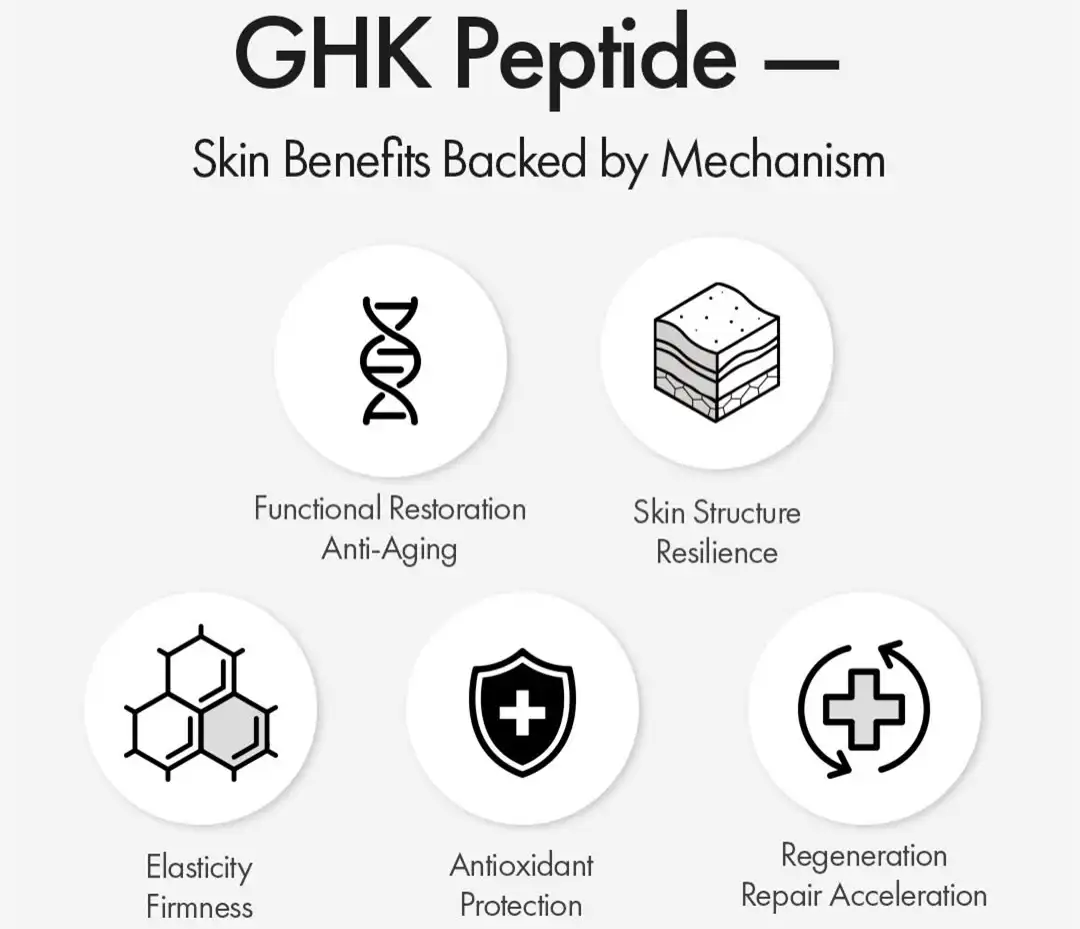
GHK copper peptide powder's ability to heal comes from the many ways it interacts with cells. When put on the skin, it goes through the stratum corneum and links to certain cell surface receptors, which sets off a series of biological reactions. The copper ion is an important element for lysyl oxidase, an enzyme that crosses-links collagen and elastin fibers in the skin matrix. This process directly fights the breakdown of structure that happens in photoaged and chronologically aged skin.
Researchers have found that this peptide combination greatly increases the production of GAGs, especially hyaluronic acid, which keeps the skin moist and full. At the same time, it lowers the activity of Matrix Metalloproteinases (MMPs), which are enzymes that break down collagen and cause wrinkles. In addition to supporting structure, the chemical increases the activity of Superoxide Sodmutase (SOD), which protects strongly against free radicals and lowers levels of pro-inflammatory hormones like TNF-alpha. It works in two ways: it builds and protects, which makes it different from single-pathway actives and explains why it works the same way on all skin types and conditions.
Key Benefits and Cosmetic Applications of GHK Copper Peptide Powder
Anti-Aging and Skin Rejuvenation Effects
The strongest proof for GHK powder comes from how well it works to slow down age. Researchers in clinical tests have found that mixtures with ratios between 1% and 2% can reduce the depth of wrinkles by 15% to 30% over 8 to 12 weeks of treatment. Similar improvements are seen in skin suppleness tests. This is because more collagen III is being made, which is the "youth collagen" that gives young skin its flexibility and robustness.
This tripeptide complex does more than just improve the skin's surface. It also works to stop dermal thinning, which is a natural part of age that makes skin more fragile and vulnerable to harm. By encouraging the growth of fibroblasts and the deposition of extracellular matrix, it gradually improves the thickness and rigidity of the dermis. Users say that the texture of their skin has improved, pores are less noticeable, and their general glow has increased. These results lead to high customer happiness and return purchases in finished goods.
Wound Healing and Skin Barrier Restoration
The therapeutic uses go far beyond cosmetic ones and include functional skin. GHK copper peptide powder speeds up the healing process by encouraging angiogenesis, the growth of new blood vessels that bring oxygen and nutrients to the healing tissue. Because of this, it is very useful in formulas for healing after procedures like chemical peels, laser treatments, or microneedling, where quick barrier repair keeps problems to a minimum.
Because it lowers redness and itching, the anti-inflammatory feature makes it good for people with sensitive or damaged skin conditions like eczema or rosacea. This peptide works through biomimetic pathways that help the body's natural healing processes, unlike harsh exfoliants or retinoids that can cause allergic reactions. Formulation concentrations that work best are usually between 0.5% and 2.5% for upkeep products and intense treatment serums. Higher concentrations need to be carefully tested for stability and compatibility with other actives, though.
Safety Profile and Formulation Stability
The good safety rating of high-purity GHK copper peptide powder is one reason why producers who care about quality are adopting it. When the ingredient comes from approved sellers who follow GMP standards, it has few bad effects. Mild itching may happen sometimes during the first few uses, but it usually goes away as the skin gets used to the increased cellular activity. Keeping powders at 2–8°C in an inert gas atmosphere will keep them from going bad and keep their effectiveness for as long as they say they will, which is usually 24–36 months for pharmaceutical-grade powders.
Comparing GHK Copper Peptide Powder with Other Popular Actives
Mechanism Differentiation from Retinol and Niacinamide
Knowing how copper peptide GHK powder is different from well-known actives helps formulators choose the best ingredients. Retinol mostly works by binding to nuclear receptors, which speeds up cell turnover and increases collagen production. However, it can irritate the skin and make it sensitive to light, and it needs to be introduced carefully. The copper complex stimulates collagen through enzymatic cofactor pathways without slowing down the rate of epidermal regrowth. This gets rid of the need for an adjustment time and the seasonal limits that come with using retinoids.
Niacinamide is great for protecting the skin and reducing color, but it doesn't have the direct collagen-building power that GHK copper peptide powder does. The two ingredients work well together because the peptide rebuilds basic proteins and the niacinamide increases the production of ceramide. This synergy makes it possible to make complete anti-aging formulas that work on multiple pathways at the same time without any ingredients working against each other. It is important for formulators to know that GHK copper peptide powder stays stable when mixed with hyaluronic acid and most water-soluble vitamins. However, they shouldn't be mixed directly with strong oxidizers or highly alkaline ingredients (pH >8.0).
Purity Standards and Batch Consistency
The difference between GHK copper peptide powder made for pharmaceutical use and cosmetic use has a big effect on both safety and effectiveness. Copper levels in high-quality goods stay within narrow bands (usually ±0.5% variation) and there aren't many free copper ions or unbound GHK, which are contaminants that can irritate skin or cause results to be different between runs. Advanced makers use Atomic Absorption Spectroscopy (AAS) to check the amount of copper and multi-point HPLC analysis to check the purity of the peptides.
When purchasing managers look at possible sellers, the ones that offer thorough Certificates of Analysis (CoA) that show test results for each batch should be given the most weight. Traceability that includes where the raw materials come from and how they are made gives customers even more peace of mind, especially for high-end names or healing claims that need to be backed up by regulations. The powder form makes quality control easier because the solid structure and consistent color make it easy to see when the right conditions for processing and storage have been met.
Procurement Considerations for B2B Buyers: Quality, Pricing, and Suppliers
Supplier Evaluation and Certification Requirements
Finding a trustworthy GHK copper peptide powder source requires a lot of research in a lot of different areas. Certifications like ISO 9001 for quality management, ISO 22716 (GMP for cosmetics), and HACCP compliance are the minimum requirements that should be taken very seriously. Site checks, which can be done in person or by a third-party inspection service, make sure that production facilities have proper controls for contamination, environmental tracking, and the ability to do approved analytical testing.
Being open about how they source and combine materials is what sets special sellers apart from commodity providers. Manufacturers with a good reputation talk freely about how they make peptides, how pure their copper salts are, and how they clean their products. They give stability data that shows how well an ingredient works in different store situations and compatibility matrices that show how it reacts with common makeup ingredients. This technical help is very helpful when making new formulas because it cuts down on the number of times you have to try things and fail and speeds up the time it takes to get new products on the market.
Bulk Purchasing and OEM Partnership Models
Strategies for buying in bulk have a big effect on how cost-effective and reliable the supply chain is. Smaller amounts are useful for testing and study, but finding suppliers who can consistently make multiple kilograms will allow for growth as the goods become more popular. Many specialized suppliers have tiered structures where costs per kilogram drop significantly as order numbers rise. However, minimum order quantities (MOQ) vary a lot, ranging from 1 kg for small makers to 25 kg or more for large businesses.
Brands that don't have their own peptide experts can take advantage of private label and OEM deals. Along with the main materials, experienced contract makers bring formulation knowledge, a place to test for stability, and legal direction. Collaboration in development is a common feature of successful relationships. The provider provides technical information about the best ways to incorporate peptides, while the brand controls positioning and marketing strategies. Communication that is clear about quality standards, release dates, and paperwork needs helps avoid misunderstandings and creates long-lasting partnerships.
Logistics and Storage Protocol Optimization
Environmental controls are needed to keep the purity of GHK copper peptide powder throughout the supply chain. Temperature-monitored packing should be used for shipments, especially when going across different climate zones internationally. When you get something, you should put it right away in opaque, sealed cases and put it in a refrigerator (2–8°C). This stops both thermal degradation and moisture absorption, which can hurt the solubility and bioactivity of the substance.
Under normal keeping settings, GHK copper peptide powder has a shelf life of 24 to 36 months. Older items should be tested every so often to make sure they are still meeting the requirements. Smart inventory management, like moving stock based on when it was made and keeping enough safety backups, keeps production from stopping because of materials that have passed their expiration dates. Even though these practical details may not seem important, they have a direct effect on the consistency of the product and the image of the brand when the quality of the ingredients stays the same across multiple production runs for long periods of time.
Clinical Applications and Future Trends in Cosmetic Use
Dermatological and Medical Aesthetics Integration
GHK copper peptide powder can be used for more than just ornamental purposes. It can also be used in clinical dermatitis. Wound care experts use it as part of their patients' recovery plans after surgery. Its angiogenic features help the body heal faster after cuts or reconstructions. Burn treatment centers are looking into how it might help reduce scarring by better organizing collagen during the healing process.
More and more, medical aestheticians say that peptide-containing goods should be a part of pre- and post-treatment routines. Putting on peptides before treatments like fractional laser or deep chemical peels makes the skin's barrier stronger and improves the response of cells. After that, it speeds up healing and improves the results of treatment by changing collagen in a way that works with itself. Professional endorsements like these increase customer demand and give brands at the cosmeceutical-pharmaceutical junction a chance to stand out.
Emerging Delivery Systems and Formulation Innovation
Researchers are still looking into new ways to give GHK copper peptide powder that make it more bioavailable. Liposomal packaging keeps the peptide safe while it's being stored and makes it easier for the product to get deeper into the skin when it's being used. Nanoparticle carriers have controlled release rates that keep therapeutic amounts steady for longer periods of time, which could mean that they don't need to be applied as often. Microneedle patches break down physical barriers and release targeted peptides, which makes uptake more effective for intense treatment uses.
These technological improvements fix problems with how deeply ingredients can penetrate and how stable they are in finished goods. As delivery systems get better and production costs go down due to economies of scale, we expect a wider range of products to use them. This includes daily maintenance serums, intense overnight treatments, and even beauty supplements that you can eat that are looking into systemic delivery routes. When brands invest in these new ideas, they put themselves at the head of the next generation of anti-aging products.
Market Growth and Geographic Expansion Patterns
The demand for anti-aging ingredients that have been proven to work by science keeps growing. This is especially true in North America and Europe, where customers value proof of effectiveness over marketing claims. Every year, the GHK copper peptide powder market grows a lot, thanks to more educated consumers and dermatologists' suggestions. Asian markets, especially South Korea and Japan, are very open to peptide-based formulations. This means that Western brands can ship their products and regional producers need to find suppliers in other countries.
Regulatory environments are favoring ingredients with well-established safety ratings and clinical support more and more. A lot of study has been done on GHK copper peptide powder to show how it works and what effects it have. This makes it a good choice as regulatory bodies around the world become more skeptical of cosmetic promises. When it comes to expensive areas where people are willing to pay more for proven performance, manufacturers who have access to high-quality raw materials, full safety data, and clinical study support have an edge over their competitors.
Conclusion
Adding pharmaceutical-grade GHK copper peptide powder to cosmetics is an example of how biological science and practical advances in skin care can work together. It works in many ways, such as by increasing collagen production and controlling MMP levels, as well as by protecting cells from damage and reducing inflammation. The results can be measured scientifically and meet both consumer and expert standards. As the cosmetics industry moves toward developing products based on evidence, ingredients that have this mix of effectiveness, safety, and recipe flexibility will continue to command high prices and loyal customer bases around the world.
FAQ
What concentration of copper peptide powder delivers optimal results in cosmetic formulations?
Depending on the product and how it will be used, effective amounts of GHK copper peptide powder are usually between 0.5% and 2.5%. Maintenance serums for general anti-aging usually have between 1% and 1.5% of this ingredient, while intensive treatment products can have between 2% and 2.5%. Lower amounts, around 0.5%, work well for items for sensitive skin or that combine more than one active ingredient. Cost-benefit analyses usually show that moderate concentration levels are best for most uses. Concentrations above 3.0% don't usually lead to proportional benefit gains and may raise the risk of irritation.
How should manufacturers store copper peptide powder to maintain stability?
For best keeping, keep GHK copper peptide powder cool (2–8°C) in sealed, opaque containers to keep it from oxidizing and getting wet. By limiting touch with oxygen in the air, packaging under an inert gas atmosphere also extends the shelf life. Pharmaceutical-grade powder that is kept properly stays in line with specifications for 24 to 36 months. Stability rests on controlling the pH, using preservatives, and packing that keeps light and air out during the time that the product is being used by consumers.
Can copper peptide powder be safely combined with retinol or vitamin C?
When mixed with most water-soluble vitamins and hyaluronic acid, GHK copper peptide powder stays solid and don't react negatively. Combining retinol with peptides, on the other hand, needs careful preparation because their pH optimal ranges are different. Peptides work best at pH 5.5–7.0, while retinoids do best at lower pH ranges. Because it is acidic and could combine with copper ions, ascorbic acid (pure vitamin C) can be hard to work with. Many formulators are able to combine the two successfully by using stable vitamin C products with neutral pH profiles or spreading out the application times.
Partner with Bolin Biotechnology for Premium GHK Copper Peptide Powder Supply
Shaanxi Bolin Biotechnology Co., Ltd. stands as your trusted GHK copper peptide powder supplier, delivering pharmaceutical-grade materials that meet the strict requirements of cosmetics production. Since we started in 2012, we've focused on providing high-quality plant extracts and bioactive peptides. We do this by combining strict quality control with quick technical support that is tailored to your manufacturing needs. Our GHK copper peptide powder is always more than 98% pure and has a confirmed copper content. This is backed up by full regulatory documentation and Certificates of Analysis.
We know how hard it is for procurement managers to balance the need for quality with the need to save money and the need for supply chain stability. Our flexible buying system can handle both small amounts for research and large amounts for production, and we keep you informed throughout every transaction. Our experienced team can help you with private label agreements, custom concentration specs, or formulation advice. They have the technical knowledge to speed up product development while keeping the purity of the ingredients.
Discover how our dedication to plant science and modern engineering helps us make reliable solutions for your cosmetic ideas. You can email our team at sales1@bovlin.com to talk about your specific needs, ask for samples, or look into relationship options that fit your quality standards and business goals.
References
Pickart, L., Vasquez-Soltero, J.M., & Margolina, A. (2017). "GHK Peptide as a Natural Modulator of Multiple Cellular Pathways in Skin Regeneration." BioMed Research International, Vol. 2017, Article ID 1849616.
Simeon, A., Wegrowski, Y., Bontemps, Y., & Maquart, F.X. (2000). "Expression of glycosaminoglycans and small proteoglycans in wounds: modulation by the tripeptide-copper complex glycyl-L-histidyl-L-lysine-Cu(2+)." Journal of Investigative Dermatology, 115(5), 962-968.
Arul, V., Kartha, R., & Jayakumar, R. (2007). "A therapeutic approach to diabetic wound healing using biotinylated GHK incorporated collagen matrices." Life Sciences, 80(4), 275-284.
Pollard, J.D., Quan, S., Kang, T., & Koch, R.J. (2005). "Effects of copper tripeptide on the growth and expression of growth factors by normal and irradiated fibroblasts." Archives of Facial Plastic Surgery, 7(1), 27-31.
Finkley, M.B., Appa, Y., & Bhandarkar, S. (2005). "Copper peptide and skin." Cosmeceuticals and Active Cosmetics: Drugs versus Cosmetics, 2nd Edition, Taylor & Francis, 549-563.
Canapp, S.O., Farese, J.P., Schultz, G.S., Gowfregul, M.L., Van Gilder, J.M., & Carr, B.J. (2003). "The effect of topical tripeptide-copper complex on healing of ischemic open wounds." Veterinary Surgery, 32(6), 515-523.