_1745226507162.webp)

How Is Instant Tea Powder Processed?
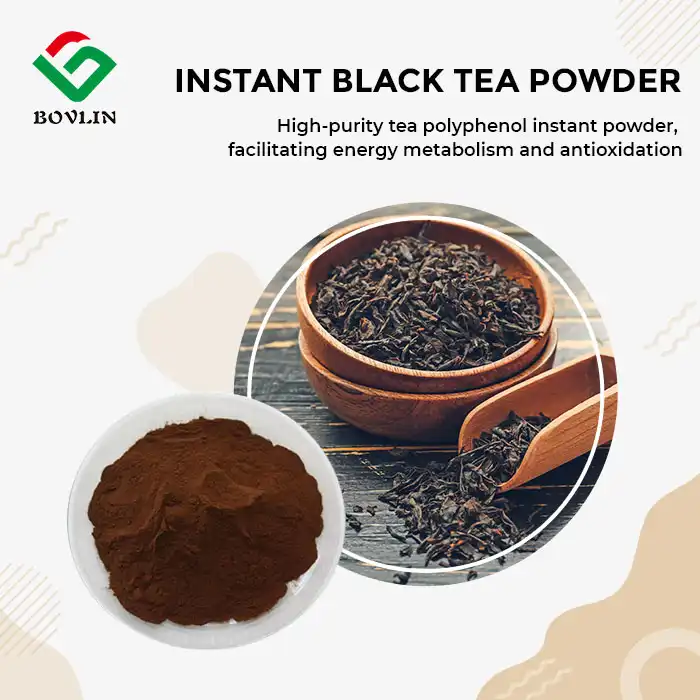
 Instant black tea extract powder is a strong ingredient that can be stored for a long time. It is made to dissolve quickly and keep its quality across a wide range of commercial uses. Controlled extraction, concentration, and advanced drying methods are used to change fresh black tea leaves. These techniques keep bioactive substances like polyphenols, flavonoids, and L-Theanine intact. Procurement experts who want to find reliable, high-performance ingredients for drinks, dietary supplements, and functional foods need to understand this change. This guide will talk about the steps in manufacturing, quality standards, and criteria for evaluating suppliers that will help you make smart buying decisions.
Understanding Instant Black Tea Extract Powder and Its Production Challenges
What Defines Quality Instant Black Tea Extract?
From fermented Camellia sinensis leaves, instant black tea extract powder is produced through a series of refinements. Because of oxidation-driven chemical changes that make theaflavins and thearubigens—compounds that give black tea its color and sour taste—this concentrated form is very different from green tea extracts. Industrial buyers prefer extracts that are standardized to certain polyphenol amounts, which are usually between 20% and 40%. This makes sure that the mixture stays stable from batch to batch.
Core Production Obstacles
The hardest part of manufacturing is keeping volatile chemical molecules from breaking down when they are exposed to heat. Using traditional drying ways can break down catechins and taste profiles, which makes the product less marketable. To keep the water-soluble antioxidant activity up during extraction and drying, the temperature and pH must be carefully managed. Premium sellers and commodity providers are different because their production facilities have to find a balance between output efficiency and nutrient protection.
Industry-Specific Requirements
For pharmaceutical uses, the quality must meet pharmacopeia standards for heavy metals and microbes, and the limits must be in line with USP or EP standards. Nutraceutical makers need to see recorded stability data that shows polyphenols stay in the product for 24 months. Instant absorption is important to functional beverage brands; powders must dissolve completely in cold drinks within 30 seconds without forming sediment. Because of these different requirements, production processes need to be able to adapt and strict quality control rules need to be in place.
Traditional vs Modern Processing Methods of Instant Black Tea Extract Powder
Historical Brewing and Drying Approaches
In the old days, black tea leaves were soaked in hot water for a while and then dried in the open air or a low-temperature oven. The concentrated liquid that was left over was spray-dried into instant black tea extract powder. However, this method had uneven extraction yields—often less than 30% by weight—and taste loss after being exposed to heat for a long time. Color differences between runs made it hard to formulate, and fine particles in reconstituted drinks made them less clear because of an inadequate filter.
Contemporary Extraction Innovations
Counter-current extraction methods are used in modern facilities to get the most polyphenols out of the material while also cutting down on processing time. Using hot water at fixed temperatures between 85°C and 95°C to remove catechins makes them more soluble without causing too much oxidation. Ultrasonic-assisted extraction technologies cut the time needed for processing by 40% compared to traditional methods. This keeps heat-sensitive substances safe by limiting their exposure to heat. Using cellulase or pectinase preparations in enzyme-assisted methods breaks down plant cell walls, making it easier to get to beneficial compounds and improving the efficiency of extraction.
The concentration phase utilizes vacuum evaporation systems work at lower pressures to lower the boiling points of substances that contain antioxidants that are sensitive to temperature. Multi-effect evaporators reuse heat energy, which makes large-scale processes more cost-effective. Membrane filtering, which includes ultrafiltration and nanofiltration steps, gets rid of tannins and other impurities while concentrating the polyphenolic compounds that are wanted. This makes extracts that are clearer and more bioavailable.
Advanced Drying Technologies
Spray drying, which turns concentrated extract into tiny droplets inside hot tanks, is still the standard method used in the business. With inlet temperatures between 160°C and 180°C and exit temperatures between 80°C and 90°C, moisture can be removed quickly while the biological integrity is kept. Freeze-drying is the best way to keep nutrients because it turns frozen extract straight into black tea instant powder through sublimation at temperatures below -40°C. This method requires a lot of money, but it keeps volatile aromatics and makes powders with great recovery qualities.
These technological improvements have measured benefits for the supply chain. For example, products will stay stable on the shelf for longer than two years, dissolve more than 98% of the time in water at room temperature, and have standardized polyphenol content with deviation margins of less than 3%. It is possible to scale up without lowering quality standards that are important for pharmaceutical-grade uses.
Detailed Step-by-Step Process of Producing Instant Black Tea Extract Powder
Raw Material Selection and Preparation
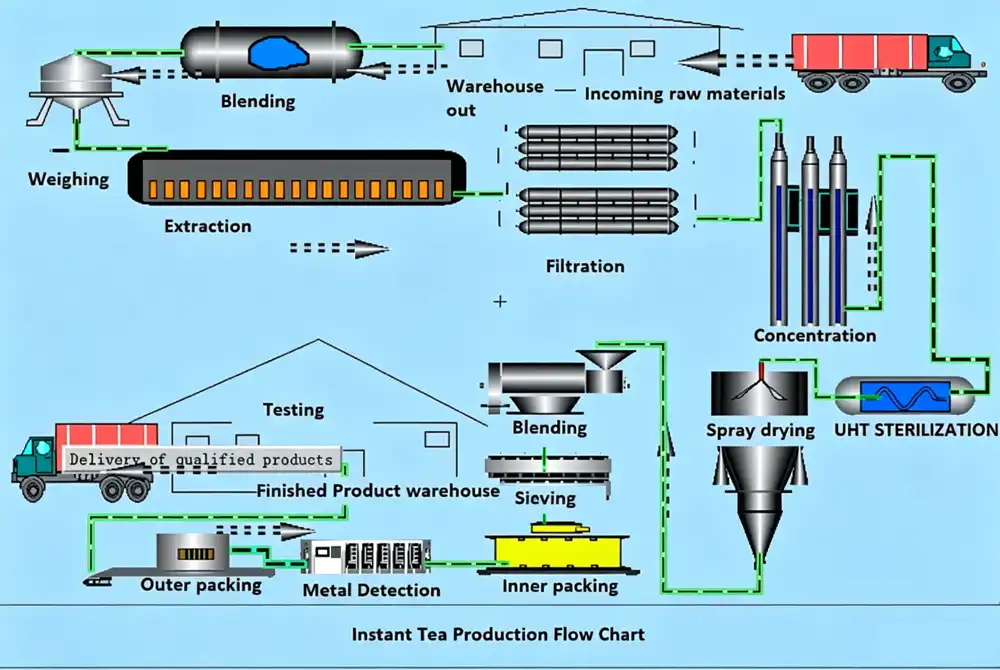
The first step in making black tea is getting high-quality leaves, which are usually grown in well-known areas that are known for consistently high variety quality. For organic certificates, farming methods that don't use synthetic poisons must be recorded and checked by a third party through an approved agency. When raw materials come in, they are checked for wetness to make sure that the water level is less than 8% so that microbes don't grow while they are being stored. Both visual and sensory testing show that the fermentation levels are right, since leaves that aren't fully oxidized don't produce enough flavor.
Extraction and Concentration
When the ready tea goes into the extraction tubes, heated water that stays within certain temperature ranges flows through the leaf structure. Usually, the extraction process takes between 2 and 4 hours, and doing several extractions in a row helps get the most compounds out. Changing the pH with food-grade acids or bases improves the stability and absorption of catechins to produce instant black tea extract powder.
The extracted liquid is clarified by centrifugation or filter media, which get rid of any solids that might affect the look of the final product. The extract that has been cleared goes into vacuum concentration equipment. In these low-pressure areas, moisture can be removed at temperatures below 60°C. Concentration keeps going until the total solids content hits 30 to 50 percent. This makes a thick middle that can be dried.
Drying and Powder Formation
Spray drying systems use high-pressure nozzles to spray small particles of concentrated extract into drying tanks with carefully controlled airflow. Cyclone dividers get back small powder particles, which keeps product loss to a minimum and makes sure that particles are all the same size. The instant black tea powder that is made has less than 5% wetness, which is important to keep it from caking and to make it last longer.
As an alternative to freeze-drying, the pure extract can be frozen at -50°C and then put in pressure tanks, where sublimation takes place over 24 to 48 hours. In this kinder method, porous powder forms with better solubility are made, but the costs of production are much higher than with spray-dried options.
Milling, Standardization, and Packaging
After drying, milling is used to get the particles to the right size, which is usually between 80 and 200 mesh but can be different based on the purpose. Analytical testing is used for standardization mixing to confirm the polyphenol content. Batches are then changed by blending or adding carriers to meet specification goals. Quality control labs do a lot of different tests, like looking for microbes, heavy metals, and polyphenols using HPLC to measure their amounts.
Multi-layer laminated films or metal foil boxes are the best ways for packaging workers to keep wetness out. By filling sealed vessels with nitrogen, oxygen is pushed out, which stops oxidative breakdown during storage and transport. For producers who make a lot of products, bulk B2B forms like 25 kg fiber drums with plastic liners inside or large-volume tote bins are available. Labeling gives batch traceability numbers, descriptions of certificates of analysis, and storing suggestions that are in line with GMP paperwork needs.
Quality and Performance Considerations for Procurement Managers
Critical Quality Indicators
To judge what a seller has to offer, you have to look at the polyphenol level using approved analytical methods. HPLC tests should show that the amount of theaflavin is more than 2% and that the amount of total polyphenols is within ±5% of what the label says it is. Testing how well instant black tea extract powder works in both hot and cold water shows how well it works in real life. For example, premium extracts dissolve 95% of the way in cold water in just one minute. Lab* color space differences between production lots are less than two units, which means that color value measures using spectrophotometric analysis make sure that each batch is the same.
Organic vs Conventional Sourcing
Moisture content directly affects shelf stability; amounts below 5% should be required by standards to stop the growth of microbes and caking. Microbiological tests must show that the total plate counts are less than 1,000 CFU/g and that bacteria like Salmonella, E. Staphylococcus aureus and E. coli. Lead level is checked to be below 3 parts per million (ppm), arsenic is checked to be below 2 ppm, and cadmium is checked to be below 1 ppm. This meets the standards set by both the USP and the EU.
Premium positioning is needed for organic black tea extract powder, but supply lines must be approved and audited every year. Getting a USDA or EU organic certification makes sure that there are no pesticide residues, which is proven by tests that look for more than 500 different residues. Procurement teams have to weigh the benefits of organic claims for brand positioning against the costs, which are usually 20–30% more than regular options.
Supplier Evaluation Framework
Reliable production partners show that they have ISO 9001 quality management systems as well as certifications relevant to their business, such as ISO 22000 for food safety management. Facility exams that check for GMP compliance show how equipment is maintained, how the environment is controlled, and how employees are trained. By asking for proof of analysis documents from more than one production batch, patterns of stability and strict quality control can be seen.
Supply chain planning works best when minimum order amounts, lead times, and price systems are all clear. MOQ arrangements that are flexible can handle test formulas before committing to large-volume purchases. Metrics for delivery dependability, such as the percentage of on-time shipments and the rate of damage during transit, give practical information. Suppliers that have been around for a while keep backup stocks and show that they can increase production when seasonal demand changes.
Conclusion
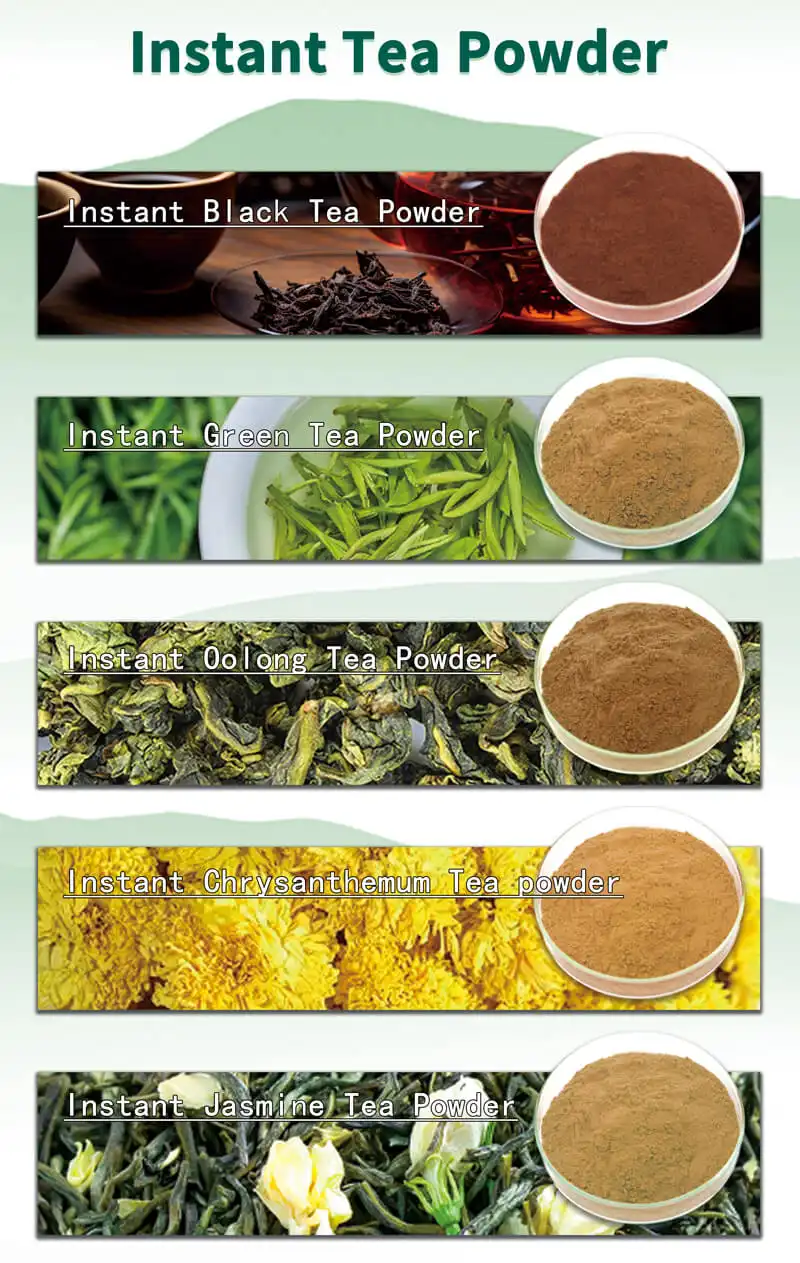
To turn black tea leaves into instant black tea extract powder, advanced processing methods are needed that keep the bioactive substances while making production efficient enough for large-scale use. Modern ways of extracting and drying ingredients get around the quality problems of the past, giving us uniform ingredients that can be used in medicinal, nutraceutical, and useful food products. When purchasing managers understand these manufacturing principles, they can choose suppliers based on things like quality certifications, analytical specs, and operating skills. The market is still moving toward cleaner ways of handling and better systems for keeping track of products. This is good for companies that are committed to using new, environmentally friendly methods of production that have been proven to work by science. Strategic sourcing choices combine quality standards with the dependability of the supply chain. This helps products stand out in highly competitive global markets.
FAQ
What distinguishes instant black tea extract powder from regular tea leaves?
Instant black tea extract powder goes through processes of separation and concentration that separate water-soluble compounds. This makes standard ingredients with exact polyphenol content. Regular tea leaves need to be steeped and then taken out, which makes doses less accurate. The powdered form dissolves right away, has a longer shelf life, and is easier to keep track of than large leaf materials that need brewing infrastructure.
How do manufacturers ensure consistent polyphenol levels across production batches?
HPLC technology is used to measure the concentrations of theaflavin and catechin by quality producers at several stages of production. Standardization blending changes batches by carefully mixing or adding carriers, which helps meet specific goals within very small error ranges. Each package comes with a certificate of analysis, which makes it possible to track it and ensures quality.
What minimum order quantities should B2B buyers expect when sourcing instant tea powder?
MOQ standards are very different depending on the size of the company and the type of product being sold. Large-scale producers usually need at least 500 kg to 1,000 kg of an order, but specialized sources may be able to handle trial amounts as low as 100 kg. When you use custom formulas or organically certified materials, you usually have to commit to larger quantities because of the costs of specific production runs and certification compliance.
Partner with Bolin Biotechnology for Premium Instant Black Tea Extract Powder
Since 2012, Shaanxi Bolin Biotechnology Co., Ltd. has been a specialist seller of instant black tea extract powder, using cutting-edge extraction technologies and strict quality control systems. Our factory has organic, ISO 9001, and ISO 22000 certificates, which make sure that the materials meet the standards of the pharmaceutical and nutraceutical industries. We offer full technical support, which includes formulation advice, data from stable tests, and unique polyphenol standardization that fits the needs of your product. Send an email to sales1@bovlin.com to get in touch with our procurement team and ask for detailed product specs, analytical testing records, and sample numbers that show how committed we are to quality excellence and supply chain reliability.
References
McKay DL, Blumberg JB. "The Role of Tea in Human Health: An Update." Journal of the American College of Nutrition, 2002, Vol. 21, No. 1, pp. 1-13.
Hilal Y, Engelhardt U. "Characterization of White Tea – Comparison to Green and Black Tea." Journal für Verbraucherschutz und Lebensmittelsicherheit, 2007, Vol. 2, Issue 4, pp. 414-421.
Bhushani JA, Anandharamakrishnan C. "Spray Drying of Food Materials: A Comprehensive Review." Food and Bioprocess Technology, 2014, Vol. 7, Issue 4, pp. 909-933.
Chen ZY, Zhu QY, Tsang D, Huang Y. "Degradation of Green Tea Catechins in Tea Drinks." Journal of Agricultural and Food Chemistry, 2001, Vol. 49, Issue 1, pp. 477-482.
Gramza-Michałowska A, Sidor A, Kulczyński B. "Tea and Health: Studies in Humans." Nutrients, 2022, Vol. 14, Issue 4, Article 936.
Sanderson GW, Ranadive AS, Eisenberg LS, Farrell FJ, Simons R, Manley CH, Coggon P. "Contribution of Polyphenolic Compounds to the Taste of Tea." Phenolic, Sulfur, and Nitrogen Compounds in Food Flavors, American Chemical Society Symposium Series, 1976, Chapter 2, pp. 14-46.