_1745226507162.webp)

Unveiling the Best Lutein Powder A Comparative Guide
For health supplements, cosmetics, and food, choose the best lutein powder. This can greatly impact your product's market performance and consumer satisfaction. Companies making eye health, antioxidant, and anti-aging goods demand this marigold-derived carotenoid extract. We recognize that buying requires balancing solid proof, obeying the regulations, ensuring a good supply chain, and keeping prices reasonable. This extensive guide leads you through assessment criteria, study comparisons, and procurement tactics to find lutein powder that meets your company's goals and quality requirements.
Understanding Lutein Powder and Its Benefits
Lutein powder is a concentrated form of xanthophyll pigments extracted from Tagetes erecta leaves utilizing complicated cleaning and saponification procedures. This naturally produced substance accumulates in the macular. Cells are protected from oxidative damage and high-energy visible light.
Primary Biological Functions and Mechanisms
Research in the Archives of Ophthalmology found that lutein contributes to macular pigment optical density. Up to 90% of 400-500 nm blue light is absorbed. Photoprotection reduces photochemical damage to retinal photoreceptors and RPE cells. The compound's conjugated double-bond structure neutralizes free radicals well. Journal of Agricultural and Food Chemistry research showed it removes reactive oxygen species from cells.
Studies demonstrate that it may cut LDL cholesterol and stabilize arterial plaque, helping the heart as well as the eyes. Nutrition research reveals that regular supplementation decreases inflammatory indicators and improve vascular function. Lipophosphatic lutein may enter cell membranes more easily, protecting several organ systems.
Formulation Optimization Considerations
Food manufacturers of carotenoids struggle with bioavailability. Normal formulae can only absorb 10-15% of native crystalline forms since they don't dissolve well in water. This issue is solved via microencapsulation. These methods develop stable water-dispersible beadlets that improve gastrointestinal absorption. Manufacturers estimate that enhanced designs boost absorption by 40–60% over ordinary powders.
Application determines the dosage. Eye health treatments have 6–20 milligrams per dosage, whereas cosmetics employ 0.5–2%. Clinical trials support daily dosages of 10 to 20 milligrams to maintain macular pigment density in older adults, providing product development teams with guidance.
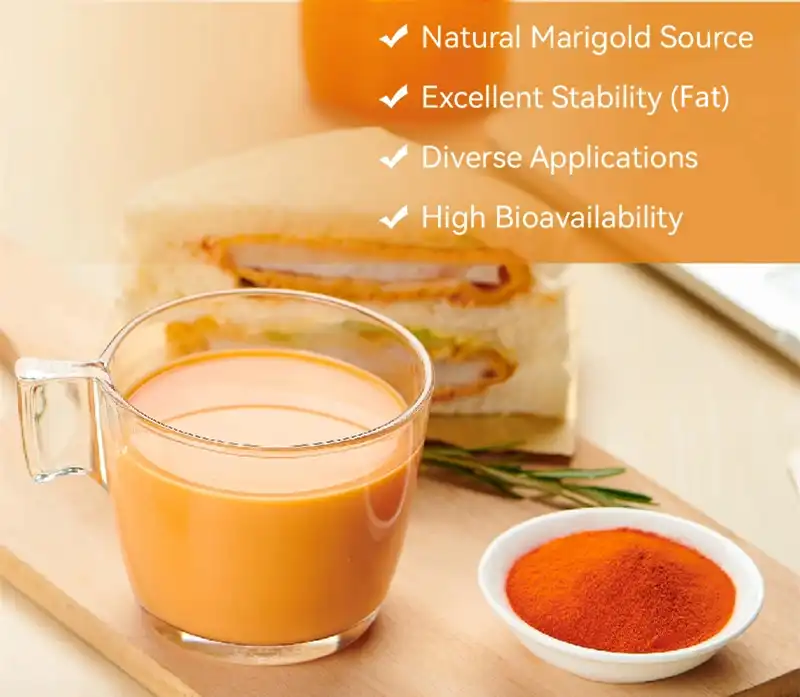
Key Criteria for Choosing the Best Lutein Powder for Your Business
Choosing the proper raw materials requires analyzing several quality criteria that affect product performance, regulation, and consistency. The distinction between manufactured manufacturing and plant extraction affects ingredient profiles and market positioning.
Source Verification and Certification Standards
Organic agricultural practices are devoid of synthetic pesticides, genetic alteration, and prohibited processing instruments, according to the USDA, EU, or comparable programs. These criteria are becoming increasingly significant in high-end supplement markets, where clean-label claims set products distinct. Pharmaceutical-grade purity must be 96% or greater, and heavy metal limitations below USP outline guidelines must be proved.
Third-party analytical verification for marigold extract powder, along with vendor evidence of analysis, ensures job quality. ISO 17025-accredited labs use HPLC fingerprinting to identify the product, quantify its active constituents using proven procedures, and check for contaminants like Sudan dyes or synthetic colorants that might contaminate lower-quality goods. We recommend inspecting arriving raw materials for microorganisms (total plate count, yeast/mold, and pathogens), residual solvents, and pesticides according to local regulations.
Supplier Transparency and Technical Support
From marigold cultivation to powder production, reliable partners retain detailed data. They record batch-specific extraction parameters, standardization methods, and stability data. GMP-approved factories utilize systematic quality management, and HACCP addresses food safety issues throughout processing. We appreciate sources that provide safety data sheets, allergy declarations, BSE/TSE permits, and formulation instructions to speed up product development.
Also important is zeaxanthin content. Natural marigold products include 4–10% zeaxanthin vs lutein. Some users benefit from standardized ratios of lutein to zeaxanthin (5:1), whereas others strive for the greatest lutein content for label claims and savings.
In-Depth Comparative Analysis of Leading Lutein Powder Options
Products range from basic powder grades to complicated distribution systems. Each offers advantages for different uses. Knowing about these technological advances lets you pick materials that match your formulation aims and target consumers' tastes. Review of the finest lutein powders.
Organic Versus Synthetic Production Methods
Marigold materials are popular in commercial marketplaces because they are well-regulated, customers enjoy them, and they are cheap to create industrially. Solvents extract the oleoresin, saponification removes the lipids, and crystallization concentrates it. This technique produces lutein esters or free lutein depending on plant processing. Free forms are mostly bioavailable.
Synthetic approaches using petrochemical intermediates can increase purity and eliminate farming variability, but North American and European health markets are resistant. More laws encourage naturally cultivated items in these locations. The most popular approach to manufacture dietary supplements and functional foods is plant extraction. Cosmetics are more flexible as both sources are safe as long as they fulfill local safety standards.
Delivery Format Comparison
Traditional crystalline powder allows formulators to produce bespoke concentrations but is difficult to dissolve in water. Cold-water-soluble kinds employ starch frameworks or gum arabic encapsulation to generate mixable particles for beverages and liquid nutrition. These altered versions yield up 10–15% of their active substance to carrier materials, but they allow novel drug production methods.
Additionally, oil suspension formats incorporate lutein crystals with vegetable oils at predetermined ratios. This approach simplifies softgel production and stabilizes lipid-based transport systems. Tablets or powdered mixes may be tougher to combine uniformly than dry substances.
Laboratory tests suggest lutein powder microencapsulated beadlets have greater oxidative stability. They retain 95%+ strength after 24 months of fast circumstances (40°C, 75% RH). Standard powders break down 15–25% under stress testing, demonstrating how safe new procedures may be. These stability discrepancies affect how long producers can guarantee product quality and shelf life.
Procurement Best Practices for Bulk Lutein Powder Buyers
To develop solid supply connections, you require stringent supplier evaluation processes that go beyond price comparisons and include quality systems, operational capabilities, and risk removal measures. Because botanical extraction is highly specialized, choosing the proper source affects product stability and regulatory compliance. Tips for Bulk lutein powder Purchasers.
Comprehensive Supplier Audit Framework
We recommend a multi-step certification procedure that begins with company licenses, manufacturing permissions, and quality requirements. Visit a production site to discover how extraction equipment, clean rooms, quality control labs, and storage environments impact material stability. Key audit steps include knowing where the raw materials come from (marigold kind, growing locations, harvest methods), verifying the extraction technique, determining analytical test frequency, and handling variations.
Ask for prior batch data from many manufacturing runs to assess key quality attributes for consistency. The coefficient of variance analysis for test findings, moisture content, and particle size distribution shows manufacturing control. Suppliers with tight standard ranges (±2% on important parameters) tend to have stronger process controls than those with more variability.
Contract Negotiation and Risk Management
Seasonal factors like marigold harvests impact botanical extract pricing. Long-term supply arrangements with raw material index price variations help clients budget and keep suppliers in business throughout market shifts. Minimum order quantities vary per provider, from 25-kilogram samples to multi-ton commitments for better pricing.
Quality agreements should state acceptance criteria, testing responsibility, steady promise length, and how to remedy non-standard materials. Supply issues caused by failing crops, government acts, or operational disasters can be avoided via "force majeure" and certified second-source suppliers. We have a range of supplier relationships throughout the world to reduce concentration risk and take advantage of competition for better business terms.
Market values make counterfeit marigold extract powder items more desirable, therefore counterfeiting prevention measures are becoming more popular. Analytical fingerprinting utilizing HPLC and photodiode array detection may distinguish marigold-based goods from fakes or cheaper colorants. Stable isotope ratio mass spectrometry identifies artificial ancestors without natural isotopic footprints, proving organic.
Future Trends and Innovations in the Lutein Powder Industry
New technology, environmental measures, and additional uses change the plant extract sector. These adjustments improve product marketing and market growth. Keep up with new advancements to adapt to shifting consumer requirements and competitive environments.
Technological Advancements Enhancing Product Performance
Nanotechnology has reduced particle sizes to submicron levels, increasing surface area and disintegration rate. Comparative studies reveal that nano-formulations boost absorption by about 200%, however regulatory approaches are still being developed. Another innovative approach is liposome encapsulation, which functions like biological membranes to help cells absorb things and protect sensitive active elements throughout digestion.
Supercritical CO2 extraction is becoming a preferred solvent-free processing alternative. Clean-label marketing and environmental benefits may make them popular. These expensive techniques remove leftover solvents and may eliminate phytonutrients that increase the item's value. The new methods generate 8–12% more crops and use raw resources better, according to manufacturers.
Sustainability and Market Expansion
Organic approval grows. Indian, Chinese, and South American marigold programs are moving toward international standards to reach higher-end markets. The future is regenerative farming that benefits wildlife and soil. As brand stories emphasize environmental responsibility, these strategies may raise pricing.
Nutrition industry studies predict 6-8% annual growth in the global eye health supplement market till 2030. An older population in industrialized nations drives demand, while more individuals of all ages using digital gadgets raises blue light safety awareness. These adjustments allow adding new goods to lines and expanding into new markets more easily.
Codex Alimentarius and regional trade treaties are standardizing laws, making it easier for multinational businesses to comply. Recent European Commission findings that lutein is safe in supplements up to 20 milligrams per day clarify the standards, and FDA judgments support adding lutein to meals in more than just supplements.
Conclusion
Plant extract market workers for lutein powder must balance scientific precision, quality control, and commercial savvy to locate products that fulfill tight criteria and help firms succeed. This evaluation approach uses biological functions, quality criteria, comparative analysis, and procurement methods. It organizes supplier selection and material qualification. Staying ahead of the competition requires tight supplier connections and compliance with regulatory changes as the business evolves and new technologies are introduced. Strategic purchase decisions now lay the groundwork for product differentiation and commercial success in complex health sectors.
FAQ
What certifications should we require when sourcing marigold extract for pharmaceutical applications?
USP or EP monographs, GMP manufacturing certification, and impurity profiles, microbiological limits, and stability data are required for pharmaceutical-grade ingredients. Ask for DMF assistance for European regulatory applications and CEPs. Approved lab testing confirms supplier claims and aids regulatory submission.
How do powder and oil suspension formats differ in bioavailability?
Oils contain dissolved lutein in lipid matrices. This improves absorption by generating digesting micelles. Study shows these powders are 20–30% more bioavailable than normal powders. Microencapsulated water-dispersible powders provide comparable outcomes but differently. Their formulation freedom for lipid and aqueous systems depends on the ultimate product format.
Can children safely consume supplements containing this carotenoid extract?
Clinical studies suggest that the medicine is safe for all ages in appropriate doses. Pediatric supplements typically include 3–6 mg per day, roughly a third of the adult dosage. We recommend consulting your local government and include pediatric nutritionists when creating supplements for kids, even when published research has revealed no detrimental impacts.
Partner with Bolin Biotechnology for Premium Lutein Powder Supply
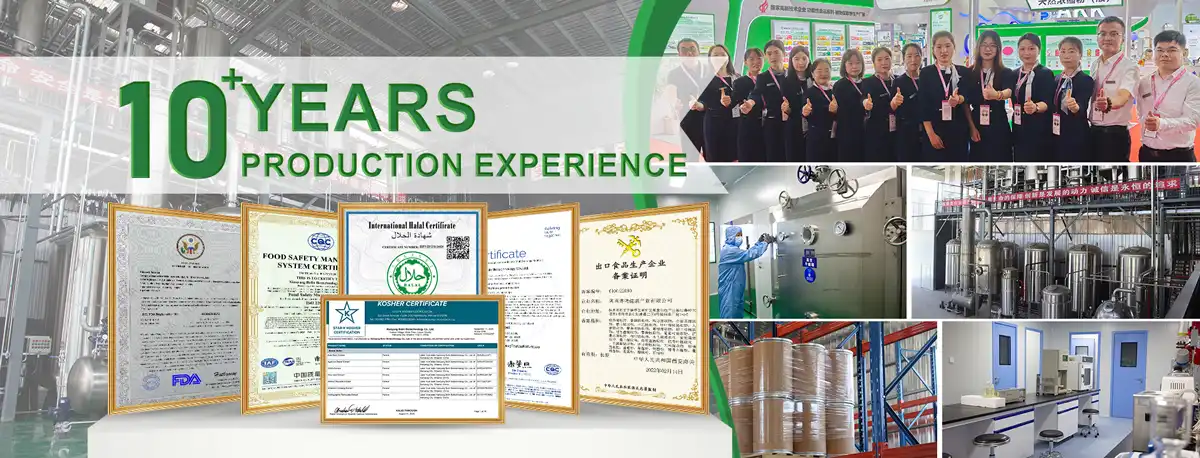
Bolin Biotechnology sells marigold extract powder reliably. They employ scientifically established plant compounds that fulfill global nutraceutical, pharmaceutical, and functional food requirements. Our ISO, GMP, and HACCP-approved production facilities transform high-quality marigold flowers into pure products with reliable test values between 5% and 80% concentration. We preserve detailed records from plant growth to packing. This helps you gain government clearances and ensure product quality. Recipe and custom concentration development may be done by technical teams, and minimum order amounts are adjustable to stimulate innovation. Contact our botanical ingredients specialists at sales1@bovlin.com to discuss your specific needs and acquire product details.
References
Bernstein, P.S., et al. "Lutein, Zeaxanthin, and Macular Pigment in the Human Eye: Basic and Clinical Studies." American Journal of Ophthalmology, vol. 154, no. 5, 2012, pp. 851-863.
Hammond, B.R., and Renzi, L.M. "Carotenoids and Visual Performance in Young Adults." Nutritional Neuroscience, vol. 16, no. 4, 2013, pp. 156-165.
Kijlstra, A., et al. "Lutein: More Than Just a Filter for Blue Light." Progress in Retinal and Eye Research, vol. 31, no. 4, 2012, pp. 303-315.
Ma, L., and Lin, X.M. "Effects of Lutein and Zeaxanthin on Aspects of Eye Health." Journal of the Science of Food and Agriculture, vol. 90, no. 1, 2010, pp. 2-12.
Nolan, J.M., et al. "The Impact of Macular Pigment Augmentation on Visual Performance in Normal Subjects." Investigative Ophthalmology & Visual Science, vol. 52, no. 7, 2011, pp. 3843-3854.
Stringham, J.M., and Hammond, B.R. "Macular Pigment and Visual Performance Under Glare Conditions." Optometry and Vision Science, vol. 85, no. 2, 2008, pp. 82-88.