_1745226507162.webp)

What is Lycopene? Benefits, Best Sources & More
Lycopene powder is a bright red carotenoid widely used in nutraceutical, cosmetic, and functional food applications. Naturally found in tomatoes and other red fruits, lycopene is recognized for its strong antioxidant properties and growing commercial value in health-focused formulations. Modern lycopene powder utilizes advanced technologies such as microencapsulation and spray drying to help address formulation challenges including oxidative instability and poor water dispersibility. These processing methods improve ingredient stability, purity, and shelf-life performance, making lycopene an important ingredient for manufacturers seeking natural, science-supported formulations.
Understanding Lycopene: Definition and Key Properties What Makes Lycopene Unique Among Carotenoids?
There are many carotenes, but lycopene is different because of its molecular structure. It has eleven conjugated double bonds that make it the best at squeezing out singlet oxygen. Lycopene does not change into vitamin A like beta-carotene does. This means that it can only work as an antioxidant and nothing else. It has about twice as much antioxidant power as vitamin E because of this structural advantage. This makes it a great choice for products that fight oxidative stress.
Technical Specifications That Matter for Procurement
If you want to use lycopene powder in a business, you should know about its physicochemical properties. The best lycopene powder is usually a dark red to reddish-brown fluid that is smooth and weighs between 0.4 and 0.6 grams per milliliter. It's easy to find standardized assay concentrations at 5%, 10%, and 20% purity levels that have been checked with HPLC analysis. Crystalline options that are good for medicine can be more than 96% pure. These rules have a direct effect on how well doses are given and how consistent formulations are when making products that need to be approved by regulators or shown to work in clinical trials.
Solving the Solubility Challenge
Lycopene from plants hasn't been used much in water-based mixtures because it doesn't like water. There are new kinds of lycopene powder that mix well with water and don't cause any problems. These are called cold water dispersible (CWD) and cold water soluble (CWS). The beadlet technology protects the conjugated double-bond structure from breaking down due to oxygen. When stored in a controlled environment, this keeps the food fresh for 24 to 36 months. With this new technology, people who make drinks and functional foods can do their jobs better than they could before.
Health Benefits and Industrial Applications of Lycopene Powder
Cardiovascular Protection Through Antioxidant Mechanisms
Many clinical studies have shown that lycopene is good for your heart because it lowers the oxidation of LDL cholesterol and makes endothelial cells work better. A review article in the journal of nutritional biochemistry found that regular lycopene intake is linked to lower heart disease risk markers. Food and supplement companies can use this proof to help them make heart-healthy formulas, especially for older people who want to stay healthy. Most of the time, 10 to 30 mg per day is recommended for heart health. However, B2B formulators should check with their local laws before making claims about their products.
Skin Health and Photoprotection Applications
Lycopene extract has been used in beauty products for a long time because it is good for the skin and helps keep it from getting damaged by the sun and aging faster. Reactive oxygen species (ROS) are made by UV light and lycopene is a strong antioxidant that gets rid of them. This keeps cells from getting hurt, which makes the aging process go more slowly. Chemists who work in cosmetics like it because it makes skin more flexible and less red after being in the sun. When used on the skin, concentrations between 0.5% and 2% have been shown to work in skin care products. But stability tests are still very important because light and oxygen can damage lycopene easily.
Versatility Across Industrial Sectors
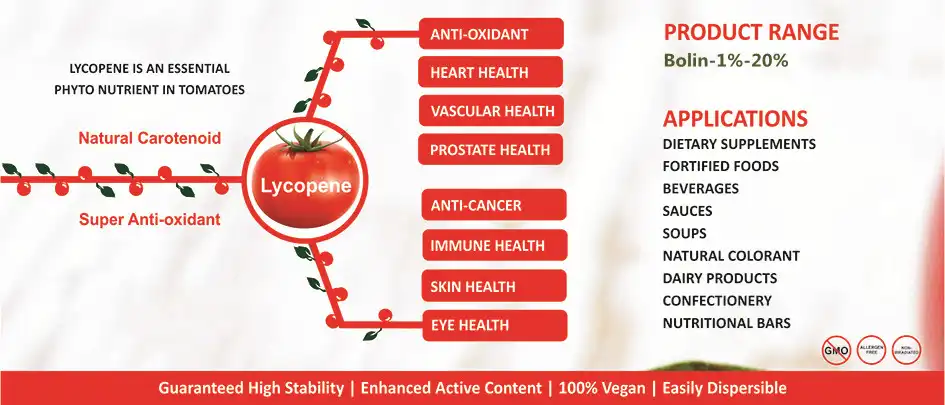
Besides being used in medicine and skin care, lycopene powder is also used in many other fields. Functional drink makers use it to make wellness drinks for active people, and nutrition bar makers use it as a natural colorant that is also good for you. Drug companies are looking into how it could be used in products that help men's prostate health. This is because studies of large groups of people have shown that those who eat more lycopene have fewer prostate problems. Lycopene powder is a popular ingredient among OEM manufacturers who want to make bioactive compounds that will appeal to a wide range of customers. This is due to the fact that it can be used in many different industries.
It is important for manufacturers to know the right dosing strategies so that their products work well and keep people safe. Standard dietary supplements have 5 to 15 mg per serving, but 30 mg can be used for medical reasons with the help of a doctor. Making sure that products follow good manufacturing practices and safety data sheets is important for making sure that they meet FDA guidelines for dietary supplements or similar international standards.
Best Natural Sources and Quality Considerations for Lycopene Powder
Primary Natural Origins and Content Variability
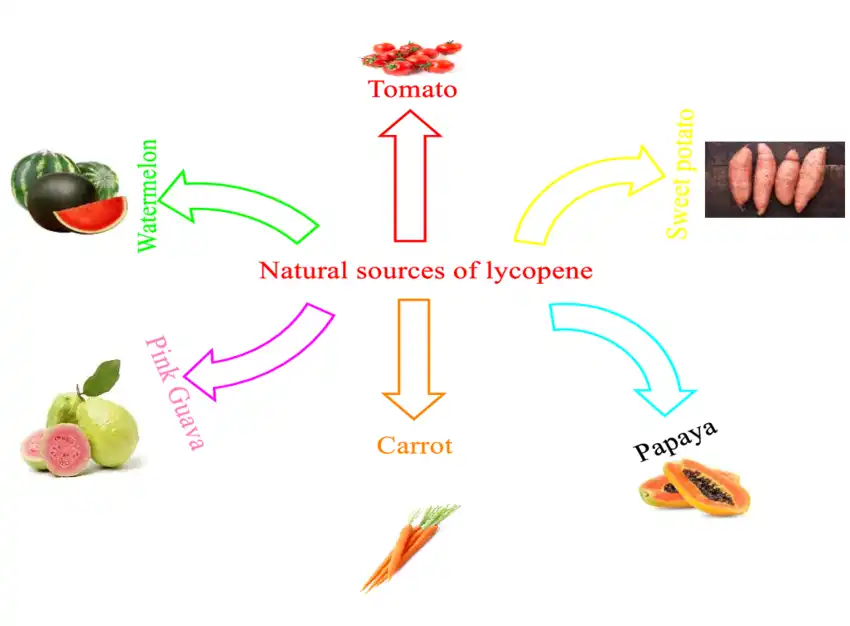
On the market, tomatoes are the main source of lycopene. Each 100 grams of fresh fruit has about 3 to 10 mg of lycopene. The amounts are a lot higher in tomato sauce, tomato paste, and other processed tomato foods. Watermelon, which has about 4.5 mg per 100 grams, is another good source. There are also small amounts in pink grapefruit. Agricultural factors like the stage of ripeness, cultivation methods, weather conditions, and the type of grape used all have a big impact on the amount of lycopene present. When building relationships with suppliers, procurement teams need to keep these things in mind.
Organic Versus Synthetic: Market Positioning Considerations
There are choices about where to get lycopene in the debate over organic certification. Organic lycopene powder made from non-GMO tomatoes costs more than other natural products on the market. This is good for people who like to buy things that have clear labels. It is possible to make synthetic lycopene when Blakeslea trispora is used to ferment fungi. This kind of lycopene is less expensive and more pure, but it has trouble selling in places where people care about where their products come from. Because of certification rules, the supply chain is more complicated and there is a lot of paperwork that needs to be done. This means that people who make products have to think about how to position them in the market and how much it costs to make each type.
Critical Supplier Evaluation Criteria
When people who buy things look for lycopene powder suppliers, they should think about more than just price. Instead of just using UV-Vis spectrophotometry, which can give false positives from other carotenoids, the assay levels should be checked by HPLC and written on the Certificate of Analysis. It is very important to test for residual solvents, especially to make sure that Class 3 solvents like hexane and ethyl acetate stay below 5000 parts per million (ppm) or higher for organic certifications. There must be proof from microbiological tests that Salmonella and E. coli are not there. For uses that don't need to be heated, coli with a Total Plate Count of less than 1000 cfu/g is best.
To follow the strict EU rules, you need to be aware of polycyclic aromatic hydrocarbons (PAHs). For example, PAH 4 levels must be less than 10 parts per billion (ppb). In microencapsulated forms, oxidation parameters like the Peroxide Value and the Acid Value show if the lipid carriers of tomato lycopene have broken down. This has a direct effect on the product's stability and bioactivity.
Comparison Guide: Lycopene Powder Versus Related Products and Competitors
Distinguishing Lycopene Powder from Tomato Powder
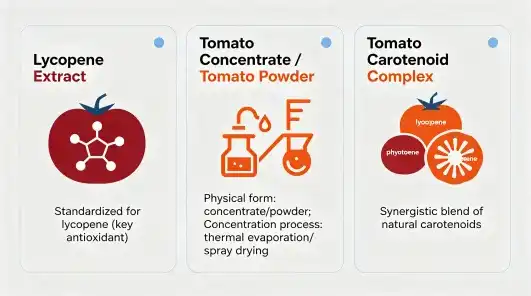
Although both tomato powder and lycopene powder are made from tomatoes, they are used in different ways in recipes. Tomato powder is the dried form of a whole tomato. It has mixed carotenoids, fiber, sugars, and lycopene, but only in very small amounts (about 0.2% to 0.5%). By extracting and purifying the bioactive target, lycopene powder makes it more concentrated. This gives it a standard level of potency that can be used for therapeutic dosing. It costs more to make supplements with this difference in purity because it takes a lot more tomato powder to get the same amount of lycopene. This makes supplements bulkier and changes how they taste.
Comparing Antioxidant Carotenoids: Beta-Carotene and Astaxanthin
People often have to pick between lycopene and other antioxidant carotenoids when they are shopping. When someone doesn't have enough vitamin A, beta-carotene is better because it can be used as both an antioxidant and a source of vitamin A. When it comes to oxidative stress, lycopene is the best choice because it is the best at getting rid of singlet oxygen. Astaxanthin is a strong antioxidant that can get into the brain from the blood. It comes from microalgae. This makes it very expensive, but it makes it a unique neuroprotective. Because each carotene helps with a different formulation goal, it takes some careful thought to choose the right ones that fit with health claims and plans for market positioning.
Supplier Qualification and Certification Requirements
Strong ways of checking out suppliers keep the supply chain running smoothly and stop problems with quality. Following good manufacturing practices (GMP) is shown by an ISO certification, which is an important certification. Using natural products is shown by an organic certification, which is also an important certification. You can learn a lot about a supplier's manufacturing skills, quality control systems, and how reliable their operations are by auditing them and looking over their paperwork. Great suppliers are different from average ones because they use performance metrics to keep track of things like on-time delivery rates, batch-to-batch consistency, and quick technical support. In turn, this changes how long it takes to make a product and how well it does on the market.
Procurement and Buying Guide for Lycopene Powder
Strategic Sourcing from Reputable Global Suppliers
To get the best deal on lycopene extract powder, you should first look for suppliers with clear supply chains and quality systems that can be checked. Suppliers you can trust keep full records that show where the raw materials came from, how they were processed, and how well they met quality standards. This is done to make sure that the products you buy meet international standards. When looking for a partner, ask for references from customers in the same line of work as you. Also, find out what kind of technical support they offer, especially if they work with you on R&D to create custom formulations. It is better to build long-term relationships with suppliers based on open communication and shared growth goals than to buy things one at a time based on price per unit.
Quality Testing Protocols and Sample Evaluation
Before you buy a lot, you should make sure that samples have been tested well. It is proven by HPLC analysis that there is lycopene present and that the amounts of its isomers are correct. The bioavailability is changed by how the all-trans and cis isomers are spread out. You can be sure that your manufacturing tools and the dissolution profiles you want will work together with particle size distribution analysis. Predicting how long something will last by testing its stability quickly shows possible ways it could go bad before it's made on a large scale. Testing for microbes and heavy metals makes sure that safety rules are followed. Testing for tastes and smells finds any off-flavors or smells that could lower the quality of the final product.
Bulk Order Negotiation and Supply Chain Optimization
You can get better deals on things when you buy a lot of them, but procurement teams have to weigh the savings against the cost of keeping the goods in stock and the chance that they will go bad. By negotiating for flexible minimum order quantities, you can test and improve a product before it is made in large quantities. Clear quality standards in purchase agreements keep people from fighting and make sure that the things you buy always do what they're supposed to. Single-source supply chains can be messed up by things like natural disasters, new rules, or political unrest. To protect your business, it's best to have suppliers in more than one place. When you work with both primary and secondary suppliers, you have more options and can keep your pricing power.
Lycopene powder is stored in the best possible way during distribution and production. Store things in cool, dry places that are out of direct sunlight and have a relative humidity of less than 60%. The best places are those that are below 25°C. By nitrogen flushing or vacuum sealing, oxidative exposure is kept to a minimum. This makes the shelf life longer. Follow the "first-in, first-out" rule for inventory to keep things from going bad, and make sure your quality management software can clearly track when things expire.
Conclusion
Lycopene powder is a bioactive ingredient that science has shown to work. It can be used in a lot of different ways in cosmetics, functional foods, nutraceuticals, and medicines. Companies that want to appeal to health-conscious customers should use this ingredient. It has a high antioxidant capacity and new formulation technologies have solved problems with solubility and stability. To do good procurement, you need to know the technical requirements, set up strict ways for suppliers to qualify, and do business with certified suppliers who are committed to quality and openness. As more people look for natural ingredients that have been proven to work, lycopene powder can help your product stand out and become the market leader.
FAQ
What dosage of lycopene powder should supplement formulations contain?
Most dietary supplements have between 5 and 15 mg of lycopene per serving to help with antioxidants in general. For medicines that are meant to improve certain health outcomes, like heart health, 10 to 30 mg daily may be recommended. However, companies should check with local regulatory bodies before deciding on dosage levels and health claims. In drug studies that are supervised by a doctor, higher doses are sometimes used. This needs support from clinical data and the proper regulatory approval processes.
How does lycopene absorption compare between powder and other delivery forms?
Lycopene is much easier for the body to use when it is combined with fats because it is lipophilic. Powder forms that use microencapsulation and beadlet technologies help the body absorb lycopene better than raw lycopene. This kind of softgel delivery system with oil matrices works very well, but it's not possible to make them in as many ways as powders are. Making isomer ratios better, especially by adding more cis-isomer, can help the body absorb things better in the intestines. This is the main reason why powder processing technologies are very important to how well formulations work.
Are there safety concerns or side effects associated with lycopene powder?
Lycopene has been shown to be very safe when taken in normal amounts. No major side effects have been reported. When you stop taking a lot of the drug, the orange spot on your skin goes away. It's not dangerous. Normal toxicology tests show that there are big safety gaps. To follow the rules, you have to use the right labels and follow the recommended daily intake levels. Lycopene, on the other hand, is generally thought to be GRAS when used in food. This makes the regulatory process easier for companies that make functional foods and supplements.
Partner with Bolin Biotechnology for Premium Lycopene Powder Supply
Manufacturers who care about quality and want to work with lycopene powder suppliers they can trust can work with Bolin Biotechnology. We've been making pharmaceutical-grade plant extracts since the beginning, in 2012. GMP, ISO, and organic credentials are just some of the quality seals that back up our products. Our lycopene powder has assay levels that have been confirmed by HPLC. It also has advanced microencapsulation for better stability and great water dispersibility, which means it can be used in a lot of different formulations. No matter if you're making dietary supplements, functional drinks, or new cosmetics, our technical team can make solutions that are just right for you. Our minimum order quantities are flexible, so they can be used for both testing new products and making a lot of them. Strict quality control makes sure that each batch is the same as the last. Email our team at sales1@bovlin.com to get samples of our products, talk about buying in bulk, or find out how we can help you make your own medicines. Working with a well-known lycopene powder maker that cares about a stable supply chain and good technical work will help your product get better faster and help you stand out in the market.
References
Rao AV, Rao LG. Carotenoids and human health. Pharmacological Research. 2007;55(3):207-216.
Story EN, Kopec RE, Schwartz SJ, Harris GK. An update on the health effects of tomato lycopene. Annual Review of Food Science and Technology. 2010;1:189-210.
Erdman JW, Ford NA, Lindshield BL. Are the health attributes of lycopene related to its antioxidant function? Archives of Biochemistry and Biophysics. 2009;483(2):229-235.
Frusciante L, Carli P, Ercolano MR, Pernice R, Di Matteo A, Fogliano V, Pellegrini N. Antioxidant nutritional quality of tomato. Molecular Nutrition & Food Research. 2007;51(5):609-617.
Unlu NZ, Bohn T, Clinton SK, Schwartz SJ. Carotenoid absorption from salad and salsa by humans is enhanced by the addition of avocado or avocado oil. Journal of Nutrition. 2005;135(3):431-436.
Giovannucci E, Rimm EB, Liu Y, Stampfer MJ, Willett WC. A prospective study of tomato products, lycopene, and prostate cancer risk. Journal of the National Cancer Institute. 2002;94(5):391-398.