_1745226507162.webp)

Saw Palmetto Extract vs Berries: Which Works Best
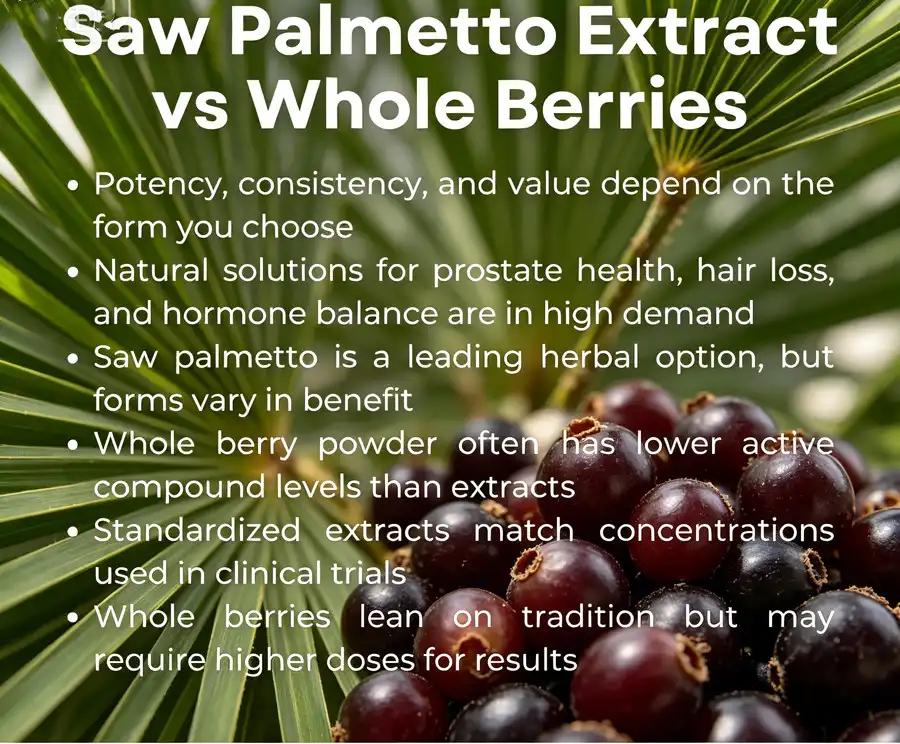
Saw palmetto extract powder is generally preferred over whole berries for standardized nutraceutical formulations because of its concentrated bioactive composition and improved formulation compatibility. Standardized extracts typically contain 25%–45% fatty acids along with controlled phytosterol levels, helping nutraceutical manufacturers achieve more consistent batch quality and product performance. While whole berries may offer lower raw material costs, they often provide less consistent bioavailability and are more difficult to standardize in large-scale production. Understanding these differences helps procurement teams select ingredients that support product consistency, regulatory compliance, and long-term formulation stability.
Understanding Saw Palmetto: Fruit Extract Powder vs Berries Botanical Background and Industrial Significance
Serenoa repens thrives on South Carolina, Georgia, and Florida coasts. Dark purple-black berries are collected for liposterolic compounds. Historically, these berries were used as medicine. They now feed modern extraction methods that concentrate healing compounds. Drug and supplement companies use saw palmetto as a main ingredient in men's health products, especially those that treat BPH.
Extraction Techniques and Concentration Profiles
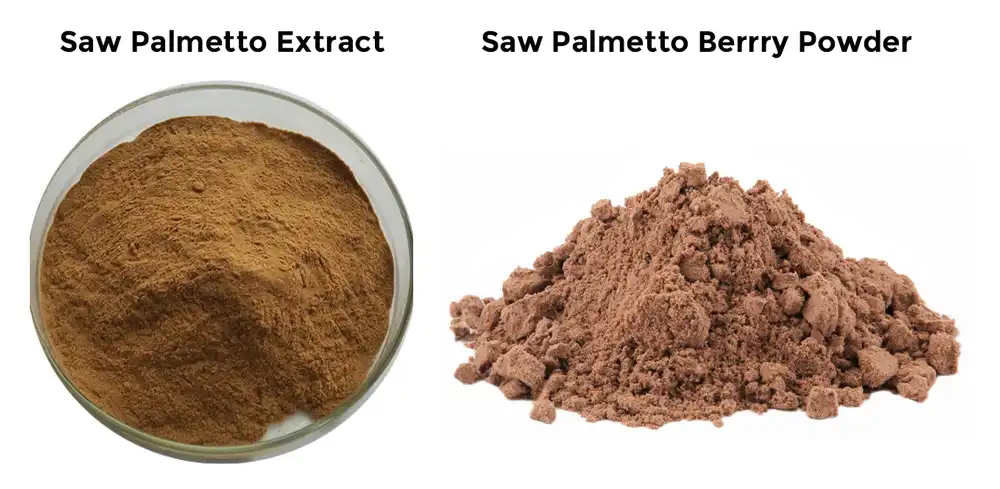
The main difference between saw palmetto fruit extract powder and whole berries is their preparation. Supercritical CO2 extraction and solvent-based methods can separate phytosterols (β-sitosterol, campesterol, stigmasterol) and fatty acids (lauric, oleic, and myristic acids) from raw berries. Standardized extracts contain 25–45% total fatty acids. In contrast, whole berry powder contains 2–4% fatty acids, fiber, sugars, and water. This is ten times more.
Mechanically drying and grinding whole berry powder preserves nutrients but changes strength. DNA barcoding shows that whole berry products come from the right species, but there are no usage guidelines, making it difficult for makers. Extract powder's active ingredients can be measured. Make accurate mixtures and get pharmaceutical-grade paperwork with this.
Bioactive Component Analysis
Saw palmetto's liposterolic part prevents 5-alpha-reductase, which is good. DHT is testosterone-derived. The enzyme converts testosterone to DHT. Androgenic alopecia and enlarged prostates are linked to high DHT levels. Standardized extracts ensure consistent delivery of phytosterols (0.2% to 0.5% β-sitosterol). They also predict biological activity. Whole berries contain these chemicals, but their amounts depend on how they were picked, stored, and processed.
Whole berries contain anti-inflammatory polysaccharides and flavonoids, but the fatty acid profile is more important in medicine. Contract manufacturers who base formulations on evidence choose extracts with validated assay data over whole berries, whose composition is unknown.
Comparing Effectiveness: Saw Palmetto Extract Powder vs Berries
Clinical Efficacy in Prostate and Urinary Health
Saw palmetto fruit extract powder has been shown in clinical trials to relieve lower urinary tract benign prostatic hyperplasia symptoms. Taking 320 mg of a standardized extract (85–95% fatty acids and sterols) daily speeds up urine flow and reduces nighttime bathroom visits. Because the extract powder is so concentrated, two softgel capsules can provide these therapeutic doses. For most people, taking eight to twelve capsules of whole berry powder daily is not a good idea.
Bioavailability and Absorption Dynamics
Saw palmetto's unique parts in saw palmetto fruit extract must be delivered in a certain way to be fully absorbed. The gut absorbs extracts with carrier oils or lecithin better than dry whole berry powder, which needs bile acids to absorb fat-soluble nutrients. Bioavailability allows smaller doses and helps products have a better cost-per-effective-dose ratio.
Gas chromatography showed that standardized extracts raise blood plasma fatty acid levels three to four hours later. Complete berry consumption results in later, lower peak levels. The better pharmacokinetic profile of extract powder helps drugmakers make fast-acting drugs.
Applications in Hair Loss Prevention
Due to its DHT-blocking properties, palmetto was considered a natural alternative to synthetic 5-alpha-reductase inhibitors. Concentrated extracts in topical and oral formulations stop hair loss. Regular supplementation reduced hair loss after 12 weeks in clinical trials. Few cosmetic and trichology formulas use whole berries because they don't contain enough to be therapeutic.
Safety Profiles and Certification Demands
Both types are safe if purchased from a trusted store. Still, side effects are rare and mild; sensitive people usually experience stomach pain. Vegan, non-GMO, and organic products are becoming more popular. Health-conscious markets charge more for certified organic extract powder. A third party must test both types for heavy metals, pesticide residues, and microbial contamination. Because extract powder is more concentrated, quality standards must be higher.
Procurement Insights: Why Choose Saw Palmetto Extract Powder?
Quality Assurance and Testing Protocols
Reputable saw palmetto fruit extract powder suppliers have strict quality control, unlike commodity brokers. Gas chromatography with flame ionization detection (GC-FID) checks the total fatty acid assay to ensure matching labels and food. If lauric-to-oleic acid ratios are off, cheap coconut or palm kernel oil is used to water down the oil, a recurring industry issue.
Strict suppliers use extensive testing programs that include:
- Fatty Acid Profile Verification: Chromatographic analysis confirmed that Serenoa repens has the only known lauric, myristic, and oleic acid ratios. Using cheaper vegetable oils was also shown.
- Phytosterol Quantification: HPLC determines β-sitosterol, campesterol, and stigmasterol levels in plants. This proves the plant is real and therapeutic.
- Rancidity Parameters: Checking the peroxide and acid values ensures steady lipids, which keeps the product useful over time.
- Heavy Metal Screening: An ICP-MS test showed that lead, cadmium, and mercury were below USP-recommended levels of 3ppm, 1ppm, and 0.1ppm, respectively.
- Microbiological Testing: Counting plates, yeasts, molds, and Salmonella and E. coli to protect people.
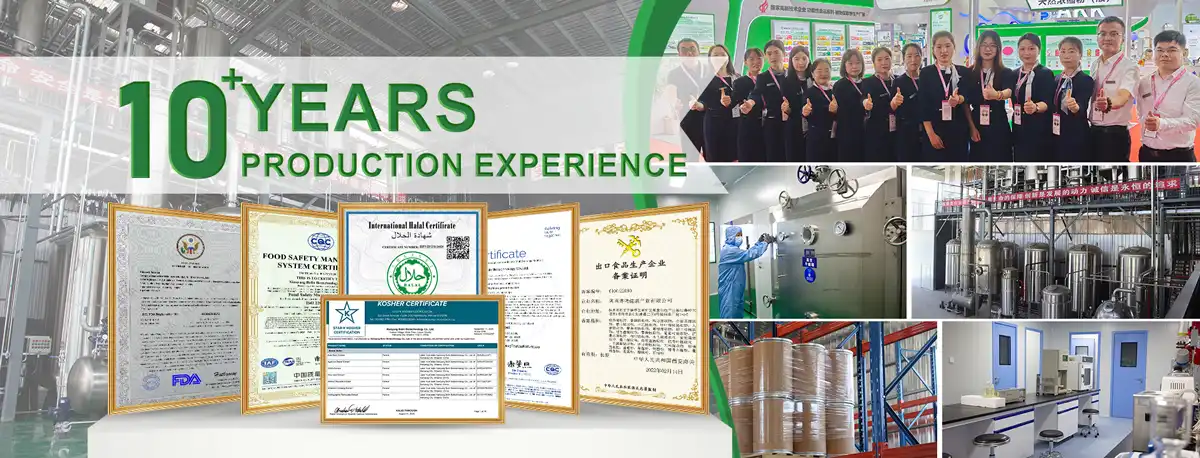
The products' ISO 9001, GMP, HACCP, and organic certifications indicate quality. Pharmacy buyers prefer suppliers who ship with a Certificate of Analysis (CoA). This paper shows how the finished extract is linked to specific berry lots and includes stability data to support expiration claims.
Supplier Evaluation and Partnership Development
Knowing vertically integrated suppliers can help you maintain quality and supply chain visibility. Producers control growing, harvesting, and extracting, eliminating middlemen who lower product quality. Most saw palmetto is harvested in Florida, slowing supply. Diversifying your sourcing reduces risk during hurricanes and rule changes.
Long-term contracts that guarantee a certain amount of goods, including saw palmetto extract, ensure fair prices and resource sharing when raw materials are scarce. Collaboration can meet custom standardization requests like fatty acid percentages or tablet particle sizes. Not possible with spot-market transactions.
Logistics and Bulk Purchasing Advantages
Extract powder is more concentrated than whole berries and takes up less space to store and ship. One 25 kg drum of 45% fatty acid extract is bioactively equivalent to four pallets of whole berry powder. This greatly reduces shipping and storage costs. Density helps when buying from abroad because shipping costs affect landed costs.
Bulk purchases from 500 kg to several tons are cheaper. However, they must consider inventory costs and product lifespan. If properly stored away from light, heat, and water, extract powder can last 24–36 months. After 18 months, whole berry powder fails quickly.
Saw Palmetto Extract Powder vs Other Market Alternatives
Comparative Analysis with Competing Ingredients
Many men's health botanical supplements work similarly. Zinc and phytosterols work well in pumpkin seed oil. It is often combined with saw palmetto in prostate drugs. Medicinemakers who want to focus on specific mechanisms use beta-sitosterol isolates for concentrated phytosterol therapy without the liposterolic matrix.
Another 5-alpha-reductase inhibitor, Pygeum africanum extract, is harder to find and costs more and lasts less. Products often contain saw palmetto and nettle root extract, which reduce swelling. Knowing these options helps purchasing teams find cost-effective manufacturing methods.
Chemical Composition Differences
Pumpkin seed oil has more omega-6 and unique tocopherol profiles than saw palmetto extract, which emphasizes medium-chain fatty acids. This composition difference allows smart ingredient combinations to make products stand out. Saw palmetto improves lycopene, zinc, and selenium when mixed. OEM clients making full men's health blends should consider this.
Market Positioning and Consumer Preferences
Saw palmetto sells better than lesser-known herbs because it's prostate-friendly. The claim that saw palmetto is in the product is good because people buy brands based on reputation. Formulators can gain an edge in crowded supplement markets by using this recognition to improve dosage forms and delivery systems.
How to Select the Best Saw Palmetto Product for Your Business Needs?
Critical Procurement Criteria
Only clear specification needs that match the applications can make sourcing work. Standardized 85–95% fatty acid and sterol extracts, including saw palmetto fruit extract, are used in softgel prostate formulations. The usual dose is 160–320 mg. Functional food designers must use water-dispersible or microencapsulated saw palmetto in drink mixes or nutrition bars. Lipid-based actives don't dissolve well, but these do.
Your target market's certification requirements vary. Novel Food must follow EU regulations and have few contaminants to sell in the EU. GRAS and GMP supplements sell more in the US. Exporting manufacturers must comply with complex regulations that require supplier documentation to enter markets.
Application-Specific Selection Guidelines
Tablet and capsule makers like saw palmetto fruit extract powder that does not stick together and has consistent particle size. Thus, filling dies evenly and guessing powder dissolution is easier. Cosmetic makers of solid shampoo bars or scalp serums need extracts that can be mixed with waterless emulsification systems or bases. After meeting these technical requirements, you can discuss form factors with suppliers instead of product lines.
OEM and private label customers should ask suppliers to change standardization, make formulations more specific, or make their own blends. Flexible minimum order quantities let you test a product line without stocking up. This is especially useful when creating a new product.
Building Resilient Supplier Relationships
Supply chain issues showed how important suppliers must be reliable and communicate quickly. If something goes wrong, suppliers with backup sourcing, business continuity, and inventory buffer policies can keep production running smoothly. Knowing crop forecasts, rule changes, and capacity limits helps people plan ahead rather than react to crises.
Supplier facilities are audited directly or through third-party certification bodies to ensure GMP compliance and quality system efficiency. Going to a company's website and seeing how well they make things and how advanced their labs are can reveal their quality commitment. Spending money on supplier qualification yields better products with fewer quality issues and rejected shipments.
Conclusion
Saw palmetto fruit extract powder is better for business purchases that must be consistent, effective, and compliant. Standardized extraction gives us bioactive substance amounts, which helps us formulate based on facts. This is good because we need less active ingredient. Saves time and money. In some cases, whole berries are cheaper and contain all the plant's nutrients, but extract powder is better for most medical, beauty, and health uses. A wellness business must carefully select suppliers based on quality, certification, and collaboration to succeed in the long run.
FAQ
Which form delivers better results: extract powder or whole berries?
Because it has 25–45% bioactive compounds like fatty acids, saw palmetto fruit extract powder is better for hospitals than whole berries, which have 2–4%. This concentration allows therapeutic doses in softgels, helping people stick to their plans. Whole berries have more phytonutrients than processed ones, but they're not standardized for medicine. Extract powder should be purchased first due to formulation consistency and efficacy.
What quality certifications matter most when sourcing saw palmetto?
ISO 9001, GMP, HACCP, and organic certifications provide quality assurance. Making medicines requires more USP or EP monograph rules. A third-party test for heavy metals, microbial contamination, fatty acid profiles, and phytosterol content can distinguish trustworthy suppliers from commodity brokers. DNA barcoding authentication prevents species mixing, which is crucial because botanical extract markets are under pressure to sell fakes.
How does saw palmetto extract fit into vegan and organic product lines?
Since saw palmetto extract is plant-based, it's safe for vegan products. Organic berries must come from organic farms or wild plants processed organically. Premium ingredients like certified organic saw palmetto extract help brands stand out in health-conscious markets as demand for eco-friendly botanicals rises.
Partner with Bolin Biotechnology for Premium Saw Palmetto Solutions
Bolin Biotechnology sells pharmaceutical-grade saw palmetto fruit extract powder with many certifications and strict quality control. This powder aids formulation. Since we've been making products since 2012, we know a lot about plants and use cutting-edge extraction technology to make strict standard extracts. Our ISO-certified factories ensure batch consistency, and our flexible MOQ rules allow small production runs and product tests. We provide all the paperwork you need to comply with global market regulations, making it easy to add us to your supply chains. Our technical team will discuss your needs and send you samples to prove Bolin Biotechnology is the best place to buy saw palmetto fruit extract powder if you email sales1@bovlin.com.
References
Gerber GS, Kuznetsov D, Johnson BC, Burstein JD. Randomized, double-blind, placebo-controlled trial of saw palmetto in men with lower urinary tract symptoms. Urology. 2001;58(6):960-965.
Patel ND, Parsons JK. Epidemiology and etiology of benign prostatic hyperplasia and bladder outlet obstruction. Indian Journal of Urology. 2014;30(2):170-176.
Bent S, Kane C, Shinohara K, et al. Saw palmetto for benign prostatic hyperplasia. New England Journal of Medicine. 2006;354(6):557-566.
Prager N, Bickett K, French N, Marcovici G. A randomized, double-blind, placebo-controlled trial to determine the effectiveness of botanically derived inhibitors of 5-alpha-reductase in the treatment of androgenetic alopecia. Journal of Alternative and Complementary Medicine. 2002;8(2):143-152.
Scaglione F, Lucini V, Pannacci M, Caronno A, Leone C. Comparison of the potency of different brands of Serenoa repens extract on 5α-reductase types I and II in prostatic co-cultured epithelial and fibroblast cells. Pharmacology. 2008;82(4):270-275.
Tacklind J, MacDonald R, Rutks I, Stanke JU, Wilt TJ. Serenoa repens for benign prostatic hyperplasia. Cochrane Database of Systematic Reviews. 2012;12:CD001423.