_1745226507162.webp)

What are the Absorption and Metabolism of Lycopene Powder?
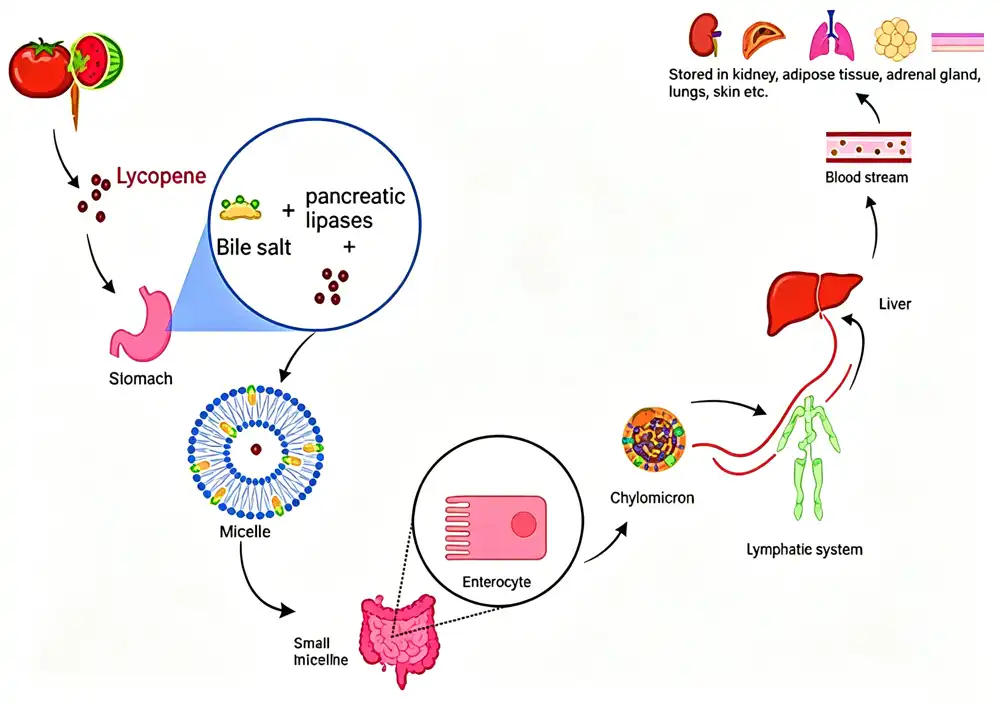
Lycopene powder is a concentrated carotenoid extract prepared from tomatoes (Solanum lycopersicum) or fungi-fermented tomatoes. For better passage across enterocyte membranes, dietary lipids assist this lipophilic molecule join other micelles in the small intestine. Lycopene is broken down in the liver and other tissues after consumption. It forms reactive metabolites and isomers with various biological effects. These mechanisms must be understood to pick high-bioavailability formulae for supplement manufacturing with the optimum therapeutic benefits.
Understanding Lycopene Powder – Composition and Nutritional Profile
When I build nutritious goods with sourcing teams, we start by discussing what makes lycopene powder work. It's brilliant red, yet its complex chemical structure influences product performance.
Chemical Structure and Antioxidant Capacity
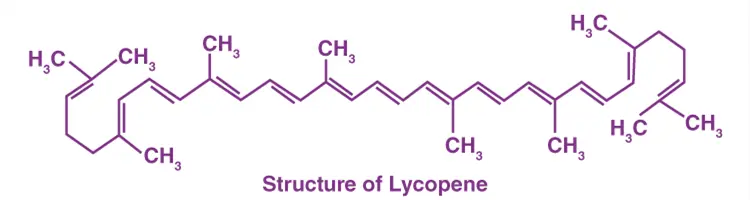
Lycopene is the electron-rich carotenoids that blocks singlet oxygen best due to its 11 conjugated double bonds. This chemical property gives it double the antioxidant potency of vitamin E. Raw tomatoes are mostly all-trans, however processing and preparation can increase cis-isomer ratios, which improve intestinal absorption by 50%, according to clinical trials.
Comparing Lycopene Forms for B2B Applications
various shipping techniques suit various formulations. HPLC testing shows standardized lycopene powder levels between 5% and 20%. Pharmaceutical-grade crystals are above 96% pure. Tomato extracts include all plant phytonutrients, including beta-carotene and phenolics. This can improve nutritional benefits but makes uniformity tougher. Although capsules are handy, they can't be used in powder-dispersed meals and drinks.
Bolin Biotechnology has shown that superior Cold Water Dispersible (CWD) technology can mix hydrophobic native lycopene with water without creating emulsion rings. More recent technology allows oleoresins to be used in ready-to-drink beverages and edible bears.
Critical Quality Indicators for Procurement
More than identification tests are needed to pick dependable raw materials. HPLC is more accurate than UV-Vis spectroscopy, which might provide false positives from other carotenoids in fresh extracts. ISO, GMP, and HACCP certifications prove that manufacturing is managed, but additional considerations must be considered.
Class 3 solvents like hexane and ethyl acetate should stay below 5000 ppm for organic approvals, therefore residual solvent levels must be monitored. Microencapsulation protects conjugated double-bond structure against reactive breakdown. The product can be kept securely for 24–36 months. Checking the Peroxide Value and Acid Value ensures that the lipid transport structure has not broken down, preserving the product's bioactivity.
Absorption Mechanisms of Lycopene Powder in the Human Body
Knowing how this carotenoid goes from powder to bloodstream helps formulators create the optimum delivery systems and establish realistic targets.
Digestive Processing and Micellization
Pancreatic lipases and bile salts fuse lipophilic carotenoids, including lycopene extract, with mixed micelles in the small intestine when lycopene powder arrives. This begins absorption. These small entities transport lycopene across still water to enterocyte brush boundary membranes. Fats from food enhance this process. Studies demonstrate that ingesting 5–10 grams of fat with lycopene increases absorption by 200–400% over fat-free conditions.
Factors Influencing Bioavailability
How effectively the matrix absorbs depends on its composition. Heat breaks down cell walls and transforms trans-isomers to more absorbable cis-configurations, making heat-processed tomatoes two to three times more bioavailable than raw tomatoes. Beadlet-technology microencapsulated powder formulae protect the active ingredient and match particle size for dissolution. 1–10 micron particles absorb more than larger agglomerates.
Supplementing with additional nutrients provides complimentary and competitive benefits. Large levels of beta-carotene and lutein may make lycopene absorption difficult because they compete for intestinal absorption pathways. However, vitamin E and other fat-soluble antioxidants may stabilize digestion, preserving beneficial substance.
Stability Challenges and Formulation Solutions
Its conjugated double-bond structure makes colorful lycopene readily broken down by light, heat, and air. Non-covered formulae might lose 30–50% after six months via storage. Spray-drying with antioxidant coating techniques creates stable powders that last the product's shelf life. Quality control includes checking oxidation variables like Peroxide Value. This is especially essential for microencapsulated forms because the lipid carrier may reduce stability.
Metabolism and Bioactivity of Lycopene Powder
Once consumed, lycopene forms metabolites with distinct physiological consequences. Understanding these metabolites helps create research-based formulations.
Hepatic and Tissue Metabolism Pathways
Lycopene accumulates in the liver, fat, adrenal glands, and prostate. Most processing occurs in the liver. Carotenoid oxygenases (BCO1 and BCO2) break down plants into apolycopenals and lycopenoids. Lycopene does not convert to vitamin A like beta-carotene. It maintains molecular activity without hypervitaminosis.
Most isomers we ingest are all-trans, although isomerization continues after absorption. Tissue contains 50–70% cis-isomers. This natural transition shows that cis-isomers have specialized functions in cell function, especially in membrane integration, where their curved molecular form helps lipid bilayers link.
Cellular-Level Antioxidant Mechanisms
Lycopene enters cell walls and protects DNA, proteins, and lipids from reactive oxygen species. This makes it effective in protecting LDL cholesterol from oxidation, which is crucial to heart health. Lycopene also increases antioxidant enzyme synthesis by altering gene expression via transcription factor pathways like Nrf2.
Lycopene intermediates have distinct biological consequences than the parent molecule, say researchers. Apo-10'-lycopenal strengthens gap junction signaling and cell development pathways, protecting the prostate and skin from UV radiation.
Dosage Optimization for Maximum Efficacy
Based on the application, clinical studies reveal that 6–30 mg daily dosages of tomato lycopene are effective. 10–20 mg daily is suitable for cardiovascular support, while 16–30 mg may protect skin from UV rays. Bioavailability variations need powder concentration determination for therapeutic values. Doses for 10% test powders are greater than crystalline extracts.
Manufacturers should consider large dosages or maintenance programs. Tissue saturation requires 4–8 weeks of treatment before blood levels peak. This impacts clinical study design and product utilization. Take daily dosages with fat-rich diet to improve absorption and maintain plasma levels.
Comparison and Procurement Insights for Lycopene Powder Products
When navigating the food market, you must consider technical requirements and business issues to acquire the best pricing without losing quality.
Delivery Format Performance Analysis
Comparing form absorption rates shows substantial variances. Because they disperse better and don't break down in the stomach, encapsulated beadlet powders are 15–25% more bioavailable than normal oleoresins. Softgel tablets are sturdy but less versatile and cost more each dosage. Powder grades that dissolve in water allow more recipe alternatives, notably for healthy beverages and candies, where oil-based additives are difficult.
Fermented and wild tomato lycopene affect metabolism differently. For various drinking usage, fermentation sources provide cleaner flavor profiles without tomato overtones while maintaining the molecular structure. In nature, phytonutrients may act together to improve antioxidants.
Supplier Selection Criteria
Building trust starts with certification verification. GMP compliance ensures pharmaceutical production safety, whereas ISO 9001 displays quality management systems. Food safety regulations for supplements are covered under HACCP licensing. Asking for third-party heavy metal, herbicide residue, microbiological contamination, and assay verification testing data adds objective quality confirmation to these fundamental procedures.
Brands that emphasize 'clean label' worry more about product sourcing. Suppliers should provide traceability documents showing raw ingredients, including lycopene extract, processing, and powder origin. Organic certification costs more, but it offers new markets to natural farming. Bolin Biotechnology has comprehensive supply chain records and offers organic and non-GMO options that meet various marketing strategies.
Procurement Logistics and Commercial Terms
Minimum order quantities vary per source, although for standard grades, they are normally 25–500 kg. Custom formulation and customized form production may require higher minimums. The lead time for regular items is 2–4 weeks, whereas special orders take 6–8 weeks to create.
To bargain well, you must understand the market. Lycopene prices depend on tomato harvests and oil prices, which impact extraction solvents. You may acquire better rates and ensure a constant supply during strong demand by arranging framework arrangements with volume pledges. Long-term commercial agreements normally need 30–60 days net payment. First-deal letters of credit are common.
Addressing Common Concerns: Safety, Side Effects, and Usage Guidelines
Following the regulations and protecting customers underpins responsible ingredient procurement and product production.
Safety Profile and Known Side Effects
Lycopene has been thoroughly tested in people and is safe. Long-term use of 120 mg per day has not caused serious negative effects. Some people suffer slight stomach ache when taking more than 30 mg, however lowering the dose or taking it with meal typically fixes it. Long-term high-dose supplement use can cause lycopenodermia. It provides skin a harmless orange color that fades when supplements are stopped.
Contraindications and Risk Mitigation
Lycopene may mix with blood thinners and antiplatelet medications, however the therapeutic value is unclear. Prudent labeling encourages prescription medicine users see their doctors. Despite no known concerns with food-derived lycopene, pregnancy and breastfeeding safety data is few, so it's better to be careful.
Industry-Standard Dosage Recommendations
Many countries don't set lycopene supplement restrictions. The European Food Safety Authority says most individuals can consume up to 15 mg per day without a doctor's advice. Dietary supplement labeling in the US state 5 to 30 mg per dosage, with larger levels utilized in doctor-supervised regimens.
Lycopene is utilized in topical cosmetics at 0.1 to 1% for antioxidant and photoprotective effects. Safety testing for sensitization and irritation is needed for these skin products.
Conclusion
The body absorbs and breaks down lycopene powder through complex processes that depend on how it is created, what is consumed, and its inherent chemical makeup. You must perform extensive technical testing to choose high-quality substances, including safety, bioavailability, and quality check records. Designing doses and generating evidence-based product claims requires understanding metabolic pathways and cellular activities. Choosing acquisitions that combine technical performance with commercial terms helps brands succeed and keep consumers safe throughout a product's lifespan.
FAQ
Procurement teams often ask technical inquiries while buying lycopene for preparatory tasks.
What factors most significantly affect lycopene absorption rates?
The most crucial element in lycopene consumption is fat. Even tiny quantities of dietary fats boost absorption 200–400%. Particle size and preparation technologies rank second. Microencapsulated powders under 10 microns absorb more than crude extracts. Compared to all-trans forms, processing that increases cis-isomer ratios increases absorption.
How does lycopene metabolism contribute to cardiovascular benefits?
Metabolism produces compounds that prevent LDL cholesterol oxidation. This is crucial to arterial plaque development. Lycopene activates nitric oxide pathways and alters inflammation-causing signaling pathways to improve vascular function. Multiple population studies have linked lycopene consumption to reduce cardiovascular disease risk. Together, these mechanisms explain these relationships.
What quality criteria distinguish premium lycopene powder?
HPLC-verified assay accuracy ensures labeled strength matches actual content, unlike unreliable UV-Vis techniques. Low peroxide values prevent the substance against oxidation, preserving bioactivity during its shelf life. Testing for heavy metals, PAHs, microbial load, and other pollutants reveals factory quality control. CWD grades should be checked for breakdown in the proper application to ensure water dispersion.
Partner with Bolin Biotechnology for Premium Lycopene Powder
Pharmaceutical-grade lycopene powder, quality documentation, and professional formulation help are available from Shaanxi Bolin Biotechnology Co., Ltd. Our advanced microencapsulation process produces stable, cell-absorbing powders. These powders are usually 5% to 96% pure. We make lycopene powder for years and are ISO, GMP, and HACCP certified. We provide flexible minimum orders and fast technical assistance. To speed up product development, we aid with dose optimization, formulation integration, and regulatory paperwork. Ask our specialists at sales1@bovlin.com for samples, discuss particular requirements, and learn how our reliable supply chain can help you expand in competitive worldwide marketplaces.
References
Giovannucci E. Tomato products, lycopene, and prostate cancer: a review of the epidemiological literature. Journal of Nutrition, 2005, 135(8): 2030S-2031S.
Stahl W, Sies H. Bioactivity and protective effects of natural carotenoids. Biochimica et Biophysica Acta (BBA) - Molecular Basis of Disease, 2005, 1740(2): 101-107.
Erdman JW, Ford NA, Lindshield BL. Are the health attributes of lycopene related to its antioxidant function? Archives of Biochemistry and Biophysics, 2009, 483(2): 229-235.
Unlu NZ, Bohn T, Clinton SK, Schwartz SJ. Carotenoid absorption from salad and salsa by humans is enhanced by the addition of avocado or avocado oil. Journal of Nutrition, 2005, 135(3): 431-436.
Rao AV, Rao LG. Carotenoids and human health. Pharmacological Research, 2007, 55(3): 207-216.
Boileau TW, Boileau AC, Erdman JW. Bioavailability of all-trans and cis-isomers of lycopene. Experimental Biology and Medicine, 2002, 227(10): 914-919.