_1745226507162.webp)

Is Urolithin A Powder Nutritious Ingredient For Anti-Aging?
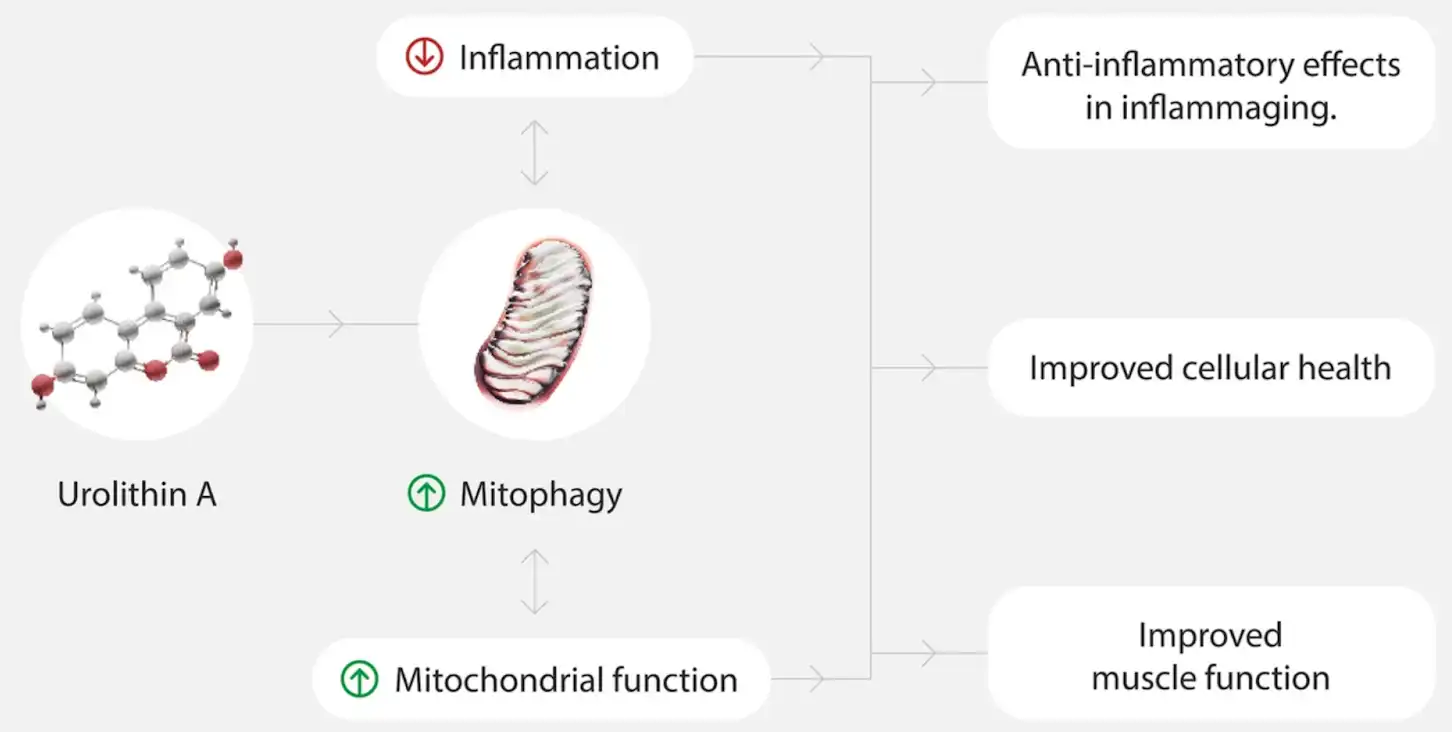
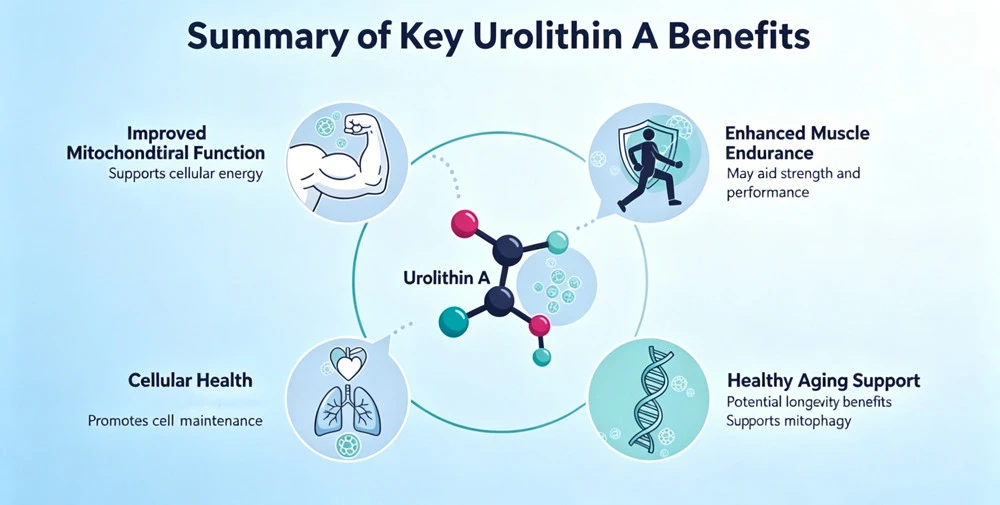
Urolithin A powder is a healthy ingredient that can help slow down the aging process. This postbiotic metabolite starts mitophagy right away. Mitophagy is the process that cells use to get rid of damaged mitochondria. At the cellular level, this fixes one of the main problems that come up with getting older. Other antioxidants only get rid of free radicals, but this compound turns on specific genetic pathways (PINK1/Parkin) to make mitochondria work better. Because of this, it is an important part of advanced formulas for longevity that aim to improve the health of cells.
What is Urolithin A Powder and How Does It Support Anti-Aging?
Biochemical Origin and Industrial-Grade Specifications
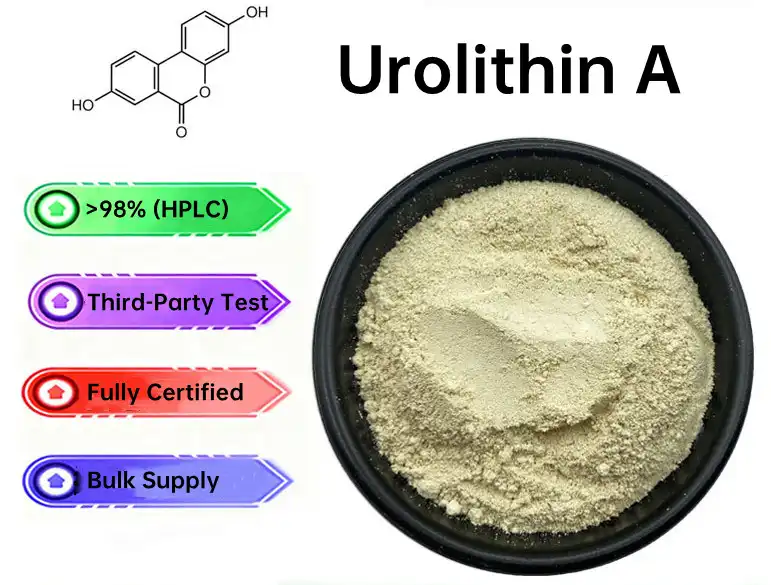
The standard, industrial-grade form of this chemical is urolithin A powder, also known as 3,8-Dihydroxy-6H-dibenzo[b,d]pyran-6-one (CAS: 1143-70-0, molecular formula C13H8O4, molecular weight 228.20 g/mol). This molecule used to be thought to come from foods that were high in ellagitannin. However, controlled biosynthesis or chemical synthesis is now used in business to make materials that are safe for use in medicines. It is a crystalline powder that ranges in color from off-white to light yellow and stays the same from batch to batch. This gets rid of the problem of differences between people that existed in earlier versions of pomegranate extract.
To make lipid-based delivery systems work better, high-quality materials must be at least 98% pure, and usually more than 99% pure. They must also have a melting point between 340°C and 345°C and a particle size distribution (D90 < 20 microns) that is strictly controlled. Lipophilic compounds are hard to make because they don't dissolve well in water (<0.01 mg/mL). However, they dissolve well in organic polar aprotic solvents but not so well in alkaline solutions. To make the products work better, bioavailability-boosting technologies like micronization, softgel lipid suspension, or liposomal encapsulation need to be used in the final designs.
Cellular Mechanism: Targeted Mitophagy Activation
The powerful anti-aging property of this metabolite comes from its unique ability to start selective autophagy in mitochondria that are damaged while leaving healthy organelles alone. Cells get less strong as they age because their mitochondria stop working properly, which slows down their energy metabolism and makes them more vulnerable to oxidative stress. Scientists have written that this compound starts the PINK1/Parkin pathway. This pathway finds and destroys damaged mitochondria with lysosomes while also supporting mitochondrial biogenesis, the growth of new, healthy mitochondria.
Clinical trials have shown that biomarkers of muscle endurance have gotten a lot better. One study on humans, for instance, found that taking supplements increased plasma acylcarnitines by 17%. The fact that these metabolites are present shows that the mitochondria burn fatty acids better. More research has shown that these benefits do more than just keep neurons safe. For instance, studies on animals showed that they increased the number of neuronal mitochondria and decreased signs of neuroinflammation. This mechanism is unique, setting it apart from broad-spectrum antioxidants. It goes after the reason why cells age instead of just fixing the signs of it.
Advantages Over Natural Precursor Sources
For some people, getting nutrients from food or raw plant extracts can be hard. This pure compound can help when taken as a supplement. Ellagitannins are found in pomegranate extract products. These need to be changed by bacteria in the gut in a few steps. People who don't have these bacteria are called "non-producers." Even in people whose microbiomes are healthy, the rate of conversion changes a lot depending on medicines they take, what they eat, and how they age.
Standardized urolithin A powder forms get rid of this doubt by giving everyone the same dose, no matter how fast or slow their metabolism is. The materials are made in a controlled environment that keeps them free of agricultural contaminants. The materials change from batch to batch in composition and quality, which is normal for materials made from plants. Synthetic or biosynthetic routes are easier to follow by regulators because they allow full manufacturing traceability and predictable impurity profiles. This is not the case with botanical matrices, which are more complicated.
Key Benefits and Safety Considerations of Urolithin A Powder
Documented Health Benefits Beyond Anti-Aging
Improving mitochondria is the main idea behind anti-aging, but there is evidence to support a wider range of treatments. Muscle health is a very interesting area of use, as studies have shown that urolithin A powder can make skeletal muscle endurance and recovery better. Over time, people get sarcopenia, which means they lose muscle mass and function. This benefit can help with that. This makes it harder for older people to live on their own. Better glucose metabolism markers and positive changes in lipid profiles show that metabolic health is better. This means that these compounds might be useful in formulating medicines for metabolic syndrome.
Every day, we learn more and more about cognitive support. It protects neurons by lowering inflammation and making the links between neurons more flexible in models that are not humans. The compound helps the brain and spinal cord directly because it can cross the blood-brain barrier. It's not the same as antioxidants, which only work on the outside. It has been seen that some types of tissues have less cellular senescence, and lower levels of senescence-associated secretory phenotype (SASP) markers suggest that the anti-aging effects are not limited to mitochondrial function.
Recommended Dosing and Formulation Best Practices
For humans, doses of urolithin A powder between 250 mg and 1,000 mg per day have been found to work well. Of these, 500 mg has been studied the most for applications related to longevity. It is very important to pick the right delivery system because bioavailability optimization strategies have a big impact on how well therapies work. Ingredients that are based on lipids are better at absorption than regular powder capsules. Peak levels in the blood are about twice or three times higher in softgels than in tablets.
When it comes to getting things done, timing is important. For instance, giving it in the morning might help mitochondria work better during the metabolic demands of waking up. When you mix ingredients that go well together, they become more valuable overall. Omega-3 fatty acids, for instance, help keep the mitochondrial membranes intact, and NAD+ precursors (nicotinamide riboside or nicotinamide mononucleotide) set up pathways that work together to improve how cells use energy. These strategies for formulation help products stand out while giving customers the most benefits.
Safety Profile and Risk Assessment Data
The drugs are safe at all doses that have been studied in depth by toxicologists. There were not many side effects in clinical trials with people. About once every few weeks, people who took higher doses had mild stomach problems. Even though there haven't been any major reports of drug interactions, people who take a lot of different medicines should still be careful when taking new supplement ingredients.
Long-term safety data is coming in more and more. For example, research that looked at people who took supplements, including pomegranate urolithin A, every day for six months didn't find any changes in biomarkers or patterns of bad events that were concerning. When food and drink applications get 'Generally Recognized As Safe' (GRAS) status updates, they have even more faith in the products. Studies in reproductive toxicology have not found any problems that could cause birth defects. Normal safety measures should be taken during pregnancy and breastfeeding, though, since there isn't a lot of health information in these groups. Because of these safety features, the ingredient is a good choice for many consumer uses. It also has a low enough risk profile to be approved by regulators in major markets.
Comparing Urolithin A Powder with Other Popular Anti-Aging Ingredients
Mechanistic Differentiation from NAD+ Precursors
Nicotinamide riboside and nicotinamide mononucleotide are compounds that target the energy metabolism of cells and raise NAD+. They have gotten a lot of attention in the market. More NAD+ coenzyme is made available by these molecules. Mitochondria need this coenzyme to work. But they don't do anything about the damage that builds up in mitochondria over time. One special thing about urolithin A powder is that it starts mitophagy, a process that gets rid of organelles that aren't working right while also helping mitochondrial metabolism happen.
There is a chance that these things could make things better when they work together. NAD+ precursors make healthy mitochondria better at metabolizing food, and urolithin A powder makes sure that the mitochondrial pool stays functionally competent by controlling quality. Combination formulations may work better than single-ingredient approaches because of this link between two things that work well together. The one-of-a-kind mechanism makes it easy to stand out in the anti-aging market, where a lot of products say they can help with the same things but don't say how they do it.
Comparison with Polyphenolic Antioxidants
Resveratrol and pterostilbene are well-known polyphenolic compounds that have been shown to work as antioxidants and to turn on sirtuins. These molecules do a lot of good things by changing gene expression and lowering oxidative stress. For this reason, they're not very specific. Resveratrol has problems with bioavailability because it goes through a lot of first-pass metabolism, which means that even when taken in large amounts, it doesn't have as much of an effect on the body.
The targeted mitophagy mechanism of urolithin A powder specifically targets mitochondrial dysfunction, potentially providing more noticeable anti-aging effects through precision rather than broad antioxidant activity. Compared to resveratrol, where human studies often show small effects despite strong preclinical data, there seems to be more strong clinical evidence that urolithin A powder works in humans. Because of its crystalline structure, urolithin A powder is more stable than resveratrol and pterostilbene in terms of formulation. Resveratrol and pterostilbene, on the other hand, are easily broken down by light and heat.
Synthetic Versus Microbial Production Quality Considerations
Chemical synthesis or biosynthetic fermentation are both ways that urolithin A powder is made for business use. Each one has its own problems with quality. Chemical synthesis makes it possible to get very high levels of purity and full control over the profiles of impurities. Using gas chromatography to look at the residual solvents (ethanol, methanol, and ethyl acetate) proves that the process meets the requirements of ICH Q3C. On a large scale, this method saves money while still getting pharmaceutical-grade material that can be used responsibly.
Engineered microbial strains can help with marketing because they allow claims like "nature-identical" or "fermentation-derived" that appeal to people who like clear labels. Tests of bioavailability and bioactivity must show that both ways work just as well. There are ways to tell the difference between real material and cheaper structural analogs like urolithin B, which isn't as safe or effective. These methods include H-NMR and FTIR spectroscopy. A procurement team should always make sure that suppliers give full manufacturing documentation, no matter what method they use to make the goods. Instead of just focusing on the production method, they should make sure that each batch is the same and that all the tests are done thoroughly.
How to Choose and Procure High-Quality Urolithin A Powder for Your Business?
Critical Quality Verification Parameters
Procurement managers need to set up strict inspection rules to make sure that urolithin A powder materials are of good quality and that rules are followed. The basic quality check is an assay verification through HPLC analysis that confirms ≥98% purity. This includes paying special attention to by-products of the synthesis process like ellagic acid that hasn't been broken down or intermediate phenolic compounds. FTIR and H-NMR spectroscopy can be used to check a substance's identity and tell the difference between real material and structural copies. This makes economic fraud less likely by giving people cheaper options.
Because heavy metal contamination is dangerous and against the law, ICP-MS testing is needed to prove that the limits set by USP <232> are being followed: total heavy metals <10 ppm, arsenic <1 ppm, lead <0.5 ppm, and mercury <0.1 ppm. For yeast and mold, the total plate count must be less than 100 CFU/g, and for all bacteria, it must be less than 1,000 CFU/g. Organisms that cause disease, like Salmonella and E. coli. For synthetic materials, it is very important to do a residual solvent analysis to make sure that the levels of organic solvent residues are below what is allowed in pharmaceuticals.
In addition to making sure that the products, including urolithin A powder, work as promised, these detailed analytical specifications also protect consumer safety and make sure that the products follow the rules set by the government. When you have clear acceptance criteria in your supplier quality agreements, everyone is responsible. This also makes it easier to keep quality high as your business grows.
Supplier Evaluation and Certification Requirements
The right Good Manufacturing Practice (GMP) certifications are kept up to date by manufacturers you can trust. For instance, companies that make dietary supplements need to be NSF or NPA GMP certified. Companies that make medicines need to have facilities that are FDA-registered. And companies that make food need to meet FSSC 22000 or similar standards. Becoming an ISO 9001 quality management system certified company shows that it wants to keep a close eye on its processes and always find ways to make them better.
Industries that have to follow rules need batch traceability systems that can keep track of the whole history of materials, from raw materials to finished goods. Providers should include a full Certificate of Analysis with every shipment. This should include all the important quality parameters, as well as tried-and-true methods and reference standards. Testing by independent labs gives suppliers' claims about quality more weight, especially when they are first being qualified.
Smart suppliers are different from commodity brokers because they can help with rules. It's a big plus if you can help with novel food notifications or new dietary ingredient (NDI) submissions and give regulatory dossiers and safety data sheets that meet the requirements of the global harmonized system (GHS). This goes beyond just giving raw materials. Technical services like formulation guidance and stability testing support cut down on the time it takes to make a product and make the formulation less risky.
Commercial Considerations and Supply Chain Optimization
Minimum order amounts and how you buy in bulk affect the total cost of buying something and how you need to keep track of your inventory. You can make sure that your demand predictions are correct and that your working capital needs are met by working with suppliers who offer flexible terms for ordering. The different price levels for different amounts of a product should be clear and well-documented so that accurate cost modeling can be done when planning the launch and development of the product.
Logistics dependability and experience with international shipping become very important when you're buying things from all over the world. It's easier for importers to follow the rules when suppliers have well-established distribution networks and know how to clear customs. This lowers the risk of supply disruptions. Lean inventory management is possible when lead times are stable. This cuts down on the cost of holding inventory while production keeps going. Private label and custom formulation let you make your product stand out and give you access to a market that no one else does. Suppliers who offer development partnerships are more valuable than just a source of materials.
Conclusion
urolithin A powder is a scientifically proven step forward in anti-aging ingredient technology. It optimizes mitochondria in a way that traditional botanical extracts or broad-spectrum antioxidants can't, by activating specific mitophagy pathways. Even if people have different metabolisms, the compound can still work the same way on all of them. Because of this, companies that want to stand out in the health and longevity markets should use this ingredient. With strict quality control, full safety profiles, and more and more clinical evidence, the product can be sold in pharmaceutical, nutraceutical, and functional food settings. The people who work in procurement should focus on forming partnerships with suppliers who can provide materials that are safe for use in pharmaceuticals, full analytical documentation, and regulatory support. Because more and more people want scientifically-based anti-aging products, adding this new compound to existing lines is a smart move. It also gives businesses an edge over their competitors because it works better and faster than regular ingredients.
FAQ
What differentiates high-quality urolithin A powder from inferior products?
Validated HPLC methods can be used to check that premium material is at least 98% pure. Through full impurity profiling, it is possible to find structural analogs or by-products of synthesis. Using H-NMR and FTIR spectroscopy to confirm the identity of a compound stops cheaper ones like urolithin B from being used instead. ICP-MS is used to test for heavy metals and make sure it meets USP <232> standards. Full microbiological screening is also done to make sure it is safe. Reliable suppliers keep their GMP certifications up to date, offer full manufacturing traceability, and give Certificates of Analysis that are specific to each batch. These quality indicators make sure that rules are followed, medicines work, and people are safe. They help a lot in telling the difference between common ingredients and materials used in medicine.
Can urolithin A powder be safely used long-term in supplement formulations?
Good long-term safety profiles are supported by recent clinical evidence. As an example, studies on people who took supplements every day for six months did not find any harmful effects or unusual lab results that were worth worrying about. It has been given the GRAS label, which means it can be put in drinks and food. Normal studies in toxicology show that therapeutic dose ranges have a lot of room for error. People keep an eye on commercial products for a long time to build safety databases. Even after the product has been sold, monitoring shows that not many bad things have happened. Because there isn't enough information about people, standard safety measures are taken for certain groups, like pregnant or breastfeeding women.
What dosage ranges are effective for anti-aging applications?
Human trials have shown that a dose of between 250 mg and 1,000 mg per day works well. The most common dose studied and sold for its ability to make people live longer is 500 mg. Because lipid-based delivery systems can improve bioavailability, it may be possible for lower doses to work than with regular powder formulations. Both the benefits for muscle function and endurance can be linked to dose. There may be even bigger benefits with higher doses. For product positioning strategies to find the best formulation specs that meet both effectiveness and cost needs, they should look at clinical evidence, cost, and the dosing that other companies use.
Partner with Bolin Biotechnology for Premium Urolithin A Powder Supply
The manufacturing process used by Shaanxi Bolin Biotechnology Co., Ltd. is GMP-certified, and the urolithin A powder they sell is pharmaceutical-grade and meets strict international quality standards. If you need help with custom formulation, full regulatory support documentation, or flexible supply solutions that are made to fit your product development needs, our technical team is here to help. Heavy metal testing, microbiological screening, and HPLC purity verification are just some of the strict quality control steps we use to make sure that every batch meets or exceeds industry standards. Our team can help you with both large orders for well-known product lines and small samples for new ideas. We are your reliable source for urolithin A powder. We respond quickly and offer solutions that don't break the bank. E-mail our buying team at sales1@bovlin.com to talk about what you need for your project and to ask for full product details and Certificate of Analysis paperwork.
References
Andreux, P.A., Blanco-Bose, W., Ryu, D., Burdet, F., Ibberson, M., Aebischer, P., Auwerx, J., Singh, A., & Rinsch, C. (2019). The mitophagy activator urolithin A is safe and induces a molecular signature of improved mitochondrial and cellular health in humans. Nature Metabolism, 1(6), 595-603.
Liu, S., D'Amico, D., Shankland, E., Bhayana, S., Garcia, J.M., Aebischer, P., Rinsch, C., Singh, A., & Marcinek, D.J. (2022). Effect of urolithin A supplementation on muscle endurance and mitochondrial health in older adults: A randomized clinical trial. JAMA Network Open, 5(1), e2144279.
Singh, A., D'Amico, D., Andreux, P.A., Fouassier, A.M., Blanco-Bose, W., Evans, M., Aebischer, P., Auwerx, J., & Rinsch, C. (2022). Urolithin A improves muscle strength, exercise performance, and biomarkers of mitochondrial health in a randomized trial in middle-aged adults. Cell Reports Medicine, 3(5), 100633.
Ryu, D., Mouchiroud, L., Andreux, P.A., Katsyuba, E., Moullan, N., Nicolet-dit-Félix, A.A., Williams, E.G., Jha, P., Lo Sasso, G., Huzard, D., Aebischer, P., Sandi, C., Rinsch, C., & Auwerx, J. (2016). Urolithin A induces mitophagy and prolongs lifespan in C. elegans and increases muscle function in rodents. Nature Medicine, 22(8), 879-888.
Heilman, J., Andreux, P., Tran, N., Rinsch, C., & Blanco-Bose, W. (2017). Safety assessment of urolithin A, a metabolite produced by the human gut microbiome upon dietary intake of plant derived ellagitannins and ellagic acid. Food and Chemical Toxicology, 108(Part A), 289-297.
Espín, J.C., Larrosa, M., García-Conesa, M.T., & Tomás-Barberán, F. (2013). Biological significance of urolithins, the gut microbial ellagic acid-derived metabolites: The evidence so far. Evidence-Based Complementary and Alternative Medicine, 2013, Article ID 270418.