_1745226507162.webp)

How PQQ Powder Is Used in Energy and Anti-Aging Supplement Formulations
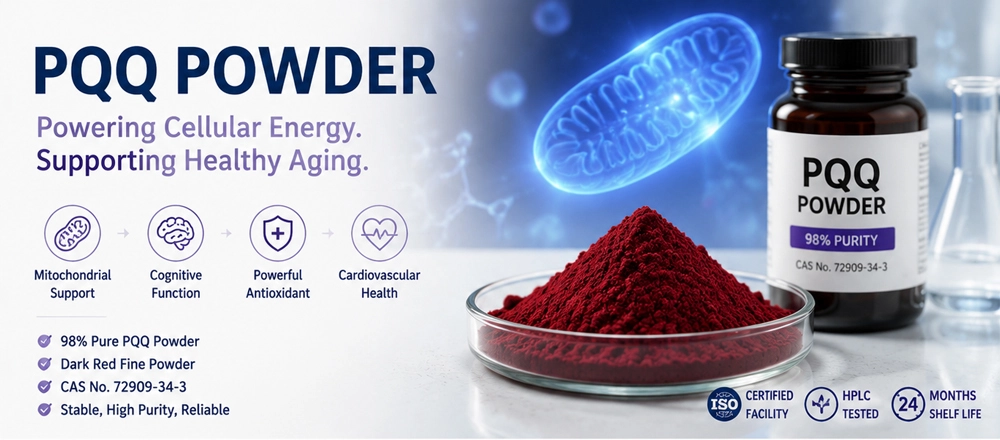
Pyrroloquinoline quinone has emerged as a transformative ingredient in the supplement industry, particularly for energy and anti-aging product lines. Our company, Bolin Biotechnology, has witnessed growing demand for formulators seeking scientifically validated compounds like PQQ powder that deliver measurable results. This guide examines how this dark red PQQ powder—98% pure Pyrroloquinoline Quinone with CAS number 72909-34-3—serves as a cornerstone ingredient for nutraceutical and pharmaceutical applications. We explore its biochemical mechanisms, formulation considerations, and procurement best practices to help B2B clients make evidence-based sourcing decisions that meet regulatory standards across global markets.
Understanding PQQ Powder and Its Role in Energy and Anti-Aging
Pyrroloquinoline quinone is a big step forward in the study of biological health. Unlike most vitamins, which work as cofactors, this redox substance works as a catalyst, allowing thousands of oxidation-reduction processes to happen without breaking down molecules. The bioactive ingredient was first found in bacterial enzymes. It now helps mitochondrial biogenesis, which is how cells make new energy-producing organelles.
The Science Behind Mitochondrial Support
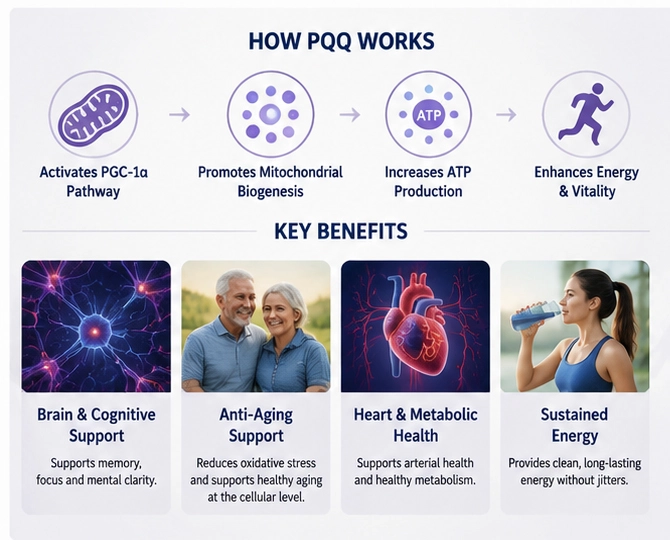
Our 98% pure formula solves important problems in the industry. Normal energy elements only give you short-term energy, but this substance turns on the PGC-1α pathway at the genetic level. A clinical study shows that it can boost the density of mitochondria in cells that are getting older, which directly addresses the loss of energy that comes with cells senescence. The chemical formula C14H6N2O8 allows electron transfer processes that keep cells respiring and get rid of reactive oxygen species.
Commercial-Grade Production Standards
Bolin Biotechnology uses cutting-edge fermentation technology to make materials that are safe for use in medicine. Triple-phase HPLC testing is used in our ISO-certified plant to make sure that the purity of each output batch is the same. The production method keeps a tight grip on particle size (80–100 mesh), which makes sure that the particles are spread out evenly in capsules, tablets, and drinks. This level of technical detail solves common formulation issues that have to do with bioavailability and accurate dosing.
Why Powder Form Matters for Formulation?
Liquid preparations break down quickly when exposed to oxygen, which leads to dosage errors. Our dark red powder format is more stable and can be kept for 24 months at temperatures below 25°C and low humidity. The low moisture content (≤2.0% loss on drying) keeps the powder from clumping while it's being stored and lets it flow easily during the encapsulation process. It can withstand heat up to 80°C for 30 minutes, which meets a variety of industrial needs without affecting its bioactivity.
Key Benefits of PQQ Powder for Energy and Anti-Aging Applications
The chemical is useful in a number of different types of supplements because it can do more than one thing. When buying teams understand these processes, they can find the best uses for their product lines.
Enhanced Cellular Energy Production
This ingredient is different from other energy boosters because it stimulates mitochondrial formation. Caffeine and B vitamins have short-term benefits, but Pyrroloquinoline quinone makes cells better at making ATP over time. Researchers found that middle-aged people who took 20 mg of it every day felt less tired after eight weeks. The long-lasting energy boost doesn't come with stimulant side effects like jitteriness or trouble sleeping, so it can be used in daily health products for workers and busy seniors.
Neuroprotective and Cognitive Benefits
Another important process is the production of nerve growth factor (NGF) with PQQ powder. Clinical tests show that this substance helps older people remember things better and pay more attention. The neuroprotective effects of PQQ powder include lowering oxidative stress in brain tissue, which may help slow down the cognitive decline that comes with getting older. Formulators are putting it together with omega-3 fatty acids and phosphatidylserine more and more to make brain health products that work on many neural processes at the same time.
Antioxidant Capacity Beyond Conventional Compounds
This ingredient is different from antioxidants like vitamin C because it can change its form (redox cycling). One molecule can neutralize thousands of free radicals before it runs out, making it much more protective. This efficiency lowers oxidative damage to DNA, proteins, and lipids in cells, which is one of the main causes of aging and chronic diseases. It is being used more and more in anti-aging skin care products for internal beauty purposes, which works in addition to external treatments to improve the health of cells throughout the body.
Cardiovascular and Metabolic Support
A new study shows that it can help the performance of arteries and the metabolism of fats. The chemical protects arterial health by lowering signs of inflammation linked to heart aging. Studies on metabolism have shown that muscle tissue has better insulin sensitivity and mitochondrial efficiency. Because of these qualities, cardiometabolic vitamin lines can use a single, well-researched ingredient to address a number of risk factors. When mixed with berberine or plant sterols, it makes the formula work better for health-conscious people looking for preventative health solutions.
Comparing PQQ Powder with Other Popular Antioxidants and Supplements
Before buying this product, you need to know how it stacks up against other well-known ingredients in the energy and anti-aging areas.
PQQ vs. Coenzyme Q10
Both compounds work to improve mitochondrial health, but they do so in different ways. As part of the electron transport chain, CoQ10 helps make ATP, and Pyrroloquinoline quinone encourages the growth of brand-new mitochondria. Based on clinical data, combining these ingredients seems to have synergistic benefits, with better energy measures than when they are used alone. There are big differences in bioavailability. CoQ10 needs fat to be absorbed, but the water-soluble disodium salt form dissolves easily in water, which makes formulation easier.
Comparison with Nicotinamide Riboside
Nicotinamide riboside (NR) raises the amount of NAD+ to help mitochondria do their job. The ways they work are very different: NR gives a base for energy processes, while our compound adds to the energy system in cells. Manufacturers who want to support mitochondria strongly at smaller doses often choose Pyrroloquinoline quinone because it is cheaper. Effective doses are between 10 and 20 mg, compared to 250 to 500 mg for NR. This means that capsules can be smaller and each serving costs less.
When to Choose Pure PQQ Powder vs. Blends
Pure ingredient formulas give you the most options for custom dosing and making your own mixes. Finding high-purity materials like our 98% HPLC-verified standard can help companies that are making high-end product lines. Pre-blended formulas may work for companies that want to get their products to market quickly with standard ratios, but they make it harder to customise the formulas and make the brands stand out. Regulatory compliance is easier when the ingredients are clean because the paperwork only needs to focus on one material instead of the complicated relationships between many ingredients.
Best Practices for Selecting and Procuring PQQ Powder for Supplement Manufacturing
To do effective buying, you need to look at more than just price when comparing suppliers.
Essential Supplier Certifications
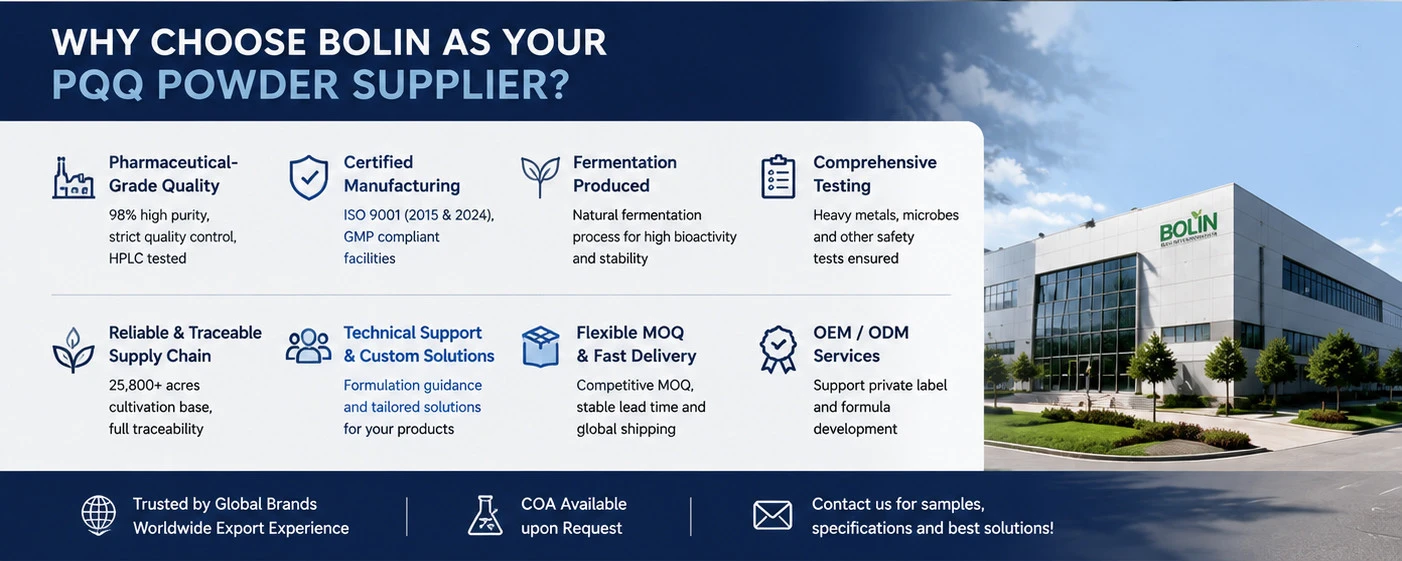
GMP approval is still a must for getting PQQ powder supplement ingredients. Our building uses both ISO 9001:2015 quality management systems and HACCP methods to keep germs from spreading. For heavy metal testing (≤10 ppm) and microbiological safety (total plate count ≤1000 cfu/g) of PQQ powder, third-party lab verification from SGS or Eurofins gives you extra peace of mind. The United States, the European Union, and other major countries require these licenses, which makes the process of registering a product easier.
Evaluating Purity and Testing Protocols
When it comes to checking quality, HPLC research is the gold standard. Our six-step quality control method checks for pesticide residues and solvent contamination (≤10 ppm) and makes sure that all production lots get the same test results. When evaluating a supplier, asking for Certificates of Analysis (CoA) for representative batches shows how rigorous the testing was and how consistent the results were. The particle size distribution study shows that the factory is able to produce the required mesh sizes, which are necessary for mixing finished goods evenly.
Volume Considerations and Supply Chain Reliability
Vertical integration tells the difference between trustworthy providers and commodity traders. Bolin Biotechnology is in charge of production from our 25,800-acre farms to the final powder manufacturing process. This takes away any uncertainty in the supply chain. This connection makes it possible to quickly change the recipe and keep the product available, even when demand goes up. Packaging options range from 1 kg for research to 25 kg drums for commercial production, so they can meet the needs of both research and development (R&D) and full-scale production without any problems with minimum orders.
Optimizing Procurement Economics
Cost-effectiveness estimates are directly affected by the amount of purity. In order to get the higher potency of 98% standards, higher doses are needed than with lower-grade options. When figuring out how much each serving costs, total formulation costs often favour high-purity ingredients. Volume prices are important for well-known product lines, but when making a new product, it's better to start with smaller amounts to see if the market will accept it before investing in mass production.
Integrating PQQ Powder Into Energy and Anti-Aging Supplement Formulations
To make a product successfully, you need to know about technical formulation issues and how to place your product in the market.
Formulation Stability and Ingredient Compatibility
When mixed with most vitamins, minerals, and plant products, the substance stays stable. It's important to keep the humidity under control—keeping the storage humidity below 60% RH stops hygroscopic clumping that makes manufacturing harder. It's important to keep an eye on temperature changes during processing, but our tests show that bioactivity stays the same at standard encapsulation temperatures. Stay away from mixing quinones with strong chelating agents that could bind to the structure of the quinone and lower its absorption.
Synergistic Ingredient Combinations
When you combine it with CoQ10, you get full mitochondrial support formulas that work on both production and electron transport efficiency. 10–20 mg of Pyrroloquinoline quinone and 100–200 mg of coenzyme Q10 are usually taken together to improve cellular energy in a balanced way. It works better in cognitive preparations when mixed with citicoline or alpha-GPC, which help neurons use energy and make neurotransmitters. More and more anti-aging blends include resveratrol or pterostilbene along with our ingredient to help with a number of different ways that people live longer by using antioxidants that work together.
Before introducing the practical applications that demonstrate these principles, examining real-world implementation provides valuable context for formulation teams.
OEM makers say PQQ powder worked well when put into capsules with amounts ranging from 10 mg for upkeep to 20 mg for therapy. For beverage uses, the disodium salt form of PQQ powder is needed because it dissolves easily in water, but the slightly bitter taste needs to be taken into account through flavouring. When particle size requirements meet 80-100 mesh standards, tablet compression works well. This makes sure that the particles are evenly distributed and that the dissolution profiles are predictable. These real-world uses show how flexible the ingredient is across different transport methods.
Regulatory Compliance for Global Markets
The compound is considered GRAS in the US, which makes it easier to register as a food product under FDA rules. European Novel Food approval lets products be sold in all EU member states, but detailed dossiers are needed to show that the products are safe and that the manufacturing process is under control. As part of our full range of technical support, we offer regulatory documentation packages that make the approval process go more quickly. Quality certificates that cover heavy metals, microbiology, and purity standards meet the needs of markets in North America, Europe, and Asia-Pacific. This makes it easier for foreign product launches to meet compliance requirements.
Conclusion
Based on strong clinical data and a wide range of possible uses, pyrroloquinoline quinone has become an important part of many energy and anti-aging supplements. The compound's special ability to boost mitochondrial production while also protecting cells strongly from free radicals targets basic aging processes that people are becoming more interested in. When B2B procurement teams choose high-purity materials like our 98% HPLC-verified standard, they can be sure that the formulations will be consistent, that the products will work well, and that the company will have a good image. Manufacturers can make competitive products that meet changing market needs for scientifically proven health solutions by reading this guide and understanding the technical issues, comparative advantages, and best practices for integration it contains.
FAQ
What is the optimal dosage range for supplement formulations?
Clinical studies show that 10–20 mg daily doses for adults are effective. Maintenance solutions usually have 10 mg, while therapeutic uses that help with brain support or severe energy loss may have 20 mg. Studies using these ranges have shown that the compound is very safe, with no serious side effects being reported. When setting dosing, manufacturers should think about the age group of the people they want to sell to. Older adults may benefit from higher amounts, while younger people who want to stay healthy may react better to lower maintenance doses.
How does it compare to CoQ10 for energy production?
Both ingredients help keep mitochondria healthy in different ways. CoQ10 makes it easier for electrons to move around in mitochondria, and Pyrroloquinoline quinone helps make new energy cells. Combined formulations often work better than products with only one ingredient. Because it dissolves in water, our disodium salt form is better for formulation than fat-soluble CoQ10, especially for drinking uses and people who have trouble absorbing fat.
What certifications should buyers prioritize?
Important qualifications include GMP approval, ISO quality systems, and testing by a third-party lab. Heavy metal limits, microbiological safety, and insecticide screens must be checked to protect the brand's image and the safety of consumers. Compliance burdens for multi-market product launches are greatly reduced when suppliers offer complete regulatory documentation packages.
Partner with Bolin Biotechnology for Premium PQQ Powder Supply
Pharmaceutical-grade Pyrroloquinoline quinone is made by Shaanxi Bolin Biotechnology and meets the strict requirements of supplement makers around the world. Our 98% pure standard goes through strict HPLC testing, which makes sure that there is stability from batch to batch, which is important for clinical-grade formulations. Our vertical merger, which includes growing crops on 25,800 acres and making products, benefits procurement teams by ensuring a steady supply even when market conditions change. We offer a range of flexible packaging options, from 1 kg for study purposes to 25 kg business drums, so we can work with you from the idea stage all the way through full-scale production. As a reliable supplier of PQQ powder, we offer free samples, detailed technical documentation, and formulation advice to help you get your product to market faster. Get in touch with our team at sales1@bovlin.com to talk about your specific needs and find out how our certified ingredients can help your brand stand out in the wellness market.
References
1. Chowanadisai W, et al. "Pyrroloquinoline Quinone Stimulates Mitochondrial Biogenesis through cAMP Response Element-binding Protein Phosphorylation and Increased PGC-1α Expression." Journal of Biological Chemistry, 2010.
2. Nakano M, et al. "Effects of Oral Supplementation with Pyrroloquinoline Quinone on Stress, Fatigue, and Sleep." Functional Foods in Health and Disease, 2012.
3. Harris CB, et al. "Dietary Pyrroloquinoline Quinone (PQQ) Alters Indicators of Inflammation and Mitochondrial-Related Metabolism in Human Subjects." Journal of Nutritional Biochemistry, 2013.
4. Rucker R, et al. "Potential Physiological Importance of Pyrroloquinoline Quinone." Alternative Medicine Review, 2009.
5. Steinberg FM, et al. "Pyrroloquinoline Quinone Improves Growth and Reproductive Performance in Mice Fed Chemically Defined Diets." Experimental Biology and Medicine, 2003.
6. Zhang Y, et al. "The Neuroprotective Effects of Pyrroloquinoline Quinone on Traumatic Brain Injury." Journal of Neurotrauma, 2016.