_1745226507162.webp)

Cordycepin Powder vs. Cordyceps Extract: Understanding the Differences
When sourcing ingredients for nutraceutical or pharmaceutical formulations, understanding the distinction between cordycepin powder and traditional cordyceps extract becomes essential for procurement success. Cordycepin powder delivers a highly concentrated, purified form of 3'-deoxyadenosine—the primary bioactive nucleoside—standardized to specific potency levels ranging from 1% to 98%. Traditional Cordyceps extract, conversely, contains a broad spectrum of compounds, including polysaccharides, adenosine, and trace cordycepin, offering synergistic effects but less targeted bioactivity. The choice between these two raw materials significantly impacts formulation efficacy, dosing precision, quality control, and ultimately, your product's competitive positioning in the marketplace.
What Are Cordycepin Powder and Cordyceps Extract?
Figuring out what these ingredients are made of at their core helps us understand their specific roles in modern formulation strategies. Both come from Cordyceps mushrooms, but they are made in very different ways and have different ingredients.
The Nature of Cordycepin Powder

Cordycepin powder is a better form of the bioactive nucleoside analogue that has the formula C10H13N5O3 and the CAS number 73-03-0. This compound is separated from Cordyceps militaris fruiting bodies at our site using modern extraction methods that have been checked by HPLC. The brown-yellow powder that is made stays at a standard level of purity, so each batch of output has the same amount of strength. This improvement gets rid of the variation that can happen in raw mushroom powders, where the amount of active ingredients can drop below 1%. The nucleoside structure of cordycepin lets it take part in cellular processes that involve stopping RNA synthesis and activating the AMPK pathway. These are processes that are becoming more important in pharmaceutical research and the development of targeted nutraceuticals.
Understanding Traditional Cordyceps Extract
Cordyceps extract includes a wider range of fungal compounds that come from either growing the mycelium or processing the whole fruiting body. Beta-glucans, polysaccharides, cordycepic acid, adenosine, and different trace minerals are all in this matrix. There are also lower amounts of cordycepin. Many times, hot water or ethanol is used in the extraction process to keep many medicinal components that work together. This all-around method fits with the ideas behind traditional medicine, but it can be hard for formulators who need accurate doses and consistent clinical results. The polysaccharide content usually makes up most of these extracts. It helps to modulate the immune system but makes it harder to standardize for specific therapeutic targets.
Market Demand Across Industries
The global functional ingredient market is becoming more and more different between these two types of products based on the needs of different applications. Pharmaceutical businesses are looking for new medicines like high-purity cordycepin because it works in a clear way and meets pharmacopoeia standards. Nutraceutical companies that want to balance effectiveness with cost-effectiveness often choose standardized cordycepin powder for energy and immune support formulas where label claims need to be backed up by proof of strength. At the same time, functional food makers may choose Cordyceps ingredients that are more general if they want to place their products as "whole foods" or offer health benefits that work together. This division shows that the industry has grown up, and now choosing ingredients is closely linked to target markets, rules, and scientific proof methods.
Key Differences Between Cordycepin Powder and Cordyceps Extract
Making decisions about what to buy depends on knowing how these materials are different in a number of technical and practical ways that have a direct effect on how well they work in formulations and how well they do in the market.
Chemical Composition and Bioactivity
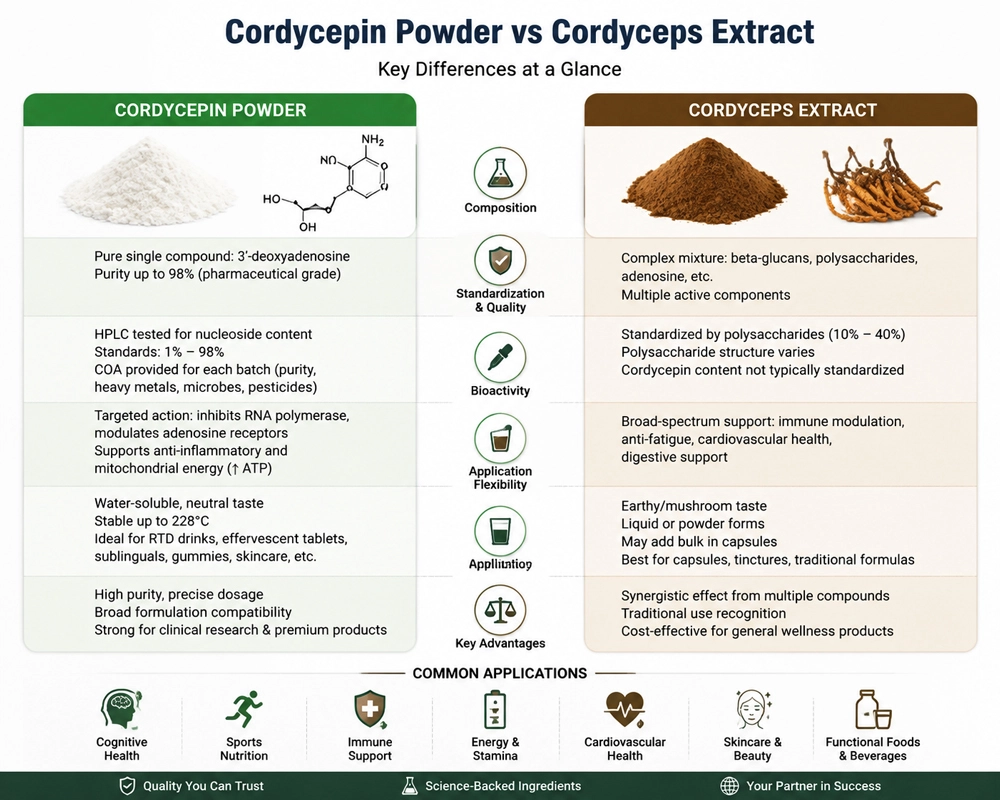
The most noticeable change is in the center of the composition. The 3'-deoxyadenosine molecule is separated by cordycepin powder, which can give amounts that can reach 98% purity for medical use. This specificity lets specific cellular processes happen, like blocking RNA polymerase selectively and changing the way adenosine receptors work. For example, studies show that purified cordycepin can reduce inflammation by blocking the NF-κB pathway and help mitochondria work better by making more ATP. On the other hand, Cordyceps extract has a complex chemical profile. Beta-glucans boost immune cell activity, polysaccharides help with digestion, and adenosine is good for the heart. This level of complexity can improve health outcomes overall, but it makes dose-response relationships and mechanism attribution more difficult, which are important for pharmaceutical applications that need to characterise a single compound.
Potency Standardization and Quality Control
Getting consistency from batch to batch is one of the hardest parts of finding plant ingredients. This is taken care of by HPLC testing, which measures the exact amount of nucleosides present. This lets formulators figure out the right serving sizes and make claims about their effectiveness that are backed up by evidence. Our facility keeps standards ranging from 1% for low-cost uses to 98% for research-grade needs. Each batch comes with records of analysis that prove its purity, as well as heavy metal screening, microbial limits, and pesticide residue testing. Traditional Cordyceps extracts are usually standardised by the amount of polysaccharides they contain, which is usually between 10% and 40%. However, this does not directly link to their therapeutic action because the structures of polysaccharides change a lot. Because generic extracts of cordycepin are not standardized, there is variation that can make it hard to prove that a product works as claimed and make it harder to get regulatory approval in markets that need scientific proof.
Application Flexibility and Formulation Compatibility
Different delivery methods can work with different ingredients depending on their physical features. Cordycepin powder is great for ready-to-drink drinks, effervescent tablets, and sublingual formulations where fast absorption is important because it dissolves easily in water and has a neutral flavour. The small particle size makes sure that pills and tablets have a smooth texture that doesn't feel gritty. Because it stays stable at temperatures up to 228°C, it can be added to healthy foods that need to be heated up. Cordyceps extract, especially in liquid or syrup form, can be useful for some supplement types. However, the earthy and mushroomy notes may make it hard to taste. Powder extracts that contain mycelial biomass can add bulk, which can change the dose amounts and fill weights of capsules. Because of these practical concerns, ingredient choice is often based on the type of product that is being made. For example, cordycepin powder can be used in a wider range of products, from skin care serums to sports nutrition gummies.
Procurement Considerations for B2B Buyers
For strategic sourcing to work, the qualities of the ingredients must match your business's needs, quality standards, and goals for market positioning. Several things need to be carefully looked at.
Industry-Specific Requirements
Pharmaceutical companies that are making APIs or running clinical trials need the purest grades—usually 98% cordycepin—along with a lot of paperwork that includes specific manufacturing methods, stability data, and files for regulatory support. Our ISO-certified center lets you follow the whole process, from our 25,800-acre controlled cultivation base to tests and extraction. When nutraceutical companies try to find the best balance between effectiveness and profitability, they usually choose potencies in the middle, between 10% and 50%. These levels are high enough to have biological effects while keeping serving costs low. Functional food brands may put a high value on food-grade certifications, non-GMO proof, and clean-label compatibility. Our Cordyceps militaris-sourced material easily meets all of these requirements. Cosmetic makers look for amounts that work best for penetrating the skin, usually between 1% and 5%. At these levels, cordycepin's DNA-repairing and antioxidant qualities stop cells from ageing. Knowing these industry-specific priorities can help match the specifications of ingredients to their intended uses, preventing both over-specification, which raises costs, and under-specification, which lowers product performance.
Supplier Evaluation and Risk Management
There are quality problems in the plant extract business that can put your supply chain at risk. Verifying a supplier's skills through facility checks, certification reviews, and sample testing can help keep you from having to deal with costly delays. Along with ISO standards, we keep our GMP and HACCP certifications up-to-date to make sure our manufacturing processes meet the strict requirements for pharmaceutical-grade products. Our team of more than 80 biotechnology experts uses strict quality control at every stage of production, from checking the raw materials to releasing the finished product. It is possible to see trends of consistency by asking for certificates of analysis for more than one batch. For example, stable HPLC chromatograms and narrow standard ranges show that processes are reliable. Traceability methods that keep track of products from the time they are grown until they are packaged make it possible to quickly fix any quality problems. Minimum order amounts starting at 1 kg and free samples are available, letting you fully evaluate the product before committing to large-scale purchases. This lowers technical risk and speeds up recipe development.
Commercial Terms and Long-Term Partnership
In addition to technical details, the practical terms of the procurement process have a big impact on the success of the project. MOQ policies that are flexible can be used for both pilot production and business scaling. This is especially helpful for OEM makers who work with a wide range of clients. Customisation options, such as custom strength levels, particle size optimisation, and specialised packing, help products stand out in markets where competition is high. We provide OEM services that include making custom labels, encasing capsules, and pressing tablets, which will make your manufacturing process run more smoothly. Operational delays can be avoided by setting up clear lines of communication about lead times, shipping processes, and paperwork needs. Our helpful technical support team is available to help you with formulation problems, suggestions for stability tests, and regulatory paperwork. They work as an extension of your R&D team. Building relationships with providers that show they can be relied on over the long term and are open to new ideas will help your business take advantage of new market opportunities while keeping product quality high.
Market Insights and Application Innovation
Real-life examples show how choosing the right ingredients, based on scientific evidence and consumer trends, can lead to market success in a wide range of areas.
Nutraceutical Product Development
To set their products apart from the many generic mushroom blends on the market, major supplement brands have changed the way their immunity products work by adding standardised cordycepin powder. One North American company raised the amount of cordycepin in their most popular formula to 15%. This allowed them to make smaller dose sizes while still making claims of effectiveness that were backed up by studies on cellular defense. This new formula cut costs per unit and made it easier for people to take their medicine because the capsules were smaller. The HPLC-verified potency let them make specific bioactive claims that connected with smart customers looking for goods that are backed up by science. In a sports nutrition line aimed at ATP production and oxygen utilization, another brand mixed cordycepin with adaptogens that worked well with it. Clinical research that showed cordycepin's part in activating AMPK, a key regulator of cellular energy, gave the company a strong position compared to competitors who used generic Cordyceps extracts with unknown levels of active compounds.
Pharmaceutical Research Applications
High-purity cordycepin grades have made big steps forward in cancer and metabolic disease studies. University teams studying how RNA is made need materials that are 98% pure, have full impurity profiles, and are consistent from batch to batch so that the results of their experiments can be repeated. Our pharmaceutical-grade cordycepin has helped fund animal studies that looked at how it stopped cell growth in different cell lines, which led to papers being published in peer-reviewed journals. Biotech companies that are working on new medicines like the detailed information we give them, like stability data under different storage conditions and studies that show how well our products work with common ingredients. Being able to find materials that meet strict quality standards speeds up the development process by getting rid of delays in seller qualification. As the clinical development stages of cordycepin move forward, the need for GMP-certified material with full regulatory support files keeps rising. This puts early-stage suppliers with strong quality systems in a good position to form long-term partnerships.
Cosmetic Innovation and Anti-Aging
Bioactive nucleosides are being used more and more in personal care products to help skin at the cellular level. Cosmetic chemists who make high-end anti-aging serums use cordycepin amounts between 1% and 3%. This is because cordycepin can cross the epidermal barrier, which helps DNA repair processes and lowers oxidative stress. One popular European skin care line focused on cordycepin's ability to slow down cellular senescence, which was backed up by in vitro tests that showed increased fibroblast activity and collagen synthesis. Our cordycepin powder is water-soluble, so it can be mixed with a wide range of cosmetic bases, from light gels to thick creams, without the phase separation problems that can happen with oil-soluble actives. Stable pH levels in the areas that matter for cosmetics (4.5–7.0) make sure that the product's action lasts as long as it does. This area of use shows how pharmaceutical-grade bioactives can be used in personal care, because people are looking for ingredients that are backed by science that aren't just plants.
Conclusion
Being able to tell the difference between cordycepin powder and traditional Cordyceps extract helps you make smart buying decisions that are in line with your quality standards and formulation goals. To make pharmaceuticals and high-quality nutraceuticals work, high-purity cordycepin powder is needed because it has targeted bioactivity, accurate dosing, and consistent potency. Traditional Cordyceps extract has compound profiles that work well together and are good for natural health formulas that focus on traditional medicine. When choosing the right ingredients, you need to think about things like technical specs, supplier capabilities, certification standards, and business terms in the context of your industry's needs. As global markets demand more and more scientifically proven ingredients that come from clear sources, working with suppliers who have strict quality control systems and lots of paperwork is becoming a competitive advantage that lasts longer than just one transaction and can help with long-term innovation.
FAQ
What is the primary difference between cordycepin powder and cordyceps extract?
The cordycepin powder has 3'-deoxyadenosine that has been separated and highly concentrated. It has also been standardised to specific potency levels (1%–98%), which means that it has the right bioactivity and dose. Cordyceps extract contains a wider range of fungal compounds, such as polysaccharides, adenosine, and smaller amounts of cordycepin. These compounds work together to produce synergistic effects, but the compositional accuracy is not as good.
Which industries benefit most from high-purity cordycepin powder?
Standardized cordycepin powder is best for pharmaceutical companies doing clinical research, nutraceutical companies making specific claims about its effectiveness, sports nutrition brands focusing on ATP production, and cosmetics companies making cellular anti-aging products because it is always effective and its mechanisms are well understood.
How do I verify cordycepin powder quality from potential suppliers?
Ask for HPLC analysis records that prove the amount of cordycepin, heavy metals, microbes, and herbicide residues. Check the facility's certificates (GMP, ISO, HACCP), look at COAs for more than one batch to see how consistent they are, and get samples for testing by someone else. Being able to see where the plants come from and how they are extracted shows that you can trust the supplier.
Can cordycepin powder and Cordyceps extract be used together in formulations?
Putting these two ingredients together can give you targeted high-potency cordycepin along with other compounds that work well together from the whole extract. This approach needs to be carefully thought out so that there is no duplication and costs are kept in check. Technical help from suppliers with a lot of experience helps make these kinds of combinations work best for certain therapeutic goals.
Partner with Bolin Biotechnology for Premium Cordycepin Powder Supply
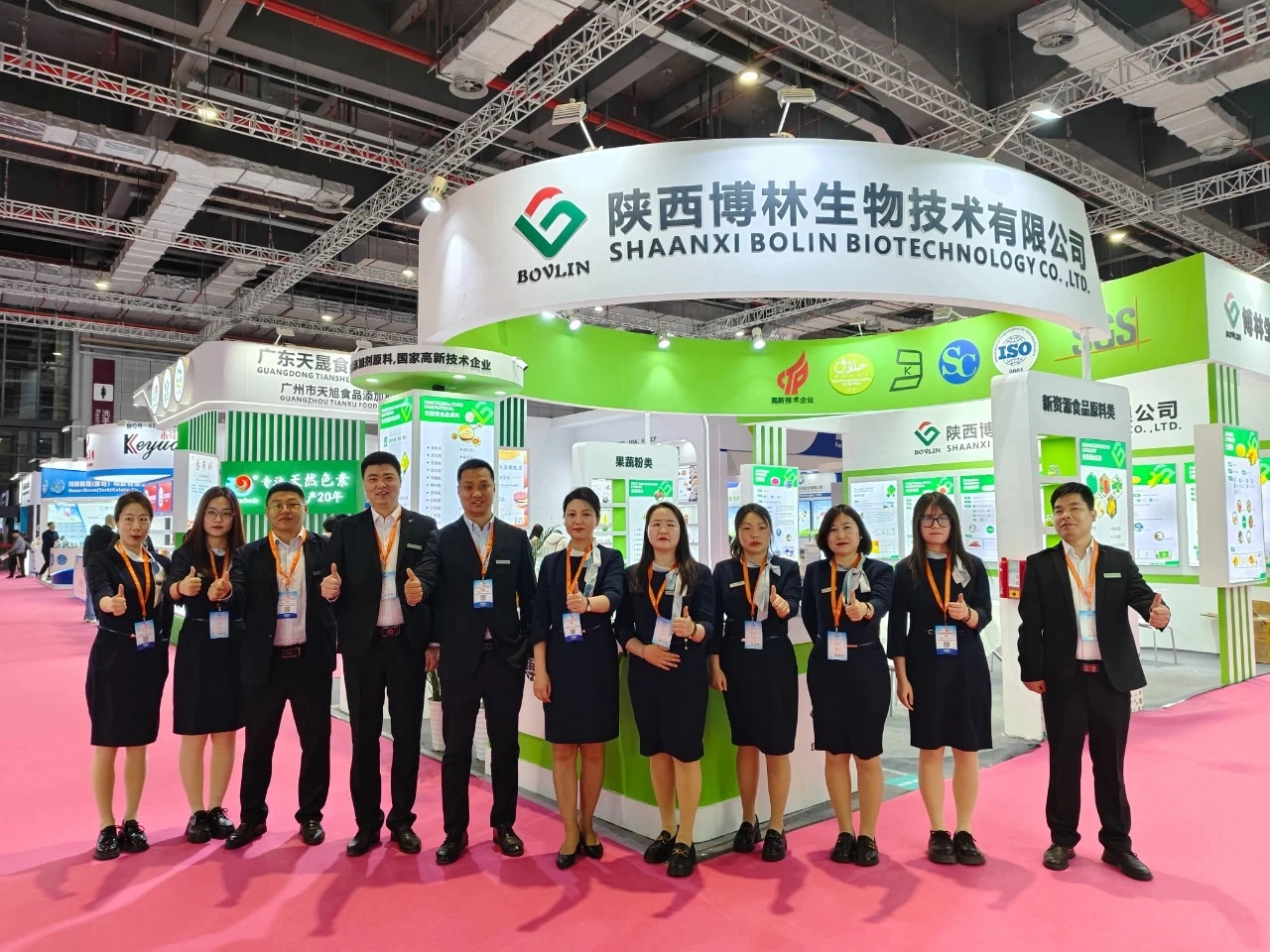
Bolin Biotechnology is a reliable company that makes cordycepin powder. Their potency is standardised from 1% to 98%, and they have ISO approval and HPLC proof to back this up. Our 25,800-acre controlled cultivation base and more than 80 biotech professionals guarantee pharmaceutical-grade quality and consistency from batch to batch, which is very important for the success of your formulation. Our flexible 1KG minimum order and free samples make it easy to test our products thoroughly before ordering more. This is true whether you need high-purity material for clinical research, mid-range strength for business supplements, or customized OEM solutions like capsules and tablets. Along with responsive formulation help from our experienced team, we provide detailed technical data to support regulatory applications. Email our purchasing agents at sales1@bovlin.com to talk about your particular needs, ask for certificates of analysis, or set up packages of samples. You can look at our full line of scientifically proven plant extracts engineered to work well in nutraceutical, pharmaceutical, and functional food applications by going to bolinbiotech.com.
References
1. Tuli, H.S., Sandhu, S.S., & Sharma, A.K. (2014). Pharmacological and therapeutic potential of Cordyceps with special reference to cordycepin. Biomedicine & Pharmacotherapy, 68(1), 1-5.
2. Ng, T.B. & Wang, H.X. (2005). Pharmacological actions of Cordyceps, a prized folk medicine. Journal of Pharmacy and Pharmacology, 57(12), 1509-1519.
3. Yue, K., Ye, M., Zhou, Z., Sun, W., & Lin, X. (2013). The genus Cordyceps: a chemical and pharmacological review. Journal of Pharmacy and Pharmacology, 65(4), 474-493.
4. Zhou, X., Gong, Z., Su, Y., Lin, J., & Tang, K. (2009). Cordyceps fungi: natural products, pharmacological functions, and developmental products. Journal of Pharmacy and Pharmacology, 61(3), 279-291.
5. Das, S.K., Masuda, M., Sakurai, A., & Sakakibara, M. (2010). Medicinal uses of the mushroom Cordyceps militaris: Current state and prospects. Fitoterapia, 81(8), 961-968.
6. Ashraf, S.A., Elkhalifa, A.E.O., Siddiqui, A.J., Patel, M., Awadelkareem, A.M., Snoussi, M., Ashraf, M.S., Adnan, M., & Hadi, S. (2020). Cordycepin for health and wellbeing: A potent bioactive metabolite of an entomopathogenic medicinal fungus Cordyceps with its nutraceutical and therapeutic potential. Molecules, 25(12), 2735.