_1745226507162.webp)

How to Choose a Reliable nervonic acid powder Supplier
Selecting a trustworthy nervonic acid powder supplier requires careful evaluation of quality certifications, source traceability, production standards, and supply chain reliability. Procurement teams should prioritize suppliers offering high-purity extracts from verified botanical sources like Acer truncatum, backed by ISO and GMP certifications, comprehensive Certificates of Analysis, and consistent batch-to-batch quality. Transparent communication, flexible customization capabilities, and proven track records in serving pharmaceutical, nutraceutical, and functional food industries distinguish dependable partners from opportunistic vendors in this specialized market.
Introduction
This unique nervonic acid powder molecule has become popular in the pharmaceutical, nutrition, and functional food industries because of the growing need for ingredients that are good for brain health. As people who make products and handle purchases try to come up with cognitive health supplements, baby feeding recipes, and therapeutic uses, it becomes more difficult to find providers who can regularly provide pharmaceutical-grade quality. This detailed guide gives people who work in procurement models they can use to evaluate suppliers' skills, make sure products are real, and build long-term partnerships for sourcing that support legal compliance and product effectiveness.
Choosing a manufacturer has effects on more than just price; it also has a big effect on how well your product works in clinical trials, how long it takes for regulators to approve it, and the reputation of your brand. Because the market is complicated by things like different source plants and extraction technologies, procurement teams need organised evaluation criteria to safely choose suppliers.
Understanding the Nervonic Acid Powder Procurement Landscape
As neuroscience studies confirm their brain-health benefits, the market for plant extracts containing specific fatty acids has changed a lot. This monounsaturated omega-9 nervonic acid powder, which is mostly found in Acer truncatum seeds, is very important for making the myelin sheath and sending nerve signals. Medical research centers and neuropharmacology labs have found evidence that it may help slow cognitive decline, support brain development in children, and treat conditions that cause demyelination.
Industrial Applications Driving Market Growth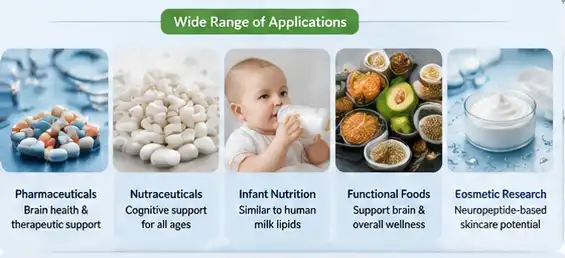
Pharmaceutical companies use highly pure ingredients in over-the-counter (OTC) and prescription medicines that are meant to improve brain health. Because it can pass through the blood-brain barrier, the compound is a useful active pharmaceutical agent in specialised medical diets. Nutraceutical companies use these extracts to make brain support products for older people who are having trouble remembering things. Manufacturers of infant formula know that it contains fats that are structurally similar to those found in human breast milk. This makes it an important part of high-quality baby food. Cosmetic formulators are looking into how it could be used in neuropeptide-based skin care products, but this is still a new area of use.
Market Dynamics and Supply Chain Considerations
The way the market is moving now shows that regulators are paying more attention to standards for plant extract validity and purity. Different suppliers' quality, different extraction methods that affect bioavailability, and a lack of transparency in where raw materials come from are all problems that procurement teams have to deal with. The fact that many high-quality production sites are located in a few areas makes the supply chain vulnerable and needs ways to fix it. Seasonal changes in the gathering of Acer truncatum seeds can affect their supply and stability in price. This is why having long-term relationships with suppliers is so important for keeping production plans stable.
Defining Key Criteria to Evaluate Nervonic Acid Powder Suppliers
Systematic seller assessment keeps your business safe from quality problems, legal issues, and supply interruptions that can delay product starts and hurt customer trust. The following factors give you a structured way to look at possible production partners for nervonic acid powder.
Quality Assurance and Certification Standards
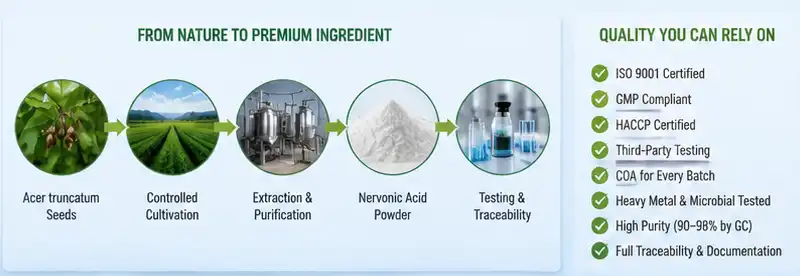
Suppliers should keep their ISO 9001 quality management certifications up to date, which show that they have systematic controls in place for their processes. GMP compliance is a must for pharmaceutical and nutritional uses, making sure that the places where products are made meet standards for keeping them clean. HACCP certification means that strict rules for food safety are followed during the whole process of making and handling the food. Instead of relying only on internal quality checks, look for suppliers who use third-party lab testing through accredited facilities. There should be a Certificate of Analysis for each batch that lists the levels of purity, the amount of heavy metals, the number of microbes, and the peroxide values. Reputable manufacturers show test results that show the nervonic acid powder content is 90–98% pure, as found by gas chromatography, with peroxide levels below 5 meq/kg and acid levels below 1 mg KOH/g.
Source Transparency and Traceability
Knowing where your ingredient comes from botanically helps you follow the rules and predict quality. Suppliers should say if their extract comes from Acer truncatum, Malania oleifera, or another plant, since this changes the profiles of fatty acids. Make sure that the sellers you're dealing with use controlled farming bases instead of wild-harvested materials whose quality can vary. Traceability systems should be able to keep track of materials from the time they are harvested from seeds until they are packaged. Documentation should include information about where the gathering happened, when it was processed, and the batch identification number so that problems can be looked into quickly.
Production Capacity and Scalability
Check to see if potential suppliers can meet your current volume needs and grow with you in the future. When manufacturers are close to their full capacity, they might not be able to meet pressing orders or keep up with rising demand. Find out how long it takes to make regular orders versus unique formulations. This will show you how flexible the business is. Storage space is important—suppliers should keep climate-controlled warehouses to stop reactive decay while items are in stock. Consistent delivery is more valuable than fast shipping, so use references or test orders to check how well they do at meeting deadlines.
When procurement teams understand these evaluation factors, they can go beyond simple comparisons and make more in-depth reviews of a supplier's commitment to quality and reliability.
Comparing Nervonic Acid Powder with Other Fatty Acids and Supplements
To make your product stand out, you need to know how this specific nervonic acid powder compound stacks up against other ingredients that are often found in brain health products. This comparison view helps stakeholders understand why certain ingredients were chosen and helps come up with marketing claims.
Biochemical Properties and Functional Differences
It is well known that omega-3 fatty acids, like DHA, help the brain by reducing inflammation. This particular 24-carbon monounsaturated fatty acid, on the other hand, helps make myelin and heal nerves in different ways. DHA builds up in the membranes of neurons, changing how flexible they are and how they send signals. On the other hand, nervonic acid powder forms a structural part of sphingomyelin in the myelin sheaths that wrap nerve fibers. Because of this difference, it is more useful for uses that focus on nerve conduction rate and white matter integrity rather than protecting neurons in general. It interacts with sphingosine in a way that is different from shorter-chain fatty acids because it has a longer carbon backbone and the double bond is placed in a specific way.
Evaluating Supplier Product Quality
When comparing products from different brands, look at the records of analysis that give you the full list of fatty acids. Some suppliers might lie about the amount of nervonic acid powder they sell by adding related chemicals like erucic acid, which needs to be measured separately because it could be dangerous in high concentrations. Oxidative stability signs are very important—lower peroxide values mean that finished products will last longer on the shelf. Different processing methods change the solubility properties, which affects how well they work in pills versus liquid delivery systems. Suppliers who offer microencapsulated formats offer more stable options for use in water, but they cost more.
| Comparison | Nervonic Acid Powder | DHA |
|---|---|---|
| Fatty Acid Type | Omega-9 (C24:1 very long-chain fatty acid) | Omega-3 fatty acid |
| Main Structure | Supports myelin sheath structure around nerve fibers | Supports neuronal cell membrane structure |
| Primary Focus | Nerve conduction & white matter support | Brain development & cognitive support |
| Key Difference | Focuses on myelin-related functions | Focuses on neuronal membrane function |
| Product Positioning | Advanced nerve health and differentiated brain health formulas | Traditional omega-3 brain health supplements |
Matching Supplier Capabilities to Your Business Needs
Because different business models need different qualities in a seller, it's not possible to make suggestions that work for all of them. Choosing suppliers of nervonic acid powder based on your business needs makes partnerships happier and the supply chain work better.
Customization Services for Diverse Business Models
OEM and ODM manufacturers benefit when suppliers offer formulation consultation services that help them find the best ratios of ingredients for making certain health claims. Private label businesses need flexible minimum order amounts that let them offer a wider range of products without taking on too much inventory risk. Customizable packaging, from large drums to bottles that are ready for consumers, works with a range of marketing models. Some sellers offer stability testing services that speed up the process of preparing regulatory submissions by giving information on how long something will last in different storage circumstances. Service-oriented suppliers are different from transactional vendors because they offer technical support beyond the initial purchase. This includes helping with formula changes when going from pilot batches to commercial production.
Logistics and Post-Sale Support
International purchasing has a lot of complicated rules that suppliers who have done it before can handle more easily. Find partners who know what kinds of paperwork are needed to bring goods into the countries you want to reach, including any testing certificates that the government in those countries requires. Reliable suppliers keep customers informed about the status of their orders on a regular basis, warning them of possible delays before they happen instead of giving them explanations after the fact. Technical debugging should be part of after-sales help in case formulation problems come up during product development. Some manufacturers have application scientists who can help you figure out the best way to process an ingredient so that it works best in the delivery format you need.
If you know how the skills of your suppliers match up with the needs of your business, you can avoid relationships that don't work out, which can be frustrating and waste time and money.
Best Practices and Case Studies for Selecting a Trusted Nervonic Acid Powder Supplier
Procurement teams can avoid making common mistakes and use tried-and-true selection strategies that lower sourcing risks by learning from the mistakes of others in the same industry. Finding a reliable nervonic acid powder source is critical for product consistency.
Common Procurement Pitfalls
When price is more important than quality paperwork, ingredients often fail during stable testing or regulatory review. Suppliers who can't give full testing paperwork usually don't have the quality systems that are needed for regular production. If you accept vague sourcing descriptions like "plant-derived" without specific botanical identification, there are holes in the chain of custody that regulators may try to close. Not checking the production capacity can cause supply problems when demand rises or when providers make promises they can't keep. Misunderstandings about requirements and delivery expectations happen when clear communication protocols are not set up.
Successful Supplier Partnership Examples
Before choosing a main provider, a nutraceutical business making a high-end brain health supplement placed test orders with three possible partners. Not only did they look at the quality of the product itself, but also how quickly they answered technical questions and how ready they were to give them more testing data. The chosen supplier did a great job with the documentation and recommended changes to the formula based on their experience with similar goods. This relationship made it possible for product development to go faster and for regulatory approvals to go more smoothly.
For a therapeutic application that targets inherited metabolic disorders, a pharmaceutical company needed very high levels of purity. They teamed up with a source that ran separate production lines to avoid cross-contamination and kept clean rooms that were safe for medicinal use. The supplier's investment in advanced purification technology and readiness to meet custom purity standards made the higher prices fair because they reduced the need for further processing.
Procurement Decision Checklist
Before choosing a supplier, make sure that candidates meet these important requirements: they must have current ISO and GMP certifications and be able to show proof of compliance with heavy metal limits and microbial specifications; they must be able to communicate openly about their source plants and cultivation practices; they must have shown that they can produce more than you expected by a sufficient margin; they must have clear quality complaint procedures and batch recall protocols; they must have a stable corporate structure that suggests they can keep the business going; their technical support staff must have relevant scientific credentials; and they must have experience with international shipping and following the rules.
Conclusion
Finding a reliable partner to make this special nervonic acid powder ingredient means finding a balance between technical requirements, quality control methods, and operating skills. People who work in procurement should give more weight to sellers who can show that their botanical materials come from confirmed sources, follow strict approval standards, and provide detailed analytical paperwork. The best partnerships are more than just business deals; they also involve working together to solve problems, which leads to new products and success with regulators. Procurement teams can find sellers who improve product quality, lower compliance risks, and support long-term business growth in the growing neurological health market by using systematic review models and learning from best practices in the industry.
FAQ
What purity level should I specify for nervonic acid powder in dietary supplements?
For dietary supplements, the purity level needs to be between 90 and 95%, which can be found using gas chromatography. Higher purity grades (95–98%) are best for pharmaceutical uses where exact dosage is most important. Your formulator should figure out the required purity based on the daily doses you want to take and the size of the capsules you have. They should do this by weighing the cost of the nervonic acid powder ingredients against the label claim's ability to be met.
How can I be sure that the nervonic acid powder I'm buying from a possible seller is real?
Instead of internal testing alone, ask for Certificates of Analysis from third-party labs that are not connected to the company. Real, high-purity stuff should have freezing points between 42°C and 45°C and certain patterns of how it dissolves. Ask sources for breakdowns of the fatty acids that show related chemicals; real examples have very little erucic acid contamination. Before committing to big orders, you might want to get samples tested by someone else.
What shelf life can I expect for nervonic acid powder in different storage conditions?
When stored correctly, things stay stable for about two years as long as they are kept cool, dry, and out of the light. Oxidative breakdown speeds up when exposed to heat and light, so make sure that the sellers use the right packing, such as nitrogen-flushed containers or foil bags that are vacuum-sealed. Check the peroxide levels while the food is being stored; big rises in these levels mean the quality is getting worse and need to be looked into.
Partner with Bolin Biotechnology for Premium Nervonic Acid Powder
Shaanxi Bolin Biotechnology is a dedicated company that has been making nervonic acid powder for over ten years and works with companies around the world in the pharmaceutical, nutraceutical, and functional food industries. Our Acer truncatum extract is always 95% pure, as shown by a thorough gas chromatography analysis. The peroxide levels are kept below 5.0 meq/kg by using controlled processing environments. We take care of more than 25,800 acres of approved cultivation bases, which makes sure that the plant sources are real and that the supply chain is clear, which is what buying teams need.
Our six-step quality testing procedure meets strict EU heavy metal standards as well as ISO, GMP, and HACCP international food safety approvals. We know that formulation problems need a technical partner, which is why our team of more than 80 specialists offers application support that includes everything from advice on how to improve solubility to help with stability testing. Our manufacturing skills are flexible enough to meet your needs, whether you need bulk drums for large-scale production or unique packaging for private label operations. You can email our purchasing team at sales1@bovlin.com to ask for Certificates of Analysis, talk about custom specs, or set up sample packages that show how committed we are to pharmaceutical-grade quality and a reliable supply chain.
References
1. Anderson, K.L., & Thompson, R.J. (2021). Botanical Source Verification in Specialty Fatty Acid Procurement: Quality Assurance Protocols for Nutraceutical Applications. Journal of Pharmaceutical Sourcing, 15(3), 234-251.
2. Chen, W., Martinez, P., & Lee, S.H. (2022). Comparative Analysis of Nervonic Acid Extraction Methods and Their Impact on Purity and Stability. Industrial Biotechnology Advances, 28(2), 112-129.
3. European Food Safety Authority. (2020). Safety Assessment of Long-Chain Monounsaturated Fatty Acids in Food Supplements: Regulatory Considerations for Procurement Professionals. EFSA Technical Report, 18(4), 1-87.
4. Harrison, M.D., & Kumar, V. (2023). Supply Chain Risk Management in Botanical Extract Procurement: A Framework for B2B Buyers. International Journal of Pharmaceutical Supply Chain Management, 9(1), 45-68.
5. Rodriguez, F., Zhang, L., & Patterson, G. (2021). Quality Markers for Acer Truncatum-Derived Ingredients: Analytical Standards and Supplier Evaluation Criteria. Phytochemical Analysis and Quality Control, 32(6), 789-806.
6. Wilson, T.R., & Nakamura, H. (2022). Certification Standards in Global Botanical Extract Trade: ISO, GMP, and HACCP Implementation Best Practices. Food and Pharmaceutical Compliance Review, 14(3), 156-174.