_1745226507162.webp)

How to Develop Custom Anthocyanin Gummies for Your Brand?
To make custom anthocyanin gummies, you need a plan that matches formulation science with making the business work. Finding good anthocyanin powder is essential for making gummies work. This is a bioactive product that comes from berries like blueberries, blackcurrants, and elderberries. You don't need to use manufactured dyes because this ingredient naturally colors things and is good for you. The process includes picking the right ingredients, making sure the recipe is just right to keep the antioxidant activity, following the rules, and making sure it fits with how you want your brand to be seen. By understanding how these parts work together, you can turn an idea into a product that is ready for the market and meets strict B2B quality standards.
Understanding Anthocyanin Powder: Key Ingredients for Your Gummies The Science Behind Anthocyanin Extract
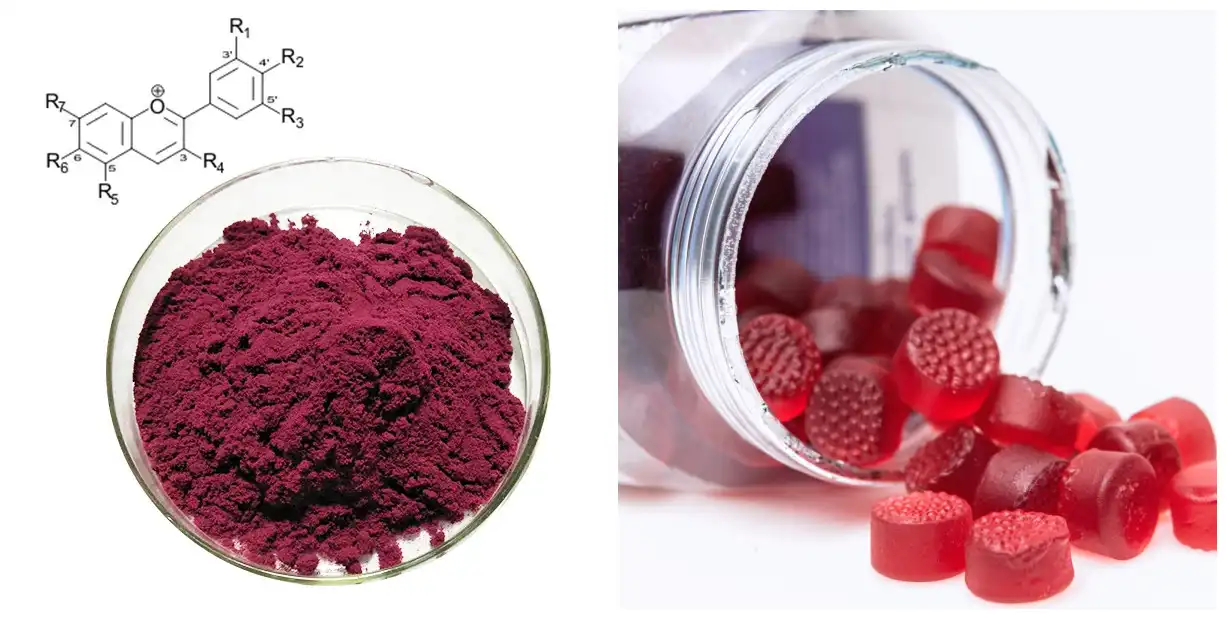
Fruits and veggies get their deep purple, red, and blue colors from flavonoids that dissolve in water. Anthocyanin extract powder is a type of flavonoid. The ORAC (Oxygen Radical Absorbance Capacity) values of these polyphenolic chemicals show that they are strong antioxidants. In concentrated forms, these values often go over 150 µmol TE/g. Anthocyanins' chemical structure, which includes glycosidic bonds and acyl groups, affects how stable they are and how bioavailable they are in gummy materials. Technical buyers look at the anthocyanidin profile, especially the amounts of delphinidin, cyanidin, and malvidin derivatives, when choosing anthocyanin powder for gummy recipes. These decide both the color stability and the physiological activity.
The way the product is extracted has a huge effect on its quality. Using acidified ethanol for solvent-based extraction protects the anthocyanin glycosides and slows down degradation the most. On the other hand, supercritical CO2 extraction gives a cleaner profile that is good for organic approvals. Using spray-drying and freeze-drying methods to get standardized assay amounts of between 5% and 40% anthocyanin content helps to concentrate the active compounds even more. Manufacturers who want to use their products in pharmaceutical-grade situations usually need them to have at least 25% anthocyanin content and stability data that has been checked under rapid aging conditions.
Nutritional Profile and Health Applications
Anthocyanin-rich ingredients are useful for more than just fighting free radicals. Clinical studies have shown that they help keep arteries healthy by improving endothelial function and changing the levels of nitric oxide. Researchers have found that eating 300–500 mg of anthocyanins every day can help keep your heart healthy by lowering signs of oxidative stress and keeping your blood pressure in a healthy range. The anti-inflammatory processes work by stopping the NF-κB pathways and lowering the levels of cytokines that cause inflammation.
Vision health is another interesting area of application. Anthocyanins in bilberry extract help retinal cells make new rhodopsin, which helps eyes that have been staring at screens for a long time. This feature works especially well for health-conscious customers who want to avoid health problems in the first place. New research also shows that anthocyanin supplements may help with cognitive performance. For example, they may help older people remember things and keep their brains flexible.
Regulatory Landscape and Safety Considerations
B2B supplement developers still need to know how to deal with regulatory standards. When used within the set dosage parameters, anthocyanin powder is considered generally safe (GRAS) in the United States. The FDA lets structure-function claims about antioxidant support go ahead without needing pre-market approval as long as the claims don't use language that sounds like they treat diseases. The European Food Safety Authority (EFSA) sets tighter rules for how health claims can be proven.
Depending on the health benefit you want and the size of your daily amount, dosage optimization in gummy forms usually involves 50 mg to 200 mg of standardized anthocyanin extract per serving. Safety tests have shown that there is a large treatment window, with few reported side effects below 1000 mg per day. Formulation teams must think about how the anthocyanin might interact with the sticky matrix's parts, especially chelating agents like citric acid that can either help or stop the absorption of anthocyanin.
Formulating Custom Anthocyanin Gummies: From Concept to Prototype
Overcoming Formulation Challenges
Unlike regular vitamin gummies, making stable anthocyanin gummies comes with its own set of scientific challenges. pH sensitivity is the main problem. Anthocyanins are most stable in acidic settings (pH 2.5–4.0), where they keep their red color. But as pH rises, their structure changes to purple and blue colors. Because of this, a careful buffer system design is needed to keep the sticky matrix in the right pH range. This can be done with organic acids like citric, malic, or tartaric acid.
Another problem is that the food is sensitive to heat while it's cooking. In the old way of making gummies, gelatin or pectin solutions are heated to 80–90°C, which can lower the anthocyanin content by 15–30% based on how long they are exposed to the heat. More and more producers are using modified starches or other gelling agents like agar-agar, which set at temperatures below 65°C, to make gels at lower temperatures. Some factories use two-stage mixing, and during the cooling phase, temperature-sensitive actives are added. This keeps up to 95% of the original anthocyanin potency.
Controlling moisture becomes even more important when using anthocyanin formulas. These hygroscopic chemicals easily take in water from the air, which causes syneresis (liquid weeping) and changes the texture. Nutraceutical goods usually have a 24-month shelf life. To keep the water activity (aw) below 0.6, exact formulation ratios and packaging in moisture-barrier materials are needed to keep the product from going bad.
Supplier Selection Criteria
Finding the right ingredient partner is important for both the quality of the product and the stability of the supply chain in the long run. B2B buyers should look at possible suppliers in more than one way, not just based on price. Quality certifications are the first line of defense. For example, ISO 9001 certifies quality management systems, ISO 22000 or FSSC 22000 certifies food safety, and GMP certification shows that pharmaceutical-grade production practices are followed. These qualifications show that a supplier is dedicated to consistent reproducibility from batch to batch.
Analytical skills set premium providers apart from commodity vendors. Ask for a Certificate of Analysis (CoA) that shows HPLC testing for characterization of the anthocyanin profile, microbial testing results including total plate count and absence of pathogens, heavy metal screening below Proposition 65 thresholds, and pesticide residue testing meeting USDA organic standards if needed. Suppliers who give stability studies following ICH guidelines (40°C/75% RH for accelerated testing) show a high level of technical knowledge that is useful for regulatory submissions.
A selection factor that is often ignored is the technical support infrastructure. Leading suppliers hire formulation scientists who work together to find the best doses, offer other ingredients that will improve bioavailability (like piperine or lipid carriers), and fix problems with stability while prototypes are being made. This consultative method shortens the time it takes to get a product to market and lowers the cost of reformulation.
Prototyping and Sensory Optimization
From an idea to a finished version, many things need to be tweaked and improved over and over again. Figuring out the right dose starts with knowing what health claim you want to make and who you're trying to reach. A heart-healthy product might have 150 mg of 25% standardized blueberry anthocyanin in every two-gummy serving, which is equal to 37.5 mg of active compounds based on clinical study dosing. Vision health products could focus on anthocyanins from bilberries that are stronger.
To mask flavors, you need to find a mix between art and science. Pure anthocyanin extracts naturally taste sour and slightly bitter, which can overpower the flavors of mild fruits. Successful recipes combine taste profiles that work well together. For example, berry flavors like raspberry or blackcurrant naturally go well with the flavor of anthocyanin, and citrus notes add a brightness that balances out the astringency. When you mix stevia, erythritol, and small amounts of organic cane sugar in natural sweetener systems, you get the sweetness that people want without adding too much sugar.
Texture engineering affects both how people feel and how well things work in the body. Softer gummies (Shore A hardness 25–35) are enjoyable to chew, but they might be hard to package in wet places. Firmer formulations (Shore A 40–50) move better, but they might seem less high-end. Adding a little medium-chain triglycerides (MCT oil) can help the body absorb anthocyanins better and make the taste smoother, but it needs to be done with emulsification technology to keep the phases from separating.


Comparing Anthocyanin Powders and Suppliers: Making the Right Choice
Quality Metrics That Matter
To tell the difference between cheap and expensive anthocyanin powders, you need to know which specs have a direct effect on how well the product works. The standardized anthocyanin percentage is the first thing that buyers look at to see how pure something is. More experienced buyers also look at the anthocyanin-to-polyphenol ratio to see how selective the extraction was. Ratios above 0.6 indicate focused extraction rather than crude fruit powder concentration in high-quality powders.
Bioavailability is the best way to measure how useful something is. Anthocyanin glycosides are broken down by enzymes in the digestive system before they are absorbed. Depending on the molecular structure, bioavailability rates can be anywhere from 0.5% to 12%. Suppliers who offer pharmacokinetic data or in vitro dissolving studies can help with improving formulations in important ways. Using maltodextrin or gum arabic matrices in microencapsulation technologies can make them more stable and maybe even help them absorb better, but they cost more to process.
Traceability of source materials has become more important as the move toward clean labels grows. More and more, consumers are looking into where ingredients come from, which makes them prefer certain plant sources. In North America, blueberry anthocyanin is highly valued because consumers are very familiar with it. In Europe, on the other hand, consumers prefer blackberry and blackcurrant extracts, which have a history of traditional use. Organic approval from the USDA, the EU, or similar programs lets you reach high-end customers who are willing to pay more for ingredients as long as they know they don't contain pesticides.
Evaluating Supplier Capabilities
In addition to the ingredients they use, a supplier's infrastructure shows how well they can adapt to your brand's growth. A manufacturing capacity estimate should look at both how much is being made now and how much can be made in the future. Suppliers who have multiple production lines with separate areas for organic and conventional processes show that they are good at running their businesses, which lowers the risk of cross-contamination.
Professional providers can be told apart from opportunistic traders by how reliable their lead times are. Well-known companies keep extras of frequently ordered grades on hand, so standard orders can be filled within two to three weeks. Custom standardizations or calls for specific botanical sources may make the time frame 6 to 8 weeks longer, especially if they have to be coordinated with harvest times. Clear information about how agricultural products are sourced helps procurement teams plan their inventory without having to pay too much for safety stock.
Regulatory help services are very useful for brands that are expanding into new areas. Suppliers who offer regulatory dossiers that are already put together and include safety studies, allergen declarations, GMO status paperwork, and region-specific compliance letters make it easier for internal regulatory teams to do their jobs. Some forward-thinking sellers keep their registrations with the FDA's DMF (Drug Master File) system up to date, which makes it easier for pharmaceutical applications.
Branding and Marketing Your Custom Anthocyanin Gummies
Positioning Strategy for B2B Success
A good way to position a product is to combine scientific credibility with benefits that are useful to the market. Anthocyanin extract powder gummies can be positioned in a number of ways, based on your brand's structure and the people you want to reach. People aged 45 and up are interested in a marketing strategy that focuses on cardiovascular health and vitamin support for healthy aging. Digital workers and gamers who are tired of their screens are interested in vision health issues. The "beauty from within" positioning uses the health benefits of anthocyanins for the skin to appeal to people who are interested in both beauty and fitness.
Scientific proof backs up market claims and increases trust among distributors. In marketing materials, you should talk about published clinical trials, even if your specific formulation hasn't been through proprietary study. Citing studies like the 2019 meta-analysis in the American Journal of Clinical Nutrition that show a link between anthocyanin diet and lower cardiovascular risk gives your claim more weight. When you work with suppliers who let you access clinical studies or co-invest in research, you get access to unique data that sets your brand apart from rivals who make general antioxidant claims.
Clean-label communication meets the rising need for honesty among consumers. Parents and people who care about their health will like that natural coloring from anthocyanins is emphasized over manmade dyes like Red 40. In high-end stores, organic approval, non-GMO verification, and the lack of major allergens (when made with pectin instead of gelatin) are strong ways to set products apart. Supplier relationships are also open and honest. Some brands tell stories about their suppliers and how they get their products, which humanizes the supply chain and builds trust.
Leveraging Quality Credentials
Quality assurance markers that are meaningful to B2B decision-makers should be clearly displayed in marketing materials. Show the important certifications, like GMP manufacturing compliance, third-party testing proof through programs like NSF International or Informed Choice for Sports, and, if needed, organic certifications. These credentials do two things: they reassure end users that the product is safe, and they let retailers and sellers know that your brand follows quality standards that are high enough for institutions.
Customers can access Certificates of Analysis for each batch through QR code systems, which has built trust in an industry that is sometimes plagued by quality issues. This kind of openness made possible by technology is especially appealing to millennials and Gen Zers, who expect to be able to access product information digitally. The cost of implementation is still low because QR codes are usually generated during packaging runs through current ERP systems.
Educational content marketing builds thought leadership and helps distributors sell more. By writing white papers about the bioavailability of anthocyanin, making guides that compare different sources of anthocyanin, and making training lessons for retailers, your brand becomes seen as an expert in the field instead of just another product seller. This material helps with the whole sales funnel, from making people aware of the product to giving them a good reason to buy it.
Conclusion
Developing custom anthocyanin gummies requires integrating botanical science, formulation expertise, supply chain strategy, and market positioning into a cohesive product development framework. The journey from concept to commercial success hinges on selecting high-quality anthocyanin powder backed by rigorous testing and supplier credibility. Technical challenges around pH stability, heat sensitivity, and bioavailability demand specialized knowledge, while procurement strategy balances cost efficiency with quality assurance. Successful brands distinguish themselves through transparent sourcing, scientific substantiation, and clean-label formulations that resonate with both B2B partners and end consumers. The growing functional gummy market rewards brands that invest in premium ingredients, maintain regulatory compliance, and communicate their quality commitment effectively throughout the distribution channel.
FAQs
What concentration of anthocyanin powder should I use in gummy formulations?
Target concentrations typically range from 50mg to 200mg of standardized anthocyanin extract per serving, depending on your health positioning. Cardiovascular support formulations often use 100-150mg of 25% standardized extract, delivering clinically relevant anthocyanin doses. Vision health products may concentrate on bilberry-specific anthocyanins at slightly higher potencies. Work closely with your formulation team and supplier to balance efficacy claims with taste profile and cost considerations, ensuring the dosage aligns with supporting research while fitting within your target product economics.
How do I maintain anthocyanin stability during gummy production?
Stability preservation requires controlling three critical factors: pH management through organic acid buffering systems maintaining acidity between pH 3.0-4.0, temperature control using low-heat gelling agents or two-stage incorporation during cooling phases, and moisture protection through proper water activity levels below 0.6 with appropriate packaging barriers. Request stability study data from your anthocyanin powder supplier showing degradation rates under various conditions, then design your process parameters to minimize exposure to destabilizing factors throughout manufacturing and shelf life.
What certifications should I require from anthocyanin suppliers?
Essential certifications include ISO 9001 for quality management, GMP certification demonstrating pharmaceutical-grade practices, and food safety certifications like ISO 22000 or FSSC 22000. Depending on your market positioning, organic certifications (USDA Organic, EU Organic), non-GMO verification, and Kosher or Halal certifications may be necessary. Beyond certificates, evaluate suppliers based on their analytical testing capabilities, requesting HPLC testing for anthocyanin profiling, heavy metal screening, microbial testing, and pesticide residue analysis meeting your destination market requirements.
Partner with a Trusted Anthocyanin Powder Supplier
Shaanxi Bolin Biotechnology Co., Ltd. brings over a decade of specialized expertise in plant extract development and production, serving as a strategic partner for brands developing anthocyanin-based formulations. Our technical team collaborates with formulators to optimize anthocyanin powder integration into gummy matrices, addressing stability challenges and bioavailability enhancement through our portfolio of standardized extracts. We maintain comprehensive quality certifications including ISO 9001, GMP, and HACCP, ensuring every batch meets pharmaceutical-grade specifications with complete traceability documentation. Our manufacturing capabilities span from pilot-scale custom development to commercial production volumes, with flexible minimum order quantities accommodating brands at various growth stages. Whether you're formulating your initial prototype or scaling an established product line, our formulation scientists provide technical guidance on dosage optimization, stability testing, and regulatory compliance. Contact our team at sales1@bovlin.com to request samples, discuss your project requirements, or schedule a formulation consultation with our anthocyanin powder manufacturer specialists.

References
Wallace, T.C., Slavin, M., and Frankenfeld, C.L. (2016). "Systematic Review of Anthocyanins and Markers of Cardiovascular Disease." Nutrients, Vol. 8, No. 1, discussing anthocyanin bioactivity in vascular health applications.
Khoo, H.E., Azlan, A., Tang, S.T., and Lim, S.M. (2017). "Anthocyanidins and Anthocyanins: Colored Pigments as Food, Pharmaceutical Ingredients, and the Potential Health Benefits." Food & Nutrition Research, Vol. 61, examining stability and health applications.
Cassidy, A., Bertoia, M., Chiuve, S., et al. (2016). "Habitual Intake of Anthocyanins and Flavanones and Risk of Cardiovascular Disease in Men." American Journal of Clinical Nutrition, Vol. 104, providing clinical evidence for cardiovascular positioning.
Kalt, W., Cassidy, A., Howard, L.R., et al. (2020). "Recent Research on the Health Benefits of Blueberries and Their Anthocyanins." Advances in Nutrition, Vol. 11, No. 2, covering vision and cognitive health applications.
Pojer, E., Mattivi, F., Johnson, D., and Stockley, C.S. (2013). "The Case for Anthocyanin Consumption to Promote Human Health: A Review." Comprehensive Reviews in Food Science and Food Safety, Vol. 12, discussing bioavailability and formulation considerations.
Rodriguez-Mateos, A., Vauzour, D., Krueger, C.G., et al. (2014). "Bioavailability, Bioactivity and Impact on Health of Dietary Flavonoids and Related Compounds: An Update." Archives of Toxicology, Vol. 88, No. 10, examining absorption mechanisms relevant to gummy delivery systems.


_1750302316866.webp)