_1745226507162.webp)

Milk Thistle Extract vs Silymarin: Key Differences Explained
If you want to use plant-based ingredients in medicines or health goods, you should know the difference between silymarin and milk thistle extract. Extract of milk thistle comes from seeds of the Silybum marianum plant and is a complete plant product. There are proteins, fatty acids, silymarin, and other phytonutrients in it. For silymarin, the plant has a strong mix of flavonoids that are good for you and keep your liver healthy. The purchasing teams need to know the difference between these two types so they can pick the best bulk providers based on cost, bioavailability, standardization, and following the law.
Understanding Milk Thistle Extract and Silymarin
Botanical Origin and Composition
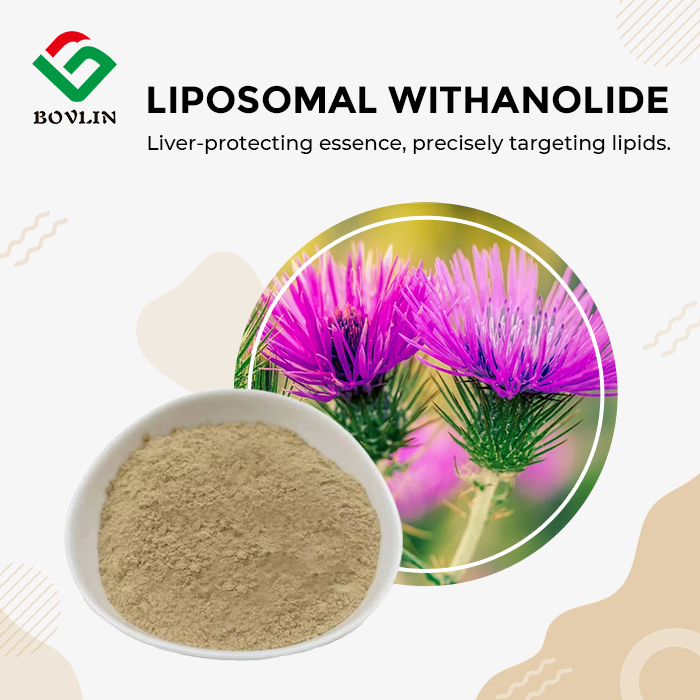
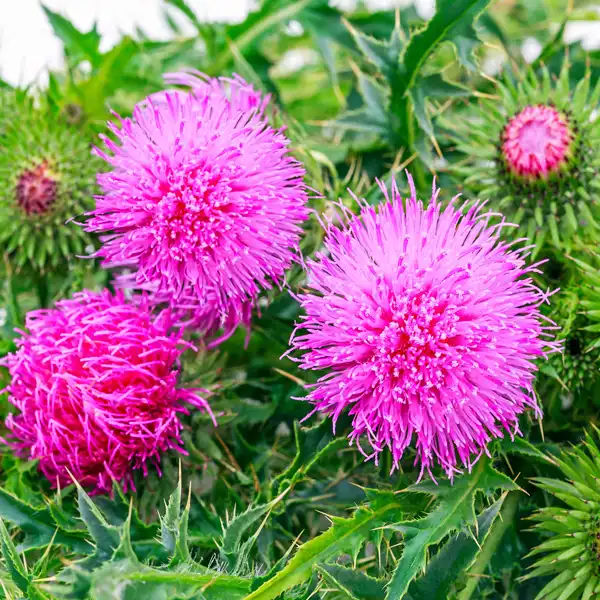
Many people have used milk thistle, also known as Silybum marianum, to treat liver problems for more than 2,000 years. The plant's seeds, which have purple flowers, are what are mostly used for extraction. It is possible to separate useful compounds from inactive ones using controlled methods that use solvents like water or ethanol. Between 50 and 80% of the milk thistle extract that is made is silymarin. It also contains other chemicals like betaine, trace minerals, and important fatty acids such as linoleic acid.
There is more than one molecule in it. There is a mix of flavonolignans, mostly silybin (also called silibinin), silydianin, and silychristin. Silybin makes up about 50–70% of the silymarin complex. It is the particle in this complex that has the most metabolic activity in cells. More modern extraction methods make it possible to separate silymarin and concentrate it to more than 95% purity, creating a product that is different from the full-spectrum extract.
Traditional and Modern Applications
To help the liver heal and stay healthy in the past, milk thistle seeds were put straight into teas and drugs. A clinical study that shows hepatoprotective, antioxidant, and anti-inflammatory properties has shown that many old promises were true. Pure silymarin and full-spectrum extracts are used in cosmetics, functional drinks, dietary supplements, and pharmaceutical products that aim to protect cells and lower oxidative stress.
Key Differences Between Milk Thistle Extract and Silymarin
Composition and Potency Variations
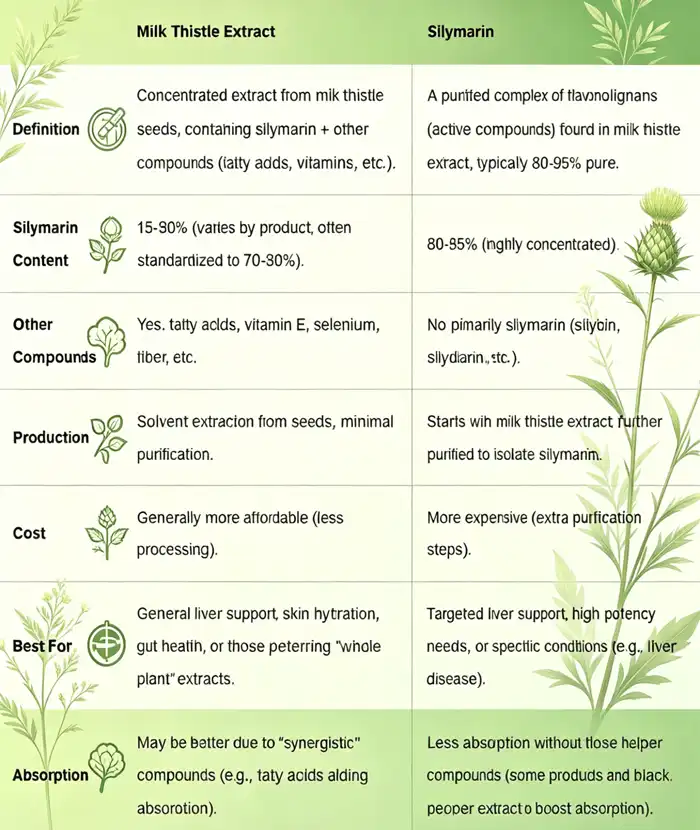
The main difference is in the amount of concentration and the variety of the chemicals. Standard milk thistle extract powders have 50–80% silymarin in them, which means that every gram has 500–800 mg of the active compound. The rest of the matrix is made up of lipophilic chemicals, fiber residues, and other secondary metabolites that may work together to help or just be there for convenience. Purified silymarin goods, on the other hand, have 90–98% silymarin content because they go through extra steps of refinement, like chromatography or crystallization. Because it is purer, smaller doses can be used and metabolism can be predicted better.
When figuring out formulation ratios, it's important to understand these changes in concentration. A supplement that wants to contain 420 mg of silymarin per pill might only need 440 mg of 95% pure silymarin or 600 mg of 70% milk thistle extract. Not only does the choice affect the cost of the ingredients, but it also affects the size of the capsules, how the tablets compress, and where the end product is placed.
Dosage Forms in Commercial Production
Both types can be delivered in a number of different ways, each one suited to a different industrial scale and end-use need:
Powder types are still the most common way to buy things in bulk, and they can be used in a variety of ways to make solid dosages. Milk thistle extract powder, which usually has a concentration ratio of 40:1 to 80:1, mixes easily into pill fill blends and tablet granulations. The bland taste and good flow properties during high-speed encapsulation are important to manufacturers. Even though pure silymarin powder costs more per kilogram, it saves room in formulation and lets manufacturers make clean-label claims when they want to claim higher potency.
Standardized liquid extracts are used in functional drinks where they can be mixed directly into drinks, syrups, or medicines that are put under the tongue. They come in water- or alcohol-based forms. Keeping liquid forms stable and stopping precipitation is hard, especially when working with silymarin chemicals that don't like water. These problems with solubility can be fixed with new microencapsulation technologies that make water-dispersible forms good for ready-to-drink liver support drinks and hangover relief sachets.
Phytosome and liposomal complexes are the best. In these, silymarin is linked to phosphatidylcholine to make it much more bioavailable when taken by mouth. According to research, phytosome preparations can make silymarin 4.6 times more easily absorbed than regular extracts. These specialized forms are more expensive to buy, but they allow brands that want to target high-end consumers to make more specific product claims and use smaller doses that work.
Scientific Evidence and Bioactivity Profiles
Over 300 studies have looked at milk thistle parts in the setting of liver health. Standardized silymarin extracts at doses of 140 to 800 mg per day have been used in clinical studies to show benefits in nonalcoholic fatty liver disease, alcohol-induced liver damage, and protection against drugs that are bad for the liver like acetaminophen. A 2020 meta-analysis reported in Phytotherapy Research confirmed that liver enzyme markers got significantly better in a wide range of patient groups.
It is thought that full-spectrum milk thistle extract has health benefits because of entourage effects, which are when silymarin and other small parts work together to make a stronger compound. Studies done in the lab show that parts other than silymarin help with antioxidant action and membrane stabilization. But there isn't a lot of clinical evidence that directly compares whole extract to silymarin that has been separated. This means that formulators have to find a balance between standardization accuracy and the overall health benefits of phytochemicals.
Safety Considerations and Regulatory Context
Both forms have great safety ratings, with few side effects seen in clinical trials. Mild stomach problems like loose stools or feeling sick happen to less than 1% of users, usually when they take higher amounts. There is a chance that drugs will combine with substrates of cytochrome P450 enzymes and P-glycoprotein transporters. When procurement teams work with pharmaceutical clients, they need to keep track of these interactions and make sure that quality control processes cover issues like heavy metals, pesticide residues, and mycotoxins that could be contaminants.
Regulatory frameworks are very different between countries. The Dietary Supplement Health and Education Act (DSHEA) says that milk thistle goods must follow Good Manufacturing Practices but don't need to be approved before they go on sale in the United States. Through the Traditional Herbal Medicinal Products Directive, European markets have stricter rules that require registration dossiers and standard extract specs. Asian markets, especially China and Japan, see high-purity silymarin as medicinal raw materials that need licenses to make drugs. These differences in jurisdiction have a direct effect on the factors used to choose a supplier and the paperwork that needs to be sent.
Procurement Insights: How to Choose Between Milk Thistle Extract and Silymarin?
Quality Standards and Certification Requirements
When judging botanical extract sellers, you need to look at more than just their claims about how strong their products are. GMP certification is the minimum standard that makes sure that controls over the process, the testing of tools, and training for staff all meet international requirements. Getting ISO 22000 or FSSC 22000 approval adds food safety management systems that are very important for functional food uses. Organic certifications like USDA NOP, EU Organic, and JAS are appealing to natural product names, but they come with higher costs and require proof that the product came from farms.
The requirements for a Certificate of Analysis (CoA) show how knowledgeable the seller is. Comprehensive CoAs include silybin A and B ratios, residual solvent testing, microbial limits (total plate count, yeast, mold, pathogens), heavy metal screening (lead, arsenic, cadmium, mercury), and pesticide panels. High-Performance Liquid Chromatography (HPLC) is used to find silymarin content. Suppliers who provide reference samples for in-house testing and batch-specific stability statistics show that they are committed to transparency.
Comparing Manufacturers and Pricing Structures
There are different levels of suppliers in the global pure milk thistle extract market. Large Chinese companies make most of the commodity-grade products. They sell 50–80% silymarin oils at reasonable prices, and the smallest order size is 25 kg. These suppliers are great at managing the supply chain consistently, and they can handle orders for established names at the container level. European producers, especially in Germany and Italy, focus on pharmaceutical-grade silymarin with better traceability and clinical evidence. They usually have lower minimum orders but charge much more.
The price is directly related to the amount of silymarin, the purity requirements, and the level of approval. Standard 80% silymarin extract powder is a lot cheaper per kilogram than 95% pure silymarin. Cost-per-dose estimates, on the other hand, often show that materials with higher purity are more valuable when formulation efficiency, capsule count, and shipping weight are taken into account. It's better for purchasing managers to ask for quotes that are compared based on silymarin content instead of raw material weight.
Packaging and Storage Considerations
Botanical products need to be kept safe in their packaging so that they stay effective over time. The flavonoid molecules in milk thistle can still be damaged by oxidation, water absorption, and light. Industrial packaging in double-layer plastic bags inside fiber drums is good for protecting things for less than six months of storage. For long-term keeping or shipping in tropical climates, aluminum foil laminate bags with nitrogen flushing are needed to keep the food from oxidizing.
Private label and OEM customers often ask for customized package layouts that work with the way they make things. Medium-sized businesses can use bulk bags that hold 5 to 25 kg, while bigger businesses would rather use drums that hold 25 to 50 kg and can connect to automated dispensing systems. When tested for stability under accelerated conditions (40°C, 75% relative humidity), important information is gathered that is used to set expiration dates and storage suggestions on commercial products.
Market Trends Influencing Sourcing Decisions
People are more aware of liver health now that more people are drinking booze and more people are getting metabolic syndrome. This increases the need for vitamins that protect the liver and have milk thistle as the main ingredient. Clean-label tastes push brands toward organic, non-GMO extracts with few fillers and clear stories about where the ingredients come from. The functional beverage category is also looking for new ways to deliver ingredients, which opens up possibilities for water-soluble and taste-optimized milk thistle ingredients.
Sustainability issues are becoming more and more important in the procurement process. Buyers now look at how suppliers treat the environment, such as whether they get their food from green farms, have solvent recovery programs, or work to lower their carbon footprint. Environmental product declarations or B Corporation recognition are two ways for suppliers to show that they are doing these things. These efforts give suppliers a competitive edge, especially for European and North American brands that stress corporate social responsibility.
Conclusion
Distinguishing between milk thistle extract and purified silymarin empowers procurement professionals to align ingredient selection with formulation goals, regulatory requirements, and commercial positioning strategies. Full-spectrum extracts deliver comprehensive phytochemical profiles at accessible costs, while concentrated silymarin offers potency advantages and dosing flexibility. Success in botanical ingredient sourcing depends on evaluating quality certifications, understanding application-specific technical requirements, and building transparent supplier relationships. As liver health awareness grows across consumer segments, strategic sourcing decisions around these botanical ingredients will increasingly influence product performance, regulatory compliance, and competitive differentiation in expanding global markets.
FAQs
Which is more effective: silymarin or whole milk thistle extract?
Clinical research primarily uses standardized silymarin concentrations, making direct efficacy comparisons difficult. Purified silymarin offers predictable dosing and enhanced bioavailability, particularly in phytosome forms. Full-spectrum extract provides additional compounds that may contribute synergistic benefits, though scientific evidence remains limited. Effectiveness depends on formulation context, delivery system, and specific health outcomes targeted.
What factors should guide dosage form selection in bulk manufacturing?
Consider production equipment capabilities, target serving size, and market positioning. Powder extracts suit high-speed encapsulation and tablet compression. Water-dispersible formats enable beverage applications but require specialized processing. Phytosome preparations command premium pricing yet allow reduced doses. Balance technical feasibility, cost structures, and differentiation goals when selecting among available forms.
Do milk thistle products interact with pharmaceutical medications?
Silymarin demonstrates moderate interactions with drugs metabolized through cytochrome P450 pathways and P-glycoprotein transport systems. Clinical significance appears low at standard supplement doses, but pharmaceutical manufacturers must document potential interactions. Quality suppliers provide comprehensive safety data addressing drug interaction studies, supporting regulatory submissions and labeling requirements.
Partner with Bolin Biotechnology for Premium Milk Thistle Extract Supply
Shaanxi Bolin Biotechnology Co., Ltd. has specialized in plant extract manufacturing since 2012, offering pharmaceutical-grade milk thistle extract and purified silymarin backed by ISO, GMP, and organic certifications. Our technical team supports custom formulation development with flexible minimum order quantities tailored to emerging brands and established OEM manufacturers alike. We maintain rigorous quality control through batch-specific HPLC testing, comprehensive contaminant screening, and stability documentation meeting international regulatory standards. Whether you require water-dispersible formats for functional beverages, phytosome complexes for premium supplements, or bulk powder for large-scale production, our procurement specialists provide personalized sourcing guidance aligned with your technical specifications and market objectives. Contact our team at sales1@bovlin.com to request certificates of analysis, arrange sample testing, or discuss how our milk thistle extract supplier capabilities can support your product development pipeline with consistent quality and reliable delivery schedules.
References
Abenavoli, L., Capasso, R., Milic, N., & Capasso, F. (2020). Milk thistle in liver diseases: past, present, future. Phytotherapy Research, 34(10), 2538-2546.
Federico, A., Dallio, M., & Loguercio, C. (2017). Silymarin/Silybin and Chronic Liver Disease: A Marriage of Many Years. Molecules, 22(2), 191.
Bijak, M. (2017). Silybin, a Major Bioactive Component of Milk Thistle (Silybum marianum L. Gaernt.)—Chemistry, Bioavailability, and Metabolism. Molecules, 22(11), 1942.
Hackett, E. S., Twedt, D. C., & Gustafson, D. L. (2013). Milk thistle and its derivative compounds: a review of opportunities for treatment of liver disease. Journal of Veterinary Internal Medicine, 27(1), 10-16.
Serviddio, G., Bellanti, F., Stanca, E., Lunetti, P., Blonda, M., Tamborra, R., ... & Vendemiale, G. (2014). Silybin exerts antioxidant effects and induces mitochondrial biogenesis in liver of rat with secondary biliary cirrhosis. Free Radical Biology and Medicine, 73, 117-126.
Saller, R., Brignoli, R., Melzer, J., & Meier, R. (2008). An updated systematic review with meta-analysis for the clinical evidence of silymarin. Complementary Medicine Research, 15(1), 9-20.