_1745226507162.webp)

Vegetable Carbon Black for Food and Beverages: Color Intensity, Particle Size, and Stability
Finding the right shade of black can help you turn everyday food and drinks into high-end, eye-catching creations when you're making new food and drinks. Vegetable carbon black powder has changed the game in this area by giving manufacturers a natural pigment produced from plants that gives great color depth and meets clean-label requirements. Unlike options made from petroleum, this food-grade colorant is made by controlled pyrolysis of vegetable matter, which creates very small carbon particles that are very black and opaque. The three most important performance factors—color intensity, particle size distribution, and stability across processing conditions—determine whether the quality of your final product is the same from batch to batch. This is why choosing a supplier is such an important choice for procurement teams.
Understanding Vegetable Carbon Black Powder in Food and Beverages
Vegetable carbon black stands out as a particularly adaptable option in the botanical pigment business, which has seen a significant shift toward sustainable, plant-based colorants. This natural ingredient comes from carefully chosen plants that break down at high temperatures in places with little air. This process creates carbon-rich particles without the damage that comes from using fossil fuels.
Chemical Composition and Safety Profile
With minute amounts of hydrogen and oxygen left over from the starting material, vegetable carbon black has an amorphous structure at its core. This mix is very different from carbon blacks made from petroleum, which might have polycyclic aromatic hydrocarbons (PAHs) in them, which are bad for the environment. Food-grade veggie varieties go through strict cleaning processes to get rid of any possible contaminants. This makes sure they meet the standards set by the FDA, EFSA, and Codex Alimentarius. The chemistry of the particle surface also affects how it spreads. For example, lipophilic treatments improve performance in oil-based sweets, while hydrophilic changes make them more compatible with water-based beverage systems.
Sustainability Advantages in Modern Manufacturing
Companies' commitments to sustainability are becoming more and more reflected in their purchasing choices. Plant-based carbon black is a great example of how to meet environmental, social, and governance (ESG) goals. The raw materials come from agricultural resources that can be used over and over again instead of oil stocks that can only be used so many times. This lowers the carbon footprint along the whole supply chain. Another benefit is that biodegradability; traditional carbon blacks stay in ecosystems for a long time, but forms made from plants break down more quickly. This quality is very helpful for companies that want to reach eco-friendly customers when telling people about their products and meeting the standards for clean-label certification.
Regulatory Landscape Across Global Markets
To follow international rules about food additives, you need to pay close attention to how they differ from one area to the next. As long as it is used for coloring in certain ways, vegetable carbon is usually recognized as safe (GRAS) in the United States. European Union rules allow it to be used under the name E153, with certain purity requirements set out in Commission Regulation (EU) No 231/2012. Asian markets, like Japan and South Korea, still have their own approval processes in place, but plant-based colorants are becoming more and more accepted. Knowing these details helps buying teams make sure that products can be sold easily in all target regions without having to wait for formulation changes.
Core Dimensions Affecting Performance: Color Intensity, Particle Size, and Stability
Three technical factors affect how well vegetable carbon black works in finished goods. Manufacturers must carefully look at these factors when qualifying suppliers and as part of ongoing quality assurance programs.
Color Intensity and Tinting Strength Optimization
When you mix a pigment with other substances, its tinting strength tells you how much color it can add. Color intensity is the amount of darkness you get at a certain dosage. These traits mostly depend on the particle's surface area and how well it absorbs light. Different lots of high-quality vegetable carbon black powder are all the same shade of black, so there are no color differences that could lead to customer complaints. Quality control teams can check for uniformity by measuring L, a, and b* values within very narrow ranges using advanced spectrophotometric testing that follows standard procedures. For companies that want to make jet-black ice cream toppings or drinks with charcoal in them, they need pigments that are very opaque so that they can use the smallest amount possible to get the look they want while keeping formulation costs low.
Particle Size Distribution and Processing Behavior
The particle width has a big effect on both how food matrices look and how well they work. Smaller particles, usually in the submicron to low-micron range, make the texture smoother and help them spread out better in liquid systems. This keeps the feeling from being gritty, which lowers the quality of the product. To get stable dispersion, though, the particle size needs to be right for the application setting. Particles between 0.1 and 1.0 microns are good for beverage formulas because they stay suspended and don't settle too much during shelf storage. Some applications in confectionery may be able to handle slightly bigger particles, especially when they are used in fat-based systems where migration worries are greater than dispersion concerns. Laser diffraction analysis gives exact information on the size distribution of particles, which helps formulators guess how the material will react to different pH levels, temperatures, and pressure conditions that happen in industrial processing.
Thermal and Chemical Stability Considerations
When ingredients are used to make food, they have to deal with tough conditions like high temperatures for pasteurization, acidic beverage pH levels, light during store display, and long periods of storage at room temperature. Vegetable carbon black has to keep its color through these stresses without fading, bleeding, or giving off bad smells. Protocols for stability testing speed up the aging process, showing possible degradation paths before the product goes on sale. According to research, vegetable carbon that is made correctly can withstand heat up to 200°C very well, making it ideal for use in baked goods and hot-fill processing. With pH stability between 3.0 and 8.0, it can be used in a wide range of food items, from citrus drinks to dairy products. Photostability testing with standard light exposure shows that the pigment doesn't change color, which protects the brand's reputation when products are kept in well-lit stores for a long time.
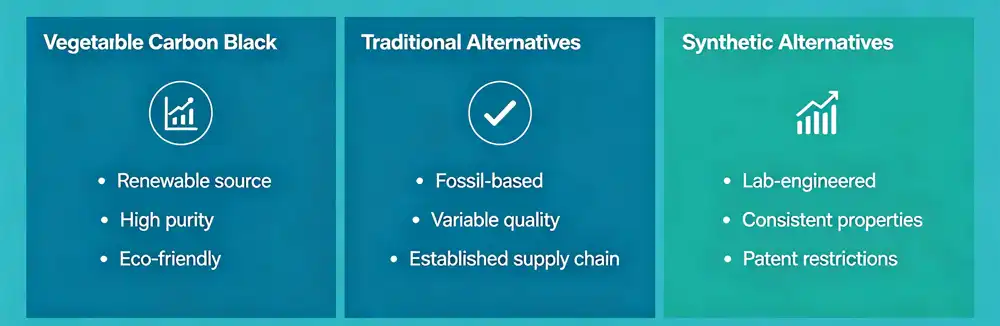
Vegetable Carbon Black vs. Traditional and Synthetic Alternatives
Knowing the competition helps procurement professionals make smart choices that meet technical needs, follow rules, and plan how to place themselves in the market.
Comparative Environmental Impact Assessment
Carbon blacks made from petroleum are used in most industries besides food. They are made when heavy petroleum products are burned incompletely. Even though these materials have some performance benefits in making plastics and rubber compounds, they are bad for the environment and make it hard for food companies to tell stories about sustainability. According to life cycle studies, the production of vegetable carbon black produces a lot less greenhouse gas emissions because it uses renewable biomass instead of fossil fuels. Different production methods also use very different amounts of water and have very different needs for treating waste water. Companies that put out yearly sustainability reports find measurable benefits in using botanical options. They back up their claims with data that has been checked by a third party and is appealing to environmentally conscious customers.
Performance Trade-offs in Specific Applications
Activated charcoal has become popular in wellness-related products that claim to have detoxifying effects in addition to their coloring function. But because it is very porous and has a lot of surface area, it can react in strange ways with other parts of the mixture, possibly absorbing flavors, vitamins, or preservatives. As a specialized colorant, vegetable carbon black works more reliably and doesn't have the functional issues that come with activated forms. In some places, synthetic iron oxide blacks are another choice, though they are not as widely accepted by regulators as carbon-based options. To figure out which of these options is best, you have to weigh performance expectations against regulatory pathways, customer perception factors, and the total cost of formulation over the lifecycle of the product.
Regulatory and Labeling Advantages
Consumer perception research constantly shows that people prefer recognizable ingredients that come from plants to synthetic alternatives or materials that come from oil. Vegetable carbon black makes label claims easier to understand—words like "vegetable carbon" or "plant-based color" tell buyers about the product's natural origins without using complicated terms that can be hard to understand. This benefit of openness is especially useful for high-end products where stories about the ingredients are what make people decide to buy them. As the demand for safer, more environmentally friendly options grows in the industry, more and more big markets are approving botanical colorants. As the market moves toward clean-label formulations, these factors become more important for companies that want to build long-term brand value.
Procurement Guide: How to Choose and Buy Vegetable Carbon Black Powder
To have a good relationship with a seller, you need to be clear about what you want, do your research, and agree on quality standards that protect the brand's reputation while lowering the total cost of ownership.
Essential Certification and Quality Standards
World-class suppliers keep a full set of certifications that show they are dedicated to quality control and food safety. The ISO 22000 certification shows that hazard analysis and critical control points (HACCP) concepts are being used in all manufacturing processes. Good Manufacturing Practice (GMP) compliance makes sure that work areas are clean enough for pharmaceutical use, which lowers the risk of contamination. Kosher and Halal certifications make it easier for goods that are aimed at certain groups of people to reach more customers. Asking for copies of certificates during the vendor qualification process is a written way to show that compliance has been met, and on-site audits make sure that real practices match up with written procedures. Every shipment should come with an analytical certificate of analysis (COA) that lists important details like the level of purity, the particle size distribution, the amount of heavy metals, the results of microbiological tests, and the analysis of any residual solvents.
Evaluating Supplier Technical Capabilities
In addition to basic certifications, the best suppliers work with you as a team and offer technical support that cuts down on the time it takes to create a product. This includes having access to application labs where problems with formulation can be fixed by following set testing procedures. Technical service teams with a lot of experience know how vegetable carbon black reacts in different types of food and can help you find the best dosage levels, dispersion methods, and processing changes to get the best results. Suppliers who put money into research and development are always making their products better by making special grades that work best for things like low-pH drinks or baking at high temperatures. By reading published technical literature, going to seminars put on by suppliers, and asking for case studies from similar applications, you can find out if possible partners have the skills your product development projects need.
Logistics and Supply Chain Considerations
Product quality isn't the only thing that determines a reliable supply chain. Correct packaging, consistent shipping, and helpful customer service are also important for smooth operations. Vegetable carbon black is usually shipped in moisture-barrier packaging that keeps the quality stable while in transit and storage. It can be shipped in small amounts for research and development (R&D) or in large numbers in fiber drums or supersacks for mass production. Lead times depend on where the supplier is located and how much they can produce. Because of this, it is important to set up clear contact channels that let you know about the status of your orders and any possible delays. Managing inventory more efficiently is helped by working with suppliers that offer flexible minimum order amounts. This is especially true when new products come out and demand forecasting is still uncertain. Being close to factories can help cut down on transportation costs and carbon emissions, but quality of the product and expert support should never be sacrificed just to save money on logistics.
Application Spotlight: Vegetable Carbon Black in Food and Beverages
Real-world examples show that paying close attention to technical details leads to successful commercial goods that meet strict manufacturing standards and make customers happy.
Beverage Formulations and Dispersion Techniques
As a result of the move toward activated charcoal drinks, there was a need for food-grade carbon pigments to color drinks black and market them as healthy. To make steady dispersions, you need to balance the particle size with hydrocolloid stabilizers that keep the mixture from settling over time. By dispersing color bases first in glycerin or propylene glycol, they become concentrated and easily mix with water when high-shear is applied. Changing the pH with citric acid or sodium citrate can change the way surface charges behave, which makes things more stable over time. Carbonated drinks add to the problems because rising bubbles create convection currents that can speed up settling if particle sizes are too big or too small. Successful recipes keep the same look from the time they are made until they are no longer good, which meets the high standards that customers expect.
Confectionery and Bakery Product Development
Vegetable carbon black is used in texture-sensitive applications where particle size directly affects taste, such as black macarons, cookies with activated charcoal, and Halloween treats. Adding the color to fat-based foods like chocolate ganache or cream sauces needs lipophilic surface treatments that help the color spread out evenly without sticking together. Baking stability makes sure that colors stay bright in the oven, so they don't get dull or brown, which takes away from their beauty. For decorative uses like edible paints and airbrush colors, the particles need to be very small so they can shoot through equipment easily and not clog nozzles. Working with suppliers who understand these details speeds up development processes and cuts down on the number of trial-and-error steps that slow down product launches.
Emerging Trends in Plant-Based Color Innovation
The market for natural food colorants is still changing because extraction methods are getting better and people are becoming more interested in botanical options. Vegetable carbon black is one example of how plant knowledge can be combined with modern production to make high-performance ingredients. New plant sources that might offer better sustainability profiles or unique functional features are still being studied. Microencapsulation technologies offer better stability and controlled release properties that could make more uses possible. Manufacturers who stay up to date on these new developments are in a good position to add next-generation ingredients that set their names apart in markets that are becoming more competitive.
Conclusion
Selecting the right vegetable carbon black powder requires evaluating multiple technical dimensions—color intensity, particle size distribution, and stability characteristics—while ensuring supplier capabilities align with your quality standards and business objectives. The advantages of plant-derived pigments extend beyond immediate functional performance, encompassing sustainability benefits and clean-label positioning that resonate with modern consumers. Successful procurement strategies balance technical specifications with regulatory compliance, supply chain reliability, and partnership value that supports innovation initiatives. As food and beverage markets continue evolving toward natural ingredients, establishing relationships with knowledgeable suppliers becomes increasingly important for maintaining competitive advantage.
FAQs
Is vegetable carbon black powder safe for direct food consumption?
Vegetable carbon black approved for food use undergoes extensive safety testing and meets international regulatory standards including FDA GRAS status and EU E153 designation. When sourced from reputable manufacturers following GMP protocols, it presents no safety concerns at approved usage levels. The natural origin and purification processes eliminate contaminants that might be present in petroleum-derived alternatives.
How does particle size affect performance in beverage applications?
Smaller particles between 0.1 and 1.0 microns provide superior suspension stability in liquid systems, preventing settling that creates uneven color distribution. Finer particles also contribute smoother mouthfeel without grittiness. However, extremely small particles may require specialized dispersion techniques and stabilizer systems to prevent reagglomeration during storage.
What typical characteristics should buyers specify when requesting quotes?
Procurement specifications should include target particle size range, purity requirements, acceptable heavy metal limits, microbiological standards, and required certifications. Requesting samples with accompanying analytical certificates allows verification that supplier capabilities match your application requirements before committing to larger purchase volumes.
Partner with Bolin Biotechnology for Premium Vegetable Carbon Black Powder
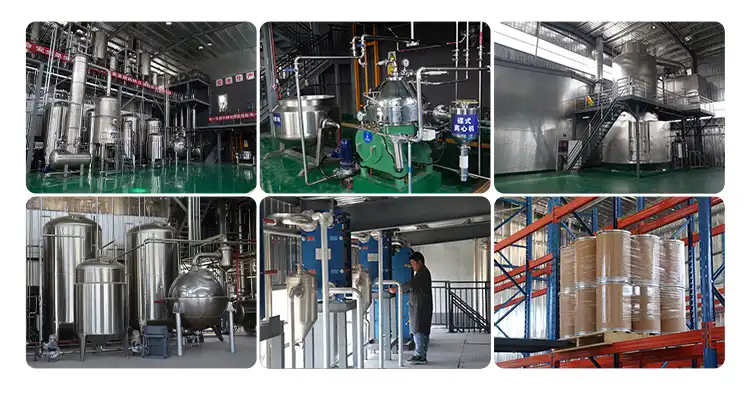
At Bolin Biotechnology, we combine over a decade of plant extract expertise with cutting-edge manufacturing capabilities to deliver vegetable carbon black powder that meets the exacting standards of global food and beverage manufacturers. Our ISO, GMP, and HACCP-certified facilities ensure consistent quality across every production batch, while our technical support team provides the formulation guidance your product development initiatives demand. Whether you need research quantities for initial trials or production-scale volumes with customized particle size specifications, we offer flexible solutions tailored to your procurement requirements. Connect with our team at sales1@bovlin.com to request samples, discuss your specific application challenges, and discover why leading brands choose Bolin Biotechnology as their trusted vegetable carbon black powder supplier.
References
Scotter, M. J. (2015). "Colour additives for foods and beverages." Woodhead Publishing Series in Food Science, Technology and Nutrition, pp. 1-48.
Sigurdson, G. T., Tang, P., & Giusti, M. M. (2017). "Natural colorants: Food colorants from natural sources." Annual Review of Food Science and Technology, 8, 261-280.
Rodriguez-Amaya, D. B. (2016). "Natural food pigments and colorants." Current Opinion in Food Science, 7, 20-26.
Downham, A., & Collins, P. (2000). "Colouring our foods in the last and next millennium." International Journal of Food Science & Technology, 35(1), 5-22.
Carle, R., & Schweiggert, R. M. (2016). "Handbook on natural pigments in food and beverages: Industrial applications for improving food color." Woodhead Publishing, pp. 385-412.
Newsome, A. G., Culver, C. A., & van Breemen, R. B. (2014). "Nature's palette: The search for natural blue colorants." Journal of Agricultural and Food Chemistry, 62(28), 6498-6511.