_1745226507162.webp)

Blue Butterfly Pea Flower Powder: Specifications and Industrial Applications
You can make blue butterfly pea flower powder from the petals of Clitoria ternatea, which is a strong plant. It gives a lot of different fields strong biological chemicals and bright natural colors. This micro-milled powder is usually dried to 5–10 micron particles using freeze-drying or spray-drying methods. It gives manufacturers a stable, anthocyanin-rich ingredient that meets high quality standards and can be used in medicines, supplements, foods, drinks, and cosmetics all over the world.
Understanding Blue Butterfly Pea Flower Powder: Specifications and Properties
Technical specifications and quality parameters that can be tested to see how well butterfly pea flower powder performs in manufacturing settings are the basis for its industrial use.
Physical Characteristics and Particle Size Distribution
There is a wide range of shades of royal blue in the best blue butterfly pea powder. Its texture is fine and even. The particle size distribution has a big impact on how well things dissolve and release colors. Industrial-grade goods can pass through 80-mesh screens 80% of the time. This uniformity makes sure that the color is spread out evenly in solids and mixed in evenly with liquids. The bulk density is generally between 0.4 and 0.6 g/mL, which changes how the substance is stored and how much is used when making a formulation. Since the powder quickly soaks up water, the moisture level must be kept below 8% so that it doesn't harden and microbes don't grow while it's being shipped and stored.
Phytochemical Profile and Bioactive Compounds
There are many anthocyanins in butterfly pea powder, mostly ternatins A through D. These are good for your health. At a wavelength of 520nm, an HPLC-UV study shows that good samples have between 15% and 25% total anthocyanins. The ORAC test generally shows 150–300 µmol Trolox equivalents per gram for these polyphenolic chemicals. They are very good antioxidants. There are also useful parts called flavonoids, which include quercetin and kaempferol derivatives. Pharmacological studies that were reviewed by experts in the field have shown that they can reduce inflammation and protect neurons. Real butterfly pea powder is different from fake colorants because it has more phytochemicals. Making things with this material does more than just make them look nice.
Quality Standards and Certification Requirements
When companies buy things, they have to follow international quality standards. These standards make sure that the goods are safe and approved by the government. Providers you can trust keep both ISO 22000 certification for managing food safety and GMP paperwork for pharmaceutical uses. The FDA says that the level of lead is below 2.0 ppm, the level of arsenic is below 1.0 ppm, and the level of mercury is below 0.1 ppm. You can't have more than 10,000 CFU/g of germs on the plate, and you can't have diseases like E. coli, Salmonella, or Staphylococcus aureus. Organic standards, such as USDA Organic or EU Organic, show that farming methods don't use pesticides. This meets the needs of health-conscious shoppers who want signs that are easy to read. A Certificate of Analysis is attached to each batch of production. This makes it possible to keep track of them, which is important for quality control and legal audits.
Regulatory Compliance Across Global Markets
If you know how rules work in different areas, you can avoid costly barriers to entry. Butterfly pea flower is GRAS (Generally Recognized as Safe) for food use in the US. This means that it can be added to drinks, sweets, and health products without first getting approval from the FDA. Novel Food Regulation (EU) 2015/2283 must be followed if you want to sell your food on European markets. However, proof of past use can help with the approval process. As per Regulation (EC) No 1223/2009, cosmetics must pass tests that prove they are safe for the skin and don't have any chemicals that make it more sensitive. For therapeutic reasons, pharmaceutical-grade butterfly pea flower powder must follow pharmacopeial guidelines and have clinical data to back up health claims. This is especially true for formulas that help the metabolism or the brain work better.
Industrial Applications of Blue Butterfly Pea Flower Powder
This botanical extract can be used in a lot of different manufacturing sectors because it has a lot of different functional features that can be used to meet different performance needs.
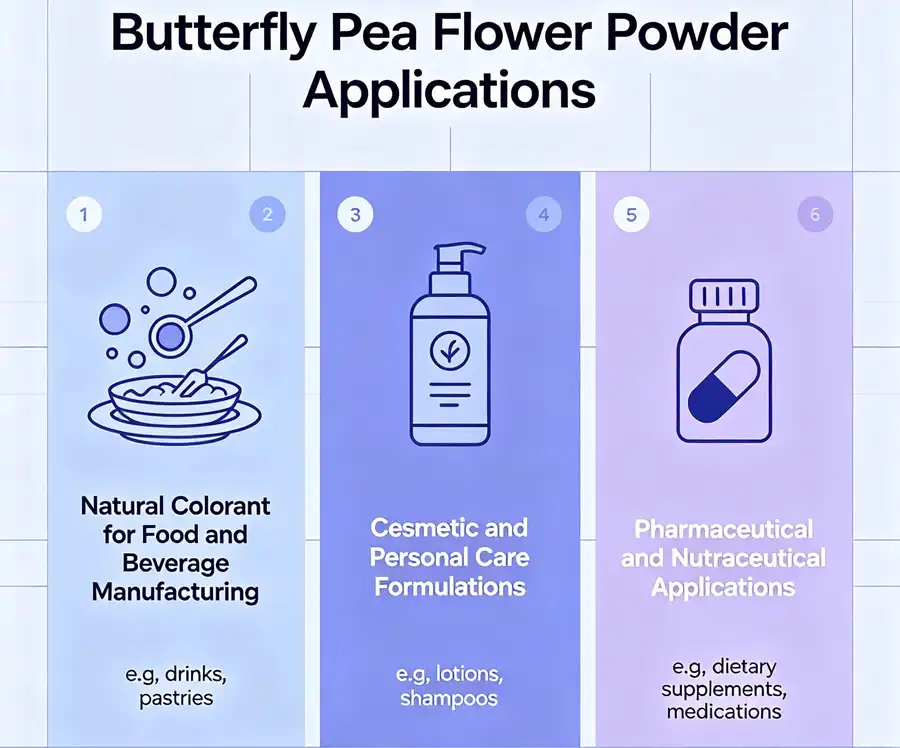
Natural Colorant for Food and Beverage Manufacturing
Butterfly pea powder is a great way for manufacturers to make eye-catching goods without adding any artificial ingredients that aren't safe for the environment. The anthocyanin pigments change color depending on the pH level. They go from a deep blue color in normal conditions to bright purple and magenta colors in acidic conditions. This color range makes it possible for dynamic drink ideas, like adding lemon juice or citric acid to make big changes to the way the drink looks. This makes it more interesting to customers and more popular on social media.
The powder is mixed into ready-to-drink teas, wellness shots, and craft cocktails at concentrations ranging from 0.05% to 0.2% w/v, based on how strong the drink is supposed to be. Because it dissolves in water, it spreads quickly without changing the texture, so it stays clear in clear uses. Heat stability up to 70°C for 30 minutes allows pasteurization methods needed for shelf-stable products, but long-term exposure to temperatures above 80°C breaks down pigments slowly. In confectionery, the powder is used to add color to marshmallows, hard sweets, and glazes without adding any other flavors. This keeps the taste profiles neutral, which is important for delicate flavor systems.
Cosmetic and Personal Care Formulations
Butterfly pea powder is becoming more popular in the skin care business because it has been shown to have anti-inflammatory and antioxidant properties that help the skin in many ways. Anthocyanin molecules fight free radicals that are made by UV light and environmental pollutants. This lowers oxidative stress, which is linked to early aging and collagen breakdown. Studies show that tyrosinase enzyme activity can be slowed down, which suggests that treatments for hyperpigmentation might help lighten the skin.
Cosmetic scientists put the extract into serums, sheet masks, and eye creams at active concentrations of 1% to 5%. They often mix it with other plants that work well together, like niacinamide or hyaluronic acid, to get even better results. In colored makeup like eyeshadows, nail polish, and hair color treatments, the natural blue pigment is used for both its function and its appearance. Aqueous solubility makes it easier to make creams and lotions that are based on water, but encapsulation technologies make systems that don't contain water more stable. Safety profiles allow leave-on applications, and dermatological testing has confirmed that the formula is gentle enough for all skin types.
Pharmaceutical and Nutraceutical Applications
Butterfly pea flower has healing properties that go beyond its usual uses. This is why pharmaceutical companies are studying how to make regular extracts of the flower that can be used in hospitals. Preclinical studies show that nootropics can improve cognitive function by blocking acetylcholinesterase. This means that memory support pills for older people may have benefits for these groups. Anxiolytic qualities shown in animal models suggest possible uses in stress management formulations. This is in line with the growing demand for natural alternatives to synthetic anxiolytics.
Nutraceutical companies make capsules, tablets, and blue butterfly pea powder blends with 300 to 500 mg of standardized extract per dose. These are often mixed with adaptogens that work well with the extract, such as ashwagandha or rhodiola. Quality control procedures make sure that the amount of anthocyanin in each batch is the same, which is important for getting the same beneficial results every time. For pharmaceutical uses, higher purity standards are needed. HPLC fingerprinting can prove that there are no impurities and that the active compound profiles match reference standards. According to ICH guidelines, stability testing shows that the shelf life usually goes up to 24 to 36 months when kept in moisture-barrier packaging below 25°C.
Comparison and Procurement Insights for B2B Buyers
For strategic sourcing to work, all product grades, supplier skills, and logistical issues that affect the total cost of ownership must be carefully considered.
Quality Differentiation: Powder Forms and Extract Ratios
Buyers come across different types of products that are set apart by how they were processed and how concentrated they are. Standard powder is made from ground whole flowers that have a natural anthocyanin content of between 0.5 and 2%. It can be used in situations where real botanical character is more important than standard strength. Through aqueous-ethanol extraction and spray-drying onto carrier matrices, concentrated extracts can reach 10:1 or 20:1 ratios. This provides higher anthocyanin densities that are needed for therapeutic formulations that need exact dosing. When choosing between organic and conventional grades, there are trade-offs between the clean label appeal and the cost of purchase. Organic approval usually commands a higher price, which is a fair price for health-conscious consumers.
Supplier Evaluation Criteria and Due Diligence
To find reliable partners, you need to look at more than just the price quotes; you also need to look at their operational skills to make sure that supply and quality are always the same. Established suppliers keep vertical integration from farming to processing, which lets you track back to specific growing areas and harvest batches. Manufacturing certifications like ISO 9001, GMP, and HACCP show that quality control is systematic, which stops contamination and makes sure that the product can be made again and again. Better suppliers stand out because they can offer technical help that includes formulation advice, stability data, and regulatory documentation that speeds up the product creation process. Before committing to commercial volumes, sample evaluation methods should include having a third-party laboratory check the specifications and make sure there are no adulterants, high anthocyanin levels, or microbial contamination.
Logistical Considerations and Supply Chain Planning
When you source butterfly pea flower powder goods from other countries, you have to think about more than just the shipping methods, paperwork, and ways to keep track of your inventory. Air freight delivers quickly, which is good for urgent orders or the launch of a new product. Ocean shipping, on the other hand, is cheaper for well-known goods that have steady demand trends. Lead times change with the seasons because of harvest cycles. In Southeast Asia, the main growing areas have the most access during the dry season. The economics of manufacturing mean that minimum order quantities usually range from 25 kg to 500 kg, based on the product grade and the level of customization needed. Strategic buyers arrange framework agreements that set stable prices and ensured allocation. This protects against supply disruptions during times of high demand or problems in agriculture that affect the availability of raw materials.
Best Practices for Using Blue Butterfly Pea Flower Powder in Industrial Settings
To get the best performance from your ingredients, you need to pay attention to how they are stored, how they are mixed, and how they are regulated throughout the whole production process.
Storage and Handling Protocols
The purity of bioactive substances is maintained and quality is not lost during storage under the right conditions. The best temperatures for storage are still between 15°C and 25°C in places that keep the humidity low, below 60%. The type of packaging has a big effect on stability. Multilayer foil pouches or HDPE containers are better at blocking light and moisture than normal polyethylene bags. When handling bulk amounts greater than 25 kg, nitrogen flushing creates modified atmospheres that slow down oxidative degradation. Handling methods for materials should limit their exposure to the environment as much as possible, and protocols for resealing items after each use should be followed to stop moisture absorption and microbial contamination.
Formulation Optimization Techniques
To get the best results, you need to know how pH changes color extraction and processing factors. When you extract something, using cold water below 60°C keeps the anthocyanin steady and the color comes out in 10 to 15 minutes. Citric acid or ascorbic acid can be used to change the pH level. This makes colors look better and kills bacteria that are in drinks to keep them fresh. Colors don't fade in harsh conditions like places with a lot of light or oxidizing agents when they are encapsulated using cyclodextrin complexation or liposomal delivery methods. Accelerated stability studies that look like real-life events should be done by formulators. During the expected shelf lives, they should check how well the color stays, how much anthocyanin is in it, and how well it resists microbes.
Safety and Regulatory Labeling Requirements
Full safety paperwork keeps worries about liability at bay and keeps market entry from being held up. The FDA says that allergen statements must show that major allergens are not present. But in some places, signs need to say that people who are very sensitive to the proteins in legumes should not eat them. Standard form for ingredients like "butterfly pea flower extract" or "Clitoria ternatea flower powder" shows how the materials were processed. Supplement fact panels need to be clear about how much anthocyanin is in a supplement in order to make structure-function claims about its antioxidant effects. It is important for cosmetic uses to follow INCI names, and the international cosmetic ingredient dictionary says that "Clitoria Ternatea Flower Extract" must be on ingredient lists.
Conclusion
Blue butterfly pea flower powder is a flexible plant ingredient that can be used in many different industries, such as the cosmetics, food, drinks, nutraceuticals, and pharmaceuticals. The ingredient fits well with clean-label reformulation trends and consumer desire for recognizable botanicals because it has natural coloration, bioactive anthocyanins, and well-documented safety profiles. For procurement to go smoothly, technical specifications, supplier skills, and regulatory compliance frameworks must all be carefully looked over to make sure quality is consistent and the market accepts the product. Strategic buyers who put an emphasis on long-term supply deals, sustainable sourcing practices, and partnerships with suppliers will gain a competitive edge as market demand grows thanks to new products and more people buying into new categories.
FAQ
When I look for blue butterfly pea flower powder, what should I look for?
Focus on consistent particle size (80 mesh or more), anthocyanin content (15–25% for concentrated extracts), moisture levels below 8%, and full microbial testing that shows total plate counts below 10,000 CFU/g with no bacteria present. Check that the levels of heavy metals are within the FDA's guidelines and ask for Certificates of Analysis that show the test results for each batch. Organic certifications help with placement with a clean label, and ISO and GMP certifications show that quality management is done in a planned way. Check to see if the supplier can provide technical help and documentation for tracking, making sure that all of your target markets follow the rules.
What is the difference between butterfly pea powder and artificial blue dyes?
Butterfly pea powder is a natural way to add color that may be better for you than manmade dyes made from petroleum, like Blue No. 1. It also has extra benefits, like being an antioxidant and possibly being good for your health. The natural pigment changes color depending on the pH level, which makes interactive experiences for customers difficult with synthetic alternatives. People choose products with clean labels because they feel good about them, and market study shows that people are willing to pay more for products with botanical ingredients they can recognize. More and more, regulations are favoring natural colorants, especially in European markets where some synthetic colors are limited.
How long does the wait time usually take, and how many items do I need to order?
Lead times vary from two to six weeks depending on the product grade and any customizations that need to be made. During harvest seasons in main growing regions, products are most readily available. For standard powder grades, minimum orders are usually between 25 and 100 kg. For specialized extracts or organic certifications, however, promises of 250 to 500 kg may be needed to cover the costs of processing. Strategic buyers arrange framework agreements that set stable prices and consistent allocation. This is especially helpful for goods whose demand patterns can be predicted. Sample sizes between 100g and 5 kg let you work on the formula and try its stability before committing to large quantities.
Partner with Bolin Biotechnology for Premium Blue Butterfly Pea Flower Powder
Bolin Biotechnology stands as your trusted blue butterfly pea flower powder supplier, delivering pharmaceutical-grade and food-grade botanical extracts meeting the most demanding industrial specifications. Our vertically integrated operations ensure complete traceability from cultivation through final processing, backed by comprehensive certifications including ISO 22000, GMP, and USDA Organic. With over a decade of experience serving global nutraceutical, pharmaceutical, and food manufacturers, we provide not just ingredients but complete technical support throughout your product development journey. Our blue butterfly pea flower powder for sale features standardized anthocyanin content, rigorous quality testing, and flexible MOQ options accommodating both R&D trials and commercial-scale production. Contact our technical team at sales1@bovlin.com to discuss your specific formulation requirements and receive customized samples demonstrating the superior quality that distinguishes Bolin Biotechnology in the competitive botanical extract marketplace.
References
Nair, V., Bang, W. Y., Schreckinger, E., Andarwulan, N., & Cisneros-Zevallos, L. (2015). Protective role of ternatin anthocyanins and quercetin glycosides from butterfly pea (Clitoria ternatea Leguminosae) blue flower petals against lipopolysaccharide (LPS)-induced inflammation in macrophage cells. Journal of Agricultural and Food Chemistry, 63(28), 6355-6365.
Chusak, C., Thilavech, T., Henry, C. J., & Adisakwattana, S. (2018). Acute effect of Clitoria ternatea flower beverage on glycemic response and antioxidant capacity in healthy subjects: A randomized crossover trial. BMC Complementary and Alternative Medicine, 18(1), 6-14.
Jeyaraj, E. J., Lim, Y. Y., & Choo, W. S. (2021). Extraction methods of butterfly pea (Clitoria ternatea) flower and biological activities of its phytochemicals. Journal of Food Science and Technology, 58(6), 2054-2067.
Oguis, G. K., Gilding, E. K., Jackson, M. A., & Craik, D. J. (2019). Butterfly pea (Clitoria ternatea), a cyclotide-bearing plant with applications in agriculture and medicine. Frontiers in Plant Science, 10, 645-658.
Damar, V. G., & Syah, D. (2020). Stability of anthocyanin extract from butterfly pea (Clitoria ternatea L.) flowers under various pH and temperatures. IOP Conference Series: Earth and Environmental Science, 443(1), 012074.
Lakshan, S. A., Jayanath, N. Y., Abeysekera, W. P., & Abeysekera, W. K. (2019). A commercial potential of butterfly pea (Clitoria ternatea L.) in health and food applications. Pakistan Journal of Nutrition, 18(7), 613-623.