How to Source Pure Rutin Powder from a Reliable Manufacturer
Sourcing pure rutin powder for B2B applications requires a disciplined approach. This bioflavonoid extract — derived from Sophora japonica flower buds — carries CAS No. 153-18-4 and is widely known as Rutin NF11. At ≥95% purity (HPLC-verified), it serves cardiovascular supplements, antioxidant skincare, functional foods, and pharmaceutical intermediates. Yet not every supplier delivers what their spec sheet promises. This guide walks procurement managers and formulation buyers through each stage of the sourcing process, from understanding the ingredient to building a long-term supply relationship with a manufacturer you can trust.
Understanding Pure Rutin Powder and Its Market Importance
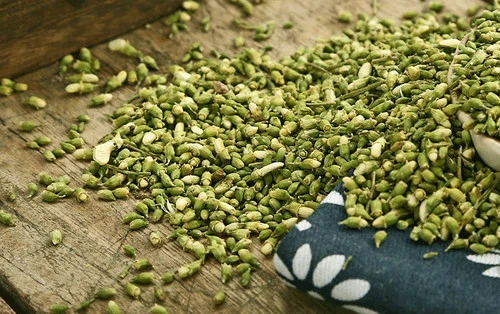
This plant's dried buds have a lot of rutin, which is a flavonoid glycoside with the formula C₂₇H₀₀O₁₆ and a molecular weight of 610.52 g/mol. There is also some of it in buckwheat, but for pharmaceutical-grade preparation, the Sophora source is the most reliable.
What Sets It Apart from Related Flavonoids
Because all three are flavonoids, rutin is often mixed up with hesperidin and quercetin. Formulators care about the difference: hesperidin comes from citrus fruits and works on similar blood vessel routes, while quercetin is the aglycone backbone of rutin. Pure rutin powder is the best starting material when making Troxerutin products or when combining with Vitamin C because of its unique solubility and absorption profile.
Why the Market Demands High-Purity Grades
A review released in 2021 in Frontiers in Pharmacology confirmed that rutin can lower capillary permeability and support venous tone. This is the scientific reason why it is used in products for chronic venous insufficiency. As US and EU regulators make it harder to back up label claims, formulators are requiring more and more ≥95% HPLC purity to meet the requirements of clinical studies and protect their product labels.
Application Scope Across Industries
The ingredient is useful in four main areas. It supports heart and vein health pill mixes in nutraceuticals. It gets rid of superoxide in anti-aging and skin-brightening serums used in makeup. It makes antioxidant drink lines stronger in functional beverages. Researchers in the pharmaceutical field use it as a starting point to make semi-synthetic flavonoid drugs.
Identifying Challenges in Sourcing Pure Rutin Powder
A big chunk of the plant extract market is made up of products that don't meet the stated specifications. Buyers can make better selection processes when they know where the risks are centered.
Purity Inconsistency and Adulteration
To meet weight goals and save money, some lower-tier providers mix rutin with starch fillers or related glycosides. So, the COA reads 95% but fails a second test in-house using HPLC. Batch-to-batch drift, which can happen even within the same seller, is another problem that has been shown to make final product label claims less reliable.
Heavy Metal and Contamination Risk
Because the buds of Sophora japonica pick up heavy metals from the soil, the process of extracting and refining them must actively lower the heavy metal load. 10 parts per million (ppm) of total heavy metals is the standard for responsible manufacturing. Buyers who want to sell in the US or EU should also ask for pesticide residue screening data, since 21 CFR and REACH legal limits are regularly checked.
|
Items |
Technical requirements |
Results |
|
Rutin |
≥95.0% |
95.12% |
|
Physicochemical Control |
||
|
Appearance |
Fine powder |
Complies |
|
Color |
Yellow-green |
Complies |
|
Odor & Taste |
Characteristic |
Complies |
|
Loss on Drying |
≤9.0% |
7.20% |
|
Ash |
≤5.0% |
0.06% |
|
Particle Size |
95% pass 80 mesh |
Complies |
|
Heavy Metals |
||
|
Heavy Metals |
≤10ppm |
Complies |
|
Pb |
≤2.0ppm |
0.03ppm |
|
As |
≤2.0ppm |
0.19ppm |
|
Hg |
≤1.0ppm |
0.03ppm |
|
Microbiological Control |
||
|
Total Plate Count |
<1000CFU/g |
Complies |
|
Yeast |
<100CFU/g |
Complies |
|
E. Coli |
Negative |
Complies |
|
Salmonella |
Negative |
Complies |
|
Conclusion |
Complies with the specifications. |
|
Supplier Credibility and Documentation Gaps
Getting documentation that isn't complete or can't be trusted is a common problem for procurement teams. There is a risk when there aren't any clear HPLC chromatograms on the certificates of analysis, when lots can't be tracked, or when third-party test reports can't be cross-referenced. Buyers should insist on paperwork that meets the minimum requirements set by ISO 9001 and ISO 22000 certifications and SGS third-party testing.
Key Criteria to Evaluate When Choosing a Rutin Supplier
There is more to checking out a pure rutin powder supplier than just looking at a spec sheet. The following factors give us an organized way to evaluate.
Quality Specifications and Testing Transparency
Get started with the numbers. Professional buyers look for something that is pure (≥95% by HPLC), doesn't lose much when it dries (≤5.0%), has particles that are 95% of the size of an 80-mesh screen, doesn't have more than 10 parts per million of heavy metals, and doesn't dissolve completely in water or ethanol. Not just the numerical result, but also the actual HPLC chromatogram. If you trust a seller, they will gladly share raw analysis data with you.
Certifications and Third-Party Verification
ISO 9001 is about quality management systems, and ISO 22000 is about food safety management. Both of these standards apply to nutraceutical-grade material. There is an extra level of confidence that comes from SGS third-party testing that internal quality control alone can't give. For buyers who want to sell in the US, another checkpoint is to make sure that the documentation meets USP or NF11 standards.
MOQ, Sample Policy, and Lead Time
A seller who is sure of the quality of their goods will accept a 1 kg sample order. Low MOQ entry points lower the risk of losing money on the first qualification. Also, find out if the item is in stock. One of the most annoying things that can happen in the supply chain for botanical ingredients is changes in lead time. That's why it's important to talk about production schedules and stock store capacity right away.
Step-by-Step Guide to Sourcing Rutin Powder from a Manufacturer
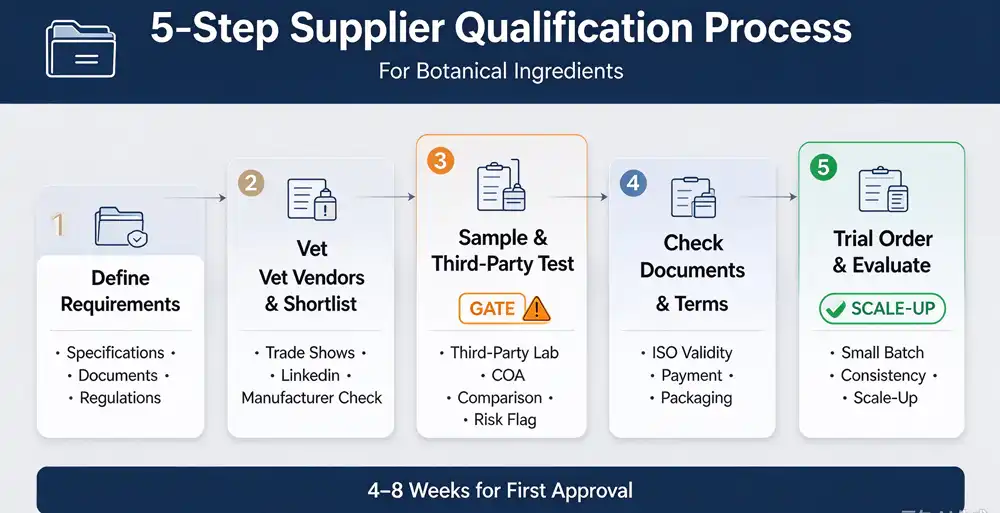
This is a useful five-step process that procurement managers and R&D buyers often use to check out a new botanical ingredient supplier.
Step 1: Write down your requirements. Before you contact any suppliers, write down the purity grade, particle size, heavy metal limits, necessary documents (COA, TDS, MSDS), and any market-specific regulatory requirements. This stops negotiations from going off track.
Step 2: Look into vendors and make a short list.**Look through source databases, lists of trade show exhibitors (like SupplySide West and Vitafoods), and LinkedIn as well. Compare company profiles to their official websites to see if they are actually manufacturers or if they are only trading.
Step 3: Ask for examples and test them on your own. Order a 1 kg sample and send it to a third-party lab that has been approved by the government for HPLC purity, heavy metal, or bacterial tests. Check the results against the COA from the supplier. Differences at this point are a warning to not qualify.
Step 4: Check the paperwork and talk about the terms.**Check all quality papers, make sure all ISO certifications are up-to-date, and make sure you understand the trade terms (including Incoterms, payment, and packing). For light-sensitive plant pure rutin powder s like rutin, foil bags and fiber drums should be standard.
Step 5: Put in a trial order and get to know each other.**A first purchase of a small amount, even if it's only a few kilograms, sets a transactional baseline. Use this order to test how quickly you respond, how accurately you ship, and how consistent your COA is. The sign to scale volume is a consistent experience across two or three orders.
This process usually takes four to eight weeks for the first approval cycle, which is about the same amount of time that it takes to buy ingredients in the nutrition and cosmetics industries.
Working with Established Manufacturers: What It Changes
When buyers switch from trading companies to direct makers, they often say that the quality of the paperwork and consistency of the batches are better. When a producer manages the whole process of extracting cannabis from raw Sophora japonica buds, from crystallization to drying, they can keep process controls tighter than a reseller who gets their cannabis from different places.
Batch Consistency Supports Label Stability
For a finished supplement with a labeled amount of rutin, like 500 mg per capsule, differences in purity from batch to batch have a direct effect on whether that claim is true. When a producer uses the ISO 22000 and ISO 9001 methods, they keep track of in-process rules that a distributor can't do.
Regulatory Support Reduces Buyer Workload
Established companies keep libraries of paperwork, like COAs, MSDSs, allergen declarations, and country-of-origin certificates, that buyers can use in their regulatory submissions. This is important for goods going into the US dietary supplement market under DSHEA, because GMP compliance requires ingredient paperwork lines.
Scalability Without Quality Trade-Offs
When a brand starts with a 1 kg sample and then orders several kilograms every month, they need a supplier whose quality controls don't get worse as the order size goes up. Direct producers with dedicated production lines for standard botanical extracts are better able to keep that consistency than middlemen who are in charge of handling multiple sources.
Conclusion
It's not hard to find a pure rutin ingredient, pure rutin powder, once you know what to look for. Make your requirements clear, ask for samples before committing to a large order, and have independent testing done to make sure the paperwork is correct. Give more weight to suppliers who have verifiable ISO certifications, SGS third-party reports, and are willing to help your qualification process at a low MOQ. These steps will protect your ingredients, the promises on the label, and finally your buyers.
FAQ
1. What purity level should I specify for nutraceutical applications?
The market norm for dietary supplements and heart health goods is ≥95% purity by HPLC. This grade is the same as the concentration levels used in published clinical studies, and it backs up label claims in the US and EU.
2. How do I verify a COA is authentic?
Ask for both the COA report and the raw HPLC chromatogram. Check the batch number against the test date. You can also send the same batch to a separate, approved lab and compare the results. If the provider is trustworthy, they will not object to third-party tests.
3. Is rutin powder safe for cosmetic formulations?
Yes. At the levels that are usually found in topical products (0.1% to 1.0%), rutin is thought to be a low-risk ingredient. High-purity grades (>95%) usually don't contain any plant proteins that could cause allergies, so they can be used with claims that a formulation is hypoallergenic.
4. What is the shelf life and storage requirement?
The powder of rutin can handle heat, but it doesn't like light. Keep in a cool, dry place in double-lined plastic bags that won't let light through, inside fiber drums. As long as the right conditions are met, the shelf life is 24 months.
5. What is the difference between NF11 and DAB10 grades?
NF11 is the standard for the US National Formulary, and DAB10 is the standard for the German Pharmacopeia. For some physical parameters, DAB10 sets stricter thresholds. Match the grade to the rules in the place where your product will be sold.
Partner with Bolin Biotechnology for Certified Rutin NF1
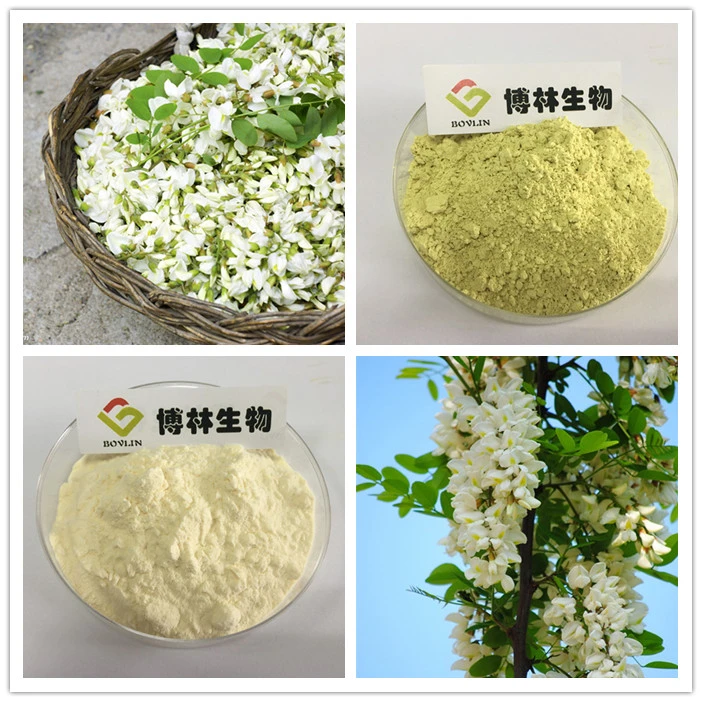
Shaanxi Bolin Biotechnology was founded in 2012 and makes Rutin NF11 (CAS 153-18-4) that is ≥95% pure by HPLC. It gets its materials directly from Sophora japonica and is tested by SGS as part of the ISO 9001 and ISO 22000 quality systems. As a reliable source of pure rutin powder, we offer a 1 kg MOQ that comes with a batch COA, which makes qualification easy. Email us at sales1@bovlin.com to get a sample or talk about your product needs right away.
References
1. Ganeshpurkar, A., & Saluja, A. K. (2017). The Pharmacological Potential of Rutin. Saudi Pharmaceutical Journal, 25(2), 149–164.
2. Shen, Y., et al. (2021). Rutin: A Promising Flavonoid with Multiple Pharmacological Activities. Frontiers in Pharmacology, 12, 647378.
3. United States Pharmacopeia. (2023). USP–NF Monograph: Rutin. United States Pharmacopeial Convention.
4. European Pharmacopoeia Commission. (2022). European Pharmacopoeia, 10th Edition: Rutin Monograph. Council of Europe.
5. Hollman, P. C. H., & Katan, M. B. (1999). Dietary Flavonoids: Intake, Health Effects and Bioavailability. Food and Chemical Toxicology, 37(9–10), 937–942.
6. Grand View Research. (2023). Flavonoids Market Size, Share & Trends Analysis Report, 2023–2030. Grand View Research, Inc.