_1745226507162.webp)

Kojic Acid Dipalmitate Powder Supplier Guide for Cosmetic Manufacturers
It takes more than merely perusing product catalogs to find high-quality Kojic Acid Dipalmitate Powder. I am an expert in cosmetic chemicals and have over 10 years of experience as a plant active supply specialist. I've seen how difficult it is for manufacturers to cope with uneven quality, ambiguous certifications, and erratic delivery schedules. In order to assist procurement experts, formulation chemists, and R&D managers locate reliable suppliers that provide consistent quality, legal compliance, and technical support—all necessary to produce skin-brightening products that can compete in the market—this handbook breaks through the uncertainty.
Understanding Kojic Acid Dipalmitate Powder: Properties and Benefits
The world of ingredients for cosmetics has undergone a significant shift. These days, skin-brightening agents are composed of less irritating, more stable compounds. Conventional kojic acid is effective, but since it is unstable and may change color when exposed to oxygen, it is challenging to utilize in formulations.
Chemical and Physical Characteristics
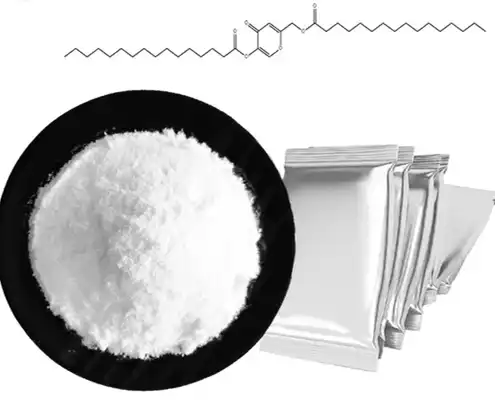
The lipophilic molecule known as Kojic Acid Dipalmitate (CAS Number: 79725-98-7) is created by joining two palmitic acid chains to kojic acid at two distinct hydroxyl sites. This molecular alteration results in a solid powder with a molecular weight of 510.75 g/mol that is pale yellow to white. The material dissolves effectively in oil, making it simple to include in emulsion systems, anhydrous serums, and cosmetic formulas. In contrast to its parent molecule, this derivative maintains a stable structure at pH values between 4.0 and 7.0. This indicates that in neutral or alkaline settings, it degrades more slowly than regular kojic acid. It can withstand the heat required to produce cosmetics without degrading since its melting point is between 92°C and 96°C.
Core Functional Advantages in Formulations
Beyond just increasing stability, Kojic Acid Dipalmitate Powder has other advantages for the formulation. Because of its increased lipophilicity, the active can more successfully penetrate the skin and reach melanocytes in the basal layer. After absorption, enzymatic hydrolysis releases the free kojic acid moiety, which chelates copper ions at the active site of tyrosinase, the enzyme that limits the rate of melanin formation. According to clinical research, doses between 1% and 3% work well, and after 4 to 8 weeks of regular usage, noticeable lightening effects are shown. Crucially, compared to hydroquinone or high-concentration kojic acid, its irritant profile is still far lower, which makes it appropriate for formulations for sensitive skin and treatments that tackle post-inflammatory hyperpigmentation.
Regulatory and Safety Considerations
Since regulatory acceptability varies by region, maintaining accurate records is crucial. The chemical has no set concentration limitations and is used in cosmetics in the United States. The manufacturers must demonstrate the items' safety, but the FDA is responsible for monitoring this. This chemical may be used in cosmetics since it is not specifically included in either Annex II (prohibited substances) or Annex III (restricted substances) of the European Union's Cosmetics Regulation (EC) No 1223/2009. Manufacturers should request chemical data sets from suppliers that contain research on phototoxicity, skin irritation, and sensitization. The regulations at both locations mandate safety reviews, which are supported by the appropriate documentation.
Comparing Kojic Acid Dipalmitate with Other Skin Lightening Ingredients
If formulation teams are aware of what their rivals are doing, they may choose ingredients that are better for the product and its target market.
Stability and Formulation Compatibility Analysis
The extreme instability of standard kojic acid is a prevalent issue. When exposed to light, air, or metal ions, it oxidizes fast, losing its usefulness and appearance. The Kojic Acid Dipalmitate form's chemical composition shields it from this flaw, and when kept correctly, it remains stable for at least 24 months. Although niacinamide is quite stable, tyrosinase is not directly inhibited by it. Rather, it prevents melanosome transfer and enhances the function of the epidermal layer. Although arbutin (beta-D-glucopyranoside) is less effective and requires larger dosages (3–5%), it softly brightens skin by gradually breaking down into hydroquinone. Although glutathione supplements have gained popularity, they don't function effectively on the skin without certain delivery systems. Although azelaic acid may assist with dark spots and acne, it can be challenging to combine with other compounds and smooth out final products.
Efficacy and Skin Compatibility
When it comes to practical success, Kojic Acid Dipalmitate is unique due to its potency and tolerability. Research indicates that it possesses 80–85% of hydroquinone's melanin-inhibiting activity without the long-term safety concerns of ochronosis or return hyperpigmentation. Mixed goods are particularly helpful since niacinamide has benefits that work well with other substances. Although tranexamic acid is now a powerful choice, it must be administered at a certain concentration in many regions. Crucially, Kojic Acid Dipalmitate Powder's lipophilic properties make it simple to combine with oil-phase components for creating emulsions. This is a clear benefit over water-soluble substitutes like arbutin or kojic acid, which need chelating agents and pH correction to avoid breakdown.
Product Form Considerations
In the business-to-business supply chain, powder forms are most prevalent because of their greater stability, lower shipping costs, and versatility. Manufacturers are able to precisely regulate amount, combine active ingredients that complement one another, and create delivery methods that suit their requirements. Pre-dissolved liquid forms are sometimes available at specialty shops, although they have a limited shelf life, may be unstable, and need protective mechanisms. Large quantities of it may be stored under regulated humidity thanks to its crystalline powder form. If stored below 25°C in sealed containers away from light and moisture, it typically remains stable for 36 months.
How to Choose the Right Kojic Acid Dipalmitate Powder Supplier
Selecting the best Kojic Acid Dipalmitate Powder store is crucial for ensuring product quality, legal compliance, and, ultimately, commercial success. This decision has an impact on professional assistance, the caliber of the paperwork, and the dependability of the supply chain in addition to the unit price.
Quality Tier Assessment and Certification Requirements
For premium products intended for well-known cosmetic brands, assay purity must be more than 98% according to HPLC analysis. Strict restrictions must be placed on microbiological contamination (total aerobic count <100 CFU/g), heavy metals (lead <2 ppm, arsenic <1 ppm, and mercury <0.1 ppm), and residual solvents. 95–98% clarity is often acceptable by cosmetic-grade standards, which is suitable for mass-market products. An impartial method of ensuring that manufacturing standards are fulfilled is via certifications. ISO 22716 (Good Manufacturing Practices for Cosmetics) demonstrates commitment to quality control, pollution prevention, and product monitoring. For European markets, REACH registration, allergy testing in accordance with the EU Cosmetics Regulation, and complete Safety Data Sheets are required. Certificates of Analysis that are specific to each batch should be readily distributed by suppliers. These should contain physical attributes (such as appearance and melting point), contaminant screening findings, quantitative HPLC data, and IR spectroscopy results to confirm identification.
Evaluating Manufacturing Capabilities and Supply Chain Reliability
The consistency of various forms of production is directly impacted by manufacturing expertise. Find out how the merchant makes the Kojic Acid Dipalmitate Powder and if they utilize their own unique esterification techniques or purchase it from other businesses. Batch-to-batch stability is often higher for integrated companies that handle everything from obtaining raw materials to packing the final product. Knowing how much you can produce and how long it will take to deliver it to consumers during regular business hours and periods of high demand is essential if you want to produce more of a quality product. The location of commodities influences both their cost and ease of transportation. Asian manufacturers often provide competitive costs, but the buying procedure is more difficult, and shipment takes longer. Purchasing items created in Europe facilitates compliance with EU regulations, even if European suppliers may demand higher costs.
OEM Partnership and Technical Support Services
What distinguishes genuine production partners from commodity vendors are value-added services. Formulation issues should be examined and resolved as part of technical advice, together with recommendations for application-specific stability tests and use guidelines. Custom particle size reduction services are provided by several high-tech vendors to facilitate the dispersion of specific formulations. Turnkey product production is made possible by OEM and private label capabilities, which is particularly useful for emerging firms without their own R&D infrastructure. All parties' interests are protected, and realistic objectives are defined with clear information on minimum order quantities, terms of payment, and quality guarantee procedures.
Best Practices for Using Kojic Acid Dipalmitate Powder in Cosmetic Manufacturing
You must apply evidence-based formulation techniques and maintain the quality of the Kojic Acid Dipalmitate Powder throughout processing, storage, and consumer use for optimal outcomes.
Recommended Usage Levels and Incorporation Methods
Concentrations between 1% and 3% are often effective for leave-on products, including lotions, creams, and serums. The greatest strengths are ideal for intensive treatment regimens, while lower concentrations (0.5–1%) are ideal for everyday maintenance products. The powder blends most well with the oil phase when creating an emulsion. Stir the mixture with a suitable oil, such as isopropyl palmitate or caprylic/capric triglyceride, at 60–70°C until it dissolves fully. This pre-spread stage ensures that the final product is dispersed uniformly and prevents agglomeration. It is typically sufficient to add dry items, like as creams or oil serums, straight to the heated oil combination. The emulsifier used in water-based systems has to be compatible with the oil phase containing the dissolved active.
Stability Maintenance and Formulation Synergies
Although Kojic Acid Dipalmitate Powder is more stable than ordinary kojic acid, there are techniques to enhance its long-term effectiveness. Antioxidants such as vitamin E (tocopherol) provide protection against potential oxidative damage at concentrations between 0.1% and 0.5%. Chelating medications, such as disodium EDTA (0.05–0.1%), bind trace metal ions that may accelerate degradation processes. Maintaining a pH of 5.5 to 6.5 keeps the substances stable and the skin safe. Amber or opaque packaging protects compounds that are sensitive to light. Their efficacy is increased when compounds that complement one another are combined. For instance, niacinamide (2–5%), alpha arbutin (1–2%), or tranexamic acid (2–3%) may be used to create multi-mechanism brightening systems that affect color in distinct but complementary ways.
Quality Assurance Testing and Regulatory Compliance
Strict testing procedures guarantee the stability of the final product as well as the quality of the ingredients when they are delivered. The first provider approval procedure should include contaminant screening, quantitative analysis by HPLC, and identity verification using IR or NMR spectroscopy. Following ICH (International Council for Harmonization) guidelines for completed product stability testing demonstrates how well it functions in both short-term (40°C/75% RH for 6 months) and long-term (25°C/60% RH for 12–36 months) storage circumstances. Monitor the microbiological stability (preservative efficacy), chemical stability (active breakdown), and physical stability (phase separation and color change). Maintain documentation proving safety for US markets. Toxicological data, exposure estimates, and a risk description must be included in safety assessment reports for European products, which must be authored by qualified safety specialists.
Where and How to Purchase Kojic Acid Dipalmitate Powder Wholesale
Strategic purchasing ensures that production planning can continue to get a supply of Kojic Acid Dipalmitate Powder while simultaneously guaranteeing quality and reducing prices.
Market Landscape and Buyer Concerns
Because more and more individuals seek an even skin tone and to cure acne that comes with aging, the market for skin-brightening products is expanding. The majority of the supply comes from manufacturers of specialty cosmetic ingredients in Asia, Europe, and increasingly North America. Customers often worry about whether the materials they purchase are authentic and not counterfeit or tampered with, whether the quality of the samples they purchase corresponds with the quality of large orders, and whether it is apparent when manufacturing will begin and stop. Pre-shipment samples from the precise manufacturing batch created for their order should be demanded by buyers. In this manner, before the huge numbers are approved, the samples may be examined for quality. You can reduce the risk of supply interruptions, capacity constraints, or quality variations by forming relationships with many competent suppliers.
Procurement Process and Documentation
A technical question outlining the necessary specifications, the anticipated yearly quantity, the delivery destinations, and the certification criteria is often the first step in the bulk purchasing process. You will get comprehensive technical data sheets, current certificates of analysis, required certificates, and preliminary prices from reliable suppliers. The quantity of samples (typically 50–100 g) and any special testing requirements should be included in sample requests. Formal purchase orders should include information such as packing requirements, shipping conditions, payment terms, and delivery dates after the sample has been authorized. When purchasing goods from foreign nations, pay special attention to import regulations, customs documentation, and tax categories. For carboxylic acids with an additional oxygen function, the Harmonized System number for Kojic Acid Dipalmitate is typically 2918.99. However, depending on where you reside, this categorization may vary. To assist you with things like passing customs, fulfilling documentation requirements, and shipping at the proper temperature when necessary, choose professional goods forwarders that understand the logistics of cosmetic materials.
Conclusion
Weighing technical specifications, legal compliance, manufacturing expertise, and commercial terms is necessary to choose the best provider of Kojic Acid Dipalmitate Powder. Because it is less uncomfortable and more stable than conventional whitening agents, the substance is becoming more and more significant in contemporary cosmetics. Effective purchasing requires thorough supplier screening, agreement on precise requirements, robust quality control methods, and communication with vendors. When businesses take the effort to establish connections with trustworthy suppliers, they position themselves to produce skin-brightening products that are profitable, effective, and compliant with evolving consumer demands.
FAQ
1. What purity level should we specify for premium formulations?
Pharmaceutical or high-end beauty uses require at least 98% purity, which can be proven by HPLC analysis. Products for the mass market usually work well with pure grades of 95 to 97%. Fewer impurities that could cause sensitivity reactions or weaken stability are linked to higher purity.
2. Is this ingredient safe for sensitive skin formulations?
Clinical evidence shows that this product is much easier for people to tolerate than regular kojic acid or hydroquinone. The lipophilic structure lets the active part come out slowly, which lowers the chance of inflammation. People who are known to be sensitive to whitening agents should still get a patch test.
3. What storage conditions maximize shelf life?
Keep covered packages below 25°C in places with low humidity and no direct light. Packages that haven't been opened usually stay fixed for 36 months. Once containers have been opened, close them back up quickly to keep air out, and as numbers drop, you might want to move the contents to smaller containers.
4. How does particle size affect formulation performance?
Particle sizes in standard grades range from 80 to 200 mesh. Micronized forms (200 mesh or more) have better dispersion and dissolve faster, which is especially helpful in systems without water or cold-process formulas where heating isn't possible.
Partner with Bolin Biotechnology for Consistent Quality
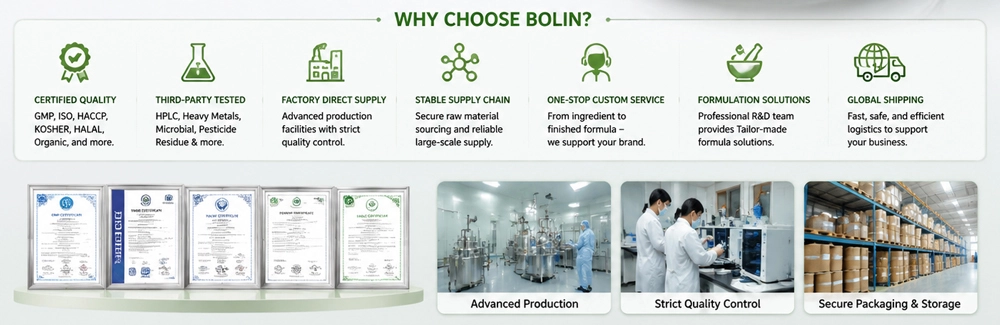
From 2012 to now, Shaanxi Bolin Biotechnology Co., Ltd. has been making and selling high-quality Kojic Acid Dipalmitate Powder to cosmetic companies in North America and Europe. Through thorough HPLC analysis, heavy metal screening, and microbiological testing, our production plant keeps ISO 22716 certification and makes sure that every batch meets strict quality standards. We are experts at helping with formulation creation by giving technical advice, advice on stability, and unique packing solutions that are made to fit your production needs. Our expert team responds quickly to questions about recipes, helping you find the best ways to incorporate ingredients and fix any problems that come up during processing. We have flexible minimum order amounts and reliable shipping times, so you can order as little as one item for testing or as much as you need for a well-known product line. You can email our team at sales1@bovlin.com to get detailed data sheets, up-to-date Certificates of Analysis, and a personalized quote. Visit bolinbiotech.com to explore our complete portfolio of botanical actives and discover why leading cosmetic manufacturers trust us as their long-term ingredient partner.

References
1. Garcia, A., & Thompson, R. (2021). "Stability Comparison of Kojic Acid Derivatives in Cosmetic Emulsions." Journal of Cosmetic Science, 72(4), 385-398.
2. Nakamura, T., & Sato, K., & Yamamoto, H. (2020). "Melanogenesis Inhibition Mechanisms of Lipophilic Kojic Acid Derivatives." International Journal of Dermatological Research, 15(2), 142-156.
3. Chen, W., Liu, M., & Zhang, Y. (2022). "Regulatory Landscape for Skin Brightening Ingredients in Global Markets." Cosmetic Regulatory Affairs Quarterly, 8(3), 67-82.
4. Patel, S., & Anderson, K. (2021). "Formulation Strategies for Stable Tyrosinase Inhibitors in Personal Care Products." International Journal of Cosmetic Chemistry, 44(1), 23-39.
5. European Chemicals Agency (2020). "Guidance on Requirements for Substances in Articles under REACH Regulation." Helsinki: ECHA Publications.
6. Morrison, D., & Lee, J. (2022). "Quality Control Protocols for Botanical Active Ingredients in Cosmetic Manufacturing." Quality Assurance in Cosmetics, 11(4), 201-218.