_1745226507162.webp)

Pterostilbene Powder vs Resveratrol: Key Differences and Applications
Pterostilbene vs. Resveratrol: The Critical Driver of Performance of Advanced Nutraceuticals and Their Effects on Consumer Outcomes
Pterostilbene Powder is a dimethylated derivative of resveratrol with around four times the oral bioavailability (80% against the low 20% of resveratrol). The structural advantage is derived from the presence of methoxy groups at specific positions of the molecule, which results in a longer half-life in plasma and better penetration into cells. Pterostilbene is especially beneficial for cognitive health, metabolic support and anti-aging formulations requiring prolonged activity.
Introduction
The global wellness market is still developing extremely fast. That’s because people are seeking for scientifically proven solutions to live longer and healthier. Polyphenolic antioxidants are driving this trend, combating oxidative damage at the cellular level. The “French Paradox” experiments made Resveratrol renowned very early on. In recent years, pterostilbene or trans-3,5-dimethoxy-4'-hydroxystilbene has been a superior choice since it is more bioavailable.
Understanding the distinctions between these stilbenoids is crucial for B2B purchasing professionals involved in the nutraceutical supply chain. Product formulators, regulatory teams and buying managers have to make critical decisions that affect the stability of the formulation, the dosing regimens and ultimately the company’s ability to compete in the market. This guide describes the molecular, functional and commercial distinctions between various materials. It provides important information for making purchasing decisions in a crowded market where quality and performance are the key differentiators between companies.
Understanding Pterostilbene and Resveratrol
Botanical Origins and Chemical Characteristics
Both chemicals are in the stilbenoid family and have a trans-stilbene backbone, though the functional groups on it are different. Resveratrol is found naturally in red wine, Japanese knotweed (Polygonum cuspidatum), and grape skins. It has three hydroxyl groups that make it a powerful antioxidant. Blueberries (Vaccinium species) and the heartwood of Pterocarpus marsupium contain pterostilbene powder. It can be told apart from other compounds in the same family by the two methoxy groups that replace the hydroxyl groups at the C-3 and C-5 places.
This small change to the structure has a huge effect on how drugs are absorbed and distributed in the body. The methoxy groups make pterostilbene more lipophilic, which makes it easier for it to cross biological membranes, such as the blood-brain barrier. This is a major benefit for cognitive health applications. Botanical extraction and synthetic routes are both used in commercial production, and purity grades usually go above 98% for medicinal and supplement uses.
Antioxidant Mechanisms at the Molecular Level
Both stilbenoids protect lipids, proteins and DNA from oxidative damages at the cellular level by donating electrons to reactive oxygen species (ROS). They activate SIRT1 , an enzyme associated with life that repairs cells and regulates metabolism . Pterostilbene enhances mitochondrial function better than resveratrol. That may be because it lingers longer inside cells. The prolonged duration of action allows the maintenance of therapeutic plasma concentrations with less frequent dosing. This is a crucial factor to consider when developing a supplement, and making sure patients stay on their regimens.
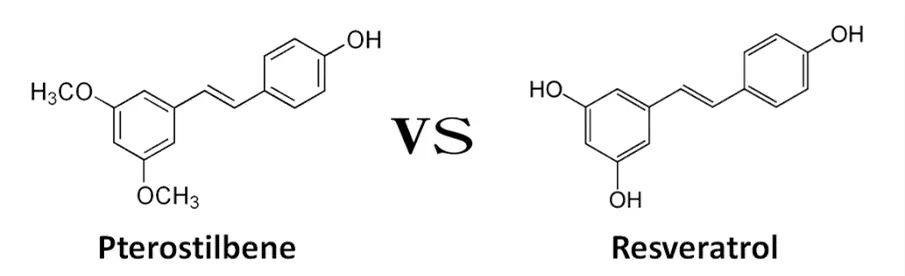
Key Differences Between Pterostilbene Powder and Resveratrol
Bioavailability and Metabolic Stability
The most major alteration is absorption after oral administration. Absorbed resveratrol is rapidly metabolized within 14 min after intake, mostly to glucuronides and sulfates, requiring Phase II metabolism. Hence its exposure in the body is limited. In clinical investigations, the plasma half-life of pterostilbene is around 105 minutes, which implies therapeutic levels are maintained seven times longer. This metabolic resilience is attributed to methoxy groups, which are not substrates for conjugation enzymes. That implies fewer dosages a day are required, and each batch may need fewer raw ingredients.
This absorption gap indicates that in terms of purchasing, even if pterostilbene is more expensive, the effective quantity is generally smaller, which might make up for the greater price initially. For manufacturers looking to provide long-term advantages, this feature is quite desirable.
Functional Efficacy Across Health Applications
Studies have shown that the advantages vary between therapeutic areas. Pterostilbene is superior than other medicines in tests of brain function. For example, it has been shown to enhance working memory and executive function in older adults . It has better ability to pass blood-brain barrier and is hence ideal for nootropic compositions.
There is still a lot of evidence that resveratrol protects the heart, particularly in terms of keeping endothelial function and lipid profiles in check. Both drugs have anti-inflammatory effects, although they act via distinct molecular pathways. For instance, pterostilbene has a more potent impact on activating PPAR-alpha which is a major player in metabolic health.
Safety Profiles and Dosage Considerations
Toxicology tests have shown that both chemicals are safe at acceptable levels. Resveratrol seems to be well tolerated at clinical dosages of up to 5 g per day. But the normal dosages of supplements are 100 milligrams to 500 milligrams. Pterostilbene is likewise safe, and appropriate quantities are generally 50-250 mg per day since they are more bioavailable. Regulatory teams should be aware that pterostilbene powder is GRAS (Generally Recognized As Safe) in the US, and as such may be used in a number of food and beverage items. But certain health claims need to be supported by research.
| Comparison | Pterostilbene Powder | Resveratrol |
|---|---|---|
| Bioavailability | Higher; better metabolic stability | Lower; rapidly metabolized |
| Plasma Half-Life | Around 105 min | Around 14 min* |
| Metabolic Stability | Higher due to methoxy groups | Lower due to rapid conjugation |
| Brain Health | Strong potential for cognitive formulations | Studied for brain health |
| Metabolic Support | Notable PPAR-α activity | Broader metabolic effects |
| Typical Supplement Dose | 50–250 mg/day* | 100–500 mg/day* |
| Key Advantage | Longer-lasting and potentially lower effective dose | More established research base |
| Formulation Use | Cognitive, metabolic & healthy-aging products | Cardiovascular, antioxidant & healthy-aging products |
Comparative Procurement Considerations for B2B Buyers
Quality Benchmarks and Certification Requirements
By paying careful attention to a number of key criteria, high-grade stilbenoids may be obtained. HPLC analysis should indicate the purity of pterostilbene and resveratrol to be at least 98% and 99% respectively. Reputable suppliers will provide you with Certificates of Analysis (CoA) that tell you the levels of heavy metals (arsenic, lead, cadmium and mercury) in the product and the number of microorganisms, pesticide residues and solvent residues.
Supply chains are incredibly sophisticated and certificates prove that you can be trusted. ISO 9001 demonstrates the organization has quality control procedures in place, while GMP (Good Manufacturing Practice) accreditation ensures the items they produce match pharmaceutical requirements. HACCP clearance is particularly vital for nutritious meals. Clean-label products such as organic and non-GMO certificates, but sophisticated testing is required to confirm natural vs. synthetic origin.
The synthetic versions are substantially cheaper than the natural pterostilbene. A radiocarbon (C14) dating study is the only method to know anything for sure. It distinguishes between artificial molecules manufactured from petroleum and natural chemicals created from plants. If the buyer has the market position to justify the price difference, they should add to the procurement contract that natural sourcing is essential.
Bulk Pricing Dynamics and Supply Chain Logistics
Studying the fluctuation of the markets of these chemicals gives a great insight into how the various production levels and supply chains operate. Resveratrol is more readily available, since it may be derived from many distinct sources. This helps to make costs more competitive. Pterostilbene is generally more costly per unit as it takes more sophisticated synthesis or restricted botanical extraction to produce. But it could be worth the additional expense since it does make the performance better.
Promises to volume have a big effect on price trends. When huge supplement brands and pharma firms negotiate yearly contracts, they can usually achieve better costs than buying on the spot. Minimum order quantity varies from supplier to provider. Unique usage may range from 25 kilos for little batches up to metric tons for large manufacturing for well-known companies.
Logistics also means packaging it well. Pterostilbene is susceptible to light and oxidation and should be stored in light-proof fiber drums in double walled plastic bags. Most foods may be preserved up to 24 months if stored in cool dry areas, away from direct sunlight. varying nations have varying import regulations and some areas need additional documentation for botanical substances. Dealing with vendors that are familiar with international shipping expedites customs clearance and minimizes the risk of supply chain interruption.
Application Scenarios and Product Formulations
Targeted Use Cases by Industry Segment
distinct buyer groups appreciate distinct stilbenoid qualities. Pterostilbene is becoming more popular as the principal ingredient in treatments for cognitive health. It is sometimes used with phosphatidylserine or bacopa monnieri to boost the nootropic advantages. It crosses the blood-brain barrier, which makes it excellent for memory assistance products geared at elderly individuals.
Cardiovascular formulas are still based on resveratrol’s lengthy history of clinical research, frequently combined with quercetin or coenzyme Q10 to support the heart in several ways. Both chemicals are used in anti-aging skin care products, however pterostilbene has superior cell absorption, making it more suited for topical formulations that need to penetrate deeper into the skin.
The two compounds are not very soluble in water, and this creates some particular issues for the manufacturers of functional beverages. Pterostilbene is lipophilic and hence must be suspended in fats, oils, or solubilizing agents. Microencapsulation technologies and emulsification systems enable the use of safe drinks, however the complexity of the formulations increases the manufacturing cost.
Format Considerations and Manufacturing Flexibility
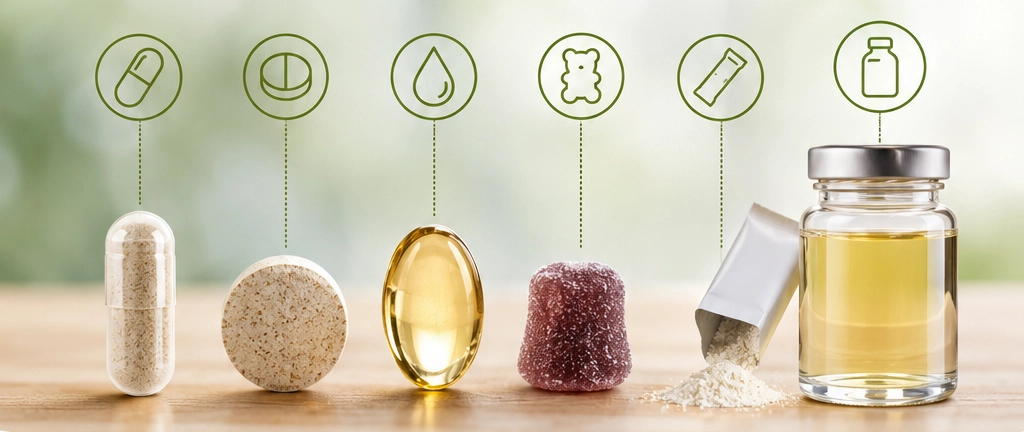
There are many methods to administer Pterostilbene Powder. Capsules remain the most common type because they give precise dosage and consistent protection. Successful tablet making depends on choosing the right excipients to complement the characteristics of the chemical. Softgel forms with oil-based matrices are particularly suited to address solubility issues.
OEM manufacturers enjoy the fact that pterostilbene works with a variety of various manufacturing processes. Special procedures are required for gummy formulations to prevent them from breaking down when heated. For standardized powder mixes for stick packs or sachets, flow agents are necessary to guaranty consistent dosing. Formulators will often utilize pterostilbene for life extension over novel drugs like NMN (nicotinamide mononucleotide) or NR (nicotinamide riboside) since it has a robust safety profile and significant clinical data, combining innovation with regulatory savviness.
How to Choose The Best Pterostilbene or Resveratrol Powder Supplier
Evaluating Supplier Credibility and Track Record
When choosing a supplier it is not just about the price but also about dependability, knowledge and consistent quality. First, check out the firm background and what it specializes in. Companies focused on botanical extracts and nutraceutical ingredients will have more rigorous quality standards than chemical dealers that cover a broad variety of goods. Success stories from the real world and customer testimonials depict how the product performs, particularly with batch-to-batch accuracy and swift responses to supply chain challenges.
Quality may be measured objectively via audits, conducted by third-party organizations. Suppliers that are transparent about their manufacturing processes and prepared to have their facilities inspected are showing that they are confident in their company. Referencing existing clients in comparable market sectors helps to support claims of quality of service and product performance.
Technical Support and Formulation Expertise
In addition to supplying raw ingredients, the main suppliers will also advise on formulation issues that are important in the creation of new goods. It provides recommendations on how to dissolve the material, results of studies of its stability under various settings and its compatibility with common excipients. “Suppliers that can do their own research and development can suggest the best way to deliver medicines and how much to deliver depending on the desired health outcomes.
Support for bespoke formulation will be very helpful for OEM producers who are producing private label items. Supplier's flexible minimum order numbers help you test the market before going into large-scale manufacturing. Documentation assistance such as legal compliance and proof-of-claim tools reduces development risk and time-to-market.
Negotiating Long-Term Supply Agreements
Long-term strategic alliances bring a wealth of rewards. If you commit to a volume for 12-24 months you often receive lower costs and guaranty you always have a supply. The terms of any contracts should include quality standards, allowed ranges of variation, testing methodologies, delivery deadlines and methods for resolving problems.
Price adjustment provisions tied to raw material market indices protect parties against significant price swings. Help with managing inventory, such as vendor managed inventory (VMI) agreements, reduces the amount of working capital needed by a purchaser, but still allows for flexibility in production. A preferred supplier relationship may assist speed the allocation of resources when supplies are tight, an essential consideration given the particular manufacturing requirements for high purity pterostilbene.
Conclusion
The decision between resveratrol and pterostilbene will rely on the aims of the formulation, the health results that are desired and the budget. Pterostilbene powder is more bioavailable and has a longer half-life, making it suitable for cognitive health and luxury anti-aging treatments that require smaller dosages to operate properly. Resveratrol is a promising candidate for cardiovascular applications, supported by a vast clinical body of data and expanding market awareness. Successful procurement strategies include identifying suppliers who consistently provide quality, fulfill standards, and offer rapid assistance, while satisfying technical performance needs and commercial realities. The stilbenoid industry is constantly evolving with fresh applications being discovered via study. Health industry is moving rapidly and supplier relationships that provide technological know-how and formulation flexibility are becoming increasingly vital to remain competitive.
FAQ
1. How does pterostilbene compare effectively to resveratrol?
Pterostilbene is about four times more bioavailable when taken by mouth than resveratrol—about 80% vs. 20%. This benefit comes from methoxy substitutions that stop metabolic breakdown very quickly. The plasma half-life is about 105 minutes, while resveratrol's is only 14 minutes. This means that therapeutic effects can last longer with fewer doses. Because of lower effective treatment needs, these pharmacokinetic benefits often make up for the higher unit cost.
2. Is pterostilbene powder water-soluble?
Yes, pterostilbene has a high lipophilicity, which means it dissolves in fats instead of water. When formulators make things for liquid uses, they need to include oils, fats, or solubilizing agents like ethanol. If you try to mix the powder straight with water, it will precipitate and the dose will not be constant. This problem can be fixed in beverage recipes by using microencapsulation or other specialized delivery methods.
3. What storage conditions ensure pterostilbene powder stability?
When kept correctly, standard shelf life is 24 months. Because the chemical reacts badly with light and oxygen, it needs to be kept in double-lined polyethylene bags inside light-proof fiber drums. Keep things cool and dry, and keep them out of direct sunlight. A little yellowing could mean that the food has been exposed to too much heat or UV light, which could mean that the packaging isn't protected properly or that storage rules have been broken.
4. How can buyers verify natural versus synthetic pterostilbene?
Radiocarbon (C14) dating research is the only sure way to prove something is real. It can tell the difference between synthetic molecules made from gasoline and natural compounds made from plants. This testing is necessary when natural materials cost more or when a brand's image stresses the accuracy of its botanicals. In purchase contracts, buyers should say that the goods must be of natural origin and ask for C14 verification certificates.
Partner with Bolin Biotechnology for Premium Pterostilbene Powder Supplier Solutions
When buying stilbenoid, it's important to find a supplier that is both technically excellent and reliable in terms of business. Bolin Biotechnology has been researching, developing, and making plant extracts since 2012. They work with nutrition companies, pharmaceutical companies, and functional food brands all over the world. Over 98% of our Pterostilbene Powder is pure enough to be used in pharmaceuticals. This was confirmed by thorough HPLC testing and is backed up by ISO, GMP, and HACCP certifications.
We know that good formulations need more than just good raw materials. They also need quick expert help and adaptable supply plans. Our research and development team can help you speed up the time it takes to make a product by giving you formulation advice, stability data, and compatibility testing. We can meet a wide range of buying needs with steady quality and on-time delivery, whether you need metric tons of materials for established product lines or smaller amounts for testing the market.
Feel the difference that comes from 20 years of experience working with botanical extracts. Email our team at sales1@bovlin.com to talk about your particular needs, get detailed documentation, or set up an evaluation sample. You can look at our full line of plant-based active ingredients at bolinbiotech.com. They are made to improve your recipes and help you stand out in the market.
References
1. Kapetanovic, I.M., et al. (2011). "Pharmacokinetics, oral bioavailability, and metabolic profile of resveratrol and its dimethylether analog, pterostilbene, in rats." Cancer Chemotherapy and Pharmacology, 68(3), 593-601.
2. Chang, J., et al. (2012). "Low-dose pterostilbene, but not resveratrol, is a potent neuromodulator in aging and Alzheimer's disease." Neurobiology of Aging, 33(9), 2062-2071.
3. Remsberg, C.M., et al. (2008). "Pharmacometrics of pterostilbene: preclinical pharmacokinetics and metabolism, anticancer, antiinflammatory, antioxidant and analgesic activity." Phytotherapy Research, 22(2), 169-179.
4. Tsai, H.Y., et al. (2010). "A review of potential harmful interactions between anticoagulant/antiplatelet agents and Chinese herbal medicines." PLoS ONE, 5(11), e12561.
5. McCormack, D., and McFadden, D. (2013). "A review of pterostilbene antioxidant activity and disease modification." Oxidative Medicine and Cellular Longevity, Article ID 575482.
6. Patel, K.R., et al. (2010). "Clinical pharmacology of resveratrol and its metabolites in colorectal cancer patients." Cancer Research, 70(19), 7392-7399.