_1745226507162.webp)

Pure Rutin Powder in Functional Foods: Formulation Considerations
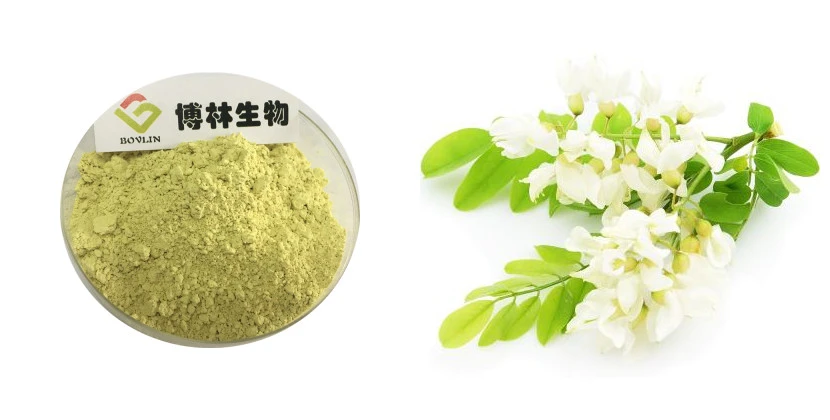
Pure Rutin Powder (CAS 153-18-4), a bioflavonoid glycoside, Rutin NF11 is derived from the flower buds of Sophora japonica. Functional Food Formulation: This yellow-green fine powder is a good choice with ≥95% purity (HPLC). “Procurement managers and R&D teams developing products in the cardiovascular health, antioxidants, or wellness spaces need to know how this ingredient performs in real food systems. This post will take you through the top formulation factors, comparative ingredient analysis, and sourcing information to help you make informed, data-backed selections.
Understanding Pure Rutin Powder and Its Functional Benefits
What Is Rutin, Chemically Speaking?
Rutin is a flavonoid glycoside with chemical formula C₂₇H₃₀O₁₆ and molecular weight 610.52 g/mol. It contains the aglycone quercetin bound to the disaccharide rutinose. This chemical framework is what gives rutin its distinctive antioxidant effect, capacity to block UV radiation, and ability to keep capillaries stable. Studies have shown that rutin may scavenge superoxide radicals and inhibit lipid peroxidation, two processes that are directly relevant to the claims made on the labels of functional foods.
Health Benefits Backed by Research
There is both clinical and preclinical evidence that rutin may reduce capillary permeability. That’s why you’ll see it in products for vein health. It stabilizes ascorbic acid and prevents the copper-catalyzed oxidation of Vitamin C in vitamin mixtures. A 2021 review published in Foods indicated that rutin may be used to help decrease inflammation. This promotes its usage in functional beverages and heart-healthy bars.
Applications Across Food Matrices
Rutin is naturally found in functional foods such as health bars, powder mixes, dietary supplement capsules, and fortified beverages. Its yellow-green tint may also improve the appearance of certain products. It blends nicely with Vitamin C, zinc, and other bioflavonoids to create multi-target antioxidant formulas that appeal to today’s health-conscious consumer.
Essential Formulation Principles for Incorporating Pure Rutin Powder
Solubility: The First Challenge to Solve
Rutin solubility in water at room temperature is rather low, i.e., 0.125 g/L, which might be considered extremely low for food systems using water. Three effective techniques for formulators to manufacture liquid drinks are to raise the pH to alkaline levels (solubility improves dramatically above pH 8), to employ enzymatic glycosylation to generate alpha-glucosyl rutin, or to use liposomal encapsulation for high-end functional beverages. Each approach has trade-offs in terms of cost, regulatory status, and bioavailability.
Dosage Ranges and Stability Considerations
The typical dosage of functional food, based on studies, varies between 20 mg and 200 mg, depending on the health claim. Pure rutin powder is not very susceptible to change when heated to conventional processing temperatures; therefore, it may be utilized for dry blending and encapsulation. But it is photosensitive, and UV radiation exposure for a long period makes it less effective and turns it brown. Packaging that prevents the penetration of light and pill shells that are difficult to look through are standard safety measures during manufacture and storage.
Regulatory and Food Safety Alignment
Rutin is regulated as a food additive in the U.S. according to DSHEA. If a formulator wants to make a claim concerning heart health or vein health, they need to make sure their documentation is in line with the FDA. Supporting documents must be provided by responsible providers for each batch and include: 1. Certificate of analysis (COA) with HPLC purity data 2. Heavy metal reports (≤10 ppm) 3. Loss on drying reports (≤5%) 4. Microbiological tests
Comparison of Pure Rutin Powder with Related Flavonoid Ingredients
Rutin vs. Quercetin: Choosing the Right Flavonoid
The aglycone backbone of quercetin and rutin is the same, but their manufacturing features are different. Quercetin dissolves better in fat and is absorbed more quickly, while rutin's glycoside form breaks down more slowly and releases its effects more gradually, making it better for long-lasting cardiovascular formulations. Formulators often choose rutin because it has a slower bioconversion profile for dry powder pills or tablets that are meant to improve vein health.
Rutin Powder vs. Rutin Capsules or Extracts
When formulators buy standardized powder that is at least 95% pure, they have direct control over the dosage and mixing ratios. This is something that pre-made capsules or standardized extracts don't always give them. It's also easy to put raw, pure rutin powder with 95% pass 80-mesh particle size into compressed pills or filled capsule shells without having to mill it first. This adaptability helps keep things the same from batch to batch on the work floor.
Natural Source vs. Synthetic Alternatives
Rutin from Sophora japonica is the most important natural-origin standard. After being extracted and crystallized, it no longer contains any toxic plant proteins. This means that it can be certified as vegan and gluten-free. Even though synthetic flavonoids are sometimes cheaper, brand owners in the North American nutraceutical market are becoming more opposed to them. This is because "clean label" and botanical sourcing are now buying criteria, not just preferences.
Sourcing and Procurement Strategies for High-Quality Rutin Ingredients
Key Supplier Evaluation Criteria
For this category, sourcing decisions are based on a few things that can't be changed. When buying from a business-to-business supplier, these factors always matter:
- Purity verification: HPLC-confirmed ≥95% with a reproducible COA that can be independently retested by your QC lab.
- Heavy metal compliance: Total heavy metals ≤10 ppm to satisfy both FDA dietary supplement guidance and EU food supplement directives.
- Low MOQ for sampling: A 1 kg minimum order quantity allows R&D teams to run bench trials before committing to volume.
- Third-party testing: SGS or equivalent independent lab reports add a layer of credibility beyond in-house testing.
- Batch consistency documentation: Formulators locking in a 95% purity spec for label claims need proof that each lot meets the same standard.
All of these criteria work together to give procurement managers confidence as they move from evaluating suppliers to naming qualified vendors.
|
Analysis |
Specification |
Result |
|
Physical Description |
||
|
Appearance |
Yellow powder |
Off-white fine powder |
|
Odor & Taste |
Characteristic |
Characteristic |
|
Particle size |
100% through 80 mesh |
100% through 80 mesh |
|
Assay |
95%min |
98.2% |
|
Ash content |
3.0% Max |
2.25% |
|
Loss on drying |
2.0% Max |
0.25% |
|
Sulphated |
0.5% Max |
0.16% |
|
Heavy metals |
10.0ppm Max |
<10.0ppm |
|
Arsenic (As) |
2.0ppm Max |
<2.0ppm |
|
Lead (Pb) |
3.0ppm Max |
<3.0ppm |
|
Mercury (Hg) |
0.1ppm Max |
<0.1ppm |
|
Cadmium (Cd) |
1.0ppm Max |
<1.0ppm |
|
Microbiology Control |
||
|
Total plate count |
1000cfu/g Max |
<1000cfu/g |
|
Yeast & Mold |
100cfu/g Max |
<100cfu/g |
|
E. Coli |
Negative |
Negative |
|
Salmonella |
Negative |
Negative |
|
Staphylococcus |
Negative |
Negative |
|
Conclusion |
Complies with the in-house standards. |
|
MOQ, Lead Time, and Documentation
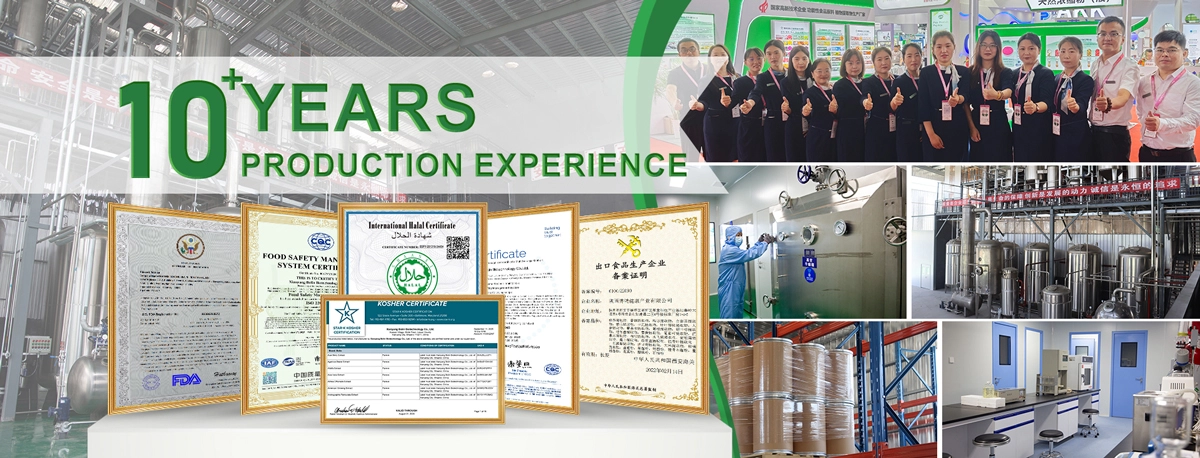
When a customer requests a sample of a novel botanical ingredient, it normally takes 4 to 8 weeks until the first commercial order comes in. When suppliers provide samples of 1 kg, have documentation in English, and respond to technical queries within one business day, that cycle is much shortened. The supplier’s quality system has been tested thoroughly, not merely declared to be excellent, with ISO 9001 and ISO 22000 certifications.
Best Practices for Integrating Rutin into Your Functional Food Products
Start with a Verified Sample Protocol
Before you make a commercial order, check the powder being sent to you against what you anticipate from the COA. Test for HPLC accuracy, color (yellow green), particle size (95% to 80 mesh), and moisture content. This small-scale proving stage avoids manufacturing delays and cost increases due to reformulations farther down the line.
Maintain Quality Through Production
Once the recipe tests are favorable, lock in the supplier’s spec sheet. Include the specified purity, mesh size, and heavy metal restrictions in your purchase order. Check the batch number and request a COA for each batch. These actions provide a quality record that is traceable and assists both internal quality control and any audits by regulators.
Watch Emerging Market Trends
In the U.S. functional food sector, heart health, vascular wellness, and clean-label antioxidants are on-trend. All of these are areas where ingredients based on rutin are gaining in popularity. When businesses create new items for these groups, they are ahead of an upward demand curve that seems like it will not stop.
Conclusion
Rutin NF11 is a widely recognized and valuable bioflavonoid pure rutin powder that may be simply added to functional beverages, cardiovascular supplements, and antioxidant meals. The preparation demands are dominated mostly by the management of solubility and light protection, and these are addressed by standard industrial procedures. The assessment approach for the buying teams is simple: check for purity using HPLC, verify heavy metal compliance, ask for a 1 kg sample, check the supplier’s quality certificates, and then go large. If done effectively, routine sourcing is a low-risk procedure that can be repeated over and over again, ensuring that every manufacturing run of a product operates the same way.
FAQ
1. Is rutin powder safe for use in food products?
Yes. Rutin is widely used as a dietary ingredient in the U.S. under DSHEA. At typical functional food dosages (20–200 mg per serving), it has a well-established safety record. Always confirm that your supplier provides a COA with microbiological and heavy metal data for each batch.
2. How do I handle rutin's low water solubility in beverages?
Three approaches work in practice: alkaline pH adjustment, enzymatic glycosylation to alpha-glucosyl rutin, or liposomal encapsulation. The right choice depends on your product's target pH, shelf stability requirements, and cost structure.
3. What certifications should a rutin supplier hold?
Look for ISO 9001 (quality management) and ISO 22000 (food safety management). Third-party testing reports from labs like SGS add independent verification beyond the supplier's in-house data.
4. Can rutin be co-formulated with Vitamin C?
Yes — this is one of its most well-studied applications. Rutin inhibits the copper-catalyzed oxidation of ascorbic acid, extending Vitamin C's functional shelf life in supplement blends.
5. What particle size is standard for tableting or encapsulation?
95% passing 80 mesh is the industry-standard particle size for direct compression tablets and capsule filling, offering consistent flowability and blend uniformity.
Partner with Bolin Biotechnology for Verified Pure Rutin Powder Supply
As of 2012, Shaanxi Bolin Biotechnology Co., Ltd. has been in business and offers pure rutin powder (Rutin NF11, ≥95%, CAS 153-18-4) that has been tested by SGS and comes with full COA documentation. We also offer a 1 kg MOQ that is meant for research and development sampling. Since we make our own pure rutin powder, there are no middlemen. We also offer uniform batch quality, which is backed by the ISO 9001 and ISO 22000 methods. Send your specifications to sales1@bovlin.com right now to ask for a sample.
References
1. Ganeshpurkar, A., & Saluja, A. K. (2017). The pharmacological potential of rutin. Saudi Pharmaceutical Journal, 25(2), 149–164.
2. Sharma, S., et al. (2021). Rutin: A dietary bioflavonoid with pharmacological activities. Foods, 10(7), 1645.
3. Kopustinskiene, D. M., et al. (2021). Flavonoids as anticancer agents. Nutrients, 12(2), 457.
4. Barreca, D., et al. (2020). Flavanones: Citrus phytochemicals with health-promoting properties. BioFactors, 46(1), 5–17.
5. U.S. Food and Drug Administration. (2023). Dietary Supplement Ingredient Advisory List and Guidance Documents. FDA Office of Dietary Supplement Programs.
6. Miean, K. H., & Mohamed, S. (2001). Flavonoid (myricetin, quercetin, kaempferol, luteolin, and apigenin) content of edible tropical plants. Journal of Agricultural and Food Chemistry, 49(6), 3106–3112.