_1745226507162.webp)

How Is Andrographolide Powder Made From Andrographis paniculata?
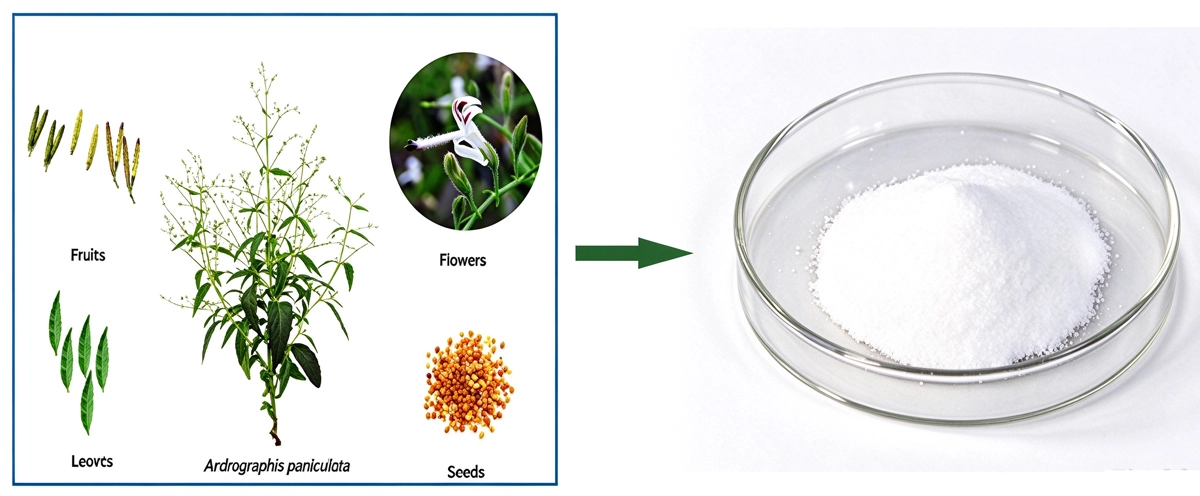
Andrographolide powder is a very pure labdane diterpenoid that is taken from the stems and leaves of the South and Southeast Asian medicinal plant Andrographis paniculata. Field harvesting, solvent-based or supercritical CO₂ extraction, column chromatography purification, vacuum drying, and precision milling must all be done at the exact same time to start the manufacturing process. This makes a white crystalline powder (CAS 5508-58-7, C₂₀H₀O₅) that has a melting point of 228–232°C and purity grades ranging from 5% to 98% HPLC. It can be used in pharmaceutical, nutraceutical, and functional food products.
Overview of Andrographis Paniculata and Andrographolide
Botanical Background and Traditional Use
Also known as "King of Bitters," the plant Andrographis paniculata grows in India, China, Thailand, and other nearby countries. China and Ayurvedic medicine have used the plant for hundreds of years to treat fevers, sore throats, and stomach problems. Medicinal scientists have proven what herbalists already knew: the plant's stems and leaves have the most active diterpenoids, with andrographolide being the main compound.
Chemical Identity and Pharmacological Value
Andrographolide is a diterpenoid lactone that is made up of two rings and has a molecular weight of 350.45 g/mol. Research in trustworthy journals says it stops the NF-κB signalling system from working, which is a part of many immune and inflammatory responses. Because it works this way, it can be used to treat upper respiratory infections (URIs), make drugs that fight viruses, and make liver-healthy goods.
Rising Global Demand
The market for herbal extracts around the world was worth over USD 9 billion in 2022. One of the segments that is growing the fastest is standardised botanical APIs, like high-purity andrographolide. Buyers of medicines, supplement brands, and original equipment manufacturers (OEMs) in North America, Europe, and Asia are all actively looking for suppliers they can trust. This makes it more important to have materials that can be tracked and meet pharmacopoeia standards.
Step-by-Step Process: How Andrographolide Powder Is Made From Andrographis paniculata
Stage 1 — Raw Material Harvesting and Selection
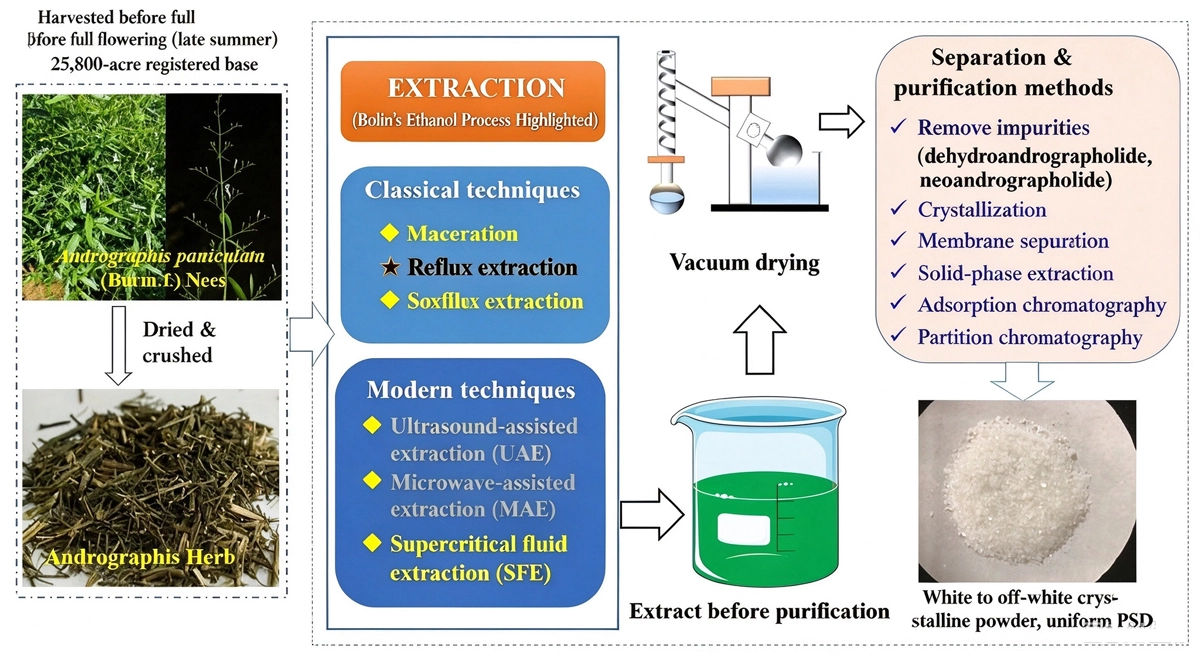
It's all about timing. Andrographis paniculata has the most andrographolide powder right before it flowers fully, which usually happens in late summer. At Bolin Biotechnology, experienced botanists choose stems and leaves from registered cultivation bases. Before harvest, they test the levels of active compounds in the field to make sure they are correct. The main reason for batch inconsistency further down the line is using less-than-ideal plant material at this stage. Our 25,800-acre confirmed growing base is intended to get rid of this problem.
Stage 2 — Extraction Techniques
There are two main ways to remove something: supercritical CO₂ extraction and ethanol liquid extraction. Controlling the temperature and contact time of ethanol extraction is a cheap and easy way to get andrographolide out of plant matter and into a solution. Supercritical CO₂ doesn't have any leftover liquid risk, but it costs more to set up. Here is how the two ways compare for B2B buyers:
- Ethanol solvent extraction delivers reliable high yields at industrial scale, suits 98% API-grade production, and allows precise parameter control for batch reproducibility across 3,000 kg/month output.
- Supercritical CO₂ extraction produces solvent-free extracts with minimal thermal degradation, preferred when finished formulations carry strict residual solvent specifications for certain regulatory markets.
Depending on what you need to make, both ways will work. Bolin Biotechnology's main method of production is ethanol extraction, and process validation data can be reviewed by auditors.
Stage 3 — Purification, Drying, and Milling
After being extracted, the crude liquid goes through several steps of column chromatography to get rid of impurities that are connected to it. These impurities are mostly dehydroandrographolide and neoandrographolide, which are the two most closely watched ones in pharmaceutical standards. After the concentrate has been cleaned, it goes through vacuum drying, which gets rid of any liquid waste while keeping the molecules' shape. Lastly, controlled milling creates a white to off-white crystalline powder with a uniform particle size distribution. This has a direct effect on how well the powder flows and forms tablets in the next step of the process.
Comparing Andrographolide Powder With Other Forms and Extracts
Pure Powder vs. Whole Herb Extract
There are many chemicals in the powder made from the whole herb Andrographis paniculata, but they are all present in different amounts. Formulators have a hard time aiming for a specific NF-κB inhibitory amount because of this difference. This makes clinical results less reliable and makes it harder to keep label claims. An andrographolide powder extract that is standardised (10% to 50%) gives you a good mix of different phytochemicals and a set amount of active ingredients. As an API for drugs, 98% pure crystalline powder is the best choice for precise dosing needs.
Precision Dosing vs. Cost-Effective Blends
OEM supplement makers that make immune-support pills often mix a 50% standardised extract with other plants that work well together to keep costs low and performance high. On the other hand, people who make enteric-coated pills to treat URTIs need 98% pure and a full study of any impurities. You won't over-specify (and pay for information you don't need) or under-specify (and risk not following the rules set by regulators) if you know which grade is best for your use.
Organic vs. Conventional Production Considerations
People are buying more and more plant-based goods that are grown organically. There are different rules for each market about how to handle organic claims. For instance, the US, the EU, and a number of Asian countries all have their own ways of certifying things. It is better for suppliers to get their materials from registered, auditable farms that use documented methods like crop rotation and not using pesticides. This is because the farms are more likely to be following the rules.
Procurement Guide: Sourcing High-Quality Andrographolide Powder
Certification Standards and Supplier Verification
If you want to look at a firm that creates andrographolide powder, start with their papers. ISO 22000 and cGMP certification are verified and establish the standard for cleanliness and process control in manufacturing. Compliance with CP/USP/EP standards ensures that the product conforms to recognized criteria of identification, purity, and potency. Brands selling in the Middle East and several Asian countries need KOSHER and HALAL certification. Make sure you acquire batch-specific COA, COO, and MSDS documentation before placing a trial order. These may be provided willingly by a reputable vendor.
Packaging, Logistics, and Storage Requirements
It is lipophilic, which means it doesn't mix well with water. Things won't absorb water or break down photochemically if they are stored in cool, dry places in containers that can't be opened. It should also work with your inventory cycle and the way you like to go through customs when bringing things in from other countries. The different types of packing should include everything from 1-kilogram foil packs to 25-kilogram fibre drums. Before you ship, make sure the supplier can label the items in a way that meets the needs of the market you want to reach.
Evaluating Value Beyond Price Per Kilogram
And that price per kg is not set in stone. If you have a cheaper batch that is not always pure, then you have to re-formulate or recall the product. This costs a lot more than the savings initially. When comparing suppliers, look at how fast their technical support is, how available their stability study data is, if they can be flexible on minimum order size (Bolin Biotechnology accepts OEM trial batches from 50 kg), and how much they assist with regulatory dossiers post-sale.
Ensuring Safety and Efficacy Throughout Production and Use
Contamination and Adulteration Risks
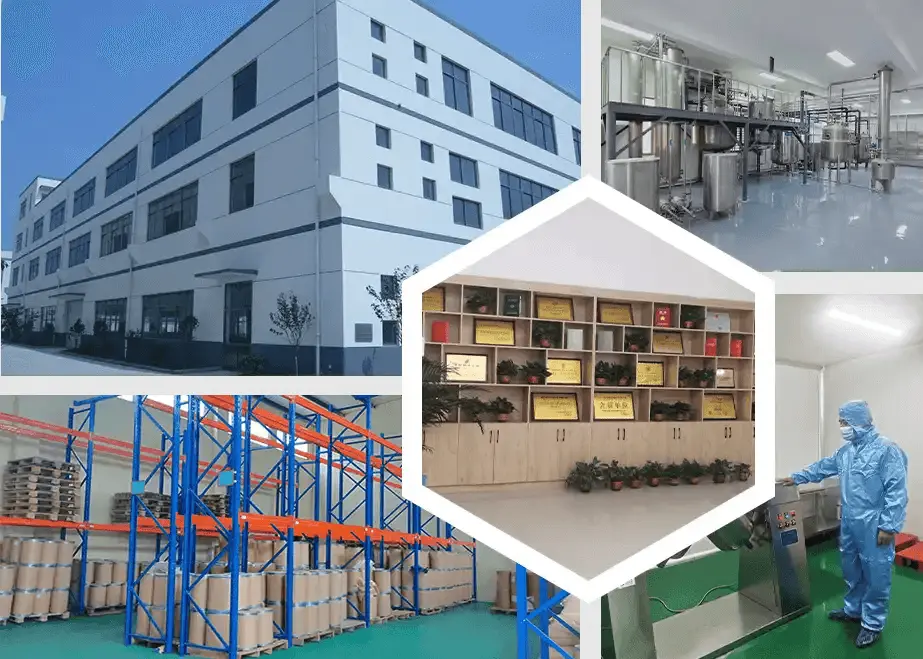
The supply chains of herbal APIs are particularly vulnerable to contamination, such as heavy metal accumulation from soil, microbial load from poor drying, and purposeful dilution with comparable but cheaper molecules. A solid six-stage quality approach addresses each risk. Bolin Biotechnology’s testing protocol includes heavy metal screening (Pb, As, Cd, Hg) within EU Pharmacopeia limits, microbiological safety testing, HPLC active content measurement, associated impurity profile, and third-party SGS validation on commercial shipments.
Batch Consistency and Stability Data
The formulation scientists who produce pharmaceutical goods worry most about uniformity from batch to batch. When trying out a new source, make sure you obtain three batch COAs in a row at least. It should have a melting point between 228 and 232°C. It should have an optical rotation between -124° and -127°. With the HPLC data alone, and these physical indicators, you may easily authenticate someone’s identity. Any firm selling to pharmaceutical companies should have stability study results meeting ICH Q1A requirements.
Dosage, Safety Profile, and Regulatory Compliance
Clinical findings reported in the literature back up short-term use of andrographolide-containing medicines to relieve symptoms of URIs. Side effects are typically modest, as long as the goods fulfill requirements for medicinal purity. If a corporation is making a supplement claim in the US market, the first step is to be in compliance with FDA 21 CFR Part 111 (cGMP for dietary supplements). Those searching for pharmaceutical APIs to acquire should ensure that they meet the region's Drug Master File (DMF) documentation standards.
Conclusion
The pharmaceutical-grade andrographolide powder of Andrographis paniculata should be carefully produced at each stage, from choosing the proper time to select the plants to extraction, washing, drying, and verifying the quality very carefully. The difference between a good API and a crude extract that doesn't always work is process control and documentation. The finest B2B supplier of this substance will have traceable agricultural and pharmacopeial compliance, well-defined impurity profiles, and sufficient manufacturing capacity to keep your supply chain safe. Since 2012, Bolin Biotechnology has been meeting these criteria, producing about 3,000 kg per month with full audit assistance.
FAQ
1. What purity grades of andrographolide extract are available for B2B purchase?
Bolin Biotechnology has grades of purity of 5%, 10%, 50%, and 98%, all of which have been proven by HPLC/UPLC. The 98% crystalline grade is used for pharmaceutical APIs, and the 50% grade is popular for nutraceutical OEM formulations that need to find a good balance between cost and effectiveness.
2. Which certifications should I verify before placing a bulk order?
Check for compliance with ISO 22000, cGMP, CP/USP/EP, KOSHER, HALAL, and third-party SGS batch proof. Ask for COA, COO, MSDS, and impurity profiling data for dehydroandrographolide and neoandrographolide from pharmaceutical customers.
3. How does the extraction method affect final product quality?
When fixed conditions are used to extract ethanol, it always comes out 98% pure on an industrial scale. Supercritical CO₂ costs more per kilogram but makes material that doesn't need a cleaner. Most of the time, all that is needed for pharmaceutical and nutraceutical uses is verified ethanol extraction with documented residue solvent tests.
4. What is the minimum order for OEM or custom concentration trials?
Bolin Biotechnology will do OEM trial production for as little as 50 kg. From this base, you can get different concentrations, bioavailability-improving formats (liposomes, cyclodextrin, nano-emulsion), and private label packaging.
5. How is batch consistency maintained across large production runs?
Each batch goes through a six-step testing process, starting with identifying the raw materials and ending with third-party SGS validation. Every commercial shipment comes with full batch records that can be tracked from the field to the package.
Partner With Bolin Biotechnology — Your Trusted Andrographolide Powder Supplier
Since 2012, Bolin Biotechnology has sold pharmaceutical-grade plant APIs to business partners around the world. Our andrographolide powder is ≥98% HPLC pure and meets CP/USP/EP standards. It also has ISO 22000 and cGMP certification, and full audit documentation to back it up. We can help you get your product from the design stage to the market. Our monthly capacity is 3,000 kg, and OEMs can start with as few as 50 kg trial runs. You can email our scientific team at sales1@bovlin.com to ask for a sample or talk about your buying needs.
References
1. Mishra, S. K., Sangwan, N. S., & Sangwan, R. S. (2007). Andrographis paniculata (Kalmegh): A Review. Pharmacognosy Reviews, 1(2), 283–298.
2. Gupta, S., Mishra, K. P., & Ganju, L. (2017). Broad-spectrum antiviral properties of andrographolide. Archives of Virology, 162(3), 611–623.
3. Zhao, F., He, E. Q., Wang, L., & Liu, K. (2008). Anti-tumor activities of andrographolide, a diterpene from Andrographis paniculata, by inducing apoptosis and inhibiting VEGF levels. Journal of Asian Natural Products Research, 10(5), 467–473.
4. Jayakumar, T., Hsieh, C. Y., Lee, J. J., & Sheu, J. R. (2013). Experimental and clinical pharmacology of Andrographis paniculata and its major bioactive phytoconstituent andrographolide. Evidence-Based Complementary and Alternative Medicine, 2013, 846740.
5. Pharmacopoeia Commission of the People's Republic of China. (2020). Chinese Pharmacopoeia (ChP 2020), Vol. I. China Medical Science Press.
6. United States Pharmacopeial Convention. (2023). United States Pharmacopeia and National Formulary (USP 46–NF 41). USP Convention.