_1745226507162.webp)

The Science Behind Creatine Monohydrate & Its Muscle Building Potential
Over thirty years of clinical studies show that creatine monohydrate powder improves muscle function. It is one of the most studied sports nutrition ergogenic aids. The body produces this nitrogenous organic acid. When muscles contract hard, they restore ATP, which is crucial for cellular energy metabolism. If formulators and purchasing managers understand this ingredient's biochemical mechanisms, application requirements, and buying issues, they can make scientifically sound products that meet regulatory and customer performance standards.
Understanding Creatine Monohydrate Powder: Chemical and Biological Foundations
The Molecular Structure and Synthesis Pathway
The formula for creatine monohydrate powder is C4H9N3O2·H2O, with crystal lattices. Creatine bonds to one water molecule. Sarcosine and cyanamide synthesis is usually done in controlled GMP conditions in industry. This creates a stable, body-friendly compound. This hydrated form is stable up to 255°C. It works in harsh processing environments without breaking down. Heat-related contract manufacturers should remember this.
Selling the compound depends on its purity. To demonstrate stoichiometric water content using high-performance liquid chromatography (HPLC), purity must be greater than 99.9% and LOD must be between 10.0% and 12.0%. Changes to these parameters affect calculations for performance and stability. Water-sensitive formulation matrices are especially affected.
ATP Regeneration and Cellular Energy Dynamics
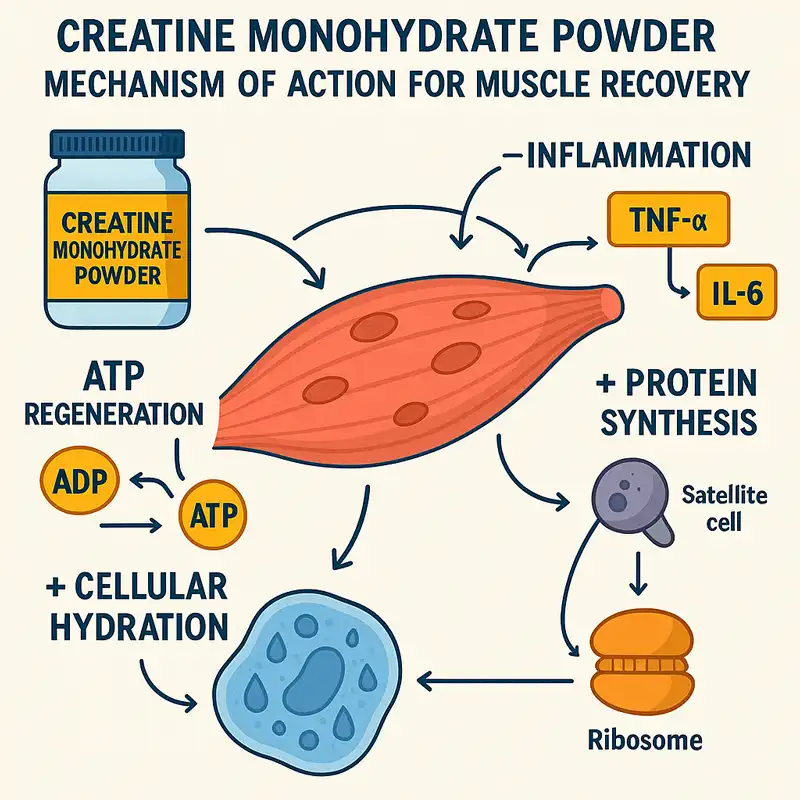
Muscle tissue converts creatine to phosphocreatine. Phosphocreatine powers fast movements immediately. Contracting muscles break down ATP into ADP. Phosphocreatine quickly donates its phosphate group to rebuild ATP. This allows longer, harder work without tiring. Sprinting and strength training are ideal for this biochemical shuttle system.
Creatine supplements increase phosphocreatine availability by 20–40%, according to research. This can significantly improve your workouts. Better energy storage and release allows athletes to do more reps or power out. This increases training adaptations over time.
Particle Size Engineering and Bioavailability Optimization
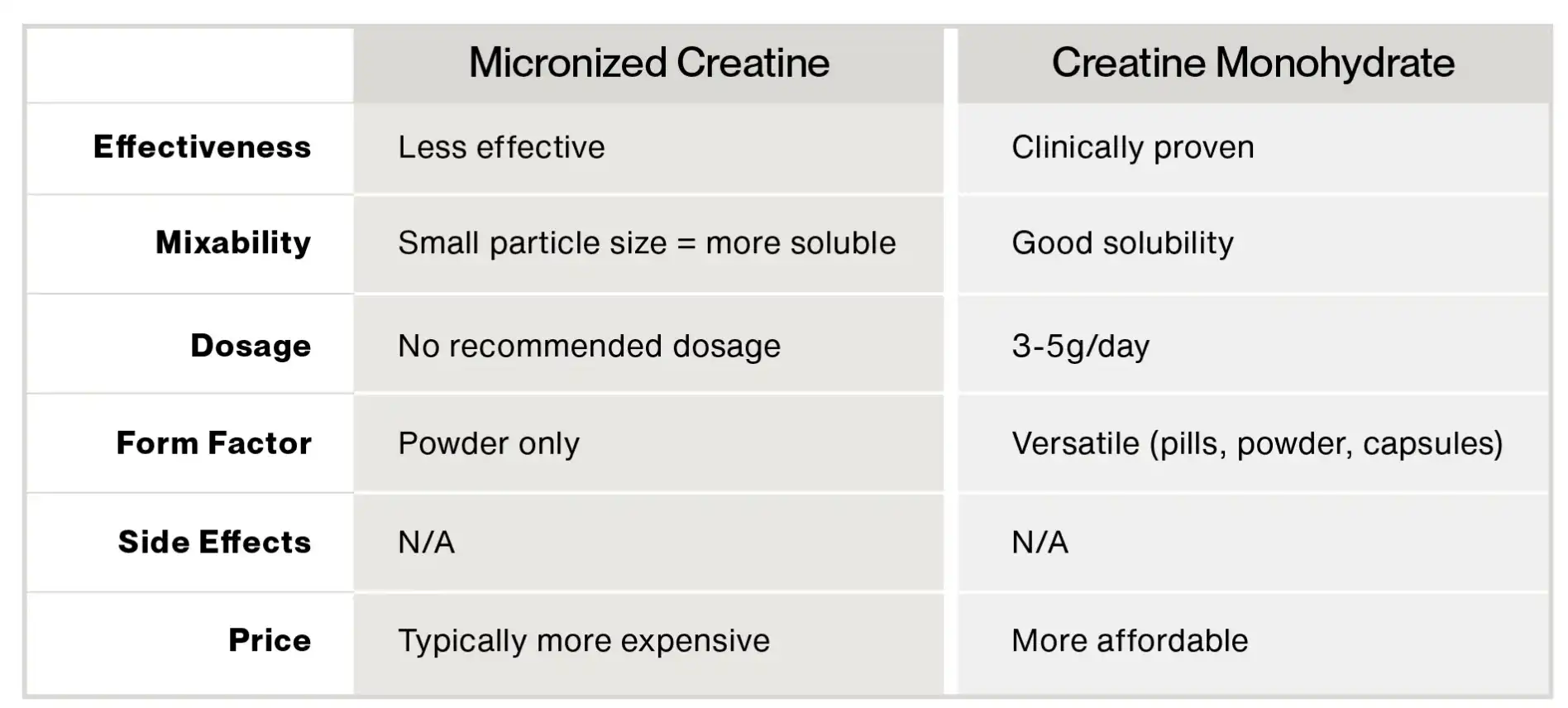
Final creatine performance depends on manufacturing. Micronized particles fit through 200-mesh sieves (74 microns or less). This makes them more stable in liquid applications and eliminates the grainy texture of older versions. Customers have had this issue for a long time, but this change gives the stomach more surface area to absorb food.
Standard or granular grades (80-mesh) help ingredients mix during encapsulation and tableting. This reduces factory dust, improving worker health. For shipping and packaging, use bulk density measurements between 0.50 and 0.65 g/ml (tapped). This is crucial when procurement teams examine international supply chain total landed costs.
Muscle Building Benefits and Usage Guidelines for Optimal Performance
Hypertrophy Mechanisms and Strength Development
Extra creatine helps muscles grow in multiple ways. They get energy from it. Creatine increases muscle hydration, which activates anabolic signals that speed protein synthesis. Holding more weight causes mechanosensitive growth responses that build lean body mass in a measured way, even when supplementation begins.
Creatine, including pure creatine monohydrate powder, makes people 5–15% stronger than placebo in many types of resistance training. Many types of exercise are like this. These gains are most noticeable when you use your full strength in squats, bench presses, and Olympic lifting variations. Higher training capacity allows athletes to overload muscles. Over mesocycles, athletes can train more.
Evidence-Based Dosing Protocols
Two ways to take supplements, according to clinical research. The loading protocol recommends eating 20–25 grams of protein daily in four 5-gram servings. This should last 5–7 days. Muscle stores gain 140–160 mmol/kg dry muscle mass quickly. This method improves performance in one week, but sensitive people may experience short-term stomach pain from osmotic load.
Maintenance involves taking 3–5 grams of creatine monohydrate powder daily for 4–6 weeks to maintain muscle saturation without digestive issues. As helpful for long-term users, this method is easy to follow because you only take it daily. There is some evidence that eating creatine with carbs and protein after a workout may help your body absorb it through insulin-mediated transport mechanisms.
Safety Profile and Physiological Considerations
Years of testing have shown that creatine monohydrate powder is one of the safest ergogenic supplements. In five-year clinical trials, the drug did not harm the kidneys, liver, or heart in healthy people. The International Society of Sports Nutrition says creatine is safe for all athletes, regardless of training.
Many say they hold on to water, which causes them to gain 1-2 kg during loading. High muscle creatine levels cause cell fluid buildup. Unlike edema, which is fluid buildup outside cells. For athletes in the same weight class, supplement cycles are scheduled around competitions. Procurement teams should educate downstream partners about physiological differences. This will help customers set realistic expectations.
Comparing Creatine Monohydrate with Other Creatine Forms: Making Informed Procurement Decisions
Evaluating Alternative Creatine Derivatives
Creatine for sports nutrition comes in many forms. Each claims better absorption or fewer side effects. Creatine ethyl ester was designed to mix better with fats and be more bioavailable. Studies with strict rules show that it changes faster than monohydrate into creatinine, a useless metabolite. That means muscles absorb less. This degrades before reaching muscle tissue, reducing permeability.
Smaller doses of creatine hydrochloride dissolve better. Despite dissolving more easily in water, there is no peer-reviewed evidence that it works better than creatine monohydrate powder in the right dose. Per effective dose, hydrochloride forms cost two to three times more. They are less desirable for value engineering formulation.
Buffering creatine products may prevent it from becoming creatinine in the acidic stomach due to an alkaline compound. Standard monohydrate and other creatines do not differ in muscle accumulation or performance metrics, according to trials. With these ingredients, the recipe costs more and takes longer.
Cost-Effectiveness and Manufacturing Considerations
Creatine monohydrate powder is cheaper to make because there are proven methods and factories worldwide. Prices and supplies remain stable when a business reaches maturity. Product lines that require consistent formulation costs across production runs require this. Chemically stable, the compound doesn't need special storage or packing conditions other than low moisture. This simplifies logistics.
Micronized monohydrate grades usually cost more because they work better and settle less in liquids. This selling point works well for brands targeting high-end customers who value texture and mixability. Procurement professionals should consider these trade-offs in light of their target customers and market position.
Sourcing and Procurement Insights for Bulk Creatine Monohydrate Powder
Quality Certifications and Supplier Validation
Good manufacturers update all certifications. ISO 9001 for quality management, ISO 22000 or HACCP for food safety, and GMP for target markets. Brands under regulatory scrutiny can rest assured that their process controls can ensure that all product batches meet standards with these third-party checks.
A CoA should accompany each lot. It should include HPLC purity, microbiological, heavy metal screening (below 10 ppm), and particle size distribution data. Smarter buyers request additional tests for dicyandiamide and dihydrotriazine. Reliable manufacturers clean these synthesis waste products. They may still be made of cheaper, unknown materials.
Strategic Sourcing Channels and Negotiation Tactics
Brands that buy more than a few thousand metric tons of goods annually can get the best prices and peace of mind by working directly with manufacturers. This method allows private labeling, particle size changes, and packaging layout changes. Dual-source strategies reduce supply risks and increase contract renewal competition.
Manufacturer-direct model used by Shaanxi Bolin Biotechnology Co., Ltd. In 2012, they implemented strict quality systems and used advanced synthesis. Our factory makes USP and EP-compliant creatine monohydrate powder. It also includes full documentation packages to help global markets submit paperwork to regulators. Formulation scientists and technical support teams ensure ingredients are mixed properly for each use. They improve gummy stability and dissolveability in ready-to-drink drinks.
People who don't need to buy much or are just starting to compare suppliers should use B2B marketplaces. Prices usually include the middleman. Complex formulations may require technical partnership, which they may not provide. No matter the channel, clear quality agreements that define acceptable and how to resolve disputes protect both sides throughout the business relationship.
Logistics and Inventory Management Strategies
Bulk creatine monohydrate powder comes in 25-kg fiber drums or 500-kg super sacks. The size depends on the factory's capacity and space. At room temperature, the compound is stable if not wet. It should be fine for 36 months in its original, undamaged packaging. First-in, first-out (FIFO) rotation protocols and temperature-controlled storage preserve goods in distribution networks.
When sending items between countries, you must follow customs rules and fill out the appropriate paperwork. Pure creatine monohydrate powder is GRAS in the US and on EU safety lists. This makes government approval easier for businesses than for new ingredients. Nutraceutical logistics experts can handle these needs quickly and easily, but buyers should plan ahead for 8–12 weeks lead times for Asia-Pacific to North America routes. Also includes production and transit time.
Real-World Applications and Case Studies in Muscle Building and Sports Nutrition
Performance Outcomes in Resistance Training Programs
University researchers followed 40 resistance-trained men for 12 weeks. They followed the same periodized training plans and took a sugar pill or 5 grams of creatine daily. Creatine increased bench press one-repetition maximum by 24% and leg press by 32%. DEXA scans showed that supplemented athletes gained 1.8 kg of muscle mass compared to the control group.
OEM manufacturers of sports nutrition SKUs can test these results in real life. This evidence can help brands make scientific claims in their marketing and product education materials. This boosts brand trust. These differences are so great that end users have an advantage over competitors. Customers are happier and more likely to return.
Custom Formulation Opportunities in Emerging Categories
Large supplement companies are adding creatine monohydrate powder to pre-workout mixes. They add synergistic ingredients like caffeine, citrulline malate, and beta-alanine. This stacking method addresses multiple performance issues at once. This makes formulation harder because the mixture is less stable and ingredients don't always work well together. Creatine can be mixed with most ergogenic compounds if the right systems are used to prevent water absorption. It has a neutral pH and is chemically inert.
How creatine dissolves and changes the taste of functional drinks, a fast-growing field, has technical issues. Very fine grades (200 mesh or more) reduce sedimentation in canned products, and flavor encapsulation hides the compound's slightly bitter taste. To ensure smooth RTD launches, they must be tested quickly for temperature stability. This ensures that creatine remains bioactive throughout its shelf life and doesn't become creatinine.
When working with Bolin Biotechnology, OEM partners can use its formulation expertise from hundreds of successful products. Our applications laboratory helps brands overcome new delivery format technical challenges by creating prototypes and testing them. Working together reduces costly reformulation cycles and product launch time.
Conclusion
Many health and muscle-building products contain creatine monohydrate powder because scientists have proven it works. Its well-known methods, high safety, and low production cost make it appealing to end users and B2B procurement professionals. To ensure the supply chain is reliable and products always work the same, know the technical differences between quality grades, compare it to other forms impartially, and work with certified manufacturers. Creatine monohydrate powder remains the gold standard for new drug uses and delivery methods.
FAQ
How does creatine monohydrate powder actually build muscle?
Creatine works in two ways to build muscle. The compound increases muscle phosphocreatine, which speeds ATP rebuilding during hard exercise. Because they have more energy, athletes can do more reps or train harder. This increases mechanical tension, which grows muscles. Creatine-rich muscles hydrate cells. This creates an anabolic environment that speeds protein synthesis signaling pathways without training.
What distinguishes pharmaceutical-grade from standard creatine?
Pharmaceutical-grade creatine monohydrate powder must meet USP or EP monograph requirements. These require HPLC analysis and purity over 99.9%. The product must be tested for heavy metals (usually below 10 ppm), have no synthesis byproducts like dicyandiamide and dihydrotriazine, and undergo strict microbiological controls. Standard grades are as pure as pharmaceutical grades, but they lack the paperwork and lot-tracking systems needed for high-stakes markets or drug uses.
Can creatine supplementation benefit endurance athletes?
While creatine is typically associated with strength and power, new research suggests it may also aid endurance. Creatine supplements can improve high-intensity intervals in endurance training. They may also help you recover faster between workouts and maintain muscle mass during long-term aerobic activity. The compound benefits endurance weightlifters and sprinters who need speed and power.
Partner With Bolin Biotechnology as Your Trusted Creatine Monohydrate Powder Manufacturer
Bolin Biotechnology sells pharmaceutical-grade creatine monohydrate powder and has made high-quality products for over ten years. Their products are safe and have many quality certifications. We strictly follow GMP, ISO 9001, and HACCP at our factory. This ensures that every batch meets your formulations' high purity standards. 25 kg drums and bulk containers are among our flexible packaging options. Micronized particles can be used in many ways, and we have all the legal paperwork to sell our goods worldwide. Our technical team solves solubility issues, stabilizes products, and creates custom blends for market trends. Contact our buying team at sales1@bovlin.com to discuss how our reliable supply chain solutions can help you compete in sports nutrition.
References
Kreider, R. B., Kalman, D. S., Antonio, J., Ziegenfuss, T. N., Wildman, R., Collins, R., Candow, D. G., Kleiner, S. M., Almada, A. L., & Lopez, H. L. (2017). International Society of Sports Nutrition position stand: safety and efficacy of creatine supplementation in exercise, sport, and medicine. Journal of the International Society of Sports Nutrition, 14(1), 18.
Antonio, J., & Ciccone, V. (2013). The effects of pre versus post workout supplementation of creatine monohydrate on body composition and strength. Journal of the International Society of Sports Nutrition, 10(1), 36.
Buford, T. W., Kreider, R. B., Stout, J. R., Greenwood, M., Campbell, B., Spano, M., Ziegenfuss, T., Lopez, H., Landis, J., & Antonio, J. (2007). International Society of Sports Nutrition position stand: creatine supplementation and exercise. Journal of the International Society of Sports Nutrition, 4(1), 6.
Branch, J. D. (2003). Effect of creatine supplementation on body composition and performance: a meta-analysis. International Journal of Sport Nutrition and Exercise Metabolism, 13(2), 198-226.
Persky, A. M., & Rawson, E. S. (2007). Safety of creatine supplementation. Subcellular Biochemistry, 46, 275-289.
Volek, J. S., & Rawson, E. S. (2004). Scientific basis and practical aspects of creatine supplementation for athletes. Nutrition, 20(7-8), 609-614.