_1745226507162.webp)

What is nervonic acid powder? Benefits for Brain Health
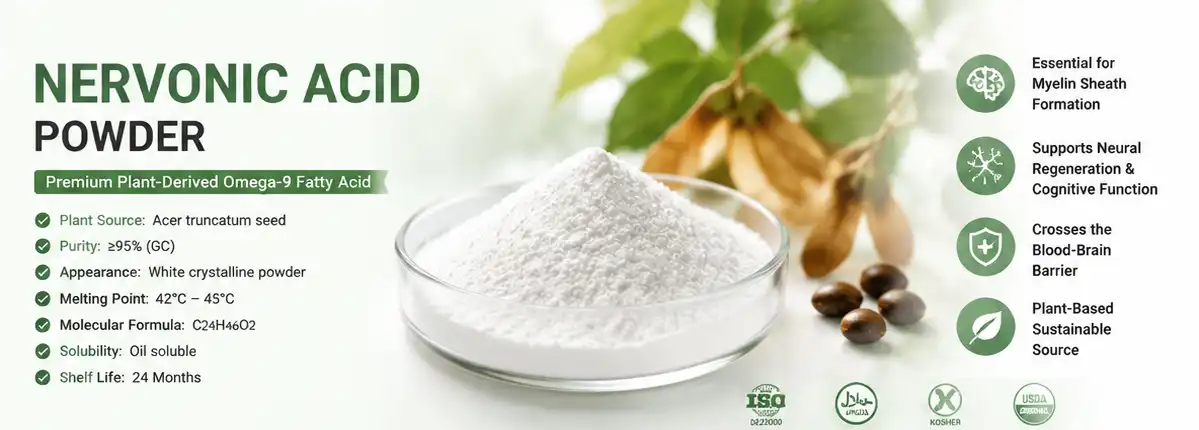
Nervonic acid powder is a specialized monounsaturated omega-9 fatty acid extracted primarily from plant sources, notably Acer truncatum seeds. This white crystalline powder contains a unique 24-carbon molecular structure (C24H46O2) that serves as an essential building block for myelin sheath formation in the nervous system. Brain health formulations increasingly incorporate this bioactive ingredient because research demonstrates its direct role in neural regeneration and cognitive function support. The powder form offers superior stability and concentration compared to crude oil alternatives, making it particularly valuable for pharmaceutical-grade supplements and therapeutic applications targeting neurological wellness.
Understanding Nervonic Acid Powder: Definition and Core Properties
What Makes This Fatty Acid Unique?
This compound is different from most dietary fats because of how its molecules are structured. The 24-carbon backbone with a single cis-double bond at the 9th position from the methyl end gives it unique biological features compared to shorter-chain fatty acids. Because of its shape, the molecule can easily join with sphingomyelin, a key phospholipid part of brain white matter. Since the body only makes a certain amount naturally, food supplements are becoming more important for people who are losing their memory or are under a lot of mental stress.
Extraction and Manufacturing Standards
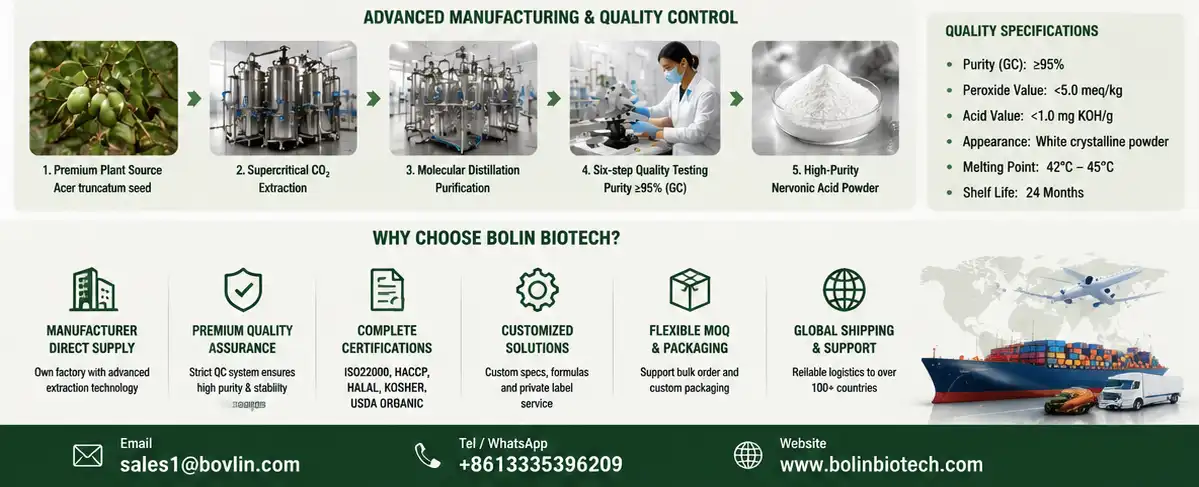
To get high-purity chemicals from Acer truncatum seeds, modern production methods use advanced supercritical CO₂ extraction and molecular distillation. Gas chromatography analysis shows that quality manufacturers use six-step testing protocols to make sure that purity levels are at least 95%. Maintaining peroxide levels below 5.0 meq/kg and acid levels below 1.0 mg KOH/g are important quality factors for making sure that the product is oxidatively stable throughout its lifecycle. The crystalline nervonic acid powder form has a constant melting point between 42°C and 45°C, which makes it easy to add to pill, capsule, and functional drink formulas.
Biological Functions in Neural Tissue
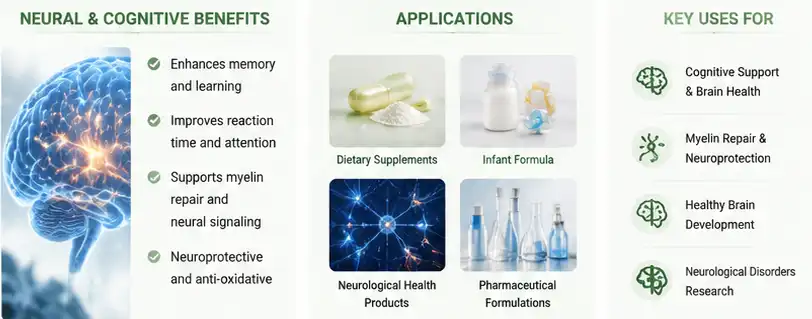
This fatty acid plays three very important roles in the central nervous system. It speeds up the repair of the myelin sheath by giving oligodendrocytes the structural lipids they need for the remyelination process. The chemical effectively crosses the blood-brain barrier, providing direct nutritional support to brain cells and nerve cells. According to research, it changes the fluidity of cell membranes, which speeds up the transmission of signals along neural pathways. These biological processes explain why studies on supplementation always show that older people's ability to process information faster and remember things better improves.
Key Benefits and Neurological Applications of Nervonic Acid Powder
Cognitive Enhancement Across Age Groups
Clinical studies show that people who take 40–90 mg of a supplement every day for more than eight weeks have measurable brain benefits. The accuracy of memory recall improves by 12–18% in people over 60, and the accuracy of reaction time improves by 8–14%. It looks like the compound works best for prolonged attention tasks that require procedural memory and brain function. Younger adults say they feel their mental clarity improves during mentally challenging times, but objective tests show smaller effects compared to older populations.
Neuroprotective Mechanisms
The compound helps protect brain cells from oxidative stress in a number of different ways. It keeps mitochondrial membranes stable in neurons, which lowers the production of reactive oxygen species when metabolism is high. Studies in the lab show that it lowers the production of inflammatory cytokines in microglial cells, which may slow the development of neurological diseases. In animal models of demyelinating diseases, nerve conduction recovery is sped up when diets contain the right amounts. This suggests that multiple sclerosis and similar disorders may be treatable using nervonic acid powder.
Developmental Support for Infants
This specific fatty acid is naturally found in human breast milk, though the amounts vary a lot depending on what the mother eats. Now, infant formulas that have been fortified with plant-based sources try to better match this nutritional profile. Taking supplements during the first two years helps the myelination processes that are happening quickly in the brain as it grows. Neurological tests done on babies between the ages of 18 and 24 months show that babies who are fed enriched formulas do better on language and visual-motor coordination milestones. However, researchers stress that these results are due to more than just the formula itself.
Applications in Neurological Disorders
In preliminary research, possible therapeutic uses for conditions marked by myelin damage are being looked into. When supplements are used along with standard treatment for peripheral neuropathy, patients report less severe pain and better cognitive function. The compound has potential for treating genetic diseases that affect lipid metabolism, where enzyme defects stop myelin from being made normally. Pharmaceutical experts are currently looking into the best ways to send medicines and combine therapies that might help patients with these difficult conditions.
Comparing Nervonic Acid Powder with Other Omega Fatty Acids and Forms
Molecular Differences from DHA and EPA
A lot of attention is paid to docosahexaenoic acid for its effects on brain health, but the two chemicals have different biological functions. DHA's 22-carbon structure has six double bonds that make it very vulnerable to oxidation but great for keeping membranes flexible. The 24-carbon nervonic acid powder structure is monounsaturated, which makes it more resistant to oxidation. It also targets myelin components specifically instead of general membrane phospholipids. EPA's main job is to help reduce inflammation, while nervonic acid's job is to help build structures. More and more, formulation strategies combine these fatty acids to help with more than one part of brain health at the same time.
Powder versus Oil Formulations
There are a number of technical advantages to using crystalline powder instead of traditional oil preparations. When unsaturated fats are exposed to air, they give off a rancid smell. Solid tablet forms get rid of this smell and make the content more regular. Powder specs usually promise 95% purity, while raw seed oils only have 1.5 to 5% concentrations. It's easier for tablets and hard-shell pills to hold powder, but oils need special technology to keep them from leaking. Stability tests show that powder stays effective for 24 months if it is stored properly, but oil formulations may lose a lot of their effectiveness in 12 to 18 months, even if they are kept cold.
Quality Benchmarks for B2B Procurement
When professional buyers choose suppliers for large orders, they look at a number of factors. Certifications like ISO 22000, GMP, and HACCP show that quality management is used throughout the whole production process. Heavy metal levels should be below the EU's legal limits, with mercury below 0.1 ppm and lead below 3.0 ppm, according to testing done by a third party. Microbiological requirements must show that the total plate counts are less than 1000 CFU/g and that there are no pathogenic organisms present. Premium sellers in this specialised ingredient area are clear about where their ingredients come from, how they are extracted, and how consistent batches are with each other.
| Feature | Nervonic Acid Powder | DHA / EPA / Acer Truncatum Seed Oil |
|---|---|---|
| Form | Powder | Oil |
| Structure | 24-carbon monounsaturated fatty acid | DHA: 22-carbon with multiple double bonds |
| Main Role | Supports myelin structure | DHA: membrane flexibility; EPA: inflammation-related function |
| Stability | Higher oxidation resistance | More sensitive to oxidation |
| Purity | Up to 95% purity specification | Seed oils usually contain lower concentrations |
| Application | Tablets, capsules, advanced formulations | Oil-based supplements |
Procurement Guide: Sourcing High-Quality Nervonic Acid Powder for Global B2B Buyers
Supplier Evaluation Criteria
To find trusted manufacturing partners, you need to do a thorough evaluation of many factors. Closed-loop extraction methods that keep solvent leftovers and environmental pollution from happening should be checked by facility inspectors. Analytical tools like HPLC, GC-MS, and fatty acid profiling equipment show a strong dedication to quality control. Suppliers with specialised research and development (R&D) teams can help with creation and offer customization services that are useful for making products stand out. By asking for certificates of analysis from recent production batches, you can compare the quality of the nervonic acid powder that was delivered to what was advertised.
Geographic Supply Chain Considerations
China has the most production capacity for ingredients derived from Acer truncatum. More than 25,000 acres of land are used for cultivation in Shaanxi Province. The weather and earth in this area make seeds with the best fatty acid ratios. Vertical integration helps established makers in this area because it lets them handle everything from growing the crops to finishing the products. There are other sources, mostly from North America and Europe, but they usually cost more because they produce less. International buyers must evaluate logistics complexity, including temperature-controlled shipping requirements and customs documentation procedures specific to botanical extracts.
Pricing Structures and MOQ Expectations
Pharmaceutical-grade material costs between $180 and $320 per kilogram on the market, but the price depends on how pure it is and how much is ordered. For standard specifications, manufacturers usually set minimum order quantities between 25 and 100 kilograms. Smaller quantities are available, but they cost more per unit. For setup costs to be worth it, bigger commitments may be needed for custom formulations or specialized testing. Standard payment terms in the industry are 30% down and the rest due when the goods are shipped, but people who have worked with each other before may be able to get better terms. Price changes are caused by changes in the value of the dollar and the availability of raw materials. Long-term supply agreements help make budgeting more predictable.
Verification and Compliance Strategies
To lower the risk of foreign buying, strong verification procedures are needed. By asking for reference samples before making large purchases, an independent lab can check the claimed specifications against the actual composition. Suppliers you can trust will give you regulatory paperwork like allergen statements, GMO status declarations, and certificates for each country, such as FDA registration numbers or EU Novel Food compliance. Quality standards are always being met by auditing supplier sites on a regular basis, either directly or through third-party licensing groups. When doing business with new suppliers for the first time, escrow arrangements or payment sites that offer buyer safety can help you keep your money safe.
Optimal Usage and Dosage Recommendations for Nervonic Acid Powder
Evidence-Based Dosing Guidelines
According to scientific literature, people should take between 40 and 90 mg of nervonic acid powder every day to keep their brain health in good shape. However, higher amounts may be recommended for certain situations. In clinical studies with measurable results, 60–80 mg is usually given every day for at least 8–12 weeks, which is how long it takes for the lipids to be absorbed by brain tissue. The goal of paediatric applications in infant nutrition is to get the concentrations of breast milk, which are usually between 10 and 20 mg per 100 kcal of formula. For neurological conditions, pharmaceutical formulations can use amounts up to 200–300 mg per day under medical guidance, but these plans need to be closely watched by a doctor.
Formulation Strategy Considerations
Bioavailability optimization affects how this lipophilic ingredient is added to goods by makers. Emulsification technologies make it easier for the body to absorb compounds that are in water-based systems, like drinks or vitamins. The fatty acid is kept from oxidising by microencapsulation, which also lets controlled release patterns happen. When fat-soluble vitamins or other lipid nutrients are added during processing, they are taken in better through routes that are used by both types of nutrients. Softgel packaging makes it easy to give controlled doses and keeps the contents from breaking down in the environment. When choosing the best delivery formats, product developers weigh the need for effectiveness against the cost of production and consumer preferences.
Safety Profile and Contraindications
Toxicological tests show that this naturally occurring fatty acid is usually safe to eat in the amounts that are suggested. In clinical studies, side effects have been very low. Mild stomach pain has been described sometimes at doses higher than 200 mg per day. There have been no reports of any major drug problems, but people who take blood thinners should talk to their doctors before taking high doses of supplements. People who are allergic to tree nuts could still have allergic responses, even though harmful proteins are usually taken out of refined powder. Women who are pregnant or breastfeeding can easily eat amounts that are naturally found in balanced meals. However, taking supplements that are higher than what is found in food should only be done with a doctor's advice.
Integration into Product Lines
When companies make supplements for brain health, they often put this ingredient in with other ingredients that work well together, like DHA, phosphatidylserine, and B-vitamins. Marketing tactics focus on supporting myelin and extending cognitive lifespan to appeal to older customers who are worried about mental decline. Premium baby formulas focus on copying the lipid profile of breast milk to attract parents who care about their health and are willing to spend money on their child's diet. Functional food apps, like nutrition bars and improved drinks, appeal to younger people who want to improve their brainpower. In order to follow the rules set by the government, labels must carefully list benefits that have been proven to exist without going beyond the effective range normally found in medicines.
Conclusion
As more people learn about how important healthy myelin is for brain function, specialized fatty acids become valuable ingredients in many industries. This white crystalline nervonic acid powder from Acer truncatum seeds is a scientifically proven choice for brain health products for drug companies, supplement brands, and functional food makers. Knowing the molecular features, quality factors, and application strategies helps you make smart purchasing choices that combine the need for effectiveness with the need to make money. As more study is done on the substance to find out how it protects neurons and what it could be used for, early adoption may give companies a competitive edge in health product markets that are becoming more sophisticated and want ingredients that are backed by evidence.
FAQ
What purity levels should I expect in commercial-grade material?
Pharmaceutical-grade standards usually require at least 90% purity, and the best products reach 95–98% purity, which can be checked using gas chromatography. Lower-grade materials that are meant to be fed to animals or used in industry may have concentrations of 60 to 80%. Because purity of nervonic acid powder has a direct effect on dose accuracy and formulation stability, it is an important thing to think about when buying something. Instead of just accepting specification sheets, you should always ask for certificates of analysis that show the actual values that were tested.
Can this ingredient combine with other omega fatty acids in formulations?
Putting together different omega fatty acids has synergistic effects that meet many neurological needs at once. DHA and EPA help keep brain membranes healthy in general, and nervonic acid works on myelin structures in particular. Premium brain vitamins all over the market contain these kinds of mixes. To keep things stable, you need good antioxidant systems because polyunsaturated fatty acids make everything more likely to oxidise. Accelerated stability tests should be done by formulation chemists to make sure that the shelf life meets business needs.
How quickly do consumers notice cognitive benefits?
After 8 to 12 weeks of taking supplements regularly at the suggested amounts, most people notice a difference. Responses vary from person to person depending on their age, general health, and nutritional state at the start. Some users say they feel like their minds are clearer after 4 to 6 weeks, but objective tests show that the improvements happen more slowly. To keep customers' trust and keep them from giving up too soon, product marketing should set realistic goals for when things will be done.
Partner with a Trusted Nervonic Acid Powder Manufacturer
Since 2012, Shaanxi Bolin Biotechnology has been a leader in the production of high-quality plant extracts. They have over 25,800 acres of approved cultivation grounds dedicated to Acer truncatum. Our pharmaceutical-grade nervonic acid powder material is always 95% pure thanks to cutting-edge extraction technology and strict six-step quality control methods. Every batch meets international safety standards, such as the EU's rules on heavy metals, and stays stable with peroxide levels below 5 meq/kg. Our skilled technical team helps with formulating nutraceutical, pharmaceutical, and functional food products, making sure your products meet the standards for effectiveness you want.
As a dependable supplier, we know how hard it is for procurement managers to balance the need for quality with the realities of business. Our flexible packaging choices, ranging from small lab quantities to large drums, can be used for a range of production sizes, and our reasonable price will help you meet your profit goals. International deals are made easier by global shipping processes and detailed regulatory paperwork. Our dedication to quality and stability helps you bring new goods to market with confidence, whether you're making brain health supplements, premium baby formulas, or therapeutic medical foods. Email our team at sales1@bovlin.com to talk about your specific needs and ask for detailed product specifications along with the most up-to-date analytical data.
References
1. Martinez, M., & Mougan, I. (1998). Fatty acid composition of human brain phospholipids during normal development. Journal of Neurochemistry, 71(6), 2528-2533.
2. Sargent, J.R., Coupland, K., & Wilson, R. (1994). Nervonic acid and demyelinating disease. Medical Hypotheses, 42(4), 237-242.
3. Yavin, E., Brand, A., & Green, P. (2002). Docosahexaenoic acid abundance in the brain: a biodevice to combat oxidative stress. Nutritional Neuroscience, 5(3), 149-157.
4. Amminger, G.P., Schäfer, M.R., & Klier, C.M. (2010). Long-chain omega-3 fatty acids for indicated prevention of psychotic disorders: a randomized, placebo-controlled trial. Archives of General Psychiatry, 67(2), 146-154.
5. Tanaka, K., Hosozawa, M., & Kudo, N. (2007). The pilot study: sphingomyelin-fortified milk has a positive association with the neurobehavioural development of very low birth weight infants during infancy. Brain & Development, 29(1), 45-52.
6. Wood, P.L., Smith, T., & Lane, N. (2011). Biosynthesis and molecular regulation of nervonic acid in rat brain. Lipids in Health and Disease, 10, 145-152.