_1745226507162.webp)

What is the Difference Between Natural and Synthetic Menthol?
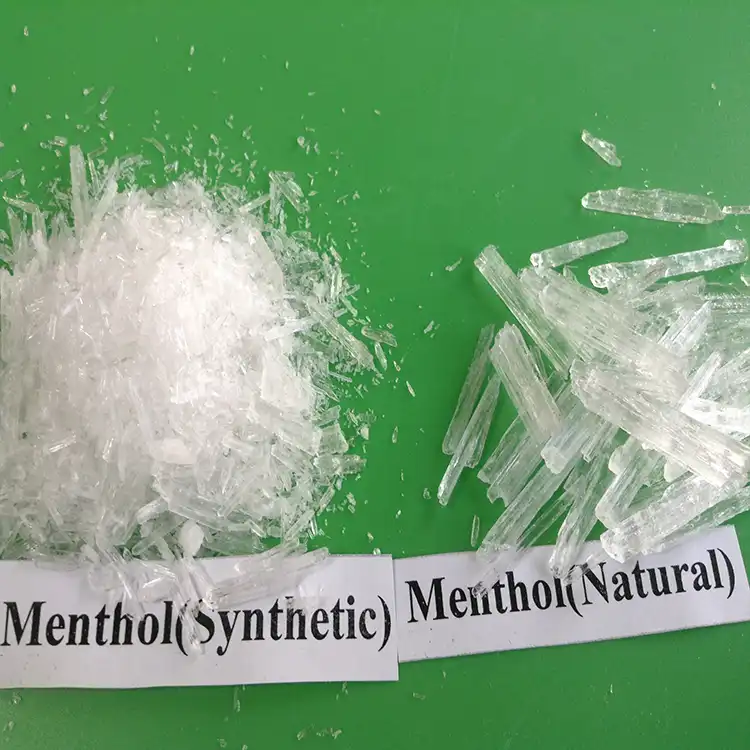
The main difference between natural and manufactured menthol is where they come from and how they are extracted. Natural menthol powder comes from plants like Mentha arvensis and is made by steam distillation and crystallization. This keeps the plant's natural structure and complex phytochemical profiles. To make synthetic menthol, chemicals are mixed with petroleum or terpene precursors like thymol or pulegone to make molecules with the same structure that can be used on a large scale in industry. Both types give the cooling effect, but they are made in very different ways and are regulated in very different ways. This means that buying tactics in the food, cosmetics, pharmaceutical, and nutraceutical industries are all affected.
Understanding Menthol: Composition and Sources
Menthol is an organic substance that belongs to the terpene alcohol family. Its formal name is 2-isopropyl-5-methylcyclohexanol. This substance comes in many different forms, such as crystals, fine menthol powder, and essential oils. Each of these forms is useful for different purposes in different industries.
Natural Menthol Extraction and Characteristics
Mentha arvensis, or cornmint, is where most natural menthol comes from. This plant is grown in large amounts in places like India, China, and Brazil. The first step in the extraction process is to pick grown plant material. Next, steam distillation is used to get basic mint oil that has 70–90% menthol in it. After cooling and crystallization, the substance is cleaned up to over 99% purity, which is needed for medicinal use.
The plant-based extraction keeps the stereochemical purity, resulting mostly in the L-menthol isomer, which has better taste and smell qualities than racemic mixes. There are many benefits to natural menthol, such as being able to get organic approval, consumers liking products that come from plants, and complicated sensory profiles made better by trace phytochemicals. Because of these qualities, natural menthol is very useful for high-end cosmetics, therapeutic skin products, and nutraceutical uses where market difference is driven by "clean label" positioning.
Synthetic Menthol Production Methods
Chemical synthesis routes are used to make synthetic menthol. These pathways build the menthol molecule through controlled processes. The main commercial method uses thymol that is made from m-cresol or cymene and changes it by hydrogenation and other chemical changes. Other ways begin with beta-pinene or other terpene precursors, giving producers more choices based on the cost and abundance of raw materials.
Today's synthetic methods produce menthol with high yields and uniform quality standards. The molecule level of this menthol is chemically similar to that of its natural cousin. Agricultural variability is eliminated by the controlled manufacturing setting, which makes production plans and prices stable. Synthetic menthol is used in businesses that need a lot of it at a low cost. It is especially useful in pharmaceutical APIs, over-the-counter medicines, mouth care products, and industrial flavorings where function is more important than where the plant comes from.
Physical Forms and Application Suitability
You can get natural and artificial menthol as brittle crystals, micronized powders, and liquids that have been mixed with carrier oils. Menthol crystals have the highest concentration and the longest shelf life, making them ideal for products that need to be exact in their doses. Powdered menthol makes it easier for solid dosage forms like pills, capsules, and packed lozenges to spread out. Liquid menthol solutions make it easier to add menthol to emulsions, mixtures, and sprays, where even spread is important for the product to work.
Natural vs Synthetic Menthol: Quality and Performance Comparison
The stereochemistry of natural menthol is very pure; it mostly contains (-)-menthol (L-menthol), which is the biologically active isomer that causes strong cooling effects. Gas chromatography analysis shows that pure menthol usually has 99.5% L-menthol content with little racemic contamination. This stereochemical uniformity means that finished goods will have known biological and sensory reactions.
Purity and Isomer Composition
In the past, making synthetic menthol led to racemic mixes with similar amounts of L-menthol and D-menthol isomers, which made the cooling effect per unit weight lower. Asymmetric synthesis or chiral separation methods are now used in more advanced synthetic processes to make L-menthol that is closer to natural standards in terms of purity, closing the performance gap. When looking at manufactured sources, pharmaceutical and nutritional companies must use chiral chromatography to check the isomer ratios to make sure they are therapeutically equivalent to natural standards.
Impurity Profiles and Safety Considerations
Depending on how well it is cleaned, natural menthol extraction may include small amounts of other monoterpenes, plant waxes, and chlorophyll products. At normal levels of use, these chemicals don't usually pose a safety risk, but they can change color stability, smell complexity, and possible allergen profiles. To meet the standards for pharmaceutical and food-grade materials, full COA paperwork should include tests for leftover pesticides, heavy metals, and bacteria contamination.
Different impurities are possible in synthetic menthol because it was made using chemicals. These impurities include leftover catalysts, reaction intermediates, and bits of petrochemicals. These impurities are lowered to almost nothing through distillation and recrystallization, which meets strict pharmacopoeia standards like USP, EP, and JP requirements. When made correctly under GMP conditions, toxicological tests repeatedly show that high-purity synthetic menthol has the same safety ratings as natural menthol.
The FDA says that both natural and man-made menthol are generally recognized as safe (GRS) for use in food, as long as they are used in certain amounts. Under 21 CFR, cosmetic rules allow menthol to be used in personal care products, but the quantity must be limited based on the type of product and how it is used. For pharmaceutical uses, it's important to follow the monograph specs laid out in official pharmacopeias. In traditional medicine, some treatment groups prefer natural sources.
Sensory Performance and Consumer Perception
Natural menthol has a round, complicated cooling profile that comes from L-menthol and small amounts of plant co-extractives working together. Sensory panels often say that natural menthol has more depth and a longer-lasting coolness than synthetic alternatives. This is why it is preferred for high-end cosmetics, artisanal candies, and therapeutic products where how customers feel affects their decision to buy.
The cooling effect of synthetic menthol is uniform and predictable, and the way it feels can be repeated from one production batch to the next. This dependability is good for mass-market products that need to give all customers the same experience. Examples of these are over-the-counter medicines, oral care products, and functional drinks. Consistency in the recipe has a direct effect on brand image and regulatory compliance.
Consumers often can't tell the difference between natural and artificial menthol in finished goods, especially when the menthol is added in small amounts or mixed with other flavorings. According to market research, consumers are more interested in labeling openness and stories about clean ingredients than in differences that can be felt. This shows how important sourcing paperwork and marketing positioning are in B2B procurement decisions.
Procurement Considerations for Natural and Synthetic Menthol
The supply lines for natural menthol rely on agricultural production cycles that are affected by weather trends, the seasons, and the way crops are grown in different areas. Harvest changes in major producing countries cause supply problems and price changes from time to time. When buying natural menthol, procurement managers should build ties with more than one seller in different parts of the world to lower the risk of disruptions and make sure there is a steady supply for production schedules.
Supply Chain Dynamics and Availability
Recent trends in agriculture show that growing crops in Southeast Asian markets is growing, which means that supply sources are becoming less dependent on India. These new production areas offer the chance for low prices, but they also bring up issues of quality consistency, approval status, and paperwork for tracking. When looking at new natural menthol sources to make sure they meet quality standards and government rules, it's important to make sure the suppliers have been properly qualified.
Using petrochemical or industrial terpene feedstocks that are available through known chemical supply networks, synthetic menthol production is not limited by the needs of agriculture. With predictable wait times and steady production all year, manufacturing facilities can handle their inventory just-in-time and cut down on the costs of storing goods. Because synthetic menthol is scalable, providers can handle big orders with stable prices, which is especially helpful for pharmaceutical and food uses that need to handle a lot of menthol powder.
Pricing Structures and Cost Analysis
Natural menthol usually costs more because it requires more work to remove and because of the costs of getting it certified as organic. Market prices change based on crop numbers, the value of the currency in the countries that produce the goods, and patterns of demand from the flavor and pharmaceutical industries around the world. Long-term supply deals with set prices or indexed changes help formulators plan their budgets when they add natural menthol to existing product lines.
When buying in bulk, especially when you buy more than one metric ton, synthetic menthol is cheaper. Competitive pricing is possible because of efficient production and easy access to raw materials. This makes it appealing for cost-sensitive uses like generic drugs, private-label consumer goods, and industrial flavoring compounds. But when buying something, people should think about the total cost of ownership, which includes quality assurance tests, making sure the product meets legal requirements, and any costs that might come up if they switch between natural and synthetic sources.
Certification and Quality Verification
Natural menthol suppliers who want to sell to the nutraceutical and pharmaceutical markets must show a lot of certifications. These should include organic certifications (USDA Organic, EU Organic), kosher and halal approvals, non-GMO proof, and current GMP lab credentials. Clear chains of custody should be set up in the traceability documents, from growing to extraction and purification. This will help with audit requirements and regulatory reports.
To get synthetic menthol, you have to make sure that the controls for the manufacturing process, the methods for analytical tests, and the relevant pharmacopeia papers are all followed. In quality agreements, tests factors should be listed, such as optical rotation (to prove that L-menthol is the main ingredient), residual solvent analysis, heavy metal limits, and microbial contamination levels. Certificates of Analysis from approved labs provide objective quality assurance that helps with government filings and choices about when to release a batch.
Testing by a third party, like independent labs, gives you more peace of mind when checking out new sources or making sure that important production runs are safe. Full lab reports, such as GC-MS identity, chiral purity assessment, and particle screening, protect against the risk of adulteration and make sure that all supply batches perform the same way.
Making the Right Choice: Which Menthol Type Suits Your Business Needs?
Pharmaceutical breathing products like inhalers, vapor rubs, and throat lozenges often use natural menthol because it has a well-known chemical profile and is well-liked by patients. The plant source is in line with traditional medicine ideas and meets the standards set by the pharmacopeia for active pharmaceutical materials. Clinical evidence that natural menthol works makes it easier for regulators to approve products and for doctors to suggest them.
ApplicationSpecific Selection Criteria
Nutraceutical dietary products that use menthol to help with digestion or lung health should get their ingredients from natural sources to keep their cleanlabel status and their suitability for organic certification. Consumer research constantly shows that people prefer botanical ingredients in health categories. This is why natural menthol costs more in expensive supplement lines. People who care about their health are driving the growth of the supplement market, and marketing stories that focus on plantbased actives connect with them.
Natural menthol is used in anti-aging serums, cooling gels, and soothing skin care products in the personal care and cosmetics industries, where chemical transparency affects buying choices. The complicated sensory profile of natural menthol supports claims of plant actives while making the product seem more expensive. The main use of synthetic menthol is in cosmetics for the general market, where it helps keep prices low without sacrificing effectiveness.
Functional food and drink companies choose menthol based on how it affects flavors, how well it dissolves, and the legal situation in each target market. Natural menthol helps with cleanlabel programs and organic product lines, while man-made options give popular goods a uniform taste. Combining both sources in different amounts to get the best cost-benefit ratio for a given recipe need is what hybrid methods do. When ordering menthol powder, companies must consider these diverse requirements.
Regulatory and Sustainability Considerations
Organic certification rules say that natural menthol must come from certified organic farming and extracting methods. Synthetic options are not allowed, even if they are as pure or work just as well. If a brand wants to sell organic products, they need to set up separate supply lines for natural menthol that have full records that can be traced back to approved farms and processing facilities.
As companies set environmental goals and meet stakeholder standards, sustainability efforts have a bigger impact on the purchases they make. When natural menthol is made, it uses up farmland, water, and chemicals that are used in farming (unless it is approved organic), while synthetic menthol is made using chemicals that are wasted and energy that is used in industrial synthesis. Comparing environmental effects over a product's life cycle gives us clear data that helps us make decisions about where to get our supplies that are sustainable.
New biotechnology methods that use fermentation to make menthol crystal from renewable materials look like good options because they combine the legal benefits of natural classification with the regularity and ability to make a lot of menthol crystal. Formulators who want long-lasting options that don't lower quality standards or make products more expensive like these artificial menthol crystal sources. Keeping an eye on how technology changes in this area allows buying teams to use new menthol crystal solutions as soon as they can be used in the real world.
Strategic Sourcing Recommendations
Diversified buying methods that include both natural and synthetic menthol choices give companies the freedom to adapt to changes in the market, in regulations, and in the needs of their product lines. Keeping approved suppliers for both types of menthol allows formulation optimization based on product positioning, target groups, and cost factors, but it doesn't stop innovation or market possibilities.
OEM and ODM makers can get menthol in a variety of forms, from high-quality natural formulas to cheaper synthetic options, depending on what their customers want. Flexible minimum order amounts and expert support for custom concentrations raise the value of the service and help keep clients for a long time.
Supplier partnerships that go beyond just buying things can lead to chances for joint development, custom solutions, recipe fixing, and sharing market data. When you have trusted providers who have shown they follow the rules, provide consistent quality, and offer quick technical support, they become strategic assets that help you gain a competitive edge and improve your operations.
Conclusion
It is important to carefully think about application needs, legal frameworks, environmental goals, and cost when deciding between natural and synthetic menthol. Natural menthol comes from real plants, can be certified as organic, and has complex sensory profiles that are valued in high-end medicinal, nutraceutical, and cosmetic products. Consistent quality, reliable supply, and low cost are all benefits of synthetic menthol that make it useful for functional food and large-scale medicine production. Understanding differences in makeup, performance, and buying patterns helps people make smart choices about where to buy things that improve product quality and effectively manage supply chain risks.
FAQ
Can synthetic menthol be used in organic certified products?
Most USDA and EU-certified organic goods don't allow synthetic menthol because they need natural farming ingredients. Organic certification rules say that plants must come from certified organic fields and extraction centers and be able to be tracked back to those farms.
What certifications should I request when purchasing menthol powder in bulk?
Some important certifications for bulk menthol powder are GMP compliance, ISO quality management credentials, pharmacopeia conformance (USP/EP/JP), organic certifications (if needed), kosher and halal approvals for certain markets, and full Certificates of Analysis from accredited laboratories that show testing for purity, identity, and contaminants.
Are there safety differences between natural and synthetic menthol?
When made according to pharmacopeia guidelines, both natural and fake menthol are just as safe. The FDA agrees that both types are GRAS chemicals that can be used in food. Proper cleansing gets rid of important safety differences. For safety reasons, checking purity through scientific tests is more important than classifying sources.
Partner with Bolin Biotechnology for Premium Menthol Powder Supply
Shaanxi Bolin Biotechnology Co., Ltd. makes high-quality menthol powder and works with makeup formulators, pharmaceutical businesses, nutraceutical makers, and functional food brands all over the United States. Our fully certified GMP, ISO, and HACCP supply chain makes sure that quality is maintained from the beginning of the process of sourcing to the end of output. We have strict quality control procedures that are checked by a third party, and we provide full analytical paperwork to support regulatory reports and audit requirements.
Our expert team can help you with formulation issues like improving stability, making the product more soluble, and changing the concentration to fit your unique needs. Whether you need natural menthol for high-end organic formulations or high-purity synthetic options for mass production of drugs, we can help. Our solutions are flexible, and we offer competitive lead times and reliable global shipping. Email our sales team at sales1@bovlin.com to talk about your needs, get more information, or set up a trial sample. Work with a reputable menthol powder provider that cares about the success of your product and the quality of your operations.

References
Kamatou, G.P., Vermaak, I., Viljoen, A.M., & Lawrence, B.M. (2013). Menthol: A simple monoterpene with remarkable biological properties. Phytochemistry Reviews, examining compositional analysis and biological activity profiles of natural versus synthetic menthol sources.
Eccles, R. (1994). Menthol and related cooling compounds. Journal of Pharmacy and Pharmacology, providing comprehensive review of pharmacological mechanisms, sensory perception, and therapeutic applications across pharmaceutical formulations.
Lawrence, B.M. (2007). Mint: The genus Mentha. Medicinal and Aromatic Plants - Industrial Profiles Series, detailing cultivation practices, extraction technologies, and quality parameters for natural menthol production.
Patel, T., Ishiuji, Y., & Yosipovitch, G. (2007). Menthol: A refreshing look at this ancient compound. Journal of the American Academy of Dermatology, analyzing dermatological applications, safety profiles, and regulatory considerations for cosmetic formulations.
United States Pharmacopeia Convention (2021). Menthol Monograph. USP-NF Official Standards, establishing quality specifications, analytical methodologies, and purity requirements for pharmaceutical-grade menthol products.
Nair, B. (2001). Final report on the safety assessment of Mentha Piperita (Peppermint) Oil, Mentha Piperita (Peppermint) Leaf Extract, and Menthol. International Journal of Toxicology, comprehensive safety evaluation supporting regulatory approvals across multiple jurisdictions and application categories.