_1745226507162.webp)

How to Use Ube Powder: Tips for Baking & More
Purple ube powder is used in a lot of industrial food products because it looks good and does something useful. Dioscorea alata gives us this bright purple powder. It's a great way for food companies and product makers to make unique products that meet customer demands for natural, plant-based ingredients. Knowing the right way to use ingredients is important when making baked goods, drinks, or specialty foods. This way, the color stays the same, the tastes are matched, and the product stays stable at all production levels.
Understanding Purple Ube Powder – Origin, Benefits, and Nutritional Profile
What Makes Purple Ube Powder Unique?
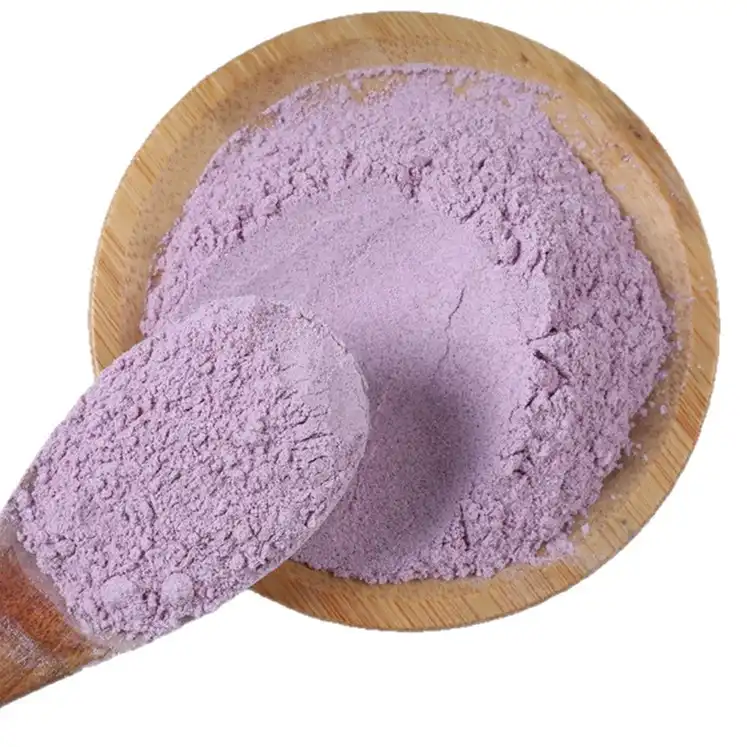
The root is used to make purple ube powder. The purple yam is grown in Southeast Asia and has a lot of traditional meaning there. The scientific name for it is Dioscorea alata. If you carefully process the fruit so that the natural colors and nutrients stay, the powder form will taste like fresh ube. Instead of dyes, the real purple color of this food comes from anthocyanins, which are vitamins that are also found in blackberries and blueberries.
Nutritional Advantages for Product Development
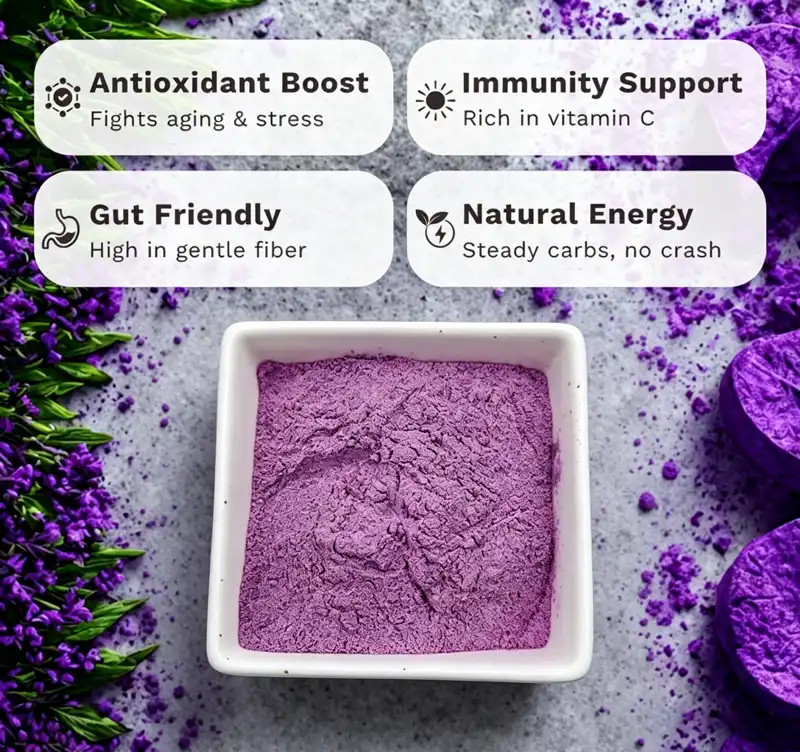
Purple ube powder does more than just look good when it comes to making things. The fact that the ingredient has dietary fiber backs up claims on the label that people who care about their health like. It gives you important vitamins, like vitamin C and a number of B vitamins, as well as minerals like calcium and potassium. The people who make these foods can sell them as useful foods instead of just sweet treats because they are healthy. Research suggests that foods high in anthocyanins may be good for you because they are antioxidants. Brands that want to reach people who are interested in health and exercise can now sell them even more easily.
How Ube Differs from Similar Ingredients
You should be able to tell the difference between ube, taro, and purple sweet potato when you go shopping. Ube is another hot and sweet root that people sometimes mix up with taro. But taro and ube are not the same plant. Ube and taro are both purple roots that taste a little sweet. The taro root has brown skin and white meat with tiny violet spots when it is first picked. The violet color in many taro drinks and sweets comes from food coloring added to processed or fake taro powder.
When people see purple meat on ube, they often mistake it for purple sweet potatoes. But they are not the same thing. The purple sweet potato is a sweet potato, while the ube is a yam. There are nutty notes in ube that make it taste different from purple sweet potato, which has a more earthy taste. These variations change how smells mix, how bright the colors are, and how people see them. This is why picking the right ingredients is so important for the success of a product and its business.
Practical Tips on How to Use Purple Ube Powder in Baking and Food Production
Substitution Ratios and Formulation Guidelines
You should know the right amount of purple ube powder to use in recipes so that you don't mess up the recipe's formula. If you use purple ube powder instead of about 10 to 15 percent of the flour, most cooked things will still turn out the same. With this amount, the structure of the gluten network is kept while color and flavor are added. Up to 20% more makes both traits stronger, but the amount of liquid may need to be changed because purple ube powder absorbs water differently than wheat flour.
When you go bigger, you should pay more attention to how the water factors change. Because of the starch in ube, water doesn't stick to it as well as it normally would, so liquid ingredients usually need to be raised by 5 to 10 percent. It saves time and money to test small amounts before committing to full production runs. This also makes sure that the quality stays the same. You can learn a lot by looking at the batter's thickness. Aim for flow qualities that are similar to your control recipe, and make small changes to the amount of water until you get the structure you want.
Commercial Applications Across Product Categories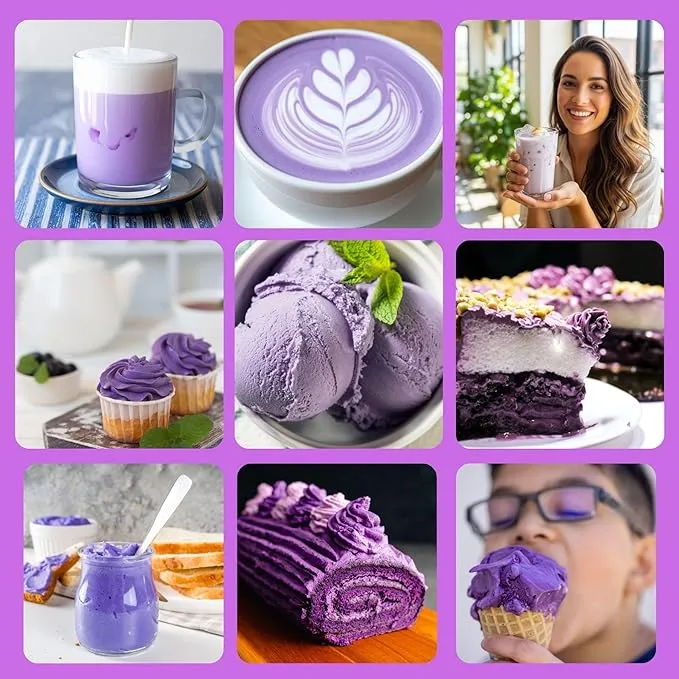
It is possible to use purple ube powder in many different goods, and there is a best way to use it for each type. This ingredient can be used in the following ways that have been shown to work:
• Bakery Products: In the bakery, purple ube powder gives cookies, muffins, bread, and cakes a unique purple color and a bit of sweetness. That way, there are no clumps that could change the color when the powder is mixed with dry ingredients. To allow for the powder's ability to soak up water, bread recipes need a little longer baking times.
• Frozen Desserts: To make dreamy purple yam ice cream, purple ube powder is mixed into cream bases before they are prepared. Natural sugars in the powder help make the texture smooth by dropping the freezing point just a bit. This keeps ice crystals from forming. You can change how much powder is in both cream and sorbet to get the right amount of strength.
• Beverage Systems: When making colored milkshakes, smoothies, or ube drinks, it's important to think about how well the colors will mix. To make a paste that spreads out better in cold drinks and keeps them from settling, mix powder with small amounts of warm liquid ahead of time. Functional drink makers like that the fiber in purple ube powder gives drinks body without the need for extra supports.
• Frostings and Fillings: Purple ube powder can be used to give frostings, fillings, or whipped cream color and flavor. Because the powder is spread out evenly, adding it after creaming the fat-based system is like frosting. The powder is a little thicker because it has natural starch in it. This helps it stay stable in cold places.
These examples show that adding purple ube powder slowly can help with many goals at once, such as texture, taste, protein, and color. This makes it very useful for teams working on new goods that want theirs to stand out.
Storage and Shelf Life Management
If you store your large purple ube powder goods the right way, they will stay safe. The stuff won't move as long as you keep it cool, dry, and out of direct sunlight. If the temperature is below 25°C (77°F) and the relative humidity is less than 60%, water can't be absorbed. This could lead to clumps or the growth of bacteria. Food-grade HDPE sealed boxes or laminated bags with moisture screens keep things fresh for a long time.
In perfect conditions, food can be stored for 12 to 18 months. However, this can change based on how it was handled and how much water it had to begin with. Making use of first-in, first-out cycle ways cuts down on trash and keeps the quality of the goods the same. Making regular checks on the color stability, moisture content, and microbe counts of the stock you keep can help you avoid differences between batches that might affect finished goods.
Procurement Insights – Choosing and Buying Purple Ube Powder for Your Business
Essential Certification and Supplier Vetting
To make a sourcing choice, you need to carefully look at the qualifications and licenses of the company and the product. Food safety certifications like HACCP, GMP, and FSSC 22000 show that a company is serious about keeping food safe. ISO 9001 approval shows that the company has a strong quality management system. These standards are very important, especially for uses in medicine and food that are closely watched by officials.
Proof of organic and non-GMO meets the wants of a growing market, but it changes how prices are set. Organic purple ube powder costs more, but it also makes natural and organic product lines more money. When a seller is being screened, they should be asked to show proof of these claims, like copies of certificates and results from third-party testing bodies. It's easier to keep track of things from the farm to the processing plant when you buy from sellers who make it easy to do so.
Organic Versus Conventional Considerations
To choose between organic and normal purple ube powder, you need to look at both price and where the product fits in the market. Organic types usually cost 20 to 40 percent more than normal ones because they have to pay more to be certified and get less money back from the crops. But clean-label trends in North America and Europe are moving more and more toward organic materials, especially in higher-end product lines.
Traditional purple yam powder works well for uses that need to be cheap. It meets standards for food safety and works the same way most of the time. You make strategic decisions based on cost-benefit studies that are unique to your product line and community. A few businesses get their powder from two different sources. For their more expensive lines, they use organic powder, while for their less expensive lines, they use regular powder.
Sourcing Channels and Logistics Planning
It's easy to buy things and costs less when you know where to go shopping. You can often get better deals if you go straight to the people who make specialized plant products instead of going through a middleman. This is especially true for big buys that you place often. At first, platforms that put buyers in touch with verified suppliers help buyers find suppliers. But before making big deals, buyers need to do a lot of study.
The total cost of landing is affected by logistics problems in a big way. You can save money on shipping containers from Asia if you buy a lot of them, but you might not need that many right now. When you need to send something quickly or in small amounts, air freight is a good option, but the cost per unit is much higher. It is safer and faster for deliveries when you work with companies that have moved food ingredients abroad before and know how to keep things at the right temperature, fill out customs forms, and follow the rules.
Ensuring Success with Purple Ube Powder – Best Practices and Avoiding Common Pitfalls
Common Formulation Challenges and Solutions
You need to know about common makeup problems if you want to get good results. Most of the time, the problem is that the wrong amount of wetness is used, which leads to dry, crumbly textures or goods that are too thick. In order to make mass production methods that can be used again and again, exact changes in water during the first tests must be written down. When you use baker's ratios instead of exact amounts, it is easier to be uniform across different batch sizes.
The sweetness of purple ube powder changes from batch to batch depending on the tubers used and the way they were processed. This can make it hard to find the right taste balance. By setting accepted limits instead of fixed amounts for sugar, the amount can be changed to account for how things change over time. Since each item is different, sensory review groups work together to make sure that the right amount of sweetness is used to meet the needs of the target audience.
It's important to see how stable the colors are at various baking temperatures and pH levels. When an acidic environment is present, anthocyanin colors change from purple to blue. If they are heated for a long time, they may lose their color. Formulations with a pH between 5.5 and 6.5 keep the bright purple tones. You can use yogurt, buttermilk, or small amounts of citric acid to do this. Any color loss that might happen before the goods go on sale can be seen by putting them through tests that shorten their shelf life.
Quality Control Protocols for Production
Bad quality products are stopped before they get into the production stream by strict checks. The acceptable ranges for the number of microbes, the spread of particle sizes, the amount of moisture, and color values (measured using the CIE Lab* color space) should be set down in standard operating procedures. You can get certificates of analysis from sellers to help you get started with your data. But you should have a third party test your work on a regular basis to make sure you're still following the rules.
In-process controls watch over important things that affect the quality of the finished product while they are being made. Keeping track of the mixing times, batter temperatures, and proving times makes it possible to find records that can be used to support quality reviews when differences happen. Before a finished product hits the market, it is tried to make sure that it looks, tastes, and meets nutritional promises.
Emerging Trends and Future Applications
It's important for innovation teams to keep an eye out for new uses that aren't just baking. The naturally purple color of purple ube powder makes it appealing to people who like to make drinks that look good in pictures for social media. This is really true for ready-to-drink health drinks, coffee shop favorites, and bubble tea. Because it has fiber, the vitamin is good for gut health. This means it can be used in functional foods like protein bars, meal replacements, and prebiotic pills.
We haven't even begun to use savory foods in new ways yet, and new recipes are popping up all the time, like purple yam gnocchi, colored pasta dough, and side dishes that are heavy on veggies. People who want to make things stand out may find purple ube powder useful for making plant-based meat substitutes that use natural colors. As antioxidants, anthocyanins are used in beauty and personal care items. This opens up jobs in other fields for people who make plant ingredients.
Conclusion
Finding out the right way to use purple ube powder can help your product stand out in places where there is a lot of competition. You can choose recipes that balance how they look with how well they work if you know where the item comes from botanically, what nutrients it gives you, and how it works. When you buy things strategically based on licensing standards, source reliability, and cost efficiency, you can keep prices low and quality high. To get consistent results from one production run to the next, you need to know about common makeup problems and take good quality control steps. As more people become interested in naturally colored plant-based foods, purple ube powder is a versatile choice that can meet the needs of both the market and recipes.
FAQs
How long does ube powder last after being stored?
Purple ube powder stays fresh for 12 to 18 months if it is stored properly: in sealed containers at temperatures below 25°C and low humidity. There are things that change color and taste more quickly when they are wet, hot, or lit up. With first-in, first-out inventory movement and moisture-barrier packing, you can make a product last longer while still getting the same performance from batch to batch.
Is it possible to use a lot of ube powder as a natural candy color?
Purple ube powder is a natural way to make food purple, and it works well for making industrial foods. When the pH level is between 5.5 and 6.5, the color stays the same. Anthocyanin colors are good for people who care about their health because they don't have any man-made ingredients. But the color strength changes from batch to batch. To keep the look the same across production runs, standard tests and maybe even changes to the recipe are needed.
What is the main difference between normal ube powder and organic ube powder?
Organic and regular purple ube powder work about the same most of the time. It's not how they work that's different, but how the ube is grown and who approves it. Some people find it useful to buy products with clean labels and organic approvals, even though they cost more. Still the same in terms of nutrition and color, so the choice should be based on what your target market wants and your price, not on how well it performs.
Partner with Bolin Biotechnology for Premium Purple Ube Powder Supply
The certified organic purple ube powder that Bolin Biotechnology makes is carefully checked for quality so that it can help you reach your product development goals. There are ISO, GMP, and HACCP badges on our building. These make sure that the ingredients are safe and uniform enough to meet standards for food, medicine, and nutrition. We give you a lot of specific information, such as analysis certificates, legal support materials, and formulation help that is tailored to your needs.
Having been in the purple ube powder business for a long time, we know how hard it is for purchasing teams to meet quality standards and keep costs low at the same time. We have a minimum order amount that can be changed to fit the needs of both test formulas and full-scale production. This is also helped by reliable transportation and clear contact all along the production chain. You can email our team at sales1@bovlin.com to get samples of our products, full specs, or price quotes for big orders. Bolin Biotechnology can help your business by giving you access to high-quality plant products, as well as good service and expert help. Find out how they can do this.
References
Champagne, D.E., "Functional and Nutritional Properties of Purple Yam (Dioscorea alata): Applications in Food Product Development," Journal of Food Science and Technology, 2021.
Rodriguez, M.T., "Natural Anthocyanin Pigments: Stability, Extraction, and Industrial Applications in Food Systems," Food Chemistry Review, 2020.
Chen, L. and Wang, Y., "Comparative Analysis of Taro, Purple Sweet Potato, and Ube: Botanical Differences and Functional Properties," International Journal of Plant Sciences, 2022.
Thompson, R.J., "Quality Assurance Protocols for Botanical Ingredient Procurement in Commercial Food Manufacturing," Food Quality and Safety Standards, 2023.
Park, S.H., "Applications of Purple Yam Powder in Bakery Products: Formulation Optimization and Consumer Acceptance," Cereal Science and Technology, 2021.
Martinez, A.C., "Trends in Natural Food Colorants: Market Analysis and Regulatory Considerations for Plant-Based Pigments," Food Industry Journal, 2023.