_1745226507162.webp)

What is the Difference Between Wheat Protein and Hydrolyzed Wheat Protein?
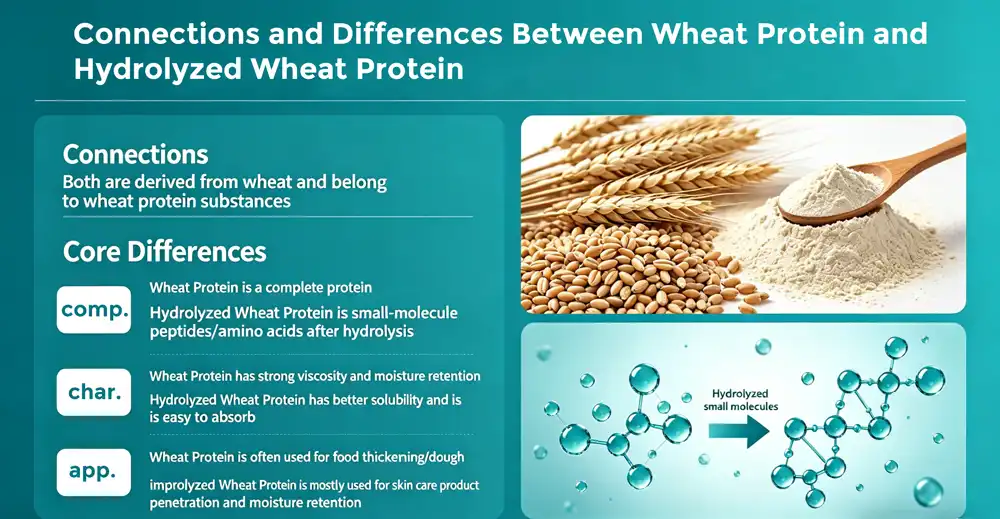
It is important to know where the protein in the materials for foods, makeup, and nutraceuticals comes from. Wheat protein and hydrolyzed wheat protein are used for different things, even though they both come from wheat. The molecules' form and how they work have changed the most. Wheat protein stays true to its long chemical chains, which makes it great for baking and changing the way foods taste. It is chemically or enzymatically broken down into smaller peptides and amino acids. Hydrolyzed wheat protein powder, on the other hand, is not. It's now much easier to break down, take in, and work with cells. These changed forms are great for personal care items, dietary supplements, and functional foods that need to be quickly consumed and still have a lot of substance.
Understanding Wheat Protein and Hydrolyzed Wheat Protein
The Nature of Wheat Protein
You can find vital wheat gluten, which is another name for wheat protein, in wheat seeds naturally. It is a complex mix of the proteins glutenin and gliadin. There are stretchy networks made of these proteins when they are wet. Because of this, they are often used instead of bread and meat. It is common for native wheat protein to have a molecular weight of more than 100,000 Daltons. This makes it strong and sticky, but it is also hard to breakdown in neutral water solutions. People use this trait to make textured vegetable proteins and dough that is easier to stretch. The right bread structure is achieved in baked goods by wheat gluten because it can hold air during fermentation. However, this means it can't be used in drinks, emulsions, or recipes that need to be clear and spread out quickly.
What Defines Hydrolyzed Wheat Protein?
Hydrolyzed wheat protein is the most cutting-edge type of protein that comes from wheat. Manufacturers break down peptide links with enzymes or sometimes by treating them with acids or bases. Because of this, the molecular weight drops to 1,000 to 10,000 Daltons, depending on the use. In a basic way, this process changes the way things work. It is possible to make hydrolyzed wheat protein powder with shorter peptide chains that are high in glutamine (about 35%) and proline. These are two amino acids that are very good at binding water and making films. If you change the pH to a range between 3 and 10, the parent protein breaks down completely. It stays steady in surfactant systems and can pass through hair cuticles and skin layers. To be pharmaceutical-grade, they have to be very pure, and to be cosmetic-grade, they have to make sure that the molecular weight distribution is just right for a certain entry depth.
Quality Standards and Certifications
Procurement teams have to deal with a lot of different quality standards when they buy these proteins. FDA rules say that food-grade wheat protein must follow certain rules. It usually has standards like ISO 22000 or FSSC 22000 that make sure it is safe to eat directly. Even stricter controls are needed for pharmaceutical-grade hydrolyzed wheat protein. For example, heavy metal levels must be below the limits set by the pharmacopeia, bacteria counts must meet USP standards, and the whole process must be fully tracked from where the wheat comes from to where it is packed. When cosmetics are used, they usually need to follow INCI names, check that the storage system works, and make sure that the safety labels are right. To get organic approval, you need to make sure that the wheat doesn't come from GMOs and is broken down organically with enzymes instead of using poisons made by people. These differences have a direct effect on following recipes, getting into markets, and making sure end users are safe. This is why it's so important to check out the seller before buying.
Key Differences Between Wheat Protein and Hydrolyzed Wheat Protein
Molecular Structure and Functionality
The performance scores for wheat protein and its hydrolyzed state are very different because of the way their chemicals are structured. Wheat protein is made up of long, twisted strings of polypeptides that are linked together by disulfide bonds. This makes networks that are flexible, which is great for building things but can be hard to break apart in some models. These chains are broken up into pieces that are about 10 to 100 amino acid residues long when hydrolyzed wheat protein is hydrolyzed. This shows groups that were hidden before that are hydrophobic and hydrophilic. Because it is amphiphilic, which means it has parts that like water and parts that don't, it works better in beauty creams to mix ingredients and in shampoos to keep the foam stable. Because the molecules have less mass, the isoelectric point moves to a pH range of about 4.5 to 5.5. This changes the way charges are spread out and how objects stick to each other. These are important things to keep in mind when getting electrostatic pull treatments for broken keratin in your hair.
Bioavailability and Digestibility
The way they are used for nutrients is another big difference. When you eat wheat, a lot of enzymes are needed to break down the whole protein before your body can absorb it. This limits how much it can take in and can make bellies hurt for people who are sensitive. When hydrolyzed forms get there, they are already broken down. The peptides are now small enough for peptide transporters to take them up directly in the gut. This makes it faster for amino acids to get to cells. This is very important for functional drinks, sports nutrition products, and clinical nutrition foods that help the body absorb protein quickly to help it heal or get better. Studies reveal that the highest levels of amino acids in the blood happen much more quickly for wheat peptide with molecular weights below 3,000 Daltons. But breakdown doesn't completely get rid of gluten's ability to make the immune system react. Changing the shape of the protein might make it less reactive, but small gluten epitopes often stay, so it's important to be careful when managing allergies.
Application Profiles Across Industries
Because of its cationic potential at an acidic pH, hydrolyzed wheat protein is used in cosmetics because it is good for hair and skin. There are two main types of shampoos: rinse-off and leave-on. Rinse-off shampoos use between 2% and 5%. Food experts, on the other hand, use natural wheat protein to make dough easier to work with, give energy bars more protein, or make things that look like meat. Some types of protein don't get cloudy when cooked or when the pH level changes, so they work well in clear protein drinks. In pharmaceuticals, low-molecular-weight wheat peptide are sometimes used as fillers or useful ingredients. However, collagen substitutes that don't come from animals are still more popular in this field. By knowing these boundaries, you can avoid making mistakes in the recipe and make sure that the ingredients you choose meet the product's performance goals.
Procurement Considerations for Hydrolyzed Wheat Protein Powder
Grade Classification and Specifications
If you want to get hydrolyzed wheat protein, you need to make sure that the details you give match what you want to use it for. For food-grade forms, the amount of lead must be less than 2 ppm and the amount of arsenic must be less than 1 ppm. Another requirement is that the dry protein content must be at least 80% and the total plate count must be less than 1,000 CFU/g. Salmonella and E. coli must also not be present. The way molecular weight is spread out is very important in makeup. The best molecular weight for deep treatments is between 1,000 and 3,000 Da. The best molecular weight for good training is between 3,000 and 5,000 Da, and the best molecular weight for making a film on the surface is between 5,000 and 10,000 Da. The standards for pharmaceutical-grade materials must be met, endotoxins must not be found, and the whole supply chain must be tracked, with proof of where the wheat came from. You have to show that the wheat you use doesn't have any GMOs and that natural enzymes are used to break it down in order to get organic approval. By making these things clear in buy orders, you can avoid specification mismatches and legal issues.
Supplier Evaluation and Quality Assurance
For product quality to stay the same, you need to work with sources you can trust. The company's ability to make things should be looked at. For example, it should be checked to see if they have their own enzyme hydrolysis equipment, analysis labs with gel permeation chromatography for tracking molecular weight, and quality management systems that are at least ISO 9001 approved. Ask for analysis papers from the most recent production runs to make sure the amounts of protein, amino acids, moisture, and contaminants are right. Check to see how your providers handle allergens. Cross-contamination with dairy, soy, or other allergens makes it hard to mark and keep people safe. This is especially important if your plant works with more than one type of protein. Openness in the supply chain is important for everyone. Sellers should say where the wheat comes from, who gives the enzymes, and if any parts of the processing are outsourced. When there are gaps, long-term ties can help you get what you need faster, let you change the particle size ranges, and get expert help when you're having trouble with a formulation.
Pricing Dynamics and MOQ Considerations
On the market, the price of wheat peptide changes based on how hard it is to process, how much wheat costs, and how much enzymes cost. If you want to buy more than 500 kilograms of food-grade material, the going rate is generally between 8 and 15 USD per kilogram. The going rate for organic and pharmaceutical products is USD 18 to 30 per kilogram. The lowest amount you can order from different companies is very different. For each sale, big brands need around 500 to 1,000 kilograms. This makes it hard for small brands to keep enough product on hand. OEM-friendly suppliers might be able to give you more freedom with orders as low as 100 to 250 kilograms. This is helpful while a product is still being developed. You may be able to get better deals if you sign long-term contracts and say you'll buy a lot of something. This could help you save 10% to 15%. When you use private labeling, companies offer unique packaging, a proof of authenticity, and paperwork that is only used in your market. This helps brands stand out. Don't just compare unit prices when you shop around; also look at the total arrival costs, which include storage, freight, and customs taxes. This will give you a good idea of what the goods are worth.
Practical Applications and Usage Guidance
Hair and Skincare Formulation Guidelines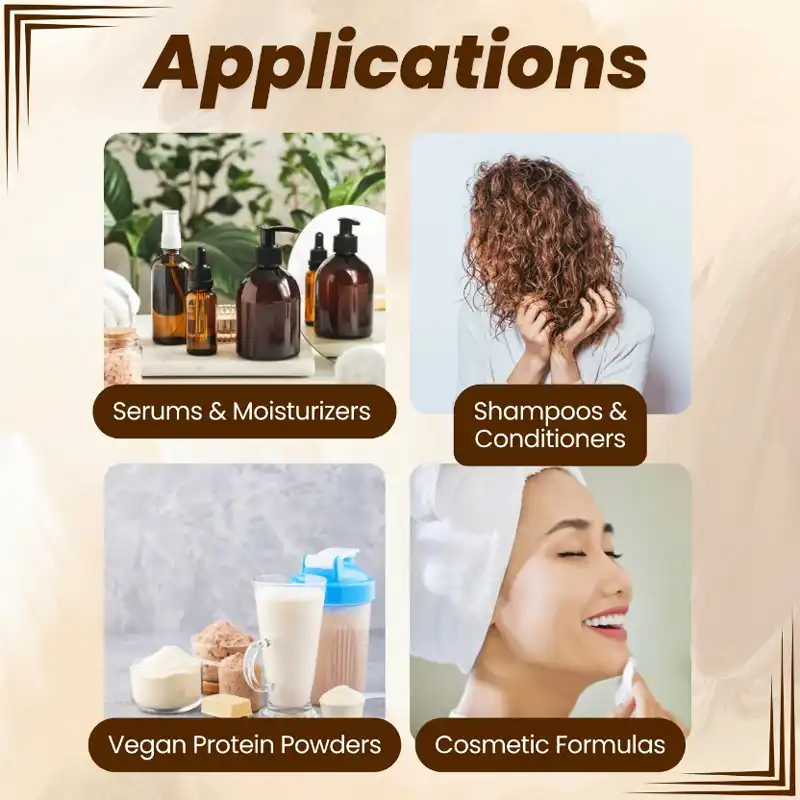
Wheat protein that has been broken down is used in makeup because it can hold things together and form films. The amount of the ingredient in most shampoos and conditioners is between 1% and 3%. Up to 5% of the material is used in deep repair treatments. The protein sticks better to charged, broken hair shaft parts than to other parts. It smooths out the skin scales and fills in tiny holes. This makes the hair shiner, easier to comb, and less likely to break. People who make medicines often mix hydrolyzed wheat protein powder with cationic polymers and conditioning esters to make the effects greater. Usually, 0.5% to 2% amounts are used in skin care items to improve the skin's ability to hold water and act as a shield. Wheat peptides absorb moisture from the air because they are hygroscopic. This keeps the skin soft and makes thin layers that let water pass through but stop water from leaving the skin's surface. If the product is going to be kept for a long time, it is important to make sure that it works with stabilizers and in the pH ranges that it was designed to work in.
Food and Nutritional Applications
To increase the protein content of their goods, improve their look, and make them easier to dissolve in challenging mixtures, nutritional product manufacturers use hydrolyzed wheat protein. In order to make clear protein drinks, low-molecular-weight hydrolysates (below 3,000 Da) can be used. These stay clear at pH 3 to 4, which is standard for drinks with fruit flavors. To add protein, you can use 2% to 5% of the weight of the product. This will not make it thicker or cloudier. As a dough relaxer in made goods, hydrolyzed wheat protein shortens the time it takes to mix the dough. This is useful for things like crackers and cookies where too much flexibility makes processing hard. Being able to work with the dough is easy because the protein stops the gluten networks from forming. Bars and snacks that have extra protein use 3% to 8% hydrolyzed wheat protein to make them more protein-dense while still having the right amount of chewiness and wetness. The product doesn't get too soft during storage as long as the balance of humectant and water activity is kept in check.
Storage and Handling Best Practices
Keeping things in the right way keeps the ingredients pure and stops quality loss that hurts how well the mixture works. It is easy for hydrolyzed wheat protein powder to soak up water from the air because it is hygroscopic. This could make it stick together, grow germs, and lose its shape. Always store things in sealed, food-safe containers in cool, dry places where the temperature doesn't go above 25°C and the humidity doesn't rise above 60%. After the package is opened, it needs to be sealed again right away with moisture-proof bags or the contents need to be moved to cases that don't let air in and put in desiccant packets. Things won't be kept longer than their recommended shelf life, which is usually 24 months for sealed packing, if you follow the first-in, first-out rule for turnover. Don't deal with strong oxidizers, heavy metals that could speed up degradation, or other things that won't work with the material. As part of your safety gear, you should wear a dust mask while you weigh and mix. This is done so you don't take in anything bad. As long as it is treated properly, hydrolyzed wheat protein isn't very dangerous.
Conclusion
Once you know the difference between wheat protein and hydrolyzed wheat protein, you can buy items that will work well with your recipe and follow the rules. Because it changes the structure of things, native wheat protein is great for baking and making things taste different. If you treat hydrolyzed wheat protein powder with enzymes, on the other hand, it dissolves, bioavails, and stays firm better. These are all important properties for makeup, nutritional supplements, and functional foods. When the molecular weight of solid gluten is lowered through controlled breakdown, it changes into flexible peptides that can reach the exterior of cells, bind water, and form protective films. To find something good, you need to think about grade requirements, selling skills, and needs that are specific to the application, such as molecular weight distribution, quality standards, and in-line certification. By carefully weighing their options and following the right handling procedures, procurement experts get ingredients that make products work better, meet standards, and help businesses get ahead in a competitive market.
FAQ
Can individuals with gluten intolerance safely use hydrolyzed wheat protein?
This process breaks down the structure of hydrolyzed wheat protein, but it doesn't get rid of all gluten proteins. After being hydrolyzed, some people may not be able to identify immunogenic epitopes as well. However, foods made from wheat can still cause allergies and should generally be labeled as such. Gluten-free people should not eat hydrolyzed wheat protein unless a test using a recognized method, like ELISA R5, shows that the gluten amount is less than 20 parts per million. If a business wants to sell its goods to people who can't have gluten, it might want to use different protein sources, like those from potatoes, peas, or rice, which don't cause cross-reactivity at all. People stay safe and follow the rules when they have clear information about allergens.
What advantages does hydrolyzed wheat protein offer in hair care products?
It is very helpful for hair care products when the pH level of the shampoo is between 5.5 and 6.5 because hydrolyzed wheat protein is acidic. This is because it lets negatively charged, broken keratin surfaces stick together electrostatically. Pepsins can only deposit on damaged areas, filling in holes in the structure and cleaning out skin scales. Because it is stretchy and thin, the protein makes films that are more durable, less likely to break, and shiner without being heavy. The body saves water by having a lot of glutamine and proline. This keeps the body from drying out and getting stiff. Wheat-based options are better for vegans because they don't contain hydrolyzed keratin, which comes from animals. They also smell less like animals and are cheaper while still thickening and treating hair the same way.
How can buyers verify supplier authenticity and product quality?
To check a provider, the first thing you should do is look at their certificates. There may be Halal or Kosher licensing needed, as well as ISO 9001 for quality management and GMP compliance for good production practices. Ask for several certificates of analysis that show all production lots always meet the requirements. This is very important for checking the amounts of contaminants, protein content, and molecular weight distribution. Before big purchases are made, samples are tested in a lab by a third party to make sure the specs are correct. Audits of factories can be done by qualified factory workers or qualified outside inspectors. These checks see how well the factory can make things, its quality control systems, and how it handles allergens. A business that is honest about where the wheat comes from, who provides the enzymes, and how the food is prepared is one that you can trust. References from present customers can tell you a lot about how trustworthy, helpful, and quick you are to help when there are problems in the supply chain.
Partner with Bolin Biotechnology for Premium Hydrolyzed Wheat Protein Solutions
Protein products can be hard to find, so you need a partner with technical know-how, quality control, and a strong supply chain. For making hydrolyzed wheat protein powder, Shaanxi Bolin Biotechnology Co., Ltd. is a stable business. They have been focusing in plant extracts for more than ten years and have clients in the cosmetics, nutraceuticals, medicine, and functional food businesses all over the world. Many certificates, such as ISO, GMP, and HACCP, are kept on file to make sure that every batch meets the highest standards set by governments around the world. We make sure that our enzyme-hydrolyzed wheat protein powder has the right molecular weight distribution for each use. It also comes with all the analyses and can be traced back to where it came from. This includes cosmetic-grade peptides for new hair care products, pharmaceutical-grade protein for therapeutic formulas, and food-grade ingredients to add to drinks. Our expert team can help you with formulation and make changes that speed up the development of your product. A low minimum order amount and flexible minimum order amounts work for both new and well-known brands. The low bulk price also helps you stand out in the market. Our helpful staff can be reached at sales1@bovlin.com to talk about your specific needs and find out how our hydrolyzed wheat protein powder can make your recipes better with stable quality and a steady supply.
References
Smith, J.R., & Chen, L. (2021). Functional Properties of Hydrolyzed Plant Proteins in Food Systems. Journal of Food Science and Technology, 58(4), 1256-1268.
Thompson, M.A. (2020). Cosmetic Applications of Wheat-Derived Peptides: Mechanisms and Efficacy. International Journal of Cosmetic Science, 42(3), 223-235.
Garcia, P., & Williams, K. (2019). Enzymatic Hydrolysis of Wheat Gluten: Process Optimization and Product Characterization. Food Chemistry, 287, 115-124.
Anderson, R.T., Davis, S.L., & Moore, H.J. (2022). Bioavailability and Digestive Kinetics of Hydrolyzed Versus Intact Wheat Protein. Nutrition Research Reviews, 35(1), 88-102.
Liu, X., & Martinez, C. (2020). Quality Standards and Regulatory Considerations for Protein Hydrolysates in Global Markets. Food Control, 118, 107401-107413.
O'Connor, D.P., & Zhang, Y. (2021). Comparative Analysis of Plant Protein Sources for Industrial Applications. Industrial Crops and Products, 162, 113-128.