_1745226507162.webp)

How to Use Menthol Crystals in Natural Products?
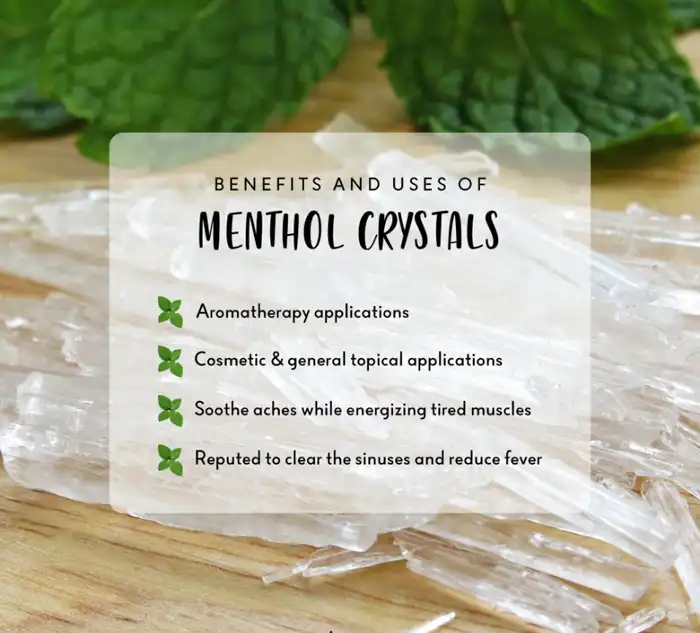
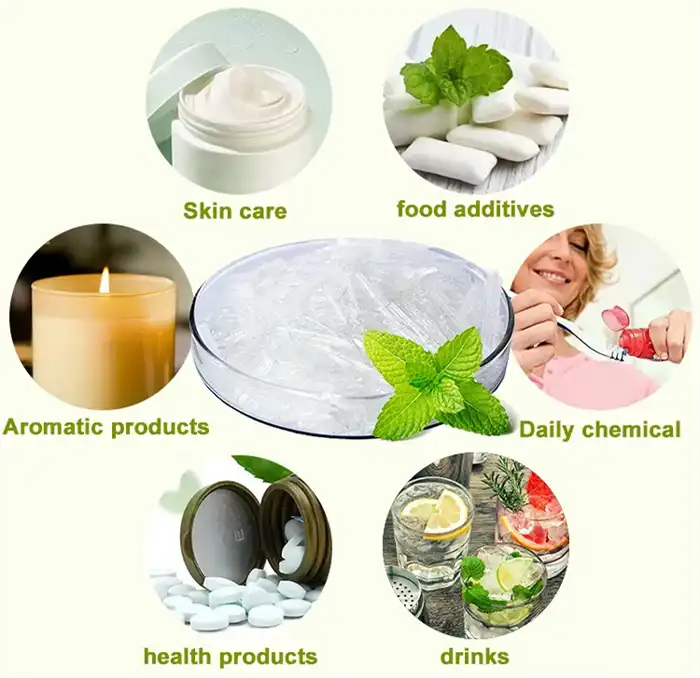
Menthol crystals that are mixed with natural ingredients work really well to cool things down. Many different ways can be found to use them in food, health, and skin care. Mostly peppermint or corn mint oils are used to make menthol powder or crystals, which are very pure, keep their strength, and come from natural sources. Because these chemicals breakdown easily in alcohols and oils, they are great for making balms, pain killers that you put on your skin, and flavoring systems. If you know how to handle, dose, and make drugs the right way, you can get the most medical benefits while also keeping the product safe and following all the rules in many fields.
Understanding Menthol Crystals and Their Role in Natural Products
What Are Menthol Crystals and How Do They Differ from Other Forms?
Mind you, menthol crystals, which usually have 99% or more L-menthol in them, are the best form of menthol for manufacturers. These clear, needle-like crystals form when peppermint oil freezes. They separate the menthol from the other ingredients. As a medicine, menthol crystals are the best form. On the other hand, menthol powder might have anti-caking agents or other processing aids added to it. At room temperature, menthol stays rigid. But menthol oil is liquid and has more green chemicals in it than just menthol. Crystalline types are best for formulators who need to measure strength regularly because they can be dosed precisely and last longer.
Natural Extraction Methods and Quality Grades
As a first step, menthol is made from plants called Mentha arvensis or Mentha piperita. These plants are mostly grown in India, China, and the US. After distilling the peppermint oil, the menthol part is cooled down slowly to form crystals. Man-made forms of menthol that come from petrochemicals are different from biological forms that come from plants in this way. Quality grades range from technical grade, which is used in business, to USP/EP pharmaceutical grade, which is used in medicine and must meet high purity standards. Extra tests are done on food-grade menthol to make sure it is safe for use in food. Heavy metals and bacteria are looked for. Approvals for organic farming add another layer of proof that no chemicals are used in any part of the supply chain.
Key Benefits Across Industries
The cooling effect of menthol comes from how it interacts with TRPM8 receptors in nerve cells. In spite of not actually cooling the skin, this makes it feel cold. It is useful for topical drugs that help muscle pain, joint pain, and light skin irritations because it calms people down. Menthol makes toners, shaving creams, and foot care products feel cool and refreshing. It can also kill some germs, but not very well. It has been shown that menthol can temporarily ease coughs, stuffy eyes, and sore throats. This is why it is used in medicines. People who make food and drinks like that menthol can add a strong flavor to small amounts, making it a cheap way to flavor gums, sweets, and mouthwash. Menthol is becoming more and more popular around the world because it can be used for so many things.
Practical Applications of Menthol Crystals in Natural Products
Formulating Topical Skincare and Therapeutic Products
To add menthol crystals to creams and lotions, menthol crystal need to be mixed with oil during the making process. The right amount for cosmetic use is between 0.1% and 1%. This level cools the skin without making it too sensitive. They are easy to mix into a hot liquid because menthol crystal melt at about 107°F (42°C). You can mix peppermint oil with warm carrier oils like jojoba or sweet almond oil. Then, you can add water that has vitamins and emulsifiers in it. Balms often have more menthol in them, up to 16% for muscle rubs and chest rubs. Oil jelly or natural fats are mixed with the menthol crystal. When this semi-solid form comes into contact with skin, it releases menthol that lasts for a long time. Leave-on product makers have to strike a mix between how well the product works and how easy it is for people to use. Some menthols can be too strong, which makes people less likely to like the product.
Therapeutic Applications and Dosage Guidelines
Based on the situation being treated, research has shown that menthol works well as a pain reliever for the skin in amounts between 1.25% and 16%. A lot of over-the-counter pain killers have 3 to 10% menthol in them to help with cramps, backaches, and joint pain for a short time. That being said, the FDA says that menthol is a Category I active ingredient that can be used up to four times a day to ease pain on the outside of the body. Pharmaceutical businesses have to use accepted HPLC testing methods to keep track of how much menthol is in their products. This way, the labels are always right and the products are always the same from batch to batch. Because menthol smells nice, it is used in lung products like vapor rubs to make it feel like breathing is better. However, the decongestant benefits are still mild. As a safety measure, you shouldn't put menthol on cuts, sores, or areas close to your eyes because it will hurt them very badly.
Food Flavoring and Specialty Product Integration
Food-grade menthol crystals work better in drinks, sweets, and mouthwashes when they are used in amounts less than 0.5%. They are very strong, so you only need a little to get the minty taste you want without making other flavors taste weak. So that it's spread out evenly, people who make drinks first dissolve menthol in propylene glycol or ethanol carriers and then mix it with liquids. Menthol is added to the final steps of making chewing gum, and it changes the taste of the gum right away when it is eaten. There are different rules for food-grade and pharmaceutical-grade menthol that have less to do with how pure they are and more to do with how they are tested. Most of the time, both types are made from the same batches. It is added to e-liquids in smoking products with menthol to make them cooler, but different places have different rules about how to handle flavored vape products.
A case study from a medium-sized supplement company shows how to add menthol and make it work. The company made a natural cream for muscles that healed with arnica extract, CBD isolate, and 5% menthol crystals. It was easy to make sure that the menthol was spread out evenly in the gel because they mixed it with MCT oil before emulsification. It cooled things down so well that 87% of customers were happy with it after it came out. In its first year, it got 12% of the market share in its area. This shows that the right way to make menthol meets real customer needs and makes a product stand out in a crowded market.
Selecting and Procuring High-Quality Menthol Crystals for Your Business
Purity Standards and Essential Certifications
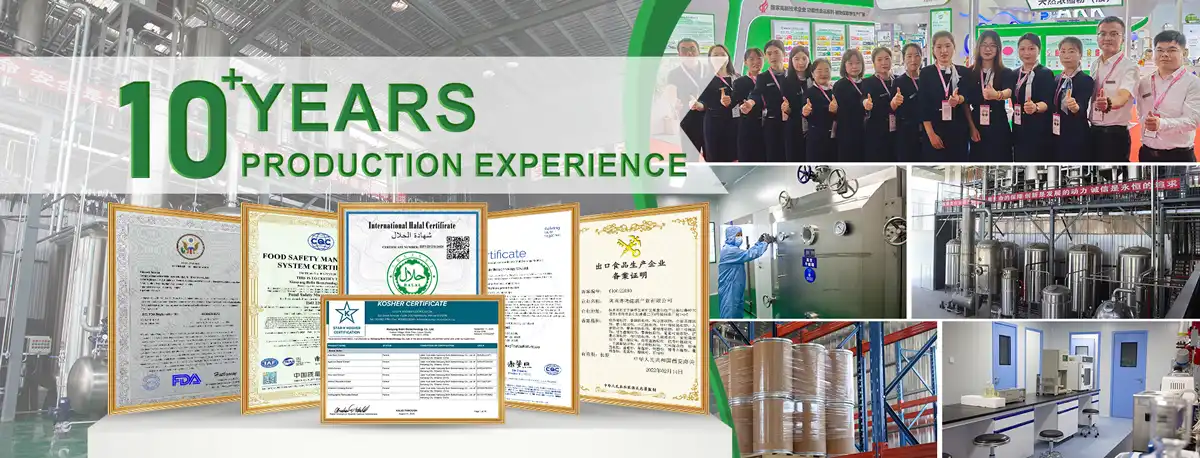
People who are in charge of buying things should favor sellers who can prove that their goods contain at least 99% L-menthol menthol crystal. This is because types with less clarity might have oils in them that make the product not work as well. Menthol crystal used in medicines must be USP or EP grade and meet the standards for identify, test, optical rotation, and impurities set out in the standard. Getting organic certification from the USDA, the EU, or a similar group proves that the ingredients are natural and that no chemicals were used in the production process. This is becoming more and more important for clean-label goods. It means that the quality management system is strong if it's approved by ISO 9001. If it's approved by GMP, it means that the production process follows good practices that are needed for drug and supplement uses. HACCP approval is important for food-grade menthol crystal because it shows that the rules for risk analysis are followed during production. People who you can trust will keep full records that can be used to link finished batches of menthol crystal to the plants that were used to make them. This helps make the supply chain more open, which is what the new rules say it needs to be.
Comparing Cooling Agents and Alternative Options
Eucalyptus and camphor both cool, but menthol is stronger and more well-known among users. Not as strong as eucalyptol (1,8-cineole), eucalyptol can be used in respiratory recipes that want softer affects because it cools and helps with breathing. Camphor does cool you down, but it also makes you feel hot, so it's not as useful when you just want to feel cool. Some synthetic cooling agents, like WS-23 and WS-5, cool without having the smell of menthol, which is useful when you don't want the mint taste. It costs more to get these choices than pure menthol, but they let you make different mixes for different needs. Menthol is often used in natural products because it comes from plants, has been safe for a long time, and is generally thought to be a good ingredient.
Bulk Purchasing Considerations and Logistics
When you buy menthol crystals from different sellers, the least amount you have to order is different. For small dealers, it's 25 kg, but for big manufacturers, it's 500 kg or more. When you buy more than 1,000 kg of something a year, volume-based price models can save you 15–30% on the price. Lead times depend on where the goods come from. Indian sellers, for instance, need 6–8 weeks to make and ship items, but US wholesalers may be able to fill orders in 2–3 weeks if they have enough stock. Before you can ship menthol across foreign borders, you need to know the right level of danger. This is because menthol is a Class 4.1 explosive solid, which means it needs to be properly packed and traced. Menthol doesn't need to be shipped in a temperature-controlled space because it stays stable. But sealed packages keep out water, which can make things clump together. Supply chains work better when they have ties with many companies. This is very important because the amounts of mint crops change with the weather, which affects the production of menthol.
Safety, Dosage, and Regulatory Insights for Menthol Crystal Use
Product-Specific Dosage Recommendations
Menthol can be safely added to cosmetics at amounts of up to 1% for leave-on products and up to 3% for rinse-off products like body washes and shampoos. These numbers don't hurt most people, but they do make things feel better. Pharmaceutical pain killers that are put on the skin work at levels of 1.25 to 16 percent. For fixing certain muscles and joints, higher amounts work best. There are limits on how much menthol can be sold over-the-counter, and goods that have more than a certain amount must have certain marks on them. Food and drinks only use 0.01% to 0.5% menthol because more than that makes things taste bitter and numb, which makes people less likely to like them. When products aren't packed properly, volatiles can leak out. To make sure that the menthol levels stay within the specs for the whole product's shelf life, makers need to do stability tests.
Safety Precautions and Contraindications
When adding and measuring menthol powder and crystals, they need to be handled carefully so that small pieces don't get into the air and hurt the lungs. To protect your skin from too much contact with concentrated substances, dust masks, safety glasses, and gloves are all good items to have. That's not possible if you keep the goods in containers with tight lids that are not near heat sources. On finished goods with menthol, it should say that they shouldn't be used on children younger than two years old because it can make their breathing worse. There needs to be a warning on the bottle for people who are sensitive to aspirin because they may also be sensitive to menthol. The medicine is taken in more deeply by the body when it is put on large areas of the body or under occlusive clothing. Even so, poisoning is still very rare at the doses that are allowed. These safety worries should be put on paper so that the ways of figuring out risk that are needed by drug and cosmetic rules can work.
Regulatory Compliance Across Key Markets
The FDA is in charge of both menthol as a food ingredient (21 CFR 184.1307) and as an OTC ingredient (21 CFR 348.10). There are different rules for each use. General safety standards must be met for cosmetic uses that don't need to be approved before they go on the market. Bad things still need to be reported, though. More than one ton of menthol must be reported every year under REACH rules, and safety data sheets must show how dangerous the menthol is. Menthol is okay to use in cosmetics according to the EU Cosmetics Regulation, but it doesn't say how much is okay. But each member state might have its own rules. Skin pain medicines with menthol are natural health products in Canada, so they have to be approved by the government before they can be sold. The time it takes to get permission is cut down and it is easier to join new markets across countries when all the necessary paperwork is kept on file. This includes certificates of analysis, allergen statements, and stability data.
Conclusion
It is very helpful to have menthol crystals around because they can be used in many ways in food, medicine, and makeup. If manufacturers know how to make menthol the right way, follow the rules, and meet quality standards, they can get the most out of its cooling and healing properties. By carefully picking providers that put an emphasis on purity, approval, and expert support, you can make sure that regulations are followed and product quality stays high. More and more people want natural ingredients. Because menthol comes from plants and has been safe for a long time, it is a useful ingredient in new recipes that meet customer needs and give real sensory experiences.
FAQ
What distinguishes menthol crystals from menthol powder in formulations?
Crystals of menthol are the best because they have been treated the least and are made up of only 99%+ L-menthol. Crystals are generally ground up to make menthol powder, which could include some small impurities. It might have anti-caking agents in it. When dry mixing, powder is easier to spread out than crystals because crystals break down more slowly in oil-based solutions. In pharmaceuticals, crystals are better for making sure the purity, while powder is better for manufacturing processes that need to quickly spread the material out.
How do I verify a menthol supplier's reliability for bulk orders?
Seek records of testing from the most recent production runs that show the standards for cleanliness and the way the tests were done. Check ISO, GMP, or organic certifications with the groups that gave them out instead of making copies. Ask people in the same line of work as you for customer examples to find out how good the technical support is. Check the paperwork to see how the finished product is connected to the plant material that it comes from. Before signing a deal for a lot of products, ask for trial batches to be checked by a different lab.
Can menthol crystals be used safely in both food and cosmetic products?
In either case, menthol is safe to use as long as it comes from a source that meets the grade guidelines. More tests than just those for makeup need to be done on food-grade menthol to look for heavy metals and bacteria. It is used in a wide range of concentrations, from less than 0.5% in food to up to 3% in makeup. Regulatory groups are not the same. There are rules about food additives that must be followed, and there are different rules for safety studies that must be followed for makeup. Pick the right kind of menthol for the job and the rules where you live.
Partner with Bolin Biotechnology for Premium Menthol Solutions
Your needs can be met perfectly by Shaanxi Bolin Biotechnology Co., Ltd., which is a master at making menthol powder that is safe for use in medicine and food. The methods we use to make things are ISO-certified, which means the quality is always above 99%. You can back this up with full records of research and paperwork from the government. We have made menthol powder for a long time and know how hard it can be to buy from other companies. That's why our low prices, open minimum order sizes, and reliable shipping dates can help you plan your production. We can help you figure out the best way to add menthol to your products, whether you're making skin care lines, useful drinks, or meds that you put on the skin. From where the plant comes from to where it ends up, we keep track of the whole process. This helps us make sure we meet all clean and quality standards around the world. Contact our team at sales1@bovlin.com to talk about your menthol powder source needs and find out how our knowledge of new plant extracts can help you make your product development better while making managing your supply chain easier.
References
Eccles, R., Jawad, M. S., & Morris, S. (1990). "The effects of oral administration of menthol on nasal resistance to airflow and nasal sensation of airflow in subjects suffering from nasal congestion associated with the common cold." Journal of Pharmacy and Pharmacology, 42(9), 652-654.
Patel, T., Ishiuji, Y., & Yosipovitch, G. (2007). "Menthol: A refreshing look at this ancient compound." Journal of the American Academy of Dermatology, 57(5), 873-878.
Kamatou, G. P., Vermaak, I., Viljoen, A. M., & Lawrence, B. M. (2013). "Menthol: A simple monoterpene with remarkable biological properties." Phytochemistry, 96, 15-25.
European Medicines Agency. (2008). "Community herbal monograph on Mentha x piperita L., folium." Committee on Herbal Medicinal Products.
Galeotti, N., Di Cesare Mannelli, L., Mazzanti, G., Bartolini, A., & Ghelardini, C. (2002). "Menthol: a natural analgesic compound." Neuroscience Letters, 322(3), 145-148.
United States Pharmacopeial Convention. (2021). "Menthol Monograph." United States Pharmacopeia and National Formulary (USP 44-NF 39).