What Is the Polysaccharide Content of Bulk Lion’s Mane Mushroom Powder?
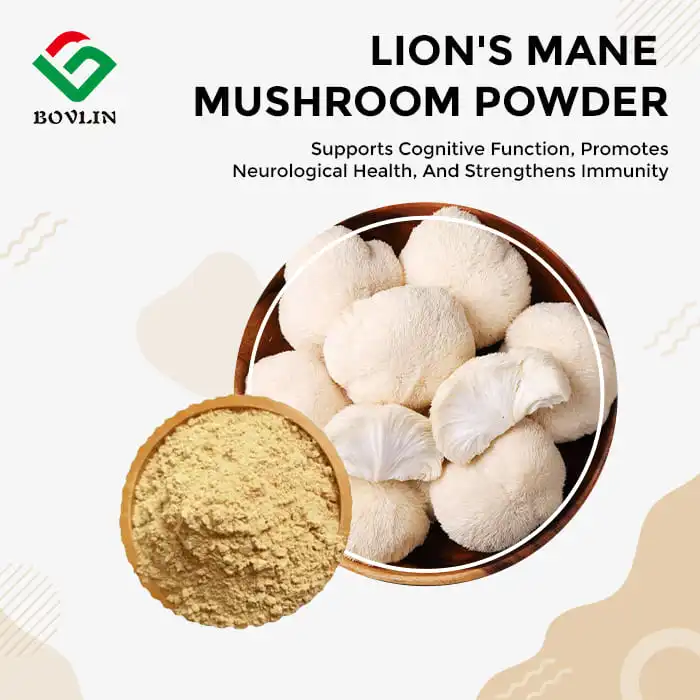
The polysaccharide content of lion's mane mushroom powder bulk depends on the grade you buy. Plain ground fruiting body powder carries a modest level. A solvent-extracted grade can be standardized to a set range. Our fruiting body extract powder offers selectable polysaccharides from 10% to 50%, and our product data lists beta-glucan at 35%, with HPLC testing. A percentage on a label means little without the test method, the raw material source, and a check for starch fillers. In this guide, I explain how to read these figures, verify them, and match a grade to your formula.

Understanding Polysaccharides in Lion's Mane Mushroom Powder Bulk
What Polysaccharides Are and Why Buyers Track Them
Polysaccharides are long chains of sugar molecules. They are mostly found in the cell wall of Hericium erinaceus and have beta-glucans in them, which are the chemicals that people want to buy. Researchers who have looked at medicinal mushrooms, like Wasser's review from 2002, have found that these polymers are connected to actions that change the immune system. Hericenones and erinacines, which are found in lion's mane mushroom powder bulk and are thought to help nerve growth factor (NGF), are also being studied. People still use the polysaccharide percentage to compare suppliers because it is easy to test, write down, and test again. It's not the whole truth to me; it's just a place to start a good conversation.
Beta-Glucans vs. Total Polysaccharides
It's not the same thing to measure something by beta-glucans and total carbohydrates. Every long-chain carb in the powder is part of the total polysaccharides. And beta-glucans are in that group. They are also the most important group for mushroom promises. There is a chance that alpha-glucans like maltodextrin and starch will add up to the same number. This is the reason a powder might have a lot of carbs but not much beta-glucan. I look at both the numbers and the ways they were found when I read a document. The range of polysaccharides we offer is from 10% to 50%, and the range of beta-glucan is from 35% to 50%. People should always read the batch COA to see how each grade is written down.
Fruiting Body vs. Mycelium on Grain
What makes the difference is where the raw products come from more than anything else. Mushrooms make body powder that tastes like fruit. Mycelium on grains is ground up with the rice or oats that it grew on by things that use it. A study by Friedman in the Journal of Agricultural and Food Chemistry in 2015 looked at the chemistry of lion's mane mushroom powder bulk growing bodies and mycelia. He learned that their chemical make-up was different. While a mycelium biomass product may have a lot of carbs, that may not mean it has beta-glucan. This is because extra grain makes starch. The fruiting body is where our lion's mane mushroom powder bulk extract powder comes from, which is a better place to start for polysaccharide claims.

Evaluating Quality Based on Polysaccharide Content
Why One Percentage Can Mislead
A lot of suppliers use the phenol-sulfuric acid method to record polysaccharides. It was first written about in 1956 in Analytical Chemistry by Dubois and his coworkers. The color response helps that method find all the carbs in food. It's impossible to tell the difference between maltodextrin or starch that has been added and a fungus beta-glucan. That means a lion's mane mushroom powder bulk may look strong on paper, but it may have a lot less beta-glucan. There have been times when a sign said 30% but another lab found much less. This tells you why. People who want to buy something should look for the method name on each COA and contrast the total carbohydrates result with a different beta-glucan result.
Test Methods That Hold Up
Enzymes can be found in beta-glucan in its own way. To find beta-glucan, some commercial kits, like the Megazyme mushroom and yeast beta-glucan kit, measure alpha-glucan and total glucan separately. Then, they count the difference between the two. Chromatography is a second way that HPLC lets you see the carbohydrate make-up. Iodine and water can be mixed together to do a quick test in your own lab. When starch is added, it turns dark blue or black. Just use this as a first step; it's not the same as trying in a lab. We welcome you to send the sample to a different lab before you place your first order.
What Moves the Number
Between farm and drum, the final percentage changes in a few steps. It changes how much cell wall material it holds when it is picked. How much polysaccharide is in the concentrate depends on what solvent was used and how it was broken down. The drying temperature and how the goods are stored can change how stable and wet they are. If it's warm outside when the lion's mane mushroom powder bulk is opened, it may stick together because it soaks up water. You should also ask for heavy metal, chemical residue, and microbial data, in addition to carbs. This is what people who buy from your store will want to know. When it comes to consistency, it's best to work with a seller who does both drying and extraction in the same plant.
Comparing Powder Grades and Finished Forms
Raw Ground Powder vs. Extract Powder
That's all there is to raw ground powder. It's just mushrooms that have been dried out and ground up. Lots of sugars stay in the cell wall, and tough chitin stays there. People can't break it down well. To get rid of the lion's mane mushroom powder bulk, you use a solvent to break up the matrix and gather the chemicals that can be dissolved. This means there is more polysaccharide, it breaks better, and the dose size is smaller for the same amount of active load. It's easy to make drink mixes with our extract because it mixes well with water. The phrase "raw powder" means "whole mushroom." This is the best way to make a point about a standard polysaccharide.
Bulk Powder vs. Capsules and Finished Products
You can pick the amount of carbohydrates, the size of the serving, and the end form when you buy powder in bulk. Capsules keep a dose and brand look the same when they are empty. One large grade can feed drink mixes, capsules, and packs if you want to sell more than one kind. This makes it easier to test and keep track of stock. Bolin Biotechnology also makes capsules, tablets, and gummies. They can package them with your brand name or in any other way you let them know. In other words, a big order can become a full run without having to change sources. That path works for brands that start with basic materials and add shapes as their sales grow.
Matching a Grade to Your Application
Pick the right grade based on how much you need and how much room you have. Extra strong polysaccharide grades, like 50%, work best in capsules and single-serve sachets because they give the right amount in a smaller dose. This is helpful when there isn't much room to fill. Little amounts, like 10%, can be mixed in with other things to make lion's mane mushroom powder bulk. A 30% score is in the middle for a lot of vitamin foods. Coffee and other drinks mix well with the powder because it completely dissolves in water and goes through an 80-mesh screen.
Using Polysaccharide-Rich Lion's Mane Powder in Formulas
Dosage Math from Polysaccharide Percentage
You just need to do some simple math to figure out an amount. There are 150 mg of carbs for every 500 mg of a 30% grade. There are 250 mg of a 50% grade for every 500 mg of a 100% grade. Based on studies in humans, body parts that produce food can be used as a guide. Mori and his coworkers paid for a double-blind study that came out in Phytotherapy Research in 2009. Adults with mild cognitive impairment aged 50 to 80 were given 3 grams of dried lion's mane mushroom powder bulk fruiting body every day for 16 weeks. They said their cognitive scores were better while they were getting treatment than when they were taking the placebo. That study only used dried mushrooms, not extract, so it doesn't say how much extract powder to use. Your formulator should decide on the serving size based on the goal on the label and the rules set by the government.
Fitting the Powder into Capsules, Coffee, and Gummies
The element needs to be good for each type. For capsule lines, our 80 mesh standard helps make powder that is fine and easy to flow. The taste of mushroom coffee and drink mixes needs to be mild and simple to mix in. Lion's mane mushroom powder bulk's woody note goes well with coffee, cocoa, or fruit tastes. In order to make gummies, heat and acidity are added. Before you scale up, make sure you have stable data for your own matrix. Every day, we send out grades in 5 to 7 working days. Custom grades may have different amounts of carbohydrates or may be mixed with other things like reishi. These grades take two to three weeks to make.
Safety and Compliance Notes
Lion's mane mushroom powder bulk mushrooms are safe to eat and have been used in cooking for a long time. Studies in people have also shown that it is well tolerated. Khan and others released a study of it in 2013 in the Journal of Complementary and Integrative Medicine. It has been used for a long time and is thought to be good for your health. If mushrooms make you sick, stay away from them. In the US, supplement claims must follow FDA rules, and structure-function statements must include the standard caution. Before you go live, I think you should have someone who knows about regulations look over your language about brain and gut health. Our certificates and COAs are what your compliance team will need to do that review.

Choosing a Supplier of Lion's Mane Mushroom Powder Bulk
Documents to Request Before You Order
The papers are given to you right away by a reputable seller. Before you place a trial order, I think you should get the following things from each candidate and compare them.
- A batch COA with named methods: Total polysaccharides and beta-glucan should be listed separately, and the test method should be written next to each result. You can then tell if the numbers come from an enzyme test or a carbohydrate test.
- Source confirmation: To be sure of the source, ask for written proof that the substance is made from fruiting bodies and not grains. Also, find out if any starch or maltodextrin was added.
- Safety and quality reports: Heavy metals, herbicide residue, microbes, and certificates like ISO9001:2015, ISO22000, HACCP, Halal, and Kosher should be on the list of things you should ask for at a safety and quality report.
These things can help you check a claim before you believe it. When the lion's mane mushroom powder bulk sample is sent to a different lab, the check is over.
Bolin's Specification and Production Capacity
Plant extracts have been studied, made, and sold by Shaanxi Bolin Biotechnology Co., Ltd. since it began in 2012. Our factory is 8,000 square meters and is in the Xi'an High-Tech Zone. We send our goods to more than 80 countries. Our lion's mane mushroom powder bulk extract powder is a brown powder that comes from the growing body. It was checked for safety by HPLC. You can pick from 10% to 50% polysaccharides, 35% beta-glucan, and any powder that passes through an 80-mesh screen. It's possible to get up to 5,000 kg, which is good for buyers who need to stock up before the busy season starts. These are the certificates we have: ISO9001:2015, ISO22000, HACCP, Halal, and Kosher.
Ordering, Samples, and Factory Verification
You can be sure of a grade before you order more because your first order is only 1 kg. That's up to you. Many people send free samples to an outside lab to test and taste on their own, which is a smart move. You can take a look at the video class if you'd like to see how the films are made. There are also pills, tablets, and gummies that we make. Each one comes in its own private name and special box. You can be a supplement brand, a distributor, or a contract manufacturer. Just tell us what level and format of polysaccharides you need, and we'll make a grade and schedule that works for you.
Conclusion
For lion's mane mushroom powder bulk, the amount of polysaccharides varies by grade, source, and test method. Since grain sugar can raise the number of carbs, fruiting body extract is a better base than mycelium that was grown on grain. Total polysaccharides and beta-glucan measure different things. That's why a good standard includes both. These methods are named, like HPLC or enzymatic analysis, and they've been tested by a third party. After being extracted and dried, the final weight changes. The right grade depends on the amount, serving size, and style. People can find the right amount of Bolin's extract for pills, coffee, or candies because it has 10% to 50% polysaccharides. Plans for doses are made with simple percentage math, and risk is lowered by reading documents before placing an order.
FAQ
What polysaccharide level should I target?
How much you eat makes a difference. For many powders, a 30% grade works well. For capsules and sachets that don't need a lot of space, a 50% grade works well.
Can a high polysaccharide number still hide fillers?
Yes. Starch and maltodextrin are also checked for when carbohydrates are being looked for. Ask for a different beta-glucan test, the method's name, and proof from a different lab.
Is lion's mane powder safe for daily use?
It has been shown to be well tolerated in clinical tests, but people who are allergic to mushrooms should not eat it. Get a lawyer to look over the claims on your label before you start.
Request Specs and Free Samples of Lion's Mane Mushroom Powder Bulk
You can get free samples of lion's mane mushroom powder bulk from Bolin Biotechnology. The polysaccharides can range from 10% to 50%. Looking for a lion's mane mushroom powder bulk supplier with paperwork ready for your lab to review? Tell sales1@bovlin.com what grade and style you need. To learn more.

References
1. Journal of Agricultural and Food Chemistry, 2015 – Friedman, M. "Chemistry, Nutrition, and Health-Promoting Properties of Hericium erinaceus (Lion's Mane) Mushroom Fruiting Bodies and Mycelia and Their Bioactive Compounds."
2. Phytotherapy Research, 2009 – Mori, K., et al. "Improving Effects of the Mushroom Yamabushitake (Hericium erinaceus) on Mild Cognitive Impairment: A Double-Blind Placebo-Controlled Clinical Trial."
3. Applied Microbiology and Biotechnology, 2002 – Wasser, S.P. "Medicinal Mushrooms as a Source of Antitumor and Immunomodulating Polysaccharides."
4. Analytical Chemistry, 1956 – Dubois, M., et al. "Colorimetric Method for Determination of Sugars and Related Substances."
5. Journal of Complementary and Integrative Medicine, 2013 – Khan, M.A., et al. "Hericium erinaceus: An Edible Mushroom with Medicinal Values."
6. Frontiers in Aging Neuroscience, 2020 – Li, I.C., et al. "Prevention of Early Alzheimer's Disease by Erinacine A-Enriched Hericium erinaceus Mycelia Pilot Double-Blind Placebo-Controlled Study."