_1745226507162.webp)

What Makes Organic Pumpkin Seed Protein Powder a Popular Plant-Based Ingredient?
Pumpkin Seed Protein Powder has emerged as a standout choice in the plant-based protein landscape because it combines nutritional completeness, minimal allergen risk, and functional versatility in formulation applications. Derived from cold-pressed pumpkin seeds (Cucurbita pepo), this organic powder delivers a robust amino acid spectrum, including high levels of arginine, glutamate, and tryptophan, while remaining naturally free from gluten, soy, and dairy. Its clean-label appeal, paired with measurable health benefits and ease of integration into diverse product categories, makes it an increasingly preferred ingredient for formulators targeting informed consumers in the nutraceutical, functional food, and sports nutrition markets.
Nutritional Profile and Health Benefits of Organic Pumpkin Seed Protein Powder
Companies that make goods need to know how nutritionally dense organic pumpkin seed protein is if they want to use formulation benefits that are based on evidence. This plant-based protein source is unique because it has bioactive micronutrients and macronutrients. There are a lot of ways that the bioactive micronutrients help the body.
High-Quality Macronutrient Composition
Gluten-free pumpkin seed protein makes up about half to two thirds of its weight. It has about the same amount of protein as other well-known plant proteins, but it is better for you in other ways. Also, the powder has some unsaturated fatty acids that are good for you, like omega-6 and omega-9, but only in small amounts. Even when fat is taken out of food, the amount of fiber that is still there is still large. Fiber makes you feel full, which is good for your stomach and helps you keep your weight in check. When you mix these things together, you get something that can help with more than one health issue at the same time.
Essential Micronutrients and Antioxidants
There are good amounts of magnesium, zinc, iron, and phosphorus in this food. A lot of people don't get enough of these minerals these days. Magnesium is very important for more than 300 enzyme processes. For instance, magnesium is important for the health of muscles and the nerve system. Zinc is a good mineral that keeps you from getting sick and helps cells work. Antioxidants like plant sterols and phenolic chemicals in the powder help cells fight free radicals and protect them from damage. Because the product has these good things in it, it can be used for more than just food. Health claims that are backed up by science are given to formulators. People who care about their health will like these claims.
Comparing Nutritional Advantages Across Plant Proteins
Organic pumpkin seed protein works better in some amino acid amounts than pea, hemp, and soy proteins. Pumpkin seed protein has more tryptophan than apple protein. Apple protein has a lot of branched-chain amino acids. It helps your body make serotonin, which makes you feel good. Each meal has more protein than hemp protein, so only a small amount is needed for finished goods. More people can use it, even those who are allergic to soy or worried about their hormone health, because it doesn't contain phytoestrogens or common soy allergens.
Clinically Relevant Health Benefits
Scientists have found that this ingredient can be used for more than one health benefit. Because of this, it can be used for tailored formulation techniques. Nitric oxide is good for the heart and blood flow, and a lot of arginine helps the body make it. These kinds of things work really well for sports nutrition items that are meant to help the body heal and do better. Some fats and proteins that are effective help lower chronic inflammation, which is a cause of many metabolic diseases. There are minerals in the body, and protein helps build muscle. This helps the body recover from exercise and keep lean muscle mass. This fills a big need in the market for healthy fuel.
Allergen-Friendly and Vegan-Compliant Profile
It's easy to make things with Pumpkin Seed Protein Powder because it doesn't have many allergens. This means that more people can use those things. Lots of people are allergic to whey, casein, soy, or even pea protein, which can make people allergic to beans. But pumpkin seed protein doesn't usually make people allergic. More and more people want plant-based foods that are good for them and the environment. This product's vegan approval fills that need. Brands can make foods that fit a lot of different diets without changing how well they work or how healthy they are.
Organic Pumpkin Seed Protein Powder vs Other Protein Sources
To choose the best protein source, you should think about how well it does its job, how it breaks down, and how it affects the world. It's clear that organic pumpkin seed protein helps with some of the most important issues that food and supplement businesses are facing right now.
Digestibility and Bioavailability Compared to Animal Proteins
The most popular proteins are whey and casein since they are healthy. Lactose-intolerant persons can't digest them. Due to their digestibility, organic pumpkin seed proteins are healthier for your stomach than dairy proteins. Even though it has less leucine than whey, it will help your body produce muscular protein if you consume enough. With the appropriate amino acid ratio and mixing, pumpkin seed proteins may function as well as animal proteins.
Environmental Impact and Sustainability Metrics
The ecosystem suffers from animal production, which uses a lot of water, space, and greenhouse gases. Grown pure pumpkin seed protein utilizes less resources and has a smaller carbon imprint. Organic farming doesn't use man-made fertilizers or pesticides and doesn't harm the environment. The public wants eco-friendly items. These sustainable credentials will appeal to Gen Z and young environmentalists. They differentiate a brand in environmental-focused markets.
Quality Assurance Through Organic Certification
To get organic food certified, the ingredients must be clean and of higher quality than those used in regular farming. Organic pumpkin seed protein is tested for contaminants, heavy metals, and microorganisms. It ensures consistent safety profiles in medication and food. It's natural and pure since it hasn't been genetically altered or helped. Support your clean brand statements to build trust. Because they're softer and neutral, organic forms usually taste better. So they don't conflict with other tastes or need much masking.
Functional Properties in Formulation Applications
The protein in pumpkin seeds is healthy and makes it simpler to produce new things. Protein beverages, smoothie mixes, and nutrition snacks taste better and are simpler to consume. This powder absorbs water nicely. The earthy flavor of hemp protein limits its application in recipes. This one tastes bad, thus it may be used for sweet and spicy items. Rice protein may make meals chalky, whereas pumpkin seed protein works well in mixes. That means they'll smell and feel better. These wonderful properties imply you don't need as many agents to mask tastes and provide texture. This simplifies ingredient lists and cleans signage.
| Comparison Factor | Organic Pumpkin Seed Protein | Whey / Casein Protein | Rice Protein | Hemp Protein |
|---|---|---|---|---|
| Digestibility | Easy to digest; dairy-free | May cause discomfort for lactose-intolerant consumers | Generally digestible | Generally digestible |
| Amino Acid Profile | Good plant-based amino acid source; can be blended for a more complete profile | High-quality complete protein | Plant-based protein; often blended with other proteins | Good plant-based protein source |
| Sustainability | Lower resource demand; suitable for sustainable formulations | Higher resource use associated with animal production | Plant-based and relatively sustainable | Plant-based and sustainable |
| Organic Positioning | Supports organic & clean-label products | Depends on sourcing and certification | Organic grades available | Organic grades available |
| Taste & Texture | Mild, relatively neutral flavor; easy to formulate | Creamy dairy profile | Can be chalky in some formulations | More distinctive earthy flavor |
| Water Dispersibility | Good for beverages and powder blends | Generally good | May require texture adjustment | Depends on formulation |
| Formulation Applications | Beverages, smoothies, nutrition bars, supplements | Sports nutrition, shakes, supplements | Plant-based foods, beverages, supplements | Plant-based foods and supplements |
| Market Positioning | Plant-based, organic, clean-label, sustainable | Sports nutrition & mainstream protein | Vegan & plant-based | Vegan & sustainable |
Applications and Usage Scenarios in B2B Markets
If people who buy organic pumpkin seed protein and people who make things know how to use it in real life, they can help a lot of people. The material's adaptability helps people create new items and fixes some issues that arise during production.
Nutraceutical and Dietary Supplement Formulations
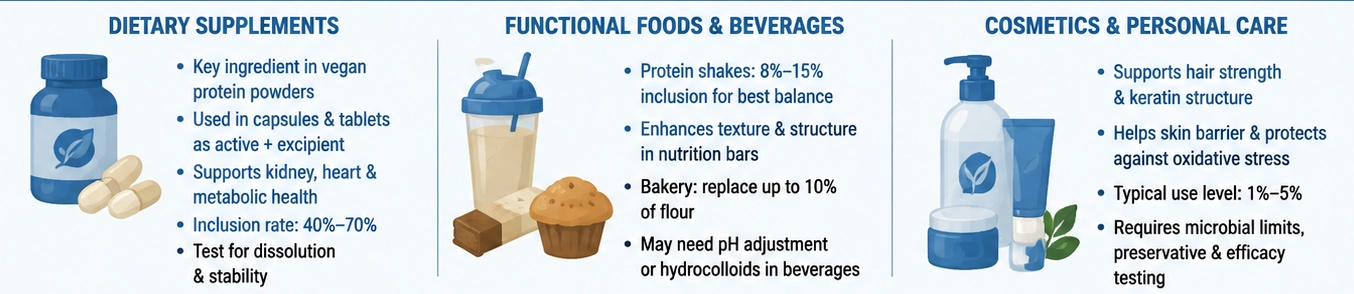
Pure pumpkin seeds are used to manufacture supplement powder mixtures, capsules, and candy. Compressed nutrients allow formulators to reach protein requirements and provide minerals and vitamins in single-serve sizes. As a stable element, it doesn't require chemicals to last. Typical of high-end vitamins, the label is clean. Protein interacts well with vitamins and plant-based meals, which helps formulators. Making whole health products with compatible ingredients helps in many ways.
Sports Nutrition and Performance Products
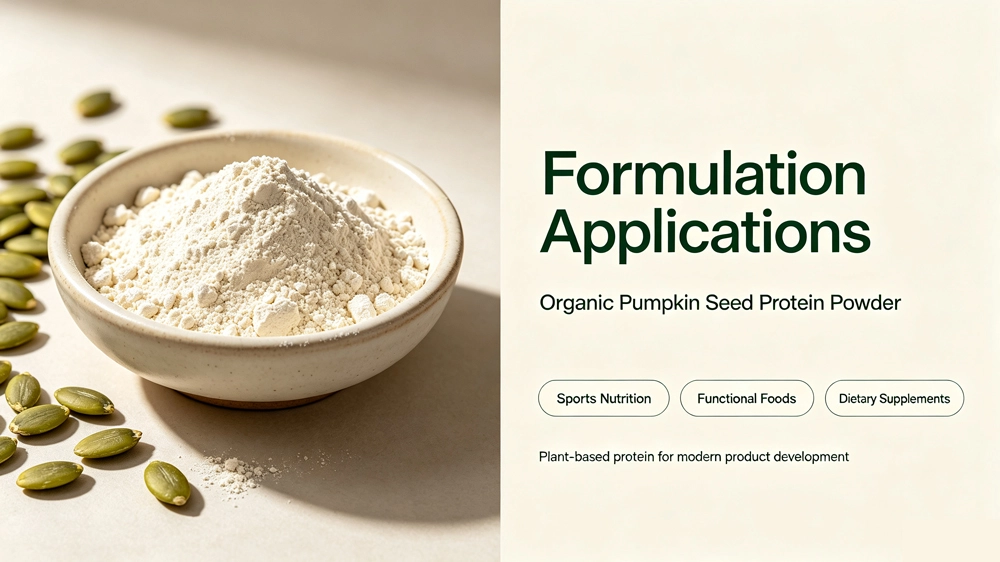
Pumpkin seed protein is in pre- and post-workout mixes, drinks, and sustained-energy bars. With arginine, nitric oxide pathways perform better. Getting more blood and nutrients to active muscles improves their performance. Protein's magnesium and zinc help regulate fluids, so strenuous workouts don't ache. Due to its ease of digestion, this portion is less likely to produce stomach issues during exercise than dairy proteins. It's crucial for endurance athletes who must eat a lot while exercising.
Functional Foods and Beverage Integration
Pumpkin Seed Protein Powder is used to chocolate bars, baked goods, cereals, and ready-to-drink beverages for wellness. You don't need many sauces and spices to blend it since it's smooth and flavorless. Drinks prepared with proteins might be clear or hazy. Non-thick protein drinks are now available. Due to its heat tolerance, it may be employed in baked and extruded goods. So food remains nutritious while preparation.
Cosmetic and Personal Care Applications
Organic pumpkin seed protein is utilized in food and plant-based cosmetic products to heal skin issues and reduce aging. Some amino acids in protein build collagen and keep skin healthy. Oxidants protect your body from free radicals and the outside environment. I enjoy that the substance works with hair care, creams, and serums. This moisturizes the skin and improves hair and nail protein structures. Different places attract more workers, which boosts provider profits in many ways.
B2B Procurement Strategies and Supply Chain Optimization
Large-scale purchases need knowledge of the supply chain and supplier relations. Buy more and save with select discounts. That way, your firm always has what it needs. Maintaining long-term relationships with reputable suppliers helps control costs and protects production from market shifts. Just-in-time delivery and subscription models make manufacturing changes cheap (and simple). Low-cost stocking is simple too. Since market demands vary, this is perfect for fast-moving enterprises. Quality assurance review the certificate of analysis, each batch, and the seller to safeguard the brand. They also ensure that all output runs meet the guidelines.
Leading Brands and Quality Assurance in the Market
It's important to choose sources that you know you can depend on. This will have a direct effect on how well your product does and how well your brand is known. A lot of well-known brands can meet the wants of people who buy things in stores. When a company buys from another business, they need sellers who can meet their strict standards for services and licenses.
Evaluating Supplier Credibility and Certifications
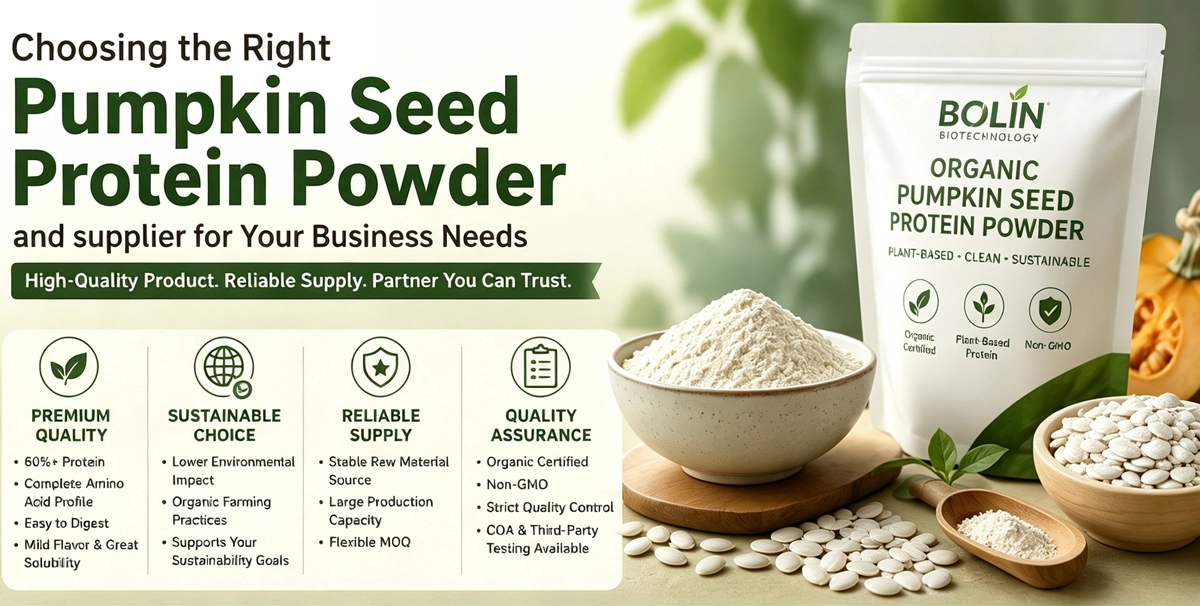
Successful suppliers have USDA Organic, Non-GMO Project Verified, ISO 9001, GMP, and HACCP certifications. These prove they follow food safety and quality rules. These licenses guaranty clean, compliant goods that follow local laws. Customers want transparent supply chains and ingredient paperwork. For these needs, manufacturers can work with suppliers with clear supply chains that allow them to track seeds through processing. Keeping spec sheets, stability data, and safety reviews in documentation files speeds product development and regulatory applications.
Quality Control Protocols and Testing Standards
Strict testing rules distinguish high-end and low-end suppliers. After allergen, germ, heavy metal, and pesticide testing, goods are safe for medicine and food. Scientifically checking nutrition labels for protein content ensures accuracy. If suppliers provide batch-specific certificates of analysis, manufacturers can set up strong quality control systems and keep full records to comply with audits. Other testing services include stability studies, particle size distribution analysis, and amino acid profiles. These help with product development and store shelf life.
Balancing Cost Considerations With Quality Requirements
Price is still important when you buy something, but to find value, you need to look at more than just the unit price. Some things may not be as good when you buy them from a cheaper source. This can mess up the recipe, cause production to be held up, or even cause product refunds, all of which cost a lot more than the money that was saved at first. The long term value of premium providers is higher because they cut down on production delays and improve the quality of the goods they sell. This is because they offer guarantyd standards, stable performance from batch to batch, and expert help. Once buyers know the prices, they can make decisions that are in line with their quality goals and brand positioning plans. Consider organic certification costs, test methods, and long-lasting sources.
Choosing the Right Pumpkin Seed Protein Powder for Your Business Needs
When choosing a strategic supplier, you should give careful thought to the specifics of the product, the range of services available, and how well they fit with your business goals. These things can help buyers decide what to do so a product can grow and stay competitive in the market.
Defining Product Specifications and Purity Requirements
What sellers need to know is very important for making sure that their goods meet government standards and formulas. The ways Pumpkin Seed Protein Powder will be processed and used must match the requirements for protein, moisture, particle size, and microbes. Regulatory reports need materials that meet the standards set by the pharmacopeia, testing methods that have been tried, and steady data when they are used in drugs. Food supplements work the same way in every batch because of rules that are the same for all of them. Customers will continue to trust the product as long as it gives them the same results every time.
Assessing Supplier Technical Support and Customization Capabilities
When teams are making new goods, suppliers who offer help with preparation, application testing, and customization can be very useful. It takes less time to make new goods and less money to go through expensive reformulation processes if you know how proteins work, how to make them break better, and how to hide tastes. There are options for custom processing that allow businesses to make their goods stand out in a crowded market. Some of these are choosing the particle size, changing the instant dispersibility, and processing with ingredients that work well with each other. They can share market information that helps them plan products in a smart way and come up with new uses. Suppliers who have their own R&D teams can do this.
Regulatory Compliance and International Standards
Sellers must follow a lot of rules in order to get their things into markets around the world. Some of these are FDA rules, EU guidelines, and licensing rules that are specific to each area. If a supplier has set up regulatory paperwork and knows how to deal with international needs, it is easier for them to enter new markets and there is less chance that they will break the law. You can get new customers in places where labels like Halal and Kosher are important to them by using these brands. Full government support, like allergen and ingredient labels and proof of health claims, speeds up the release of new products and makes sure that marketing messages are legal everyplace.
Anticipating Market Trends and Future Innovation
The market for plant-based nutrients keeps growing because more people want to try new foods, be healthy, and help the environment. Some suppliers spend money on study, making connections with buyers that will last for a long time, and coming up with new ways to handle things. This helps their clients do well in markets that change all the time. With the help of new uses like bioactive peptide isolation, cellular agriculture integration, and new protein texturization technologies, the company will continue to grow. Work with suppliers who are ahead of the curve, keep an eye on how the industry changes, and put money into next-generation technologies. This will help you get new ingredients that give you an edge over your competitors and help you take advantage of new market opportunities.
Conclusion
Organic Pumpkin Seed Protein Powder has been shown to be a useful, nutrient-dense, and better-than-average plant-based ingredient in many nutraceutical, food, drink, and beauty products. It meets the high standards for industrial production with a wide range of amino acids, a low risk of allergens, and production that is good for the environment. It also meets the wants of customers today. A good buying strategy takes into account the providers' professional skills, how well they follow the rules, and how much the costs are kept down. As plant-based markets continue to grow, businesses that want to boost their sales while keeping the quality of their products and the trust of their customers will need to form partnerships with dependable suppliers who offer certified organic products, strict testing procedures, and help with formulation.
FAQ
1. What makes organic pumpkin seed protein powder different from conventional versions?
If something is labeled organic, it means that it was grown without insecticides, man-made chemicals, or changes to the plants' genes. In other words, it is better and less likely to be bugged. A lot of the time, organic versions taste better than regular ones because they are less bitter and break down better. As part of the process for getting certified, strict tests are done to make sure there are no illegal drugs present. If a company is making something for someone who cares about their health and wants clean ingredients, this gives them peace of mind. Organic farming is also good for the earth because it keeps the land healthy and lowers the amount of chemicals that get washed away. Going green in this way fits with the company's goals of being a responsible business and with what customers want.
2. Can pumpkin seed protein powder cause allergic reactions?
People who are allergic to soy, dairy, tree nuts, or shellfish are more likely to be allergic to pumpkin seed protein. People are more likely to have reactions when they put pumpkin seed oil on their skin, which turns it a little red, than when they eat the protein powder. Do not add seeds if you know someone who is allergic to them. Instead, you should talk to your doctor first. Still, businesses that make things should make sure they have the right allergy labels and test their products thoroughly to make sure that big allergens don't get mixed in with other ingredients while they're being made and packed. This is very important in places where a lot of different products are used.
3. How does the amino acid profile compare to whey protein?
It's not as full of branched-chain amino acids as whey protein, which is made from milk. Leucine is an example of this. But when eaten in the right amounts, organic pumpkin seed protein has a bigger range of amino acids that help build muscle. The plant protein has more arginine and glutamate than the animal protein. These amino acids are good for your heart and brain. It has been found that eating a few more plant proteins can help build muscle just as much as eating animal proteins. These people can use pumpkin seed protein instead, like athletes who don't eat dairy. When you put different plant proteins together, you can get amino acid levels that work just as well as or better than proteins from animals.
Partner With Bolin Biotechnology for Premium Organic Pumpkin Seed Protein Powder
Bolin Biotechnology is a good place to buy pure Pumpkin Seed Protein Powder. Scientists have shown that the plant extracts they sell meet the high standards of companies that make functional foods, nutraceuticals, and medicines. Our company has been around since 2012 and follows many rules, including ISO, GMP, and HACCP. With the right paperwork, this makes sure that each batch meets quality standards all over the world. Our technical team can not only help you with formulation, but they can also make sure you get all the big goods you need. Because the minimum order numbers can be changed, you can make them fit your needs. A very competitive market will help you do well if you're making new vitamins, sports nutrition products, or useful foods. Our fast service and consistent quality will help you do well. Write to sales1@bovlin.com and let us know what you need. We'll send you technical specs that will help you make your products faster.

References
1. Martinez-Villaluenga, C., & Peñas, E. (2017). Health benefits of pumpkin seed proteins: Composition, bioactivity and applications in food products. Journal of Food Science and Technology, 54(11), 3355-3365.
2. Patel, S. (2013). Pumpkin (Cucurbita sp.) seeds as nutraceutical: A review on status quo and scopes. Mediterranean Journal of Nutrition and Metabolism, 6(3), 183-189.
3. Stevenson, D. G., Eller, F. J., Wang, L., Jane, J. L., Wang, T., & Inglett, G. E. (2007). Oil and tocopherol content and composition of pumpkin seed oil in 12 cultivars. Journal of Agricultural and Food Chemistry, 55(10), 4005-4013.
4. Rezig, L., Chouaibi, M., Msaada, K., & Hamdi, S. (2012). Chemical composition and profile characterisation of pumpkin (Cucurbita maxima) seed oil. Industrial Crops and Products, 37(1), 82-87.
5. Gossell-Williams, M., Hyde, C., Hunter, T., Simms-Stewart, D., Fletcher, H., McGrowder, D., & Walters, C. A. (2011). Improvement in HDL cholesterol in postmenopausal women supplemented with pumpkin seed oil. Climacteric, 14(5), 558-564.
6. Fruhwirth, G. O., & Hermetter, A. (2008). Seeds and oil of the Styrian oil pumpkin: Components and biological activities. European Journal of Lipid Science and Technology, 109(11), 1128-1140.


_1775716267875.png)