_1745226507162.webp)

Why Is Vitamin K2 MK7 Commonly Used in Bone Health Supplements?
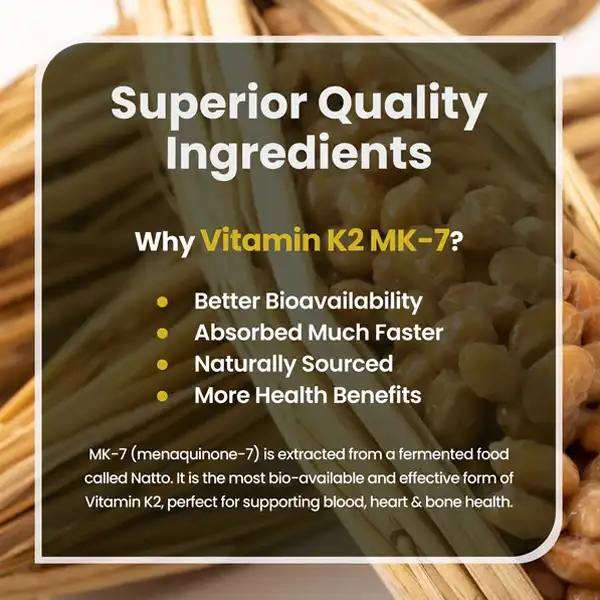
Because it is so bioavailable and stays active for a long time in the body, vitamin K2 MK7 has become an important part of bone health products. Unlike shorter-chain menaquinones, vitamin K2 Mk7 powder has a seven-isoprene unit structure that gives it a blood half-life of more than 72 hours. This means that it can consistently activate osteocalcin, the protein that makes calcium go to bone tissue instead of soft tissues. This biochemical efficiency, along with better stability in formulas and proven clinical results, makes MK7 the first choice for supplement makers who want to avoid osteoporosis and improve heart health.
Understanding Vitamin K2 MK7 and Its Role in Bone Health
The Biochemical Profile of MK7
Vitamin K2 MK7 is a unique type of menaquinone because it has seven isoprenoid units, which makes it different from vitamins K4 and K1 that comes from plants. MK7 is mostly made through Bacillus subtilis natto fermentation, and it has better lipophilicity and longer biological activity. The molecular structure of the substance makes it easy for the liver to handle it and for plasma concentrations to stay high. This keeps therapeutic levels that support the constant carboxylation of proteins that depend on vitamin K. Because it stays in the bloodstream for longer, osteocalcin and Matrix Gla Protein (MGP), which control calcium absorption in skeletal and vascular tissues, work more consistently.
Mechanisms of Bone Density Enhancement
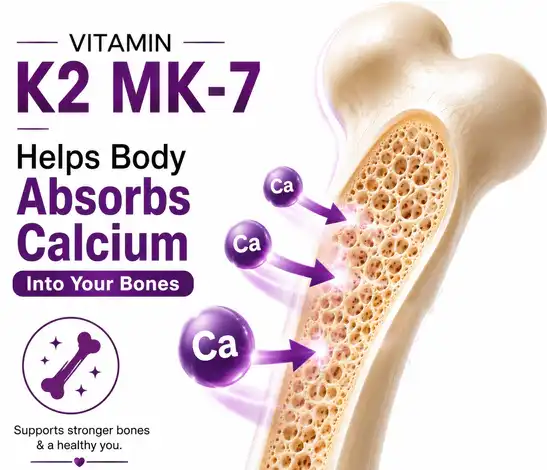
The main way that MK7 affects the body is by working with gamma-glutamyl carboxylase, an enzyme that turns on osteocalcin. It's called the "calcium paradox" when extra calcium doesn't improve bones but instead builds up in the walls of arteries because osteocalcin isn't properly carboxylated. Taking 180–200 mcg of MK7 every day for 12 months has been shown in clinical tests to greatly increase bone mineral density in postmenopausal women. At the same time, the substance lowers the amounts of undercarboxylated osteocalcin by 50–70%, which means that calcium is used more efficiently. Because it improves bone structure and stops artery calcification, MK7 is a multipurpose ingredient that can help with a number of health issues that are all linked.
Dosage Specifications and Safety Parameters
The daily dose range for bone health uses has been set at 90 to 200 mcg by regulatory bodies and clinical studies. According to the European Food Safety Authority, these amounts are safe for long-term use because no harmful effects have been seen at doses up to 360 mcg per day. When formulating inclusion rates, formulation scientists have to think about stability, especially in complicated materials that contain alkaline minerals. The substance is very safe for all age groups, but people who are taking anticoagulants need to be closely watched by a doctor because it might combine with warfarin-class medicines.
Key Benefits of Vitamin K2 MK7 Powder in Bone Health Supplements
Optimizing Calcium Utilization and Bone Mineralization
The main thing that makes MK7 valuable is that it solves the calcium supplementation problem that has been bothering the nutrition business for a long time. Calcium alone can't direct its own formation into skeletal tissue, so traditional calcium pills don't always work as promised for bone health. Vitamin K2 Mk7 powder turns on the proteins that control this process. This makes sure that calcium that is eaten gets to the bone matrix instead of building up in the kidneys or arteries. According to studies published in osteoporosis journals, combining calcium with MK7 has significantly better results than using calcium alone. In combination methods, trabecular bone volume increases 1.8–2.3 times more successfully.
Synergistic Action with Vitamin D3
The K2-D3 relationship is one of the most scientifically proven ways that nutrients can work together in modern supplements. Vitamin D3 improves the intake of calcium in the intestines and increases the production of osteocalcin. MK7 then turns on the newly made osteocalcin so it can bind calcium. Together, these two systems work together to make a full calcium control system in the body. Market data shows that people are becoming more aware of this connection. In North American markets, combination K2+D3 goods are growing at rates higher than 18% per year. Formulation ratios are usually between 45 and 100 mcg MK7 per 1000 IU D3. These ratios have been found to improve bone density the most in clinical studies.
Cardiovascular Protection Through MGP Activation
In addition to helping the bones, MK7 turns on the Matrix Gla Protein in the walls of arteries. This stops the formation of calcium crystals, which makes the arteries stiff. This cardiovascular aspect adds a lot of value to the market and lets brands sell their goods as "bone and heart health" solutions that cover everything. Over a ten-year study period, clinical data from Rotterdam Study groups show that getting enough K2 is linked to a 50% lower chance of arterial calcification. Procurement teams know that this dual functionality sets their products apart from the competition, especially in high-end product categories where customers want single-ingredient options that can help with more than one health issue.
Comparative Analysis for Procurement: Vitamin K2 MK7 Powder vs Other Formats & Types
Powder Format Advantages
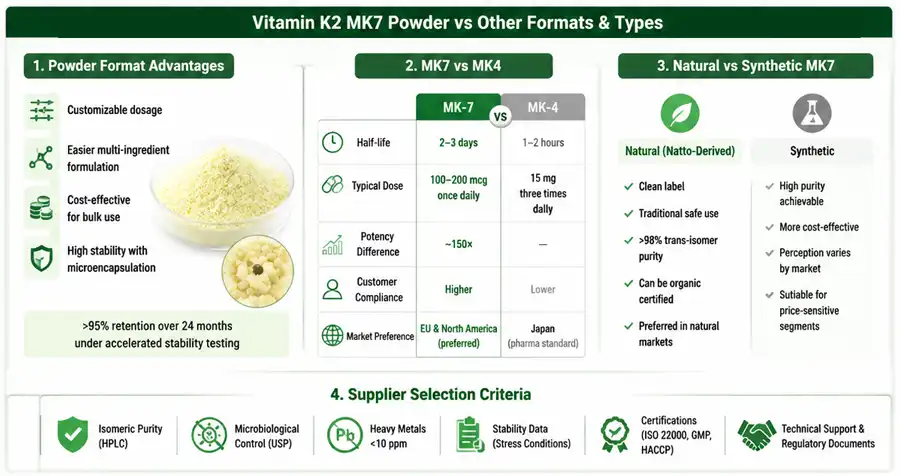
Vitamin K2 MK-7 bulk powder gives you more options for how to make the supplement than pre-encapsulated types. Bulk powder makes it easier to customize doses, makes mixing mixtures of multiple ingredients easier, and saves money when used in large quantities. Modern microencapsulation technologies keep the labile quinone structure from breaking down when mixed with alkaline minerals like calcium carbonate or magnesium oxide. This solves the stability problem that kept K2 from being included in full bone formulas in the past. Advanced beadlet shapes have stability values that are higher than 95% retention over 24-month shelf lives when tested under rapid stability settings.
MK7 vs MK4: Efficacy and Practical Considerations
Vitamin K-dependent proteins are both activated by MK7 and MK4, but their metabolic patterns are very different. Due to its 1-2 hour half-life, MK4 needs to be dosed three times a day at 15 mg each time. On the other hand, 100–200 mcg once a day is all it takes to keep working for MK7. This 150-fold difference in dose means big savings for the company making the medicine and more agreement from customers. Different markets have different tastes. For example, Japanese pharmaceutical standards prefer MK4 because it has been used before, but most markets in Europe and North America choose MK7 because it is easier to use and has more clinical evidence behind it.
Natural vs Synthetic MK7 Sources
Natto-derived natural MK7 demands a high price because it has a clean label and has been used safely in food for hundreds of years. The fermentation method creates mostly trans-isomer configurations (>98% purity), which are the biologically active form that regulatory texts say should be made. Synthetic routes can get about the same level of purity, but they have trouble with how customers see them in some areas. Fermentation-based powders can be certified as organic, which meets the needs of natural product outlets. Costs must be weighed against the tastes and brand positioning strategies of the target market when making procurement choices.
Supplier Selection Criteria
To find skilled MK7 powder providers, you need to look at things from a lot of different angles. Some important things that go into the evaluation are making sure the isomeric purity is correct through HPLC analysis, making sure the microbiological control meets USP standards, checking for heavy metals below 10 ppm, and getting stable data that shows the drug stays effective under stress conditions that are relevant to the formulation. Quality methods in production can be trusted with third-party certificates like ISO 22000, GMP compliance, and HACCP verification. Established sellers offer expert help for formulation problems, teamwork for stability testing, and regulation paperwork packages that shorten the time it takes to make a new product.
Procurement Insights: How to Source High-Quality Vitamin K2 MK7 Powder
Bulk Purchasing Economics and MOQ Considerations
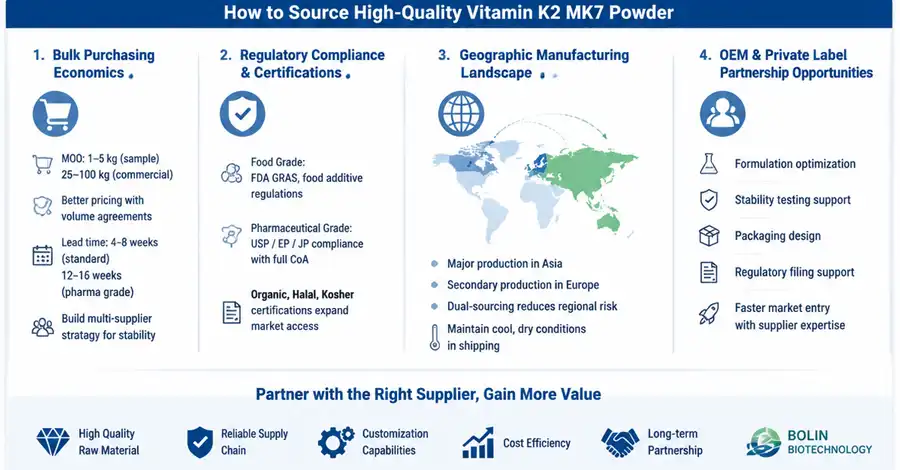
To get vitamin K2 Mk7 powder in bulk, you have to figure out the minimum order quantities, which can be anywhere from 1 to 5 kilograms for testing reasons to 25 to 100 kilograms for business orders. When sellers make volume agreements, they can get better prices, but they have to weigh the costs of keeping inventory against lower unit prices. Lead times depend on how busy the seller is and how readily available the source material is. For normal grades, they usually take 4 to 8 weeks, but for pharmaceutical-grade materials that need more paperwork, they can take 12 to 16 weeks. Strategic sellers build ties with a number of qualified suppliers to make sure they always have supplies and to take advantage of the way competition works.
Regulatory Compliance and Certification Requirements
Regulatory compliance profiles need to be different for each application. Food-grade vitamin K2 MK-7 bulk powder has to follow rules about food additives in the countries it's meant for, like getting FDA GRAS status approval before it can be sold in the U.S. Pharmaceutical-grade materials must meet the requirements of a pharmacopeial standard (USP, EP, or JP) and come with full test results that show their identity, purity, and contaminant profiles. Getting organic licenses like USDA Organic or EU Organic makes paperwork more difficult but gives you access to more expensive markets. Halal and Kosher approvals meet the needs of certain groups of people. This is especially important for global brands that sell to a wide range of people.
Geographic Manufacturing Landscape
The majority of MK7 production takes place in specialized fermentation facilities in Asian manufacturing hubs. Secondary production takes place in European facilities that serve regional markets. Knowing where something comes from is important for meeting tracking standards and tariff concerns. To lower the risk of regional disruptions, supply chain resilience strategies are using dual-sourcing from producers that are spread out physically more and more. When planning logistics, it's important to keep shipping temperatures in mind, since MK7 powder stays stable best when stored in cool, dry places while traveling across borders.
OEM and Private Label Partnership Opportunities
Value-added buying plans use what suppliers can do besides just provide raw materials. Leading makers offer complete packages that include recipe optimization, stable testing, packing design, and help with filing with the government. These agreements help distributors and new brands that don't have their own R&D machinery get into the market faster. Working together with highly advanced suppliers gives you a competitive edge because you can use their own stability technologies and make concentration grades that are exactly what you need for your application. Bolin Biotechnology has a lot of experience working with these kinds of partnerships on a wide range of products.
Conclusion
Because it works better in the body, is more bioavailable, and has been shown to improve bone health, vitamin K2 MK7 has become an important part of many bone health supplements. The vitamin K2 Mk7 powder format gives purchasing professionals the most freedom to change the recipe while also saving money, which is important for placing the product competitively. Knowing the technical differences between MK7 and other types of vitamin K, spotting quality signs when evaluating suppliers, and managing the regulatory landscape helps buyers make smart decisions about where to buy. As people become more aware of how hard it is to control calcium, the demand for properly formulated K2-containing goods will continue to grow. This will create chances for brands that put quality ingredients and scientific credibility first.
FAQs
Is long-term Vitamin K2 MK7 supplementation safe?
A lot of clinical studies and data from after the drug was sold show that MK7 is very safe at the doses that are suggested. Three-year studies show that daily doses up to 360 mcg, which is much higher than most supplement amounts, have no negative effects. Regulatory groups, such as the EFSA, have said that these amounts are safe for long-term use. The main thing to think about is people who are taking vitamin K antagonists like warfarin. They should talk to their doctors before starting a supplement because it might change how well the anticoagulant works.
When should consumers take K2 MK7 supplements for optimal absorption?
Vitamin K2 MK7 dissolves in fat, so it needs food fats to be absorbed well in the gut. When taken with foods that have a modest amount of fat, bioavailability is maximized, and absorption rates are usually 30–50% higher than when the person is fasting. It's more important to take MK7 every day than when you take other vitamins, because its long half-life keeps plasma concentrations fixed no matter when it's taken. Evening doses may have some small benefits for people who take calcium pills before bed, making sure that both nutrients are available at the same time for the bone-building processes that happen overnight.
Can Vitamin K2 MK7 genuinely prevent osteoporosis development?
There is strong clinical proof that taking MK7 supplements greatly raises measures of bone quality that are linked to a lower chance of osteoporosis. In three-year studies of women who have gone through menopause, bone mineral density stayed the same or went up in the MK7 groups while it dropped by 2% to 3% in the control groups. The chemical lowers the risk of spinal fractures by about 60% in groups that already have osteopenia. Using the word "preventing" osteoporosis to describe MK7 alone is too simplistic because the disease is caused by a number of different factors. However, the chemical clearly helps maintain bone health and slows down the deterioration that comes with not getting enough calcium and vitamin D.
Partner with Bolin Biotechnology for Premium Vitamin K2 MK7 Powder Supply
When it comes to pharmaceutical-grade and food-grade vitamin K2 Mk7 powder, our team at Bolin Biotechnology is the best at meeting the highest quality standards. We've been in business since 2012 and have become experts in extracting ingredients from plants and making them through fermentation. We keep our ISO, GMP, and HACCP certifications to make sure the quality of our products always stays high. In addition to providing raw materials, we also offer expert support in the form of formulation advice, collaborative stability testing, and help with regulation paperwork. Whether we're making functional drinks, heart-healthy supplements, or recipes that work together to improve bone health, our minimum order quantity (MOQ) rules and scalable production capacity can handle projects from the beginning of research and development (R&D) to mass production. Send an email to sales1@bovlin.com for detailed technical specs, samples of certificates of analysis, and cheap quotes that are made to fit the needs of your project. As a reputable vitamin K2 Mk7 powder maker, we promise to work with you in a way that speeds up the growth of your products.
References
Knapen, M.H.J., Drummen, N.E., Smit, E., Vermeer, C., & Theuwissen, E. (2013). "Three-year low-dose menaquinone-7 supplementation helps decrease bone loss in healthy postmenopausal women." Osteoporosis International, 24(9), 2499-2507.
Geleijnse, J.M., Vermeer, C., Grobbee, D.E., Schurgers, L.J., Knapen, M.H., van der Meer, I.M., & Hofman, A. (2004). "Dietary intake of menaquinone is associated with a reduced risk of coronary heart disease: the Rotterdam Study." Journal of Nutrition, 134(11), 3100-3105.
Theuwissen, E., Smit, E., & Vermeer, C. (2012). "The role of vitamin K in soft-tissue calcification." Advances in Nutrition, 3(2), 166-173.
Schurgers, L.J., Teunissen, K.J., Hamulyák, K., Knapen, M.H., Vik, H., & Vermeer, C. (2007). "Vitamin K-containing dietary supplements: comparison of synthetic vitamin K1 and natto-derived menaquinone-7." Blood, 109(8), 3279-3283.
Beulens, J.W., Booth, S.L., van den Heuvel, E.G., Stoecklin, E., Baka, A., & Vermeer, C. (2013). "The role of menaquinones (vitamin K2) in human health." British Journal of Nutrition, 110(8), 1357-1368.
Plaza, S.M., & Lamson, D.W. (2005). "Vitamin K2 in bone metabolism and osteoporosis." Alternative Medicine Review, 10(1), 24-35.