_1745226507162.webp)

Why Liposomal Vitamin C Offers Superior Absorption?
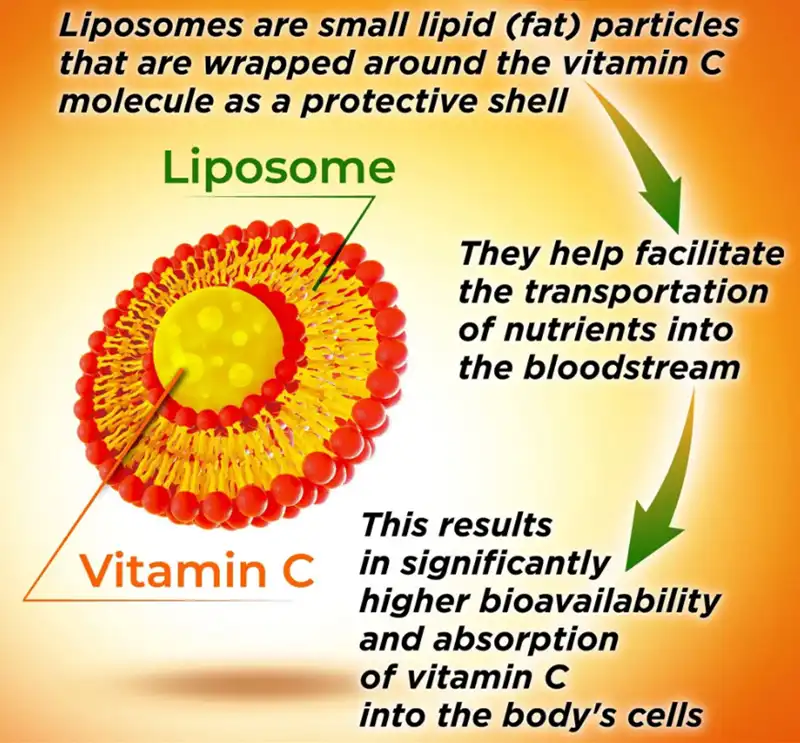
Liposomal vitamin C is better absorbed because it has ascorbic acid inside liposomes made of phospholipids, which are organized like the membranes of our cells. Because our cells are made of fats, the liposomal delivery method changes vitamin C into a form that dissolves in fats instead of water. This form is harder for our cells to receive. With this new capsule technology, the vitamin doesn't get broken down in the digestive system. Instead, cells can take it straight in. This makes the supplement work much better than standard ascorbic acid supplements.
Understanding Liposomal Vitamin C and Its Absorption Advantage The Science Behind Liposomal Encapsulation Technology
Regular vitamin C pills have a big flaw: our bodies can only handle a certain amount at a time. It is not as well absorbed when you take regular ascorbic acid, especially when you take more than 200 mg. Most people take 1,000 mg, but their bodies only absorb about half of that. The rest of it leaves your body through pee.
This is not a problem for liposomal vitamin C because it is protected by complex phospholipids. There are very small circular vesicles that protect vitamin C molecules. They are made of the same stuff that our cell walls are. With this biomimetic method, the nutrient can get past the regular barriers to absorption and blend in with the way cells are built.
Enhanced Bioavailability Through Cellular Mimicry
Bioavailability getting better through cell cloning. The phospholipid bilayer structure of liposomes is a lot like the structure of the membranes of human cells. In this way, nutrients can be sent right to the tissues they need to reach. Researchers have found that liposomal vitamin C supplements are up to 90% more likely to be absorbed than normal vitamin C pills. To improve absorption, each dose must be used more effectively. This cuts down on waste and raises the chance of healing.
The way liposomes are made has a lot to do with how well they stay together. Modern ways of encapsulation make sure that all the particles are the same size and that the amounts of phospholipid and ascorbic acid are just right. These two things are very important because they decide how well and how long the goods will last.
Key Benefits of Liposomal Vitamin C for Health and Business
Immune System Enhancement and Antioxidant Protection
Vitamin C helps white blood cells make and do their jobs, which is good for your defense system. Immune cells get the vitamin C they need from liposomal vitamin C powder because it is better taken. This is especially true when demand is high, like when the weather changes or when there is a lot of stress.
Vitamin C is a much stronger antioxidant when it is given through liposomal systems. It's easier to get rid of free radicals when there are more cells. This is good for heart health and lowers signs of reactive stress. With this higher antioxidant capacity, supplement companies that want to sell to people who care about their health can make good value arguments.
Gastrointestinal Tolerance and Patient Compliance
Gastrointestinal tolerance and how well patients stick to their plans. When you take regular high-dose vitamin C pills, they can make your stomach upset and give you osmotic diarrhea. With liposomal versions, these issues can't happen because they keep ascorbic acid from touching stomach cells directly. In this case, the vitamin stays whole as it moves through the digestive system. Instead of being released in the gut, its contents are released at the level of cells.
More powerful doses can be used in treatment because of this better tolerance profile. This is very useful in hospital nutrition settings that use protocols for high doses of vitamin C. When doctors recommend long-term vitamins, they don't have to worry that patients won't take them because they hurt their stomachs.
Collagen Synthesis and Tissue Repair Applications
Collagen synthesis and tissue repair have many uses. It is more clinically important for vitamin C to play a role in making collagen when liposomal systems are used to give it. Better cell uptake makes sure that there is enough vitamin C where tissue is being made. This helps cuts heal, keeps the skin healthy, and keeps the tissues that connect them in good shape. It's best for formulas that help people heal from surgery and make them look better from the inside out during this process.
The amount of vitamin C in the body stays the same for a long time because liposomal delivery uses continuous release. This helps collagen production all the time, not just sometimes like with normal supplements.
Comparing Liposomal Vitamin C with Other Vitamin C Forms
Absorption Efficiency Across Different Formulations
When you look at how vitamin C is delivered, absorption kinetics shows that there are big changes between formulations. Standard ascorbic acid pills have low absorption rates that stop quickly, but liposomal vitamin C stays absorbed at the same rate across a wider dose range. Vitamin C forms that are buffered are better for stomachs, but they don't fix the problems with uptake that come with water-soluble forms.
This kind of vitamin C, along with others like it, tries to stay in cells longer by adding metabolites, but they can't beat the phospholipid capsule method. In time-release forms, it stays in the gut longer, but that doesn't change the fact that nutrients that dissolve in water and cell barriers made of fat don't mix well.
Powder vs. Liquid Liposomal Formulations
Powder vs. liquid: two different liposomal forms. It's clear that business-to-business uses for liposomal vitamin C powder are good, especially when making pills and healthy drinks. The powder form keeps the shape of the liposomes while they are kept. You can also choose how much to take, and it lasts longer. When these mixtures are mixed again, the liposomal structures take shape on their own. This makes sure that the best accessibility is reached by the recipients.
Liquid liposomal forms work right away, but they might not be stable if you store them for a long time. When you make liposomes, you should think about how weather-sensitive they are and what problems with oxidation could happen over time.
Cost-Effectiveness and Scalability Considerations
Some thoughts on scalability and cost-effectiveness. At first, making liposomal forms of ascorbic acid costs more than making basic forms, but they are worth it because each milligram is better absorbed and used by the body. For the best effects, stable plasma levels are very important during treatment, which makes this cost-effectiveness even more clear.
It is now much easier to make a lot of these high-quality formulas thanks to changes in the technology used to make liposomes. This means that supplement brands in the middle range can now make their goods stand out.
Procurement Insights - How to Source the Best Liposomal Vitamin C?
Evaluating Supplier Quality and Manufacturing Standards
If you want to buy liposomal vitamin C powder, you should carefully look at the seller's skills and quality control methods. Some of the most important things to look at are ISO approval, GMP compliance, and a track record of being good at phospholipid encapsulation technology. Full analysis paperwork should be given by suppliers. This should include information on particle size distribution, encapsulation efficiency, and stability testing.
Audits of factories reveal useful details about how to remain consistent with output and avoid contamination. Smart providers use complicated quality control systems that watch over key factors while the encapsulation process is going on. This makes certain that every batch is the same, which is important for business reasons.
Regulatory Compliance and Documentation Requirements
Following the rules and gathering the necessary paperwork. Foreign markets have a lot of different rules and laws, so suppliers need to keep a lot of papers to back up what they say about their products and how safe they are. It's important to think about things like HACCP certification, allergen management processes, and traceability systems when making plans for a global distribution strategy.
Specifications, reports of analysis, and stability studies should all be part of the paperwork to back up claims about how long something will last. Suppliers who can help with new area regulations show that they might be good partners for businesses that are growing.
Pricing Models and Supply Chain Optimization
Setting prices and making the supply line work better. Buying in bulk can save you a lot of money and make sure you always have what you need. Tier-based pricing is used by top providers to reward customers who buy a lot and keep quality standards high. Because there are different minimum order amounts, smaller brands can use quality liposomal technology without having to buy a lot of stock.
To make a supply chain more stable, you need different ways to get goods that lower costs and lower risk at the same time. You can avoid problems and keep your pricing power by building relationships with several good providers.
Integrating Liposomal Vitamin C into Your Product Offering
Product Development and Formulation Strategies
It's important to think about how liposomal vitamin C will work with other ingredients and the way the goods are made before adding it to them. Scientists working on the formulation have to think about how pH affects the liposomes, how solid they are at different temperatures, and what interactions could break them down.
Companies that want to get high-quality goods on the market quickly can do a lot of different things under their own brand names. Companies that make liposomes can work with brands to make their own formulations that are better for different types of customers. This is possible because the makers already know how to make liposomes well.
Marketing Positioning and Consumer Education
Setting up a position in marketing and teaching people. The science behind liposome technology is different from other vitamin C products, and it's a good idea to stress this in marketing materials. Consumer education programs should stress the advantages of solubility and better absorption, and they shouldn't use too much technical language that could be hard for end users to understand.
Making it clear to customers how goods are made and what the quality standards are helps build trust and backs up expensive strategies. Claims that something works must be backed up by references to clinical studies and test results from a third party.
Market Trends and Innovation Opportunities
Market trends and chances to come up with new ideas. Vitamin C sales are rising around the world as more people become health-conscious and learn how to keep their immune systems strong. A big part of this bigger business that is still growing is liposomal delivery. It lets brands stand out and make more money.
Smart formulations can now make more money in new areas like sports nutrition, anti-aging, and useful foods. People who want to take care of their whole health should use mix products that have liposomal vitamin C and other nutrients that work well with it.
Conclusion
Vitamin C pills have changed a lot since the invention of liposome capsules, which make it easier for the body to absorb the vitamin. The phospholipid-based delivery system is better at getting ascorbic acid vitamins into cells because it is more accessible, easier for the body to handle, and more bioavailable. Liposomal vitamin C is great for business-to-business buyers because it helps their goods stand out, allow them to charge more, and appeal to more and more health-conscious customers. You can get high-quality formulations and follow the rules in many foreign areas if you have strategic relationships with qualified suppliers.
FAQ
What makes liposomal vitamin C more effective than regular vitamin C?
Liposomal vitamin C works better because it is surrounded by phospholipids. These make it easier for cells to absorb the vitamin straight and keep it from breaking down in the digestive system. With this technology, ascorbic acid solutions can be up to 90% more bioavailable than they would be without it.
How does liposomal encapsulation improve absorption rates?
These two layers of phospholipids are structured to look like the membranes of human cells. This lets them work well with biological systems. This biomimetic method skips the regular barriers to absorption and sends vitamin C straight to the tissues it needs to reach, where it can be used right away.
What are the key considerations when sourcing liposomal vitamin C for manufacturing?
If you want to judge a service, you should look at their GMP certification, data on how well they encapsulate, data on how consistent their particle size is, and full stability testing. Suppliers should show that they know a lot about phospholipid technology and make sure that strict rules for quality control are followed during production.
Partner with Bolin Biotechnology for Premium Liposomal Vitamin C Solutions
In Bolin Biotechnology, you can get liposomal vitamin C that is made with cutting-edge ingredients that meet the high standards of the supplement market today. They keep their ISO, GMP, and HACCP certifications and use cutting edge phospholipid capsule technology to make sure quality is consistent and the drugs work better in the body. We know how to make bulk powders that work great in capsules and healthy drinks. We don't have a set minimum order quantity, and we offer full expert support throughout the whole process of making a product. Our skilled workers can help you with regulations, come up with new recipes, and set up a reliable supply chain that fits your market's needs. Please email sales1@bovlin.com to learn more about how our top-notch liposomal vitamin C can help your goods stand out in the market.
References
Hickey, S., & Roberts, H. "Pharmacokinetics of oral vitamin C." Journal of Nutritional & Environmental Medicine, 2004.
Davis, J. L., et al. "Liposomal-encapsulated Ascorbic Acid: Influence on Vitamin C Bioavailability and Capacity to Protect Against Ischemia-Reperfusion Injury." Nutrition and Metabolic Insights, 2016.
Gopi, S., & Balakrishnan, P. "Evaluation and clinical comparison studies on liposomal and non-liposomal ascorbic acid for better bioavailability." Journal of Liposome Research, 2017.
Lykkesfeldt, J., & Tveden-Nyborg, P. "The Pharmacokinetics of Vitamin C." Nutrients, 2019.
Graumlich, J. F., et al. "Pharmacokinetic model of ascorbic acid in healthy male volunteers during depletion and repletion." Pharmaceutical Research, 1997.
Padayatty, S. J., et al. "Vitamin C pharmacokinetics: implications for oral and intravenous use." Annals of Internal Medicine, 2004.