_1745226507162.webp)

AHK-Cu Powder for Hair & Skin Care Product Formulation
Many formulators who work on high-tech cosmetics look for peptide ingredients that they can trust to give effects that have been proven by science. The copper peptide combination in AHK-Cu powder is a breakthrough that was made especially for hair and face care. This bioactive ingredient mixes a tripeptide sequence with copper ions to make a solid substance that helps the body make collagen, heal tissues, and protect itself from free radicals. As the need for cosmetic actives based on proof grows around the world, makers who want to make competitive product lines need to know how to find and formulate this peptide.
Understanding AHK-Cu Powder and Its Role in Hair & Skin Care Products
Learn about AHK-Cu powder and how it is used in skin and hair care products. Copper peptides have become scientifically proven to help with a number of skin and hair problems at the same time, and the world of makeup ingredients is always changing. At Bolin Biotechnology, we've seen how makers are putting more and more emphasis on ingredients that have scientific evidence and can be used in a variety of formulations.
Chemical Composition and Purity Standards
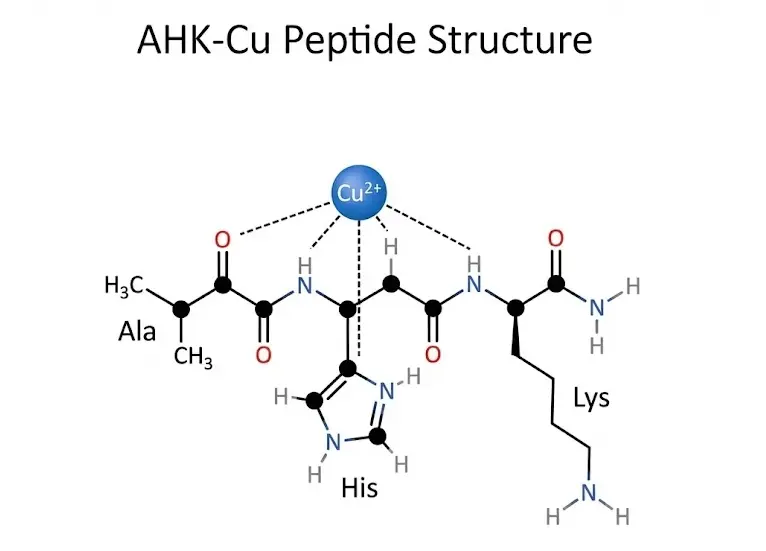
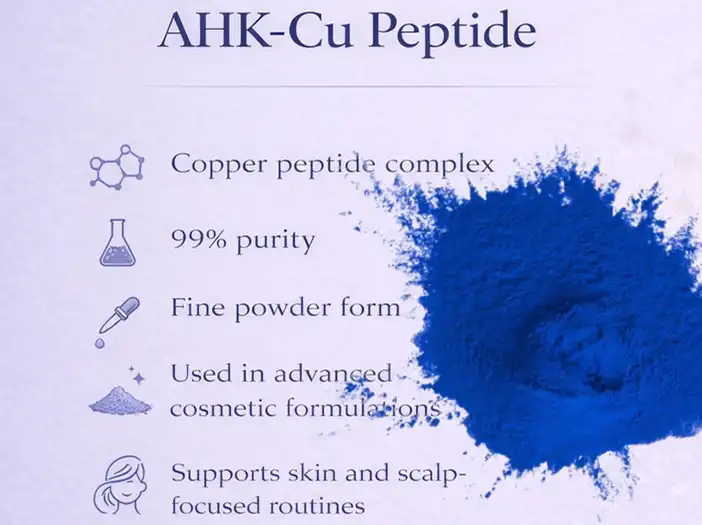
AHK-Cu powder is made up of a unique three-peptide sequence that is linked to copper ions. This gives the molecule a molecular weight of about 340 Daltons. This small structure makes it easy to get through the stratum corneum and into target tissues, where healing processes happen. High-purity grades have a controlled moisture level below 5% and very few solvents left over. They also have at least 95% active substance. The powder's unique blue-green color shows that the copper is properly complexed, and the particle size distribution between 80 and 200 mesh makes sure that the powder spreads out smoothly during production. Specifications for quality control include tests for heavy metals, microbes, and stability under rapid aging conditions. These make sure that makers get materials that meet both legal and cosmetic grade standards.
Bioactive Properties for Cosmetic Applications
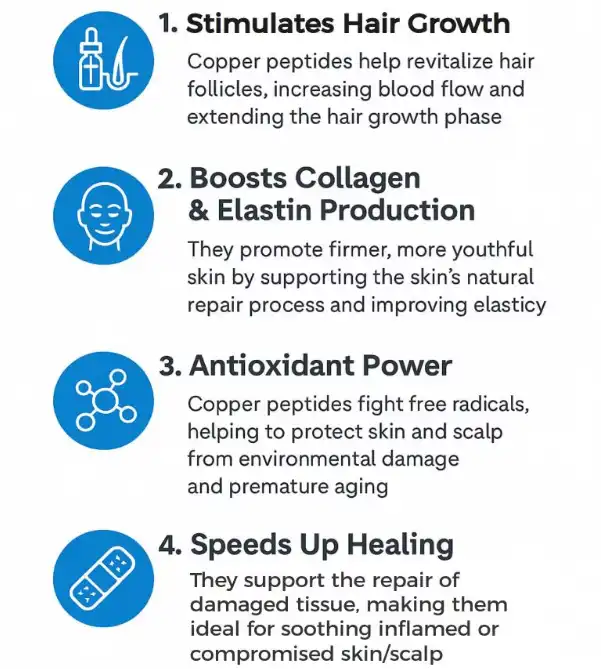
Copper peptides have been shown to increase the activity of fibroblasts, which in turn increases the production of collagen type I and elastin in skin tissues. This process directly deals with obvious signs of aging, such as fine lines, loss of firmness, and changes in texture. The copper part has extra benefits because it works with superoxide dismutase as an enzymatic cofactor, protecting against external stresses as an antioxidant. These qualities are used in hair care products to strengthen root structures, improve blood flow to the head, and help hair grow in the anagen phase. Clinical studies show that hair density and thickness get better after long times of constant use. Copper ions' antimicrobial qualities also help keep products fresh, so they don't need as many standard preservatives and keep microbes stable throughout the shelf life.
Formulation Compatibility and Stability Considerations
To successfully add this peptide, you need to know about pH sensitivity. The best range for safety is between pH 5.0 and 6.5, which is close to the naturally acidic environment of skin. The compound stays stable when mixed with common makeup ingredients like hyaluronic acid, ceramides, and plant extracts. However, strong oxidizing agents or metal ions that don't mix well should not be mixed directly with the compound. Because peptides are sensitive to temperature, cold processing methods must be used whenever possible, and the highest temperature that can be used for processing must not be higher than 60°C. The best places to store things are in cool, dry places that are out of direct sunlight and in cases made of non-reactive materials like HDPE or glass. These conditions must be met for prepared goods to have shelf lives of 24 to 36 months without major active degradation.
Comparing AHK-Cu Powder with Other Copper Peptides for Cosmetic Applications
Copper peptides are a group of different substances with different molecular structures and, as a result, different performance patterns. Knowing these differences helps buying teams make smart choices about AHK-Cu powder that are in line with how to place a product and who the target audience is.
Structural Differences and Penetration Characteristics
The GHK-Cu variant has a glycyl-histidyl-lysine backbone, while the AHK-Cu variant has an alanyl-histidyl-lysine sequence. This makes small but important changes in how well it penetrates skin and binds to receptors. When glycine is switched out for alanine, a slightly more lipophilic molecule is made, which could improve membrane permeability in some formulation situations. Molecular modeling studies show that this difference in structure affects how it interacts with parts of the extracellular matrix, which in turn affects the signaling pathways that control tissue remodeling. Both peptides work, but formulators making products for particular problems may find that one variant works better than the other based on the ingredients they are mixed with and how the delivery system is set up.
Performance Metrics in Hair and Skin Formulations
Comparative studies show that copper peptides work better than regular copper salts at targeting and being bioavailable. Compared to ascorbic acid products or retinoids, copper peptides are kinder and less likely to irritate the skin, which makes them good for recipes for sensitive skin. Hair care uses have a lot of potential. For example, clinical studies have shown that they can improve the thickness of the hair shaft, make it less likely to break, and speed up the growth cycle. Leave-on treatment makers say that customer happiness levels are linked to peptide concentration levels, which are usually set between 0.5 and 3% based on the product category and positioning. The cost-benefit analysis suggests that copper peptides should be used in high-end products where claims are backed up and higher ingredient costs are justified.
Industrial Applications Beyond Personal Care
Knowing about the bigger market for copper powder helps with finding materials that are safe for cosmetics. Industrial copper powders are used in fields like metallurgy, electronics manufacturing, and additive production. The standards focus on the powder's ability to carry electricity and stick together, rather than its biological activity or purity levels that are safe for human use. This difference shows how important it is to work with suppliers who specialize in cosmetic-grade peptide synthesis and make sure the materials meet safety standards, go through the right chemical tests, and come with proof that they can be used for cosmetic purposes. Because peptide production needs a lot of skill, there are different supply chain issues to think about than when getting bulk chemicals.
Procurement Insights: How to Source Quality Copper Peptide Powder for Manufacturing
Setting up reliable supply chains for specialty cosmetic actives like AHK-Cu peptide powder requires carefully evaluating suppliers, being clear about requirements, and agreeing on quality standards that protect brand image and customer safety.
Supplier Qualification and Certification Requirements
Manufacturers of peptides with a good reputation keep certifications like ISO 9001 for quality management systems, GMP compliance for making cosmetic ingredients, and ideally ISO 22716 for cosmetic manufacturing practices. These licenses show that quality control, preventing contamination, and making sure that batches are all the same are done in a planned way. Ask for Certificates of Analysis for sample batches and read the specifications carefully to see the purity levels, identification verification methods like HPLC or mass spectrometry, and safety parameters such as the amount of heavy metals and microbes allowed. For target countries, suppliers should send complete technical data packages that include stable studies, formulation instructions, and proof of regulatory status. At Bolin Biotechnology, we follow strict testing methods that are in line with international standards. This way, we can make sure that our clients get materials that help them meet their quality goals and legal requirements.
Minimum Order Quantities and Logistics Considerations
Cosmetics made on a commercial scale usually need kilogram amounts, but smaller amounts may be needed for recipe trials during the creation phase. Different suppliers have different minimum order amounts. For example, specialized peptide makers usually set limits between 1 and 5 kilograms to stay profitable. Pricing frameworks are based on how complicated the process is, the purity grade, and where the product fits in the market. Commitments to buy in bulk can sometimes lead to better terms. You can package your goods in pharmaceutical-grade drums, aluminum foil bags flushed with nitrogen, or custom cases that meet your special handling needs. For international shipping, you need the right paperwork, like Material Safety Data Sheets, Certificates of Origin, and statements that say the goods are cosmetic-grade. Lead times for stock items are usually between 2 and 4 weeks, but they can be up to 8 weeks for special synthesis or large orders that need specific production runs.
Technical Support and Formulation Assistance
In addition to providing materials, partners who can help with formulation and debugging are also helpful to makers. Technical teams help improve methods for incorporating substances, offer ways to keep them stable, and give advice on the concentration ranges that work best for different types of products. By working together, we can shorten the time it takes to build something, cut down on the number of times it needs to be changed, and use what we've learned from using different applications in the past. Access to application labs for testing compatibility or substantiation studies adds value beyond the sale of a commodity ingredient. This helps build relationships that support the success of a product over the long term.
Practical Guidelines for Formulating with Copper Peptide Powders
To successfully turn AHK-Cu powder specifications into finished market goods, you need to know both how to handle peptides technically and how to make more of them in a practical way.
Incorporation Methods and Mixing Protocols
Because copper peptides are hydrophilic, they need to be dissolved in the water phase of emulsions or added directly to water-based products. Start by making a concentrated stock solution at room temperature using purified or deionized water. Make sure the solids are completely dissolved by shaking the solution gently without adding too much air. Do not stir the mixture too much because it could break down the peptide structure or make foam that needs a long time to settle down. Based on an active base, target concentrations in finished goods are usually between 0.5% and 3%. When making emulsions, add the peptide solution while the mixture is cooling down, making sure the temperature stays below 40°C to keep the activity. Anhydrous mixtures are hard to dissolve and usually need special methods like propylene glycol or other polar liquids that don't affect the stability of the peptide.
Addressing Common Formulation Challenges
During stability tests, peptide mixtures can sometimes have problems like precipitation, color changes, or activity loss. Precipitation usually means that the pH or ionic strengths aren't right. This can be fixed by making the buffer system work better or adding chelating agents that stop unwanted complexation. Changes in color from the normal blue-green to brown indicate oxidation damage, which can be fixed by strengthening the antioxidant system with substances like tocopherols or sodium metabisulfite. Before finishing compositions, compatibility testing should be used to check each recipe component against the peptide on its own. Following ICH standards for stability protocols can help find problems before they hit the market, and fast testing at 40°C and 75% relative humidity can predict how well the product will work in the long run. Formulators should expect a 10-15% drop in activity over 24 months as a normal loss of quality that meets the requirements.
Practical Case Applications and Performance Outcomes
Within 8 to 12 weeks of regular use, serums with 2% copper peptide concentrations along with hyaluronic acid and niacinamide show changes in skin firmness and brightness that they can see. Instrumental testing has shown that hair care systems that use 1% peptide in leave-in products increase the thickness of the hair shaft and lower the rate at which it breaks. Copper peptides are the main ingredient in some anti-aging creams that are successful in expensive markets. These creams make claims about supporting collagen and reducing wrinkles that are backed up by clinical evidence. These real-life uses show that the ingredient can be used in business and is acceptable to customers when it is properly made and placed.
Future Developments in Copper Peptide Technology and Market Dynamics
The makeup actives market is always changing because science is learning more, customer tastes are shifting, and new rules affect how AHK-Cu peptide powder can be used and how claims can be proven.
Emerging Research and Enhanced Delivery Systems
Nano-encapsulation technologies that keep peptides from breaking down and allow controlled release patterns that improve absorption are being studied right now. Liposomal delivery methods have better penetration depths, which could make them more effective at hitting structures in the dermis. When copper peptides are mixed with growth factors, plant stem cells, or advanced peptide sequences, the combined effects are stronger than the sum of their parts. Academic institutions and cosmetic research labs are still writing down molecular methods of action. This gives scientists a way to separate products and tell stories about them that are based on facts, which resonates with customers who are becoming more educated.
Sustainability and Clean Beauty Considerations
Buying choices are affected by how consumers feel about where ingredients come from, how they affect the earth, and how ethically products are made across all market segments. Chemical methods have usually been used to make peptides, but improvements in biotechnology have made fermentation-based alternatives possible, which are better for the environment. Manufacturers that care about sustainability look for providers that can show they reduce trash, use energy efficiently, and handle chemicals responsibly throughout the production cycle. Clean beauty groups like products that come from clear sources, are processed as little as possible, and have safety ratings backed up by a lot of toxicological data. When explained correctly, copper peptides fit in well with these trends because they offer naturally-inspired methods that come from knowing how biological repair processes work.
Regulatory Landscape and Compliance Evolution
Different countries around the world have different rules about cosmetics. For example, the United States, the European Union, and the Asia-Pacific area all have their own rules about which ingredients can be used, how safe they are, and how claims can be backed up. The FDA's control of cosmetics in the US is very different from the EU's strict pre-market standards. This means that different types of paperwork are needed and different kinds of marketing language is allowed. Copper peptides are generally well-regulated as cosmetic chemicals. However, companies that make them must make sure that amounts stay within known safety limits and that therapeutic claims don't cross over into drug area. Keeping up with changes to regulations, joining industry groups, and keeping in touch with regulatory consultants can help you find your way through this complicated world while lowering your compliance risks.
Conclusion
Copper peptide actives are useful tools for cosmetic companies that are making hair and skin care products based on scientific proof that fight aging, repair harm, and improve general look. The known biological actions, good safety scores, and ability to be made in a variety of ways help the market grow and keep people buying them. Finding high-quality materials from reliable sources, using the right formulation strategies to keep peptide stability, and placing goods in markets that value scientific proof are all important parts of making a successful product. Copper peptides like AHK-Cu powder will likely continue to be popular in high-end cosmetics as science improves and delivery methods get better.
FAQs
What concentration levels produce optimal results in finished products?
Copper peptide amounts for AHK-Cu powder that work usually fall between 0.5 and 3% in finished products, but the exact number depends on the type of product and how often it will be used. Leave-on treatments like serums and creams usually have higher concentrations, around 2% to 3%. Cleansers, on the other hand, may have lower concentrations because they only touch the skin for a short time. Leave-in treatments for hair care that are 0.5 to 1.5% effective show benefits. Concentration choice should strike a mix between goals for effectiveness, cost, and keeping the product stable over its entire shelf life.
How do storage and handling affect material quality?
The right storing conditions are very important for keeping peptide activity high while they are being stored and during the making process. Keep packages that haven't been opened away from direct sunlight and water and in a cool, dry place that is below 25°C. Once containers are opened, close them back up quickly and use desiccants if you have them to keep air out as much as possible. Use special tools and follow proper handling methods to keep things from getting dirty. In ideal conditions, material that hasn't been opened stays in good shape for 24 months after it was made.
Can copper peptides cause skin sensitivity or adverse reactions?
Copper peptides are usually considered safe by clinical tests because they are well accepted and don't cause skin inflammation. The amounts used in makeup are still a long way below the levels that are known to cause harm. Some people may have responses if they are sensitive to copper or have certain allergies, but these events are still very rare. Following standard procedures for cosmetic safety assessment, manufacturers should do the right safety testing, such as patch tests and use trials, on their target groups before putting their products on the market.
Partner with Bolin Biotechnology for Premium Copper Peptide Solutions
We understand the challenges cosmetic manufacturers face when sourcing specialized actives that meet rigorous quality standards while supporting innovative product development. Shaanxi Bolin Biotechnology Co., Ltd. has been making high-quality beauty peptides for more than ten years and has a lot of certifications and professional support services to back them up. Our AHK-Cu powder provider capabilities extend beyond material provision to include formulation consulting, stability guidance, and regulatory documentation supporting your global market objectives. Whether you're developing a new anti-aging line or enhancing existing hair care formulations, our team provides the materials and expertise ensuring project success. Reach out to our technical sales team at sales1@bovlin.com to discuss your specific requirements, request samples, or explore how our copper peptide offerings can elevate your product portfolio in competitive markets.
References
Pickart, L., Vasquez-Soltero, J. M., & Margolina, A. (2017). GHK Peptide as a Natural Modulator of Multiple Cellular Pathways in Skin Regeneration. BioMed Research International, 2017, 1-10.
Gul, N. Y., Topal, A., Cangul, I. T., & Yanik, K. (2008). The effects of topical tripeptide-copper complex and helium-neon laser on wound healing in rabbits. Veterinary Dermatology, 19(1), 7-14.
Hostynek, J. J., Dreher, F., & Maibach, H. I. (2010). Human Skin Penetration of a Copper Tripeptide in vitro as a Function of Skin Layer. Inflammation Research, 59(11), 983-988.
Abdulghani, A. A., Sherr, A., Shirin, S., Solodkina, G., & Tapia, E. (2012). Effects of Topical Creams Containing Vitamin C, a Copper-binding Peptide Cream and Melatonin Compared with Tretinoin on the Ultrastructure of Normal Skin. Journal of Cosmetic and Laser Therapy, 14(5), 224-230.
Miller, S. J., Aly, R., Shinefeld, H. R., & Elias, P. M. (1988). In Vitro and In Vivo Antistaphylococcal Activity of Human Stratum Corneum Lipids. Archives of Dermatology, 124(2), 209-215.
Mazurowska, L., & Mojski, M. (2008). Biological Activities of Selected Peptides: Skin Penetration Ability of Copper Complexes with Peptides. Journal of Cosmetic Science, 59(1), 59-69.