_1745226507162.webp)

Alpha Lipoic Acid Bulk Powder in Health Formulations
Alpha lipoic acid powder is an important part of current health products because it can be used as an antioxidant in a wide range of situations. Chemically named 1,2-dithiolane-3-pentanoic acid, this organosulfur compound works in both water and fats in a way that no other compound does. This makes it essential for companies that make healthy drinks, pharmaceuticals, and nutraceuticals. Because it dissolves in two different ways, it can get into cells in all body tissues, even those that are normally separated by blood and brain. This makes bulk ALA powder an ideal ingredient for formulators who want to add complete oxidative stress management solutions to their products.
Understanding Alpha Lipoic Acid Powder and Its Health Benefits
What Makes Alpha Lipoic Acid Powder Unique
Alpha lipoic acid powder is an important ingredient in the production of energy in mitochondria. It works directly with aerobic metabolism to help make ATP. Unlike other antioxidants that can only protect organs that are either water-based or fat-based, this amphiphilic molecule protects cells all over the body. The raw ingredient market knows that ALA powder can recycle other antioxidants, like vitamins C and E, which makes their beneficial effects last longer in products. This recycling system solves a problem that has been around for a long time: how to make big production runs of antioxidants as effective as possible while keeping costs low.
Core Health Applications in Commercial Formulations
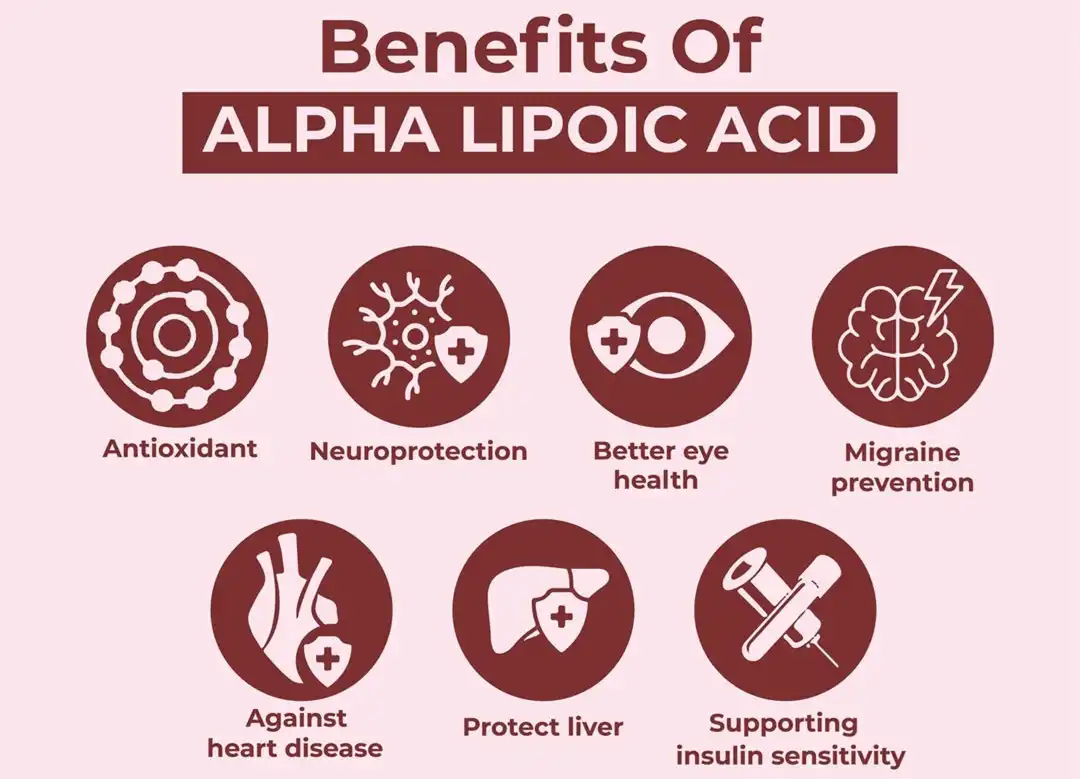
Researchers have found that taking thioctic acid supplements can help keep blood sugar levels healthy by improving the oxidative processes that cause metabolic problems. Studies on animals show that it might lower blood sugar, which makes it useful for metabolic support formulas. ALA powder does more than just control glucose levels; it also lowers inflammatory signs like C-reactive protein, giving formulators a versatile ingredient for long-term health goods. The compound protects neurons by working on particular tissues to stop damage to neurons and improve neurotransmitter function. This opens the door for brain health supplements.
Meta-analytical study has shown that ALA can lower LDL cholesterol and fat levels, which is good for cardiovascular formulations. It helps capillary function when mixed with complementary antioxidants in formulation matrices. This addresses vascular health issues that raise cardiovascular risk factors. Topical uses in cosmeceuticals take advantage of its ability to reach deep layers of skin, slowing down the signs of aging and protecting against free radicals for a long time. Because of these many uses, bulk ALA powder is an important ingredient in many types of health products.
Stability Considerations for Manufacturers
Because it melts at a relatively low temperature (about 60–62°C), procurement teams need to know how to handle alpha lipoic acid bulk powder in a certain way. The compound likes to polymerize when it comes in contact with light or heat, so it needs to be stored carefully during shipping and keeping. Manufacturers who follow GMP guidelines should set up climate-controlled areas and light-protected packing to keep the product's effectiveness throughout the supply chain and stop it from caking. These technical factors have a direct effect on the security of the formulation and the shelf life of the finished product. Because of this, knowing how to handle products properly is a very important factor in choosing a provider.
Comparing Alpha Lipoic Acid Powder with Other Forms and Supplements
Powder versus Alternative Delivery Formats
When it comes to processing, bulk powder form is clearly better than pre-encapsulated or injection-ready shapes. The raw powder gives formulators the most freedom to change the dosage, so they can make anything from low-dose daily upkeep supplements to high-potency therapeutic formulas. Buying powder makes cost effectiveness go up by a lot, especially for medium to large production runs where the cost of each item directly affects profit margins. Working with pure powder makes it easier to integrate into production processes. This is true whether you are making pressed pills, full capsules, beverage powders, or topical serums.
Bioavailability issues are different for each type of delivery. While shots work right away, most commercial health goods need to be taken by mouth or put on the skin, which is where powder form really shines. The compound can naturally pass through cell walls, so it is absorbed well no matter what method is used for delivery. However, formulation techniques have a big effect on the compound's final bioavailability. Manufacturers can improve absorption by strategically pairing active ingredients with bioavailability boosters or using advanced packaging technologies that keep the active ingredient safe while it goes through the digestive system.
Positioning Against Complementary Antioxidants
When you compare ALA to N-acetylcysteine, glutathione, and resveratrol, you can see that their relationships are not competitive but rather complementary. NAC mostly works as a precursor to glutathione and has mucolytic effects. Glutathione itself has problems with bioavailability in oral forms. Resveratrol has polyphenolic effects that are mostly focused on heart health and living longer. One of the best things about thioctic acid is that it is a general antioxidant that works well in all parts of cells and helps other antioxidants work better in formulation matrices.
These chemicals are often put together in strategic formulation creation to make antioxidant networks that work better together. Combining ALA with glutathione precursors and polyphenolic substances is a common way for product makers to protect cells in a wide range of ways. This method has more biological effects than single-ingredient approaches. This combination approach helps customers reach a range of wellness goals and sets goods apart in the supplement market, which is very competitive. Clean-label trends are pushing for more complex formulations that are based on science. This gives experienced makers who know how ingredients interact with each other a market edge.
Purity Standards and Formulation Options
Pure alpha lipoic powder standards usually aim for 99% minimum measurement values, which can be confirmed by High-Performance Liquid Chromatography tests. For material to be pharmaceutical-grade, it needs to have strict impurity profiles that set limits on related chemicals, leftover solvents, and polymerized material. Nutraceutical manufacturers may come across stabilized ALA formulations that are already mixed with excipients to make them easier to handle. However, it is important to carefully check the real active ingredient amount per unit weight of these formulations.
As demands for clean labels change what the market needs, vegetarian and organic standards become more important in buying choices. Even though ALA synthesis doesn't use materials that come from animals, approval paperwork shows that the manufacturing methods are vegetarian-friendly. Organic certification is harder to get because the substance is made in a lab, but some sellers do have choices that come from plants and meet organic standards. Although these specialty grades are more expensive, they are necessary for brands that want to reach natural product stores and health-conscious people who want to know where their ingredients come from.
Procurement Insights: Buying Alpha Lipoic Acid Bulk Powder for Health Formulations
Critical Quality Verification Points
A thorough study of the Certificate of Analysis is the first step in effective buying. In addition to basic assay proof, buying managers should look at laser diffraction data on particle size distribution because it has a direct effect on how uniform the mix is in finished goods. Loss on drying standards stops clumping caused by wetness and the growth of microbes during storage. GC-Headspace study of residual solvents makes sure that ICH Q3C rules are followed, especially when it comes to cyclohexane and ethyl acetate residues that are common in chemical processes.
A useful quality sign that is often missed in the first stages of procurement reviews is the "clear solution" test. This easy test dissolves the powder in ethanol to make sure there aren't any polymerized materials or impurities that don't dissolve and make the mixture less stable and clear. Heavy metal screening for cadmium, lead, arsenic, and mercury keeps the product from getting contaminated, and microbe limit testing makes sure that the factory follows good cleanliness rules.
Together, these checkpoints make sure that the raw material meets the high standards for pharmaceutical grade materials that are needed in controlled health product markets.
Supplier Evaluation Framework
Reliable providers show they are honest by providing a lot of paperwork, such as descriptions of the manufacturing process, approvals for the quality system, and stable data to back up promises about shelf life. Good Manufacturing Practices (GMPs) must be followed in order for medicinal and nutritional products to be certified. Standardized quality management systems are shown by ISO certificates, and systematic food safety controls that are useful for practical food and drink uses are shown by HACCP compliance.
Tracking systems that tell the difference between trustworthy sources and shady ones make it possible to keep track of all the raw materials from the time they are synthesized until they are packaged. Synthesis records, in-process testing data, and finished product analysis reports should all be part of batch-specific paperwork. It's just as important that the supply chain is resilient. Reliable providers keep stable inventory levels, backup manufacturing capacity, and written business continuity plans to keep your production schedules from getting messed up. Long-term relationships with highly skilled suppliers give you access to help with formulation, regulatory advice, and early warning of changes to specifications or supply limits.
Logistical and Regulatory Considerations
Different providers have very different minimum order numbers, ranging from small amounts that can be used to test a product's viability to full container loads for established manufacturing operations. Lead times range from two to six weeks, but they can be longer or shorter based on where the seller is located, how customs works, and when the product is made. When making purchases, you should think about the time it might take for foreign shipping to arrive, especially during busy times or when regulatory inspections make ports crowded.
Different target markets have different needs for regulatory compliance documents. Importers in the United States require sellers to follow FDA rules about dietary supplement chemicals, such as getting the right GRAS status or food additive approvals based on the use. Novel Foods rules and specific purity standards laid out in pharmacopeial papers must be followed in order to sell food in Europe. Experienced providers offer certificates that are relevant to the market, allergen declarations, BSE/TSE statements, and non-GMO confirmations to help with regulatory reports and meet customer openness requirements.
Formulating with Alpha Lipoic Acid Bulk Powder: Best Practices and Case Studies
Dosage Optimization Across Product Categories
Alpha lipoic acid powder is usually found in dietary supplements in amounts between 100 mg and 600 mg per dose. The exact amounts depend on the health claims that are being made and the type of people who will be buying the supplement. Higher amounts (300–600 mg) are often used in metabolic support products, while smaller doses and other ingredients that work well together may be used in general antioxidant formulations. For pharmaceutical uses that need therapeutic results, specific dose amounts need to be backed up by clinical data. Based on published effectiveness research, some over-the-counter formulations go over 600 mg.
Topical cosmetics use much lower concentrations—usually between 0.1% and 1% in finished products—but they still work to protect the skin from damage without causing discomfort. Because the substance can penetrate, it can be delivered effectively at these low amounts. Functional beverage and food uses have to balance the need for effectiveness with the need for taste, since ALA has a sulfury smell at higher amounts. Microencapsulation technologies successfully hide flavors while keeping the active ingredient from breaking down in water-based media. This makes it possible for more food and drink uses that were previously limited by organoleptic issues.
Stability Enhancement Strategies
Formulation scientists use a number of tried-and-true methods to deal with ALA's sensitivity to heat and light. Using lipid matrices or polysaccharide coatings for microencapsulation protects the active ingredient from external stressors and makes it easier for the product to move during production. Antioxidant systems that include rosemary extract or vitamin E offer extra defense against reactive damage. Hydrolysis-related strength loss can be avoided during shelf storage by choosing the right excipients and packing materials and keeping the moisture level under control.
During the blending, granulating, and encapsulation steps, heat contact is kept to a minimum by temperature-controlled production methods. Many producers with a lot of experience use cold-chain methods to keep the temperature below 25°C during the whole process. Choosing the right packaging has a big effect on how stable the product is. For example, aluminum blisters, amber glass bottles, and foil-laminated bags with desiccants clearly have longer shelf lives than regular plastic cases. Accelerated stability studies under ICH conditions should help with choices about packing and expiration dates. This will make sure that final goods live up to the claims on their labels for as long as they are sold.
Real-World Application Examples
A well-known nutraceutical company made a metabolic wellness tablet with 300 mg of alpha lipoic acid, chromium picolinate, and biotin for people who care about their health and have problems with their blood sugar. Stability tests showed that HDPE bottles with desiccant inserts could be stored for 24 months, which supports wide market distribution. The market reaction confirmed the formulation approach, with rates of repeat purchases higher than the averages for the category.
A new functional drink brand successfully put microencapsulated ALA into a ready-to-drink form, combining it with B-vitamins and green tea extract to place the product as an energy and antioxidant source. The packaging technology covered up the sulfur notes and kept the product stable through pasteurization and keeping at room temperature. This new idea opened up new markets that ALA-based goods couldn't reach before. It shows how technical formulation solutions can open up new business possibilities.
A cosmetics company came out with an anti-aging lotion that has 0.5% alpha lipoic acid, hyaluronic acid, and vitamin C molecules in it. After eight weeks of use, clinical tests showed that fine lines had faded and the structure of the skin had become smoother. The product was positioned as a premium item in high-end beauty stores. This shows that formulas that have been scientifically proven to work can command higher prices while still meeting the high standards of effectiveness and honesty that educated consumers expect.
Ensuring Quality and Compliance in Bulk Alpha Lipoic Acid Powder Procurement
Standardized Testing Protocols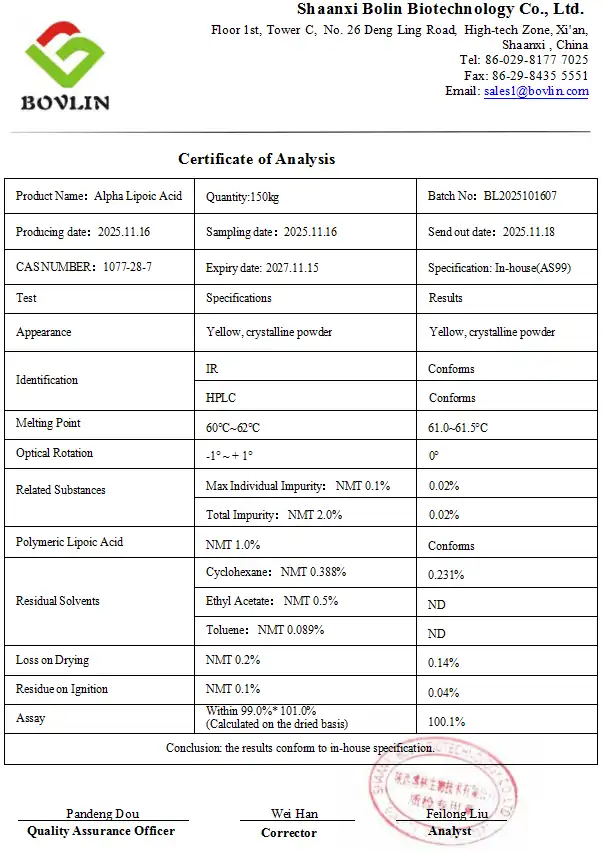
Comprehensive quality control programs use multiple levels of testing, starting with an eye check to make sure the colors are the same and there are no foreign materials. HPLC research measures the amount of an assay and looks for linked chemicals and breakdown products that show bad storage or aging. Acceptable purity standards set upper limits for each impurity, which are usually less than 0.1% for each and no more than 1.0% for all impurities together. These requirements protect the quality of the end product and lower the chance of regulatory action.
Particle size analysis is part of physical testing to make sure that the variation is always 80-mesh or smaller for even mixing. Measuring bulk density helps with formulating and making decisions about packing. Loss on drying tests should show results below 0.5% for good materials when done at 105°C for two hours. Inorganic impurities can be measured by residue on ignition tests, and levels usually below 0.1% are considered okay. These physical factors have a direct effect on how well the manufacturing process works and what the end product looks like.
Standard pharmacopoeial methods are used for microbiological tests. The highest total aerobic microbe count is usually set at 1,000 CFU/g, and the lowest yeast and mold counts are below 100 CFU/g. Lack of certain bacteria, such as E. coli, Salmonella, and Staphylococcus aureus must be tested for in food that is meant to be eaten. Heavy metal screening using ICP-MS measures levels of lead, arsenic, mercury, and cadmium against strict pharmacopeial limits. This keeps people safe and makes sure that regulations are followed.
Essential Certifications and Documentation
GMP certification from reputable auditing groups shows that factories follow the right standards for quality control, paperwork, and cleanliness. This license is especially important for suppliers who work with pharmaceutical companies or for makers that the FDA inspects. Getting ISO 9001 certification shows that you are committed to quality management principles that can be used in any business. ISO 22000 certification, on the other hand, is only for food safety management that is important for nutraceutical and functional food uses.
When organic certification is offered, it needs to be checked by recognized certifying bodies that make sure the whole supply chain follows the rules for organic farming. Getting Kosher and Halal licenses makes it easier for companies to sell their products to people who follow certain religious food rules. More and more people are worried about genetic change, and non-GMO certification helps ease those worries. However, ALA's synthetic production methods make GMO risk very low. All of these certificates back up what the company is saying in their marketing and meet the needs of retailers so the product can be sold.
Risk Management Best Practices
In world chemical markets, fake materials are a big problem. Before accepting large purchases, procurement professionals should set up seller qualification programs that include facility audits, reference checks, and evaluations of pilot orders. Price points that are much lower than the market average often mean that the quality has been lowered or that the product is fake. Reliable sellers keep their prices stable so that they can cover the costs of good raw materials, good factory controls, and compliance investments.
Traceability systems that let you see the whole supply chain, from where the raw materials come from to where the finished powder goes, protect against tampering and make it easier to respond quickly to quality concerns. Each shipment should come with batch-specific paperwork that makes it easy to connect the provided materials to the original production records. Supply deals should spell out quality standards, who is responsible for testing, and how to fix material that doesn't meet specifications. These parts of the contract make sure that everyone knows what to expect and protect both sides in long-term business agreements.
Ongoing procurement choices are based on regular supplier performance reviews that look at things like on-time supply rates, certificate accuracy, and quality consistency. Diversified supply sources lower the risk of dependence while keeping prices and service levels competitive. Strategic providers who offer technical support, regulatory knowledge, and recipe advice add value beyond just supplying raw materials, which is why they deserve to be paid more for important ingredient categories.
Conclusion
Alpha lipoic acid powder is becoming more and more popular as an important ingredient in useful foods, cosmetics, nutraceuticals, and pharmaceuticals. Its special molecular properties—universal antioxidant activity, dual solubility, and metabolic support functions—meet the changing health needs of consumers and meet the needs of different formulations. To make a good purchase, you need to pay close attention to checking the quality, making sure the seller is reliable, and following the special handling instructions for this valuable but fragile product. Manufacturers who learn how to formulate ALA and build relationships with approved sources will have an edge in the competitive health product markets that want ingredients that have been scientifically proven to be safe and have clean labels.
FAQ
What is the optimal dosage of alpha lipoic acid powder for dietary supplement formulations?
Dosage suggestions change depending on the health benefit and type of person being treated. General antioxidant support formulas usually have 100 to 300 mg per dose, while metabolic wellness formulas usually have 300 to 600 mg based on clinical studies. Pharmaceutical uses can go beyond these areas if there is a good treatment reason to do so. Formulators should look at published studies that test their health claims and follow regulatory advice to make sure that the doses they use are in line with safety data and the needs of the market clearance process.
How can procurement teams verify alpha lipoic acid powder quality before purchasing?
The first step in making sure the quality is right is to carefully look over the Certificate of Analysis and make sure that the HPLC test results meet the requirements for at least 99% pure. Ask for details on particle size distribution, loss on drying, residue solvent analysis, and heavy metal screens. To do the clear solution test, dissolve samples in ethanol to look for polymerized material or impurities that don't dissolve. Check the supplier's certificates, such as those for GMP, ISO standards, and compliance documents relevant to the market. Pilot orders let you directly check the quality of a product before agreeing to alpha lipoic acid powder purchase deal.
Is alpha lipoic acid powder safe for use across different product categories?
When used at the right amounts, ALA has been studied widely for its safety profile when taken by mouth, used as a cosmetic, and added to functional foods. In clinical tests, taking supplements by mouth in normal doses was found to be safe. However, people should talk to their doctors about any possible drug interactions. Topical uses at amounts suitable for cosmetic use show great skin tolerance with a low chance of irritation. Material that is safe for food and meets the right standards can be easily added to functional drinks and protein bars. To keep safety standards high, manufacturers must make sure they have good quality controls and follow the rules that apply to their unique products.
Partner with Bolin Biotechnology for Premium Alpha Lipoic Acid Powder Supply
Pharmaceutical-grade alpha lipoic acid powder is supplied by Shaanxi Bolin Biotechnology Co., Ltd., which meets the high standards of nutraceutical companies, drug makers, and functional food providers around the world. Our ISO and GMP-certified factories make sure that the quality is always the same, and they back this up with thorough Certificate of Analysis paperwork, heavy metal screening, and bacterial testing methods. We offer reasonable terms and reliable foreign shipping, and our minimum order amounts are flexible enough to cover everything from product research to full-scale production. Our technical team can help you with formulation, stability, and regulatory issues. They can also help you with meeting the difficult compliance standards in many countries. Contact our sales team at sales1@bovlin.com to discuss your alpha lipoic acid powder provider needs and find out how our dedication to quality, openness, and customer relationship can help your product development efforts and speed up your market success.
References
Packer, L., Witt, E. H., & Tritschler, H. J. (1995). Alpha-lipoic acid as a biological antioxidant. Free Radical Biology and Medicine, 19(2), 227-250.
Shay, K. P., Moreau, R. F., Smith, E. J., Smith, A. R., & Hagen, T. M. (2009). Alpha-lipoic acid as a dietary supplement: Molecular mechanisms and therapeutic potential. Biochimica et Biophysica Acta, 1790(10), 1149-1160.
Golbidi, S., Badran, M., & Laher, I. (2011). Diabetes and alpha lipoic acid. Frontiers in Pharmacology, 2, 69-85.
Rochette, L., Ghibu, S., Muresan, A., & Vergely, C. (2015). Alpha-lipoic acid: molecular mechanisms and therapeutic potential in diabetes. Canadian Journal of Physiology and Pharmacology, 93(12), 1021-1027.
Biewenga, G. P., Haenen, G. R., & Bast, A. (1997). The pharmacology of the antioxidant lipoic acid. General Pharmacology, 29(3), 315-331.
Gorąca, A., Huk-Kolega, H., Piechota, A., Kleniewska, P., Ciejka, E., & Skibska, B. (2011). Lipoic acid—biological activity and therapeutic potential. Pharmacological Reports, 63(4), 849-858.