_1745226507162.webp)

Copper peptides in cosmetics – structure, effects, and regulations
Copper peptides, especially GHK copper peptide powder, have changed the way cosmetics are made because they have been shown to slow down aging and make skin look younger. A tripeptide sequence and copper ions work together in this bioactive complex to boost collagen production, speed up wound healing, and fight the obvious signs of aging. As the need for scientifically proven cosmetic actives grows around the world, it becomes important for B2B sourcing workers who want to find high-quality ingredients for their product lines to understand the molecular structure, biological effects, and legal requirements.
Understanding the Structure and Science of Copper Peptides
Molecular Composition of GHK Copper Peptide
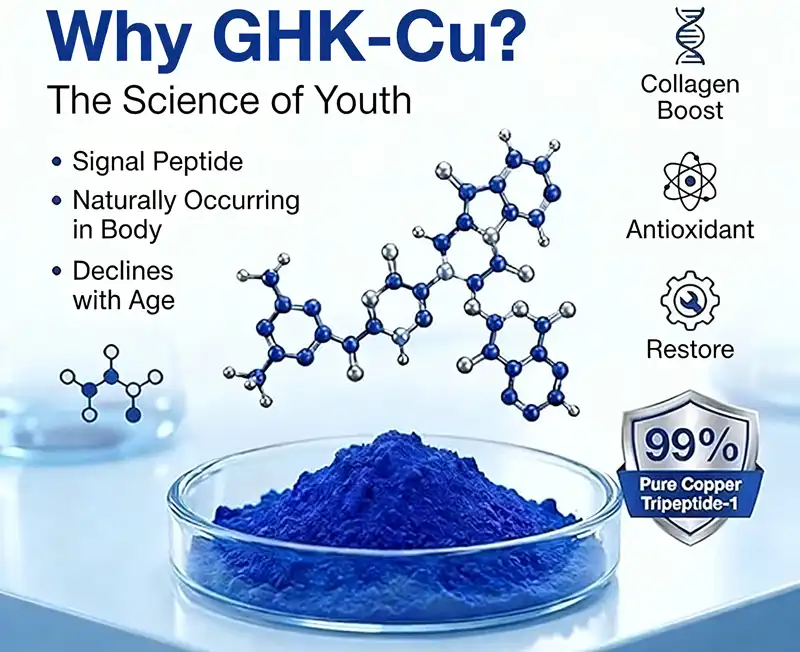
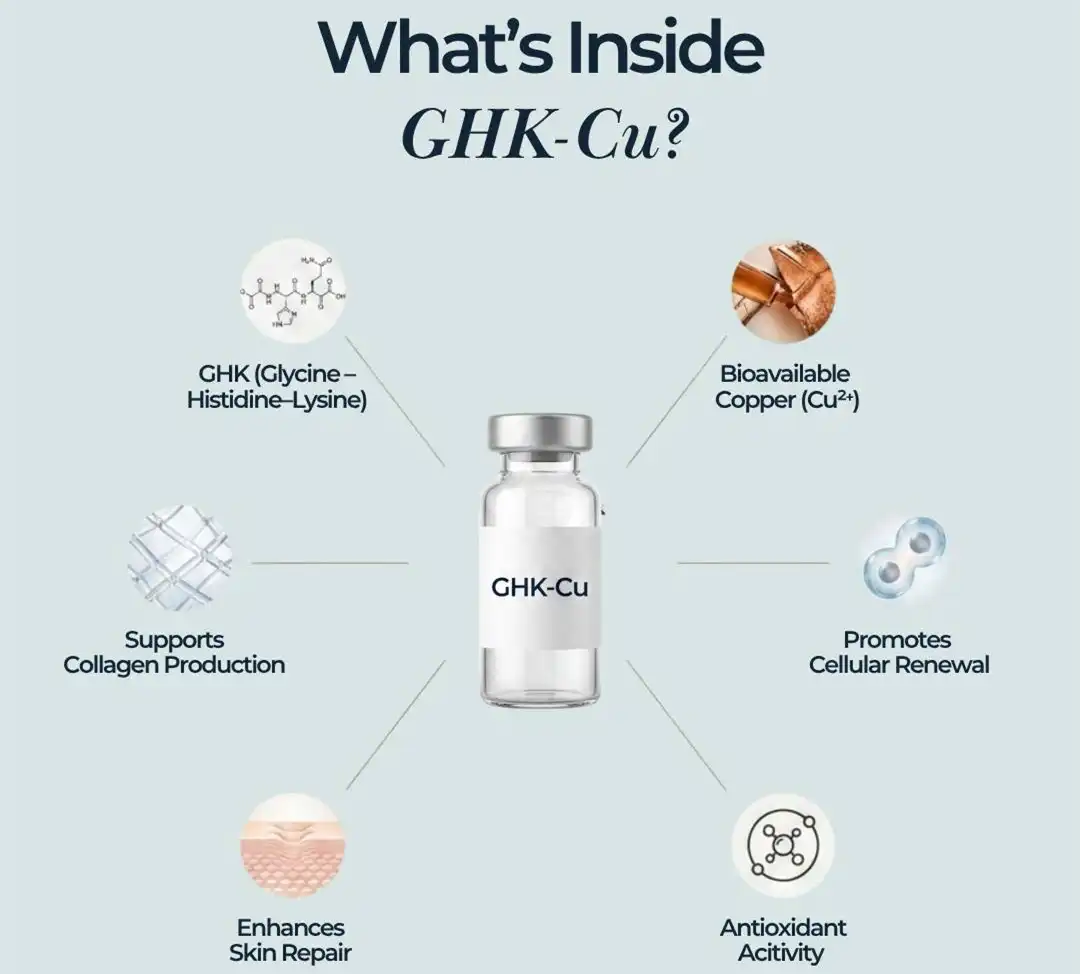
Copper peptide's effectiveness is based on its exact chemical structure. GHK copper peptide powder is made up of glycyl-L-histidyl-L-lysine (GHK), a naturally occurring three-part protein that binds to copper ions (Cu²⁺) and keeps them together. This complex structure is shown by the molecular formula C14H24N6O4Cu, which has a molecular weight of about 403.94 g/mol. This deep blue to violet solid powder looks very different from other materials that aren't pharmaceutical-grade. It shows that the copper binding is working correctly.
Atomic Absorption Spectroscopy (AAS) shows that the copper level in premium-grade powder is between 13.0% and 16.0%. This means that it has the best biological function without being harmful to cells. High-purity standards need HPLC purity values of ≥98.0% to ≥99.0%, which means that impurities like free GHK or loose copper salts that can irritate the skin should be kept to a minimum. Formulators who make clinical-grade goods must make sure that consistency and safety are not sacrificed, and this strict quality standard solves a major problem.
Biological Mechanisms and Cellular Activity
At the level of cells, this functional complex works as a strong signaling peptide that coordinates a number of routes for healing. The copper-peptide complex speeds up the production of glycosaminoglycans (GAGs), which are important parts of the extracellular matrix that keep the skin moist and strong. It has been shown in clinical studies to increase the production of collagen type III, which is also known as "youth collagen," while decreasing the activity of matrix metalloproteinases (MMPs), which break down collagen and elastic fibers.
Because copper is an oxidizer, its redox qualities are very important. GHK copper peptide powder gets rid of free radicals better than many other antioxidants because it boosts superoxide dismutase (SOD) action. At the same time, the complex stops pro-inflammatory proteins like TNF-alpha from working. This lowers chronic inflammation that makes skin age faster. This dual process works on both the signs of aging and the underlying reasons of skin damage, giving formulators a complete way to make anti-aging products.
Comparative Advantages Over Traditional Actives
Compared to retinol and vitamin C, which are commonly used in cosmetics, GHK copper peptide powder has more benefits and is easier for the body to handle. Retinol is great at turning over cells, but it can irritate the skin and make it sensitive to light. GHK copper peptide powder has similar effects on collagen production without these problems, so it can be used in products for people with sensitive skin. Ascorbic acid breaks down quickly in water, but properly stable GHK copper peptide powder stays active across pH ranges of 5.5 to 7.0. This makes formulation chemistry easier and increases product shelf life.
Effects, Applications, and Safe Usage of GHK Copper Peptide Powder
Primary Cosmetic Benefits and Clinical Evidence
Copper tripeptide-1 can be used in a lot of different ways for medicinal reasons. Many clinical studies show that regular use leads to big changes in the skin's elasticity, a decrease in fine lines, and a rise in dermal thickness. The peptide's ability to boost angiogenesis improves microcirculation, which brings oxygen and nutrients to skin cells that are getting older. For hair care uses, it wakes up dormant hair follicles and makes the hair shaft stronger, which addresses hair loss and thinning issues that are a growing market segment.
Accelerating wound healing is another useful use, especially for skin care items used after surgery. The copper complex speeds up tissue regeneration by coordinating the production of collagen and keeping the inflammatory reaction under control. This cuts down on healing time and scarring. These benefits that can be proven give formulators strong marketing claims that are backed up by peer-reviewed research. This makes the product more credible and builds customer trust.
Optimal Formulation Concentrations and Compatibility
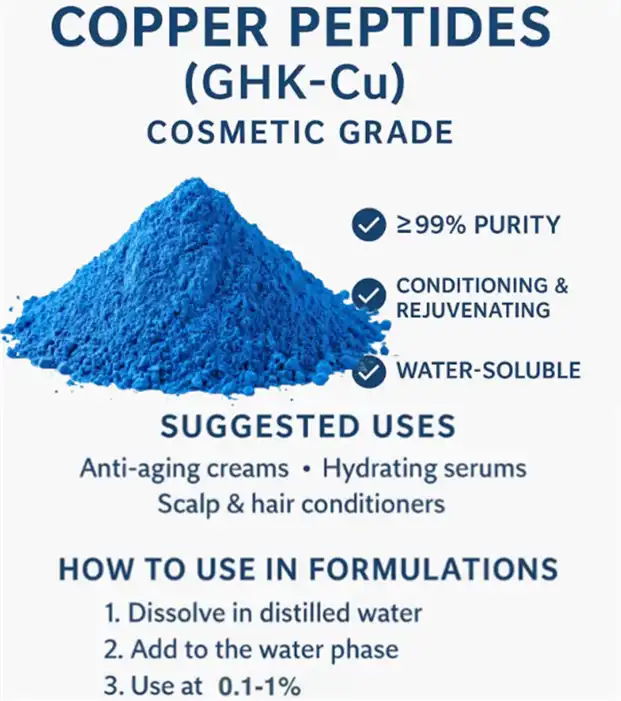
GHK powder is often found in cosmetics at concentrations ranging from 0.5% to 3.0%, based on the product shape and how it will be used. Higher amounts are used in serums that want to treat aging deeply, while moderate levels are used in daily creams to keep the skin healthy. The powder is water-soluble, which makes it easy to mix with water and emulsions. However, oil-based formulas need special delivery vehicles to keep the ingredients stable and available to cells.
Testing for compatibility shows that it works better when mixed with hyaluronic acid, niacinamide, and some plant products. But formulators shouldn't mix GHK copper peptide powder with strong chelating agents like EDTA in large amounts, since these can break the bond between the copper and peptide and make the drug less effective. Changing the pH level is still very important; formulas need to stay slightly acidic to neutral in order to keep the purity of the peptides while they are stored. Antioxidant co-actives, like tocopherol or ferulic acid, can make the copper complex more stable by stopping it from breaking down due to oxygen.
Storage Conditions and Stability Considerations
Strict weather controls are needed to keep the quality of the ingredients high from the time they are bought until the end product is made. The powder should be kept between 2 and 8°C in a neutral gas atmosphere to keep the copper ion from oxidizing. Exposure to water, sun, and high temperatures speeds up degradation, which lowers cellular activity and may produce byproducts that are unpleasant. Packets of desiccant and opaque, airtight cases should be sent with bulk items to protect them from environmental stresses while they are being shipped and stored.
Accelerated aging studies and real-time tracking should be part of finished product stability tests throughout the expected shelf life. Formulations are most stable when they are stored in airtight canisters or amber glass bottles that keep oxygen and UV light from getting in. These practical concerns make sure that B2B clients get materials that can keep their labeled effectiveness during business distribution. This protects both the brand's image and the happiness of its customers.
Regulatory Landscape and Quality Assurance for Copper Peptides
US FDA and International Compliance Requirements
To find your way around the rules for cosmetic peptides, you need to know what the rules are in each state. GHK copper peptide powder is considered a cosmetic chemical by the US Food and Drug Administration (FDA) when used to improve the way someone looks. They do not need to be approved before they can be sold, but the Federal Food, Drug, and Cosmetic Act does require that their safety be proven. Manufacturers must make sure that their goods are correctly labeled and haven't been tampered with or given the wrong name. Claims must be backed up by the right tests, and they shouldn't suggest therapeutic benefits like drugs without going through the right drug approval channels.
The Cosmetics Regulation (EC) No 1223/2009 in the European Union requires that safety tests be done by trained safety evaluators as part of stricter rules. The EU's Cosmetic Ingredient Database (CosIng) shows copper tripeptide-1 as an allowed ingredient. However, stability data, toxicological evaluations, and exposure estimates must be included in finished product dossiers. Businesses that sell to people in Europe should make sure that the sellers they work with give them all the paperwork they need to show they're following the rules. This should include impurity profiles and microbe limits testing.
Certification and Quality Control Standards
GHK copper peptide powder that is used in medicine should be made in facilities that are certified by ISO 9001 for quality control and follow current good manufacturing practice (cGMP). Other standards, like HACCP and ISO 22716 (Cosmetics GMP), show organized ways to avoid contamination and make sure each run is the same. Independent confirmation of important quality factors, such as peptide purity, copper content, microbial limits, and heavy metal contamination, is provided by third-party testing by recognized labs.
The Certificate of Analysis (CoA) that comes with each batch should explain how the samples were tested and what the acceptance standards were for all important quality characteristics. Traceability systems that connect batches of raw materials to finished goods make it possible to respond quickly to changes in quality and help with return processes if needed. These quality assurance steps keep B2B clients safe from risks in the supply chain and make sure that the final goods meet safety standards set by regulators and consumers.
Batch Testing and Supplier Verification
Strong inspection procedures for new materials help buying teams find low-quality materials before they go into production. Visual inspection should confirm the characteristic blue-violet color and solid texture. Testing for dissolving should confirm that the substance dissolves properly. HPLC analysis is still the best way to make sure that a peptide is pure and to find any breakdown products or hidden adulterants. Atomic absorption or ICP-MS testing confirms that the copper level is within certain ranges. This makes sure that the biological activity meets the needs of the composition.
Reliability in the supply chain is improved by having long-term ties with suppliers who have clear quality processes and offer technical help. Regular checks of factories, looking at quality trend data, and working together to solve problems make relationships that can change with the times and meet changing market and governmental needs. By doing these things, B2B clients are seen as quality-conscious businesses that can provide high-end cosmetics to picky customers.
Choosing the Right GHK Copper Peptide Powder Supplier – A B2B Procurement Perspective
Essential Supplier Evaluation Criteria
To find a trustworthy copper peptide GHK powder provider, you should first look at their manufacturing skills and quality control systems. ISO approval shows that you are committed to consistent process control, and GMP compliance makes sure that you don't get any contamination and that you can track each batch. Suppliers should keep written quality guides that explain how to get raw materials, keep an eye on things while they're being made, and test finished products. Being clear about where the products are made, what tools they use, and how qualified the quality staff are boosts trust in their ability to meet strict requirements.
The ability to provide technical help sets exceptional sellers apart from commodity providers. Collaboration in product creation is possible with access to formulation scientists who know about peptide chemistry and safety. Customization services, like specialized particle size distribution or stabilized formulas, from suppliers give clients who are making new goods a competitive edge. Supporting documentation like regulatory dossiers, safety data sheets, and technical data sheets speeds up the approval process for finished goods that go into controlled markets.
Pricing Structures and Bulk Purchasing Benefits
To buy things on a commercial scale, you need to know how prices change based on purity grades, order amounts, and market conditions. Pharmaceutical-grade powder that is ≥99% pure costs more than cosmetic-grade powder because it goes through more steps of cleaning and testing to make sure it is safe. Most of the time, volume agreements open tiered price structures. This lowers the cost per unit while making sure that high-volume production operations always have a supply. Long-term supply deals can keep prices stable when the market changes and make sure that supplies are distributed evenly during times of high demand.
Beyond base price, logistics affect the total cost of ownership. To keep inventory costs as low as possible, minimum order amounts (MOQs) should match production estimates and storage space. Standard orders have lead times of 4 to 8 weeks, so you need to plan ahead to avoid production delays. When shipping goods across continents, for example, where longer transport times can cause products to go bad, methods must find a balance between how much they cost and how well they keep the temperature stable. Suppliers with a lot of experience can help clients figure out the best ways to buy and handle transportation so that their products can be made on time.
Partnering with Bolin Biotechnology for Superior Quality
Shaanxi Bolin Biotechnology Co., Ltd. has been working with plant extracts for more than ten years and has strict quality standards that meet the needs of making beauty peptides. Our ISO-certified factories use cutting-edge cleaning methods to make sure that the GHK copper peptide powder we make meets or exceeds the requirements for medicinal-grade products and works the same way from batch to batch. Full CoA paperwork and third-party confirmation help with regulatory compliance in all global markets, which speeds up the approval process for our clients' product launches.
Our technical team works closely with formulation scientists to make sure that ingredients work best in certain product matrices. We offer formulation advice and stable data that shorten the time it takes to make new haircare treatments, anti-aging serums, or healing creams for after surgery. Flexible OEM support can handle custom concentration needs and unique packaging needs, which helps businesses stand out in competitive markets. Our clients can keep their profit margins healthy while still getting high-quality finished goods because we offer competitive prices for large orders and work with dependable transportation partners.
Future Trends and Innovations in Copper Peptide Cosmetics
Emerging Delivery Technologies
The next big step toward making GHK copper peptide powder work better is to use advanced transportation methods. Liposomal packaging keeps the peptide from breaking down too quickly and makes it easier for the drug to get through the stratum corneum. Nanoparticle carriers allow focused release to specific layers of skin, concentrating active ingredients where they work best. Microencapsulation technologies extend release profiles, keeping medicinal amounts for longer periods of time and making it easier for customers by requiring less frequent application.
Copper peptides in transdermal patches allow controlled release for medical beauty uses, closing the gap between the cosmetic and pharmaceutical markets. Microneedle arrays make temporary microchannels that greatly improve the absorption of peptides. This makes anti-aging and scar reduction treatments work better. These new ideas make it possible to reach more types of customers and make it possible to make patent-protected products that are priced higher.
Market Growth and Consumer Demand Trends
Peptide technology is becoming more and more popular among consumers thanks to recommendations from influential people and educational material that emphasizes scientific proof. The global peptide makeup market is growing at a fast rate, and GHK copper peptide powder is gaining market share because it can be used for more than one thing and is well tolerated. Peptides are being used as star ingredients in more and more high-end and natural cosmetics. These brands use scientific data to support their high prices and build loyal customer bases.
As brands try to appeal to environmentally conscious customers, they choose which ingredients to use by thinking about sustainability. Leading brands prefer peptide synthesis methods that use green chemistry ideas and sources that show they use environmentally friendly methods. Being open about where the materials come from, how they are made, and how they affect the environment becomes a competitive advantage, and providers who invest in sustainable operations and make their environmental promises clear will be rewarded.
Conclusion
Copper peptides are a flexible cosmetic ingredient that has been proven to help with a number of skin and hair problems through well-known biological processes. Knowing the molecules' molecular structure, the best way to formulate them, and the rules that apply to them helps B2B buying workers make smart choices that improve the effectiveness of their products and make them more competitive in the market. By choosing sellers with strong quality systems, technical know-how, and dependable services, you can be sure that you will always have access to high-quality materials that help cosmetic product developers come up with new ideas. GHK copper peptide powder will continue to play a bigger role in high-end skin and hair care products as delivery methods improve and people want ingredients that have been proven to work.
FAQs
How long does it take to see visible results from copper peptide products?
Clinical studies show that using it regularly for 8 to 12 weeks makes a noticeable difference in the skin's general smoothness, suppleness, and reduction of fine lines. Within two to four weeks, you may start to see early effects like better hydration and glow. The results depend on the dosage, the vehicle used in the formulation, and the person's skin state.
Can copper peptides be combined with other active ingredients?
The copper tripeptide-1 works very well with niacinamide, hyaluronic acid, and most plant products. It can be used with retinol or vitamin C in different steps, but putting them together in one mixture needs careful stability testing and pH balancing to make sure there are no interactions.
What certifications should I look for when purchasing bulk copper peptide powder?
Give priority to sellers who have ISO 9001, cGMP, and ideally ISO 22716 approval for making cosmetics. Ask for Certificates of Analysis that prove the HPLC purity is at least 98%, the copper level is between 13 and 16 percent, and the microbe and heavy metal testing meets the standards for cosmetic ingredients. Testing by a third party from a recognized lab gives you more trust.
Partner with Bolin Biotechnology for Premium GHK Copper Peptide Powder
Bolin Biotechnology stands ready as your trusted GHK copper peptide powder supplier, delivering pharmaceutical-grade quality backed by comprehensive technical support. Our rigorous quality control systems, competitive bulk pricing, and flexible OEM collaboration empower your innovation in cosmetic product development. Whether formulating cutting-edge anti-aging serums or expanding into peptide-based haircare, our team provides the expertise and reliable supply chain your business demands. Contact us at sales1@bovlin.com to request certified samples, discuss bulk procurement options, or explore custom formulation support tailored to your specific product vision.
References
Pickart, L., Margolina, A. (2018). Regenerative and Protective Actions of the GHK-Cu Peptide in the Light of the New Gene Data. International Journal of Molecular Sciences, 19(7), 1987.
Hostynek, J.J., Dreher, F., Maibach, H.I. (2011). Human Skin Penetration of a Copper Tripeptide In Vitro as a Function of Skin Layer. Inflammation Research, 60(1), 79-86.
Regulation (EC) No 1223/2009 of the European Parliament and of the Council on Cosmetic Products. Official Journal of the European Union, L 342/59.
Ahangari, Z., Molaei, M., Rezaei, H. (2020). Assessment of Anti-Aging Efficacy of Copper Peptide in Clinical Applications. Journal of Cosmetic Dermatology, 19(6), 1432-1438.
Miller, D.M., DeSilva, D., Pickart, L., Aust, S.D. (1990). Effects of Glycyl-Histidyl-Lysyl Chelated Cu(II) on Ferritin Dependent Lipid Peroxidation. Advances in Experimental Medicine and Biology, 264, 79-84.
US Food and Drug Administration. (2020). Cosmetics Safety Q&A: Personal Care Products. FDA Guidance for Industry: Cosmetic Good Manufacturing Practices.