_1745226507162.webp)

How Is Brown Rice Protein Powder Made?
Brown rice protein powder is a fine, light brown powder made from whole-grain brown rice with 80% protein (dry basis, NX6.25). Everything that purchasers care about — amino acid purity, taste, solubility, and label cleanliness — is determined by the manufacturing route between those two places. Bolin Biotechnology applies enzymatic hydrolysis to generate bulk brown rice protein powder without chemical solvents, resulting in a concentrate free of hexane residues. This produces a 300–600 mesh powder that disperses smoothly in hot and cold applications and has a thermal stability of up to 90°C and a shelf life of 24 months.
What Is Bulk Brown Rice Protein Powder?
Definition and Industrial Format

"Bulk brown rice protein powder" is a term used to describe a plant-based protein concentrate that is sold in large bags (10 kg, 20 kg, or 25 kg) for producers, distributors, and formulators rather than end consumers. Bulk versions, unlike retail pouches, come with complete COA documentation, batch monitoring, and compliance records that are useful for B2B supply chains.
Nutritional Profile
Brown rice protein has a good array of amino acids, with significant levels of methionine and cysteine, sulfur amino acids that are less prevalent in pea protein. Combined with pea or pumpkin seed protein, the combination profile approaches a PDCAAS of 1, making it suitable for sports nutrition and meal replacement organizations that wish to make claims about complete protein.
Market Applications
The material may be utilized in a wide range of final products. It is used to manufacture ready-to-drink protein beverages, high-protein bars, meal replacement powders, healthy baked goods, and sports nutrition products. It's hypoallergenic, meaning it's dairy-free, soy-free, and gluten-free. This is attractive to companies that wish to appeal to allergy-sensitive clients or promote clean labeling.
How Is Bulk Brown Rice Protein Powder Made?
Step 1 — Raw Material Selection and Cleaning
Making anything starts with acquiring certified organic brown rice from producing places with regulations and an excellent soil and water quality history. Before processing, all fresh lots are examined for heavy metals, mycotoxins, and chemical residues. Only rice that passes this examination at the input travels to the extraction line. This prevents any contaminants from entering the final concentration.
Step 2 — Enzymatic Extraction
Bolin does not utilize hexane or other chemical solvents to separate the protein fraction from the starch and fiber fraction. Rather, he employs closed-loop enzyme extraction techniques. Some protease and carbohydrase enzymes break down the starch structure but leave the protein chains intact. This process retains the structure of the amino acids, leaves no chemicals behind, and provides a cleaner label claim than solvent-based processes that are prevalent in lower-level production.
Step 3 — Spray Drying, Milling, and Quality Verification
The protein mix is then placed through precision spray drying towers, which transform the liquid concentrate into a fine, bulk brown rice protein powder. The particle size is between 300-600 mesh, which means there is no grittiness associated with earlier rice protein products. Then six phases of quality control are applied to each batch. This includes certification of raw materials, testing for heavy metals and pesticides to EU standards, microbiological safety (total plate count, E. coli, Salmonella), protein percentage testing by HPLC/UPLC, supplier auditing, and an independent third-party check by SGS laboratories. The moisture level is at ≤8%, and this helps to provide a shelf life of 24 months.
Bulk Brown Rice Protein Powder vs. Other Plant-Based Proteins
Comparison with Pea and Soy Protein
In blended dishes, pea protein is often paired with rice protein since their amino acid gaps are usually a great match. Soy protein has all the required amino acids; however it may include allergens, so it can't be utilized in all sensitive goods. Brown rice protein is used to overcome the soy allergy issue and provides almost the same quantity of protein. People are still wary of soy since it includes GMOs; however, rice protein does not have this issue if it is certified USDA Organic.
Comparison with Hemp and Pumpkin Seed Protein
Hemp protein typically has about 50-60% protein concentration, compared to the 80% protein level that you may get in decent rice protein concentrate. Pumpkin seed protein has a particular nutty taste and is more challenging to develop dishes with neutral flavors. The brown rice protein with 300–600 mesh size has a milder taste and improved dispersibility, which is more appropriate for use in drinking systems and unflavored powders, where a neutral taste is desired.
Plant Protein vs. Whey and Casein
The finest examples of leucine levels and fast/slow absorption rates are still whey and casein. But both are manufactured from dairy, so vegetarians and those who can't tolerate lactose can't use them. Brown rice protein has no allergies, and it also handles heat well, something whey does not do when cooked to pasteurization temperatures. “If a company wants to make plant-based products, rice protein is better aligned with the clean label and nutritional inclusion standards than dairy proteins,” he said.
| Feature | Brown Rice | Pea | Soy | Hemp | Pumpkin Seed | Whey | Casein |
|---|---|---|---|---|---|---|---|
| Protein content | ~80% (good concentrate) | — | Similar to rice | 50–60% | — | — | — |
| Amino acids | Complements pea | Complements rice | All essential aminos | — | — | Best leucine; fast absorption | Best leucine; slow absorption |
| Allergens | None; avoids soy allergy | — | May contain allergens | — | — | Dairy; not for lactose intolerance | Dairy; not for lactose intolerance |
| GMO concern | None if USDA Organic | — | GMO concern | — | — | — | — |
| Taste/dispersibility | Mild; 300–600 mesh = better dispersibility | — | — | — | Nutty; hard for neutral flavor | — | — |
| Heat stability | Good | — | — | — | — | Poor at pasteurization temps | — |
| Best for | Plant-based, soy-free, clean label, drinks, unflavored powders | Blends with rice | — | — | — | — | — |
| Main limit | — | — | Allergens; GMO | Low protein | Strong nutty taste | Not vegetarian/lactose-free; heat-sensitive | Not vegetarian/lactose-free |
How to Source Bulk Brown Rice Protein Powder: Procurement Insights
Supplier Evaluation Criteria
Procurement teams should ask for HPLC amino acid profiles, batch COAs, third-party test results, and certification papers from brown rice protein suppliers when they are looking at them. Some important certifications to check are ISO9001, ISO22000, USDA Organic, HALAL, and KOSHER. Each one meets different needs for getting into markets in North America, Europe, and the Middle East. When suppliers only use self-reported data without having it checked by an independent lab, they add needless risk to the supply chain.
Pricing Structure and Lead Time
The price of bulk protein depends on the type of protein, the amount ordered, and the level of certification. Standard practice among well-known manufacturers is to offer discounts at the pallet, half-container, and full-container levels based on the size of the order. Buyers who have to restock every month or three months benefit from suppliers who keep a steady stock instead of building to order, because formulation problems caused by late raw material arrivals cost money in the end.
Packaging and Logistics Planning
Standard bulk sizes of 10 kg, 20 kg, and 25 kg bags can be used with a variety of inventory control methods. Trial runs and formulation testing can be done with smaller amounts at first before committing to larger container sizes. Bolin ships to North America, Europe, and the Asia-Pacific region with all the necessary customs paperwork ready for each market. This cuts down on wait times at the ports of entry.
Practical Usage Tips for Bulk Brown Rice Protein Powder
Solubility and Beverage Formulation
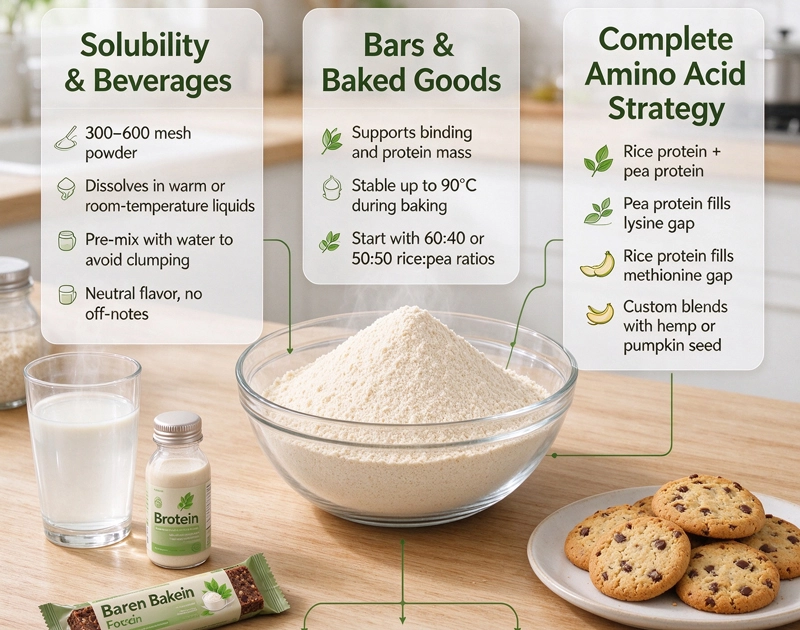
The bulk brown rice protein powder quickly dissolves in warm or room-temperature liquids because the particles are between 300 and 600 mesh. If you want to make an RTD beverage, mixing the powder with a small amount of water first will keep it from clumping. Formulators can start from scratch when making taste systems because the neutral flavor profile doesn't add any off-notes that rougher or higher-fat plant proteins often do.
Application in Bars and Baked Goods
In recipes for high-protein bars, rice protein helps with binding and protein mass without changing the rheology of the dough too much. Because it can handle temperatures up to 90°C, the protein stays intact during baking cycles. A 60:40 or 50:50 rice-to-pea ratio is a good place to start when mixing pea protein with rice protein in a bar matrix to get a balanced amino acid score and good texture.
Blending Strategy for Complete Amino Acid Profiles
When a product claims to have all the protein you need, brown rice protein works best when it is mixed in with other ingredients. When you mix it with pea protein, the pea protein fills in the lysine gap, and the rice protein fills in the methionine gap. Bolin's research and development team can help with formulating custom blends that include hemp, pumpkin seed, or other plant proteins. The texture of the final product can also be changed to meet specific needs.
Conclusion
To make brown rice protein powder, you have to follow a set process: start with organic rice, separate the starch with enzymes, spray dry it to a fine mesh, and check the quality several times. The protein content, flavor, solubility, and label eligibility of the final bulk brown rice protein powder are all changed by each step. When purchasing teams are making plant-based product lines, knowing how the products are made helps them tell the difference between real quality and marketing based on specs. This process has been used by Bolin Biotechnology since 2012 to provide verified 80% protein powder to brands in more than 30 countries, along with all the necessary approval paperwork and uniform batch performance.
FAQ
1. What protein content does Bolin's brown rice protein powder contain?
The nitrogen conversion factor (NX6.25) and HPLC/UPLC analysis of every output batch show that Bolin's rice protein concentrate has 80% protein on a dry basis.
2. Is the extraction process solvent-free?
Yes, Bolin only uses enzymatic hydrolysis. At no point are hexane or any other chemical solvents used. This means that the finished powder can be labeled as "clean" in the US, EU, and other regulated markets.
3. What certifications does the product carry?
The product has been certified by ISO9001, ISO22000, USDA Organic, HALAL, and KOSHER. Each batch COA is backed by SGS third-party verification.
4. What particle size is available?
Particles are usually between 300 and 600 mesh. This range gets rid of the rough texture in finished products and helps them dissolve quickly in drinks and powders.
5. Can Bolin produce custom protein concentrations or blends?
Yes. You can get custom protein concentrations of up to 85%, as well as blended formulas with pea, hemp, or pumpkin seed protein and flavor or sweetener systems that you can choose from.
Partner with Bolin Biotechnology for Consistent, Certified Brown Rice Protein Powder
Since 2012, Bolin Biotechnology has sent tested plant-based ingredients to companies in 30 different countries. As a reputable company that makes bulk brown rice protein powder, we keep a lot of it in stock, offer full SGS-verified COA paperwork, and offer free technical recipe support for all of our orders. You can ask for a sample or talk to our team directly about your recipe needs. To begin, email us at sales1@bovlin.com.
References
1. Gorissen, S. H. M., et al. "Protein Content and Amino Acid Composition of Commercially Available Plant-Based Protein Isolates." Amino Acids, 2018.
2. Hertzler, S. R., et al. "Plant Proteins: Assessing Their Nutritional Quality and Effects on Health and Physical Function." Nutrients, 2020.
3. Hughes, G. J., et al. "Protein Digestibility-Corrected Amino Acid Scores (PDCAAS) for Soy and Whey Proteins: A Comparison with Rat Bioassays." Journal of Agricultural and Food Chemistry, 2011.
4. Martínez-Villaluenga, C., et al. "Enzymatic Hydrolysis of Plant Proteins: Impact on Protein Quality and Bioavailability." Journal of Food Science and Technology, 2020.
5. Mariotti, F., & Gardner, C. D. "Dietary Protein and Amino Acids in Vegetarian Diets — A Review." Nutrients, 2019.
6. USDA Agricultural Research Service. "USDA National Nutrient Database for Standard Reference: Brown Rice Protein Composition Data." USDA, 2021.