_1745226507162.webp)

How Supplement Brands Use Phosphatidylserine Powder in Brain Health Products
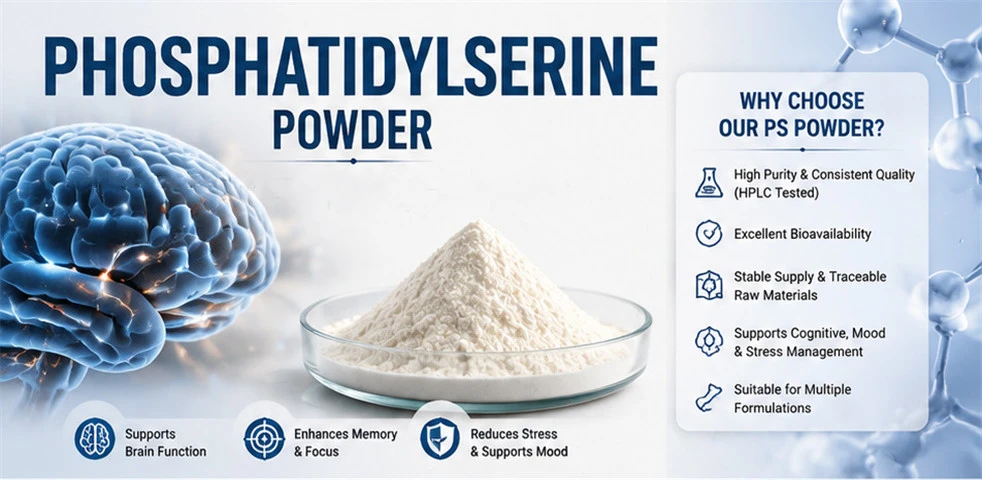
Supplement companies use phosphatidylserine powder in brain health formulas because it is an important phospholipid for maintaining the integrity of neural membranes and brain function. More and more people want natural nootropics that help with memory, focus, and dealing with stress. This ingredient meets that need. Companies make PS-based products in a variety of forms, such as capsules, powders, and functional drinks, and use clinical research to prove their cognitive benefits. Manufacturers can set their goods apart in a competitive market by using PS powder in a smart way. Bioavailability, purity, and being clear about where the powder comes from are important to both regulatory teams and end users.
Understanding Phosphatidylserine Powder and Its Cognitive Benefits:
What Makes Phosphatidylserine Essential for Brain Function?
This is phosphatidylserine powder (PS), which is a phospholipid structure that is found in the double layer of all human cell membranes. The most PS is found in brain tissue. A chemical controls the pathways for apoptosis and makes it easier for neurotransmitters to be released. It also keeps membranes flexible. Not long ago, PS from cows was used, which could have spread BSE. Now, chemical transphosphatidylation of lecithin from soy or sunflower sources is used instead. The enzyme conversion from plants makes a bio-identical protein that is a lot like the PS that brain cells naturally make. Because of this, it works well with the respiration of cells.
Clinical Evidence Supporting Cognitive Enhancement
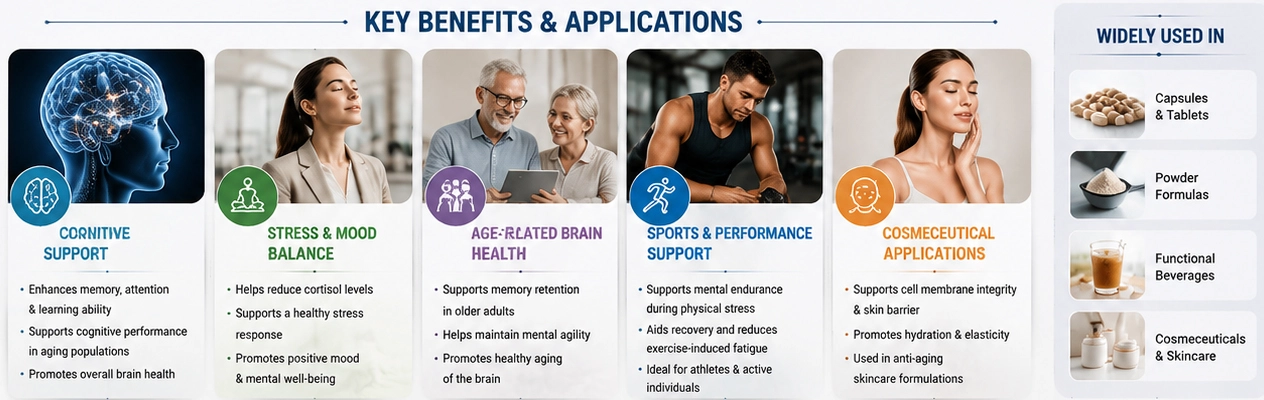
A lot of randomised controlled trials have shown that older people who are losing their minds can improve their memory, processing speed, and attention span by taking 100–300 mg of PS every day. Studies in clinical nutrition journals say that taking PS supplements during the stress reaction lowers the amount of cortisol in the body. When you're stressed out, this helps clear your mind. The hypothalamic-pituitary-adrenal axis manages the stress hormones that are released. The PS has an effect on this axis. Because it lowers cortisol, PS is found in both brain health and sports diet lines. This is good for athletes and workers who want to keep their brains sharp. Studies in toxicology have shown that PS is still safe at therapeutic doses, with few side effects being recorded.
Dosage Considerations Across Different Demographics
The amount of PS in a product is changed by people who make it based on health goals and target customer groups. Formulas for cognitive maintenance usually have 100 mg per dose, while products for memory issues caused by getting older might have 200–300 mg per day. Still, there aren't many versions for kids because there isn't enough long-term safety data on them, but a new study is looking into how PS can help kids who have trouble paying attention. PS's bioavailability is very affected by the particle size, the carrier materials, and the pH of the formulation. This is the reason why supplement businesses spend a lot of money on unique ways to deliver their products. Business-to-business buyers who know about these dosage parameters can make sure that the standards for raw materials are in line with what is said about the finished product and what is printed on the label.
How Do Supplement Brands Formulate Brain-Health Products with Phosphatidylserine Powder?
Synergistic Ingredient Combinations That Amplify Cognitive Effects
Big-brand brain health products don't usually use phosphatidylserine powder by itself very often. When PS and alpha-glycerophosphocholine (alpha-glycerophosphocholine) are mixed, they work together to support the formation of membranes and the production of neurotransmitters. Alpha-GPC gives the body the choline it needs to make acetylcholine. PS and omega-3 fatty acids from fish oil work well together because they both get into neural membranes and make them more fluid, which lets messages pass. Extracts of Ginkgo biloba or Bacopa monnieri are used in some high-end products. This helps the brain in more than one way, so companies can sell "brain support" items instead of items that only help with one process.
Formulators have to think about how the parts will work together and how stable the end result will be over time when they make these complicated recipes. PS can attach to both water and fat, which is called amphiphilicity. In other words, it can be used with vitamins that dissolve in fat and delivery systems that are based on fat. They can make liposomal encapsulations that are better at being absorbed by the gut than regular powder blends because of this chemical property.
Product Format Selection Based on Consumer Preferences
PS is still mostly given in capsule form because they hide its mild lipidic taste and allows for accurate dosing. The range of particle sizes from 40 to 80 mesh makes it easier for the material to move through automatic encapsulation equipment. This keeps the process from getting stuck and saves money. The bulk density should be between 0.3 and 0.65 g/mL so that the fill weights of the capsules stay the same and there are no issues with bridging.
People who like being able to mix their amounts and make smoothies or protein shakes often choose powder forms. To reach this group of people, brands need to make grades that can dissolve in water using micro-encapsulation technology or other special carriers. This is because PS naturally likes fats. This kind of powder is mixed with water to make a steady solution that keeps the ingredients from separating, which would be bad for the customer.
In terms of growth, functional drinks are the fastest-growing area. However, it is technically hard to turn PS into liquid forms. This part is sensitive to heat, so it needs to be added when the temperature is below 60°C to protect the phospholipid. Emulsifiers, such as lecithin or polysorbate 80, are used in successful beverage recipes to keep the product evenly spread out over time. With this, the product doesn't settle to the bottom, which makes customers worry about its quality.
Quality Standards That Build Market Trust
Supplement brands with a good reputation follow strict quality standards that go above and beyond what the government requires. High-Performance Liquid Chromatography with Evaporative Light Scattering Detection (HPLC-ELSD) testing measures the actual PS content instead of the general phospholipid amounts. Because phospholipids don't have chromophores that let UV light in, this is a more accurate method than regular UV spectrophotometry. The difference in this analysis is what makes premium suppliers different from regular suppliers who give false "total phospholipid" numbers.
Certificates from a third party show that the ingredients and production standards are met. FSSC22000 approval shows that you follow food safety rules while making the product, and ISO9001 approval shows that you have quality control systems in place. People who need to follow certain dietary rules can buy food in some stores that are certified as Halal or Kosher. These certificates show that the ingredients always meet the written standards for each production batch. This gives regulatory and buying teams peace of mind.
Heavy metal tests show that the lead level stays below 0.5 ppm. This lowers the chance of contamination that comes with using plant-based materials. Making sure the total plate count of bacteria stays below 1000 cfu/g keeps the food safe and stops it from going bad. Lipid oxidation is low at levels close to 5 meq/kg, which is directly linked to how well an ingredient works since oxidative degradation breaks down bioactive phospholipid structures.
Key Factors for B2B Procurement: Choosing the Right Phosphatidylserine Powder Supplier
Essential Certifications and Quality Documentation
People who work in procurement check potential suppliers against strict certification standards that show they meet high standards of business performance and legal compliance. When a plant has GMP (Good Manufacturing Practice) approval, it means that they keep their environments under control and clean and calibrate their equipment according to the right procedures. FSSC22000 certification includes key control points and risk analysis all along the supply chain, which is more than just simple GMP. This gives even more faith to uses that are safe for food.
Clear paperwork can tell the difference between suppliers you can trust and traders who just want to make quick cash. Full Certificates of Analysis (CoAs) should have allergen statements, heavy metal screening, microbial counts, pesticide residue tests, and assay data of all kinds. It's possible for batches to be different when suppliers only give basic specs and no analysis data to back them up. This can hurt the quality of the finished product and the brand's image.
Source Material Considerations: Soy Versus Sunflower Derivation
The source of the raw material has a big effect on the allergy profiles and market positioning. Phosphatidylserine powder made from sunflowers is non-GMO and doesn't contain any soy allergens. This makes it the best choice for clean-label products aimed at European and North American markets where people are trying to avoid possible allergens. Quality assurance teams like that sunflower source make it easy to list allergens, which makes labeling easier and lowers the risk of recalls.
PS made from soy has lower costs, which helps brands that are trying to compete in price-sensitive markets. The PS molecule is chemically the same no matter where it comes from. The lipid layers that surround it are slightly different, but they don't change the core bioactivity. Both versions have the same cognitive benefits, so brands can lower the cost of formulation without lowering claims of effectiveness.
Storage stability varies a little between sources. When kept below 25°C, nitrogen packing and tocopherol antioxidants make food last up to 24 months, no matter where it comes from. When procurement teams understand these technical details, they can better match material requirements with brand positioning strategies and the tastes of their target markets.
Evaluating Supplier Manufacturing Capabilities
How well a seller can support long-term growth depends on how much they can produce and how good their professional skills are. Shaanxi Bolin Biotechnology runs 25,800 acres of approved growing sites, which makes sure that raw materials can be tracked from where they are grown to where they are processed. Pharmaceutical-grade production standards are met by advanced automated facilities that opened in 2024. Environmental controls keep moisture levels below 5% and solvent residues below 50 parts per million (ppm).
Commodity suppliers and technical partners can be told apart by the accuracy of their analyses. Suppliers who use the HPLC-ELSD method provide properly standardized materials at 20%, 50%, and 70% PS ratios, which have been proven by strict quality control. This level of accuracy lets formulators make sure that all batches of a product have the same amount of strength. This keeps the label claim accurate, which builds customer trust and meets regulatory requirements.
Market Trends and Future Outlook for Phosphatidylserine in Brain Health Supplements
Growing Consumer Demand for Natural Nootropics
The market for brain boosters has changed a lot in favor of plant-based products as people turn away from man-made chemicals that aren't always safe. Because enzymes are used to make lecithin, phosphatidylserine powder can be sold as a "natural" ingredient, even though it needs to be processed in a very complex way. People who care about their health and want cognitive support without drugs respond well to marketing messages that stress "plant-derived" and "nature-identical" ingredients.
The demand for memory aid products is growing because people in developed markets are living longer. Population figures show that more and more people over 50 are going through normal brain changes that come with getting older. This means that the market will continue to grow even when the economy isn't doing well. Because of this, brands are more likely to make specialized formulations that address specific brain issues while still being safe enough for daily use for a long time.
Innovations Enhancing Bioavailability and Efficacy
New delivery technologies are trying to get around the problems that lipophilic nutrients have with bioavailability. Liposomal encapsulation systems use ultrasonic emulsification to make nanoparticles that are much better at being absorbed by the gut than regular powders. These advanced delivery methods cost a lot, but they give brands that want to reach educated customers willing to pay more for better results a way to stand out. Using new combinations with adaptogens like Rhodiola rosea or Lion's Mane mushroom extracts can help with many parts of brain health, such as maintaining the integrity of membranes, neuroplasticity, and stress resilience.
Supply Chain Evolution and Sustainability Priorities
As brands try to meet the needs of customers and the government, the way they get their ingredients around the world is becoming more open and environmentally friendly. When suppliers invest in vertical integration, which includes everything from cultivation to extraction, they offer better tracking and can meet the growing need for paperwork. Regional buying hubs in North America and Europe make it easier to move goods and tell "local" stories in marketing, but the costs of production are usually higher than in Asia. As brands make green promises, they take environmental concerns into account when deciding where to get their materials.
Final Recommendations for B2B Buyers and OEM Manufacturers
Balancing Cost, Quality, and Certification Requirements
Finding the right balance between price, quality, and certification needs is critical. Instead of optimizing for just one aspect, procurement plans need to look at a lot of things at once. The cheapest material often comes with hidden costs, like batch variations, the risk of contamination, or poor documentation that causes production delays. On the other hand, high-priced ingredients don't always provide equal value unless their scientific superiority leads to real product benefits or market advantages.
Building Strategic Supplier Relationships
Transactional buying relationships make it harder to get the technical help and recipe advice that experienced sellers offer. Collaborative partnerships make it possible to share information about new uses, improving stability, and changes in regulations that affect when products are made. When suppliers are willing to work with you to create custom concentrations or unique shipping forms, they become strategic assets instead of just another source you can use. Clear communication keeps people from getting confused about requirements, deadlines, and quality standards.
Leveraging Market Intelligence for Competitive Advantage
Successful brands keep an eye on the pipelines of clinical research to see what new health claims and consumer awareness trends will come up. Early acceptance of brain benefits that have been proven to work, backed up by new studies, creates thought leadership positions before markets become saturated. Over time, product formulations get better as customer feedback is added. By collecting and analyzing data on customer experiences, brands can find ways to change phosphatidylserine powder concentrations, delivery methods, or the features of ingredients that work well together.
Conclusion
Phosphatidylserine powder has become an important part of brain health supplements thanks to strong clinical evidence and a wide range of formulation options. Brands that do well in this competitive field use high-quality PS sources along with nootropics that work well with them. They also offer their goods in formats that customers like and keep strict quality standards that build trust. When choosing providers, procurement teams shouldn't just look at price; they should also look at certifications, analytical accuracy, source material choices, and manufacturing capabilities. Natural cognitive support, improved bioavailability technologies, and supply chain transparency are all market trends that open up opportunities for brands and suppliers who are willing to put money into quality and new ideas.
FAQ
What concentration of phosphatidylserine powder works best for cognitive health supplements?
Most of the clinical studies that showed PS helped with memory and thinking used daily doses of 100 mg to 300 mg of phosphatidylserine powder. To get therapeutic amounts in normal pill sizes, brands usually mix powders with a 50% or 70% concentration. Lower concentrations (20%) work well for powder blends where the total serving size can hold more. The best concentration relies on how you want to send the drug, how much you want to give, and how much it costs.
How does sunflower-derived PS differ from soy-derived material?
The PS molecule is chemically the same no matter where it comes from, so it has the same effect on the brain. Material from sunflowers is non-GMO and free of all allergens, which gives it a special place. PS made from soy is cheaper and can be used in a wide range of supplement applications. Both types have a 24-month shelf life when stored properly and have similar stability ratings.
Can phosphatidylserine powder integrate into liquid formulations?
Standard PS powder has lipophilic qualities that make it hard for liquids to mix with it. When water-dispersible grades are combined with special carriers or microencapsulation, they create stable emulsions that can be used in drinks. To keep the bioactivity, heat sensitivity needs to be added during cooling phases below 60°C. When you work with experienced suppliers, you can be sure that you will be able to get grades that are best for your formulation needs.
Partner with Bolin Biotechnology for Premium Phosphatidylserine Powder Supply
Pharmaceutical-grade phosphatidylserine powder maker options from Shaanxi Bolin Biotechnology are made for nutraceutical companies, pharmaceutical developers, and original equipment manufacturers (OEMs) who need consistent quality and flexible specs. Our two types of PS—from soy and sunflower—can be used for different marketing tactics while still having the same bioactivity profiles. With amounts standardized at 20%, 50%, and 70% through HPLC-ELSD validation, your formulation teams get materials that are very specific, which makes sure that the label claims are always correct across production runs. Our ISO9001 and FSSC22000 certifications show that we have excellent quality management, and our Halal and Kosher approvals help you reach more customers. Reach our technical sales team at sales1@bovlin.com to discuss goals.
References
1. Glade, M.J., & Smith, K. (2015). Phosphatidylserine and the human brain. Nutrition Journal, 31(6), 781-786.
2. Kato-Kataoka, A., Sakai, M., Ebina, R., Nonaka, C., Asano, T., & Miyamori, T. (2010). Soybean-derived phosphatidylserine improves the memory function of elderly Japanese subjects with memory complaints. Journal of Clinical Biochemistry and Nutrition, 47(3), 246-255.
3. Starks, M.A., Starks, S.L., Kingsley, M., Purpura, M., & Jäger, R. (2008). The effects of phosphatidylserine on endocrine response to moderate intensity exercise. Journal of the International Society of Sports Nutrition, 5(1), 11-18.
4. Baumeister, J., Barthel, T., Geiss, K.R., & Weiss, M. (2008). Influence of phosphatidylserine on cognitive performance and cortical activity after induced stress. Nutritional Neuroscience, 11(3), 103-110.
5. Cenacchi, T., Bertoldin, T., Farina, C., Fiori, M.G., & Crepaldi, G. (1993). Cognitive decline in the elderly: a double-blind, placebo-controlled multicenter study on efficacy of phosphatidylserine administration. Aging Clinical and Experimental Research, 5(2), 123-133.
6. Richter, Y., Herzog, Y., Cohen, T., & Steinhart, Y. (2010). The effect of phosphatidylserine-containing omega-3 fatty acids on memory abilities in subjects with subjective memory complaints: a pilot study. Clinical Interventions in Aging, 5, 313-316.